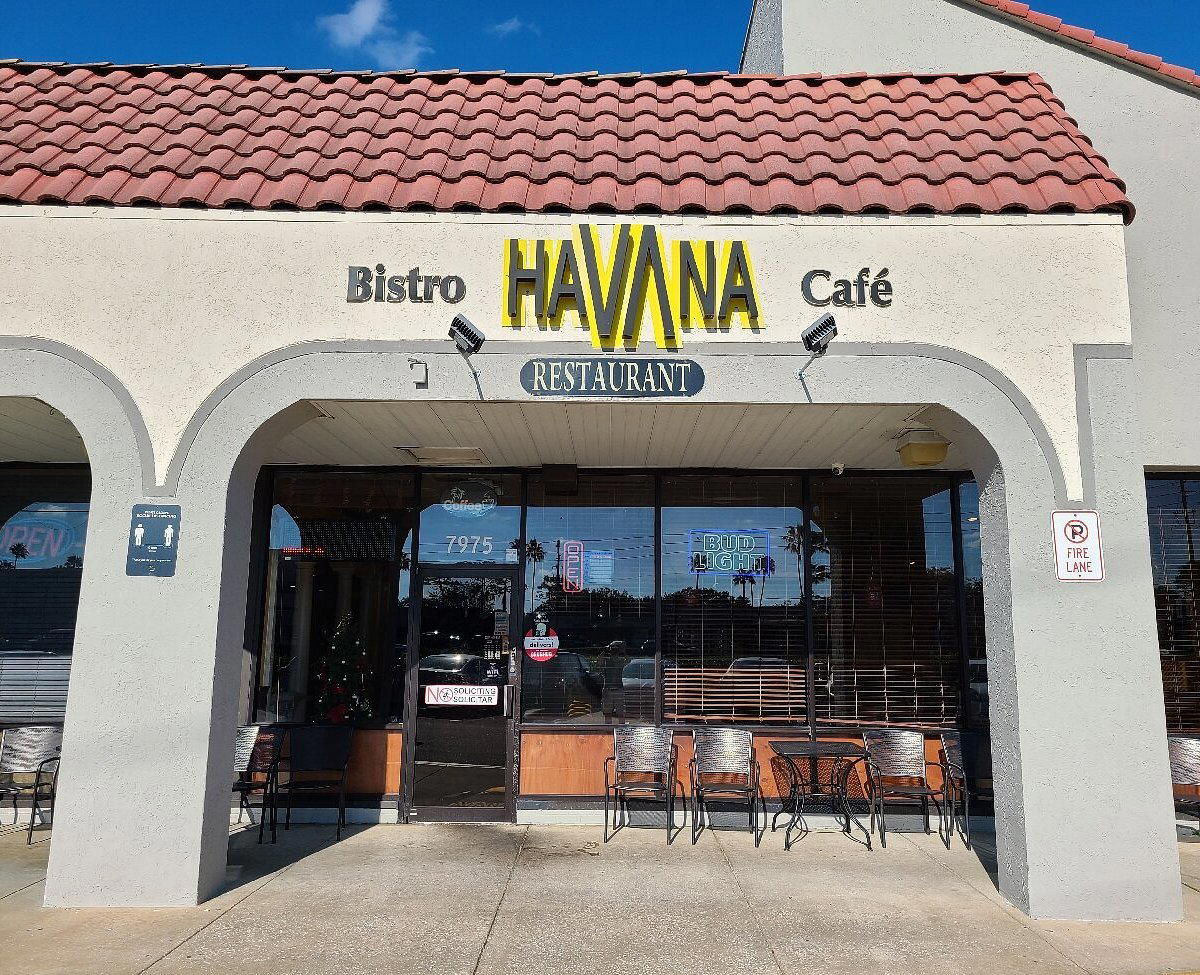
Havana Café.
Havana Café operates on South Orange Blossom Trail, Orlando's Cuban-American community corridor, at a considerable remove from the resort-adjacent Latin dining tier. Where upmarket rooms compete on format and price point, this stretch of S Orange Blossom Trail produces Cuban cooking shaped by community sourcing networks and a local audience that eats the cuisine daily. That context tends to produce honest, ingredient-driven results.
 Discover on Pearl
Pearl is the En Primeur Club membership app — saves, bookings, and concierge access live there. Same editors, same standards.
- Address
- 7975 S Orange Blossom Trl, Orlando, FL 32809
- Phone
- +14074207278
- Website
- havanabistrocafe.shop
Cuban Cooking on the South Orange Blossom Trail
South Orange Blossom Trail is a practical dining corridor in Orlando. The corridor runs through working-class commercial sprawl, past tire shops and taqueiras, and the restaurants that operate here tend to serve communities rather than critics. That context matters, because it shapes what Cuban cooking along this stretch actually is: ingredient-driven, pragmatic, built around the diaspora pantry rather than any tourist-facing idea of Havana. Havana Café, at 7975 S Orange Blossom Trail, sits inside that tradition. To understand what it offers, it helps to understand where Cuban cuisine positions itself within Florida's broader Latin food geography.
Florida's Cuban Kitchen and What It Draws From
Cuban cooking in Florida carries a distinct lineage from the island's Spanish colonial base, complicated by African and Caribbean ingredient traditions and then reshaped again by the specific communities that settled in Tampa, Miami, and, eventually, Orlando. The pantry that defines the cuisine, black beans, plantains, yuca, sofrito built from onion, garlic, cumin, and bitter orange, is largely the same across Florida's Cuban restaurants, but the sourcing and execution vary considerably depending on who the kitchen is cooking for and how long the establishment has been cooking it.
Along the South Orange Blossom corridor, Cuban and pan-Latin restaurants operate with supply chains that prioritize the same staples used in home kitchens across Central Florida's Hispanic communities. That proximity to a working-class consumer base often produces more honest ingredient sourcing than restaurants chasing a broader market: bitter orange from backyard trees, ripe plantains purchased daily from produce distributors serving local bodegas, dried beans from Latin grocery importers with direct relationships to Caribbean growers. The food that results from this supply chain tends to reflect Cuban cooking as it is actually practised domestically, rather than as it is curated for presentation.
That context places Havana Café in a different tier than Orlando's upmarket Latin-influenced rooms. Compare the positioning, for instance, to Camille, which operates at the $$$$ price point with a Vietnamese tasting format, or Capa, a steakhouse at Four Seasons Orlando designed around the resort guest. Havana Café operates in an entirely different register: neighbourhood-facing, cash-flow practical, and shaped by the sourcing realities of its immediate community.
Where Ingredient-Sourcing Defines the Format
Cuban cuisine's leading argument for itself has always been in proteins and roots rather than in technique complexity. Lechón, slow-roasted pork, requires time, a well-chosen cut, and the right marinade of garlic and sour orange, but it asks relatively little of the cook in terms of advanced technique. The same is true of ropa vieja, the braised shredded beef that is Cuba's most recognisable export to American restaurant menus. What separates a reliable version from a forgettable one is almost entirely sourcing: the quality of the beef, whether the tomatoes in the base have depth or are thin and acidic, whether the peppers are fresh or from a can.
Plantains carry a similar logic. The difference between tostones and maduros is not just ripeness, it is the sourcing chain that gets a plantain to the kitchen at the right stage. A green plantain fried as a tostone requires a specific starchiness that disappears as the fruit ripens; a sweet maduro requires a plantain that has been allowed to blacken fully. Restaurants that buy in bulk and manage inventory poorly produce neither dish well. This is where the South Orange Blossom corridor's proximity to community produce suppliers provides a structural advantage over restaurants in tourist corridors buying from larger, more generic distributors.
Black beans carry the same argument further. Cuban black bean soup and congri, beans cooked with rice, draw their depth from slow cooking and from the quality of the dried beans themselves. The Dominican, Cuban, and Puerto Rican grocery distributors that serve Central Florida's Latin community tend to stock higher-quality dried legumes than the mainstream foodservice supply chains. The resulting dish, when kitchens use those suppliers, has a different density of flavour than what restaurant kitchens sourcing from broadline distributors tend to produce.
Orlando's Latin Dining Spectrum
Orlando's dining scene has developed in an unusual pattern. The resort corridor drives considerable fine-dining investment, producing restaurants like Kadence and Sorekara in the Japanese omakase format, and Natsu alongside them. The Latin dining scene, by contrast, has developed more organically, shaped by the communities that define specific corridors rather than by capital pursuing tourist spend.
South Orange Blossom Trail represents one of those community-shaped corridors. Cuban, Puerto Rican, and Central American restaurants along the strip operate without the infrastructural support of resort-adjacent dining but benefit from the consistent, repeat custom of neighbourhood residents who are cooking and eating Cuban food at home and know immediately what a well-sourced version tastes like. That audience is more demanding in its way than the occasional tourist visitor, and kitchens that serve it tend to develop the consistency that comes from being tested daily against informed expectations.
At the broader national level, the restaurants that have drawn the most sustained critical attention for ingredient sourcing across American cuisine include places like Blue Hill at Stone Barns in Tarrytown, Single Thread Farm in Healdsburg, and The French Laundry in Napa, restaurants that have built their identity around agricultural supply chain. Cuban-American neighbourhood restaurants operate at an entirely different price point and with an entirely different set of ambitions, but the underlying principle, that sourcing quality determines dish quality, is the same. Along South Orange Blossom Trail, that principle operates at a fraction of the price and with none of the critical apparatus, but it operates.
For readers building a broader picture of American restaurant culture, it is also worth cross-referencing what ingredient-sourcing looks like at other price tiers: Le Bernardin in New York, Providence in Los Angeles, Addison in San Diego, Lazy Bear in San Francisco, Alinea in Chicago, Atomix in New York, Emeril's in New Orleans, The Inn at Little Washington, and 8 1/2 Otto e Mezzo Bombana in Hong Kong. Sourcing is universal as a principle; what changes is the price bracket, the ingredient category, and the cultural tradition the kitchen is working within.
Know Before You Go
Address: 7975 S Orange Blossom Trail, Orlando, FL 32809
A Lean Comparison
Comparable venues nearby, for context on price, style, and recognition.
| Venue | Cuisine | Price | Notes |
|---|---|---|---|
| Havana Café.This venue — the venue you are viewing | Lake Buena Vista, Authentic Cuban | $$ | |
| Bandeja Paisa Latin Restaurant | Sky Lake South, Colombian Latin | $$ | |
| Cuba Libre Restaurant & Rum Bar | $$ | International Drive, Classic & Contemporary Cuban | |
| Crocante Restaurant | Colonialtown, Modern Puerto Rican | $$$ | |
| Mamak Asian Street Food | $$ | Mills 50, Dining | |
| Bosphorous Turkish Cuisine - Lake Nona | Lake Nona, Authentic Turkish Cuisine | $$ |







At a Glance
- Lively
- Cozy
- Casual Hangout
- Family
- Standalone
- Craft Cocktails
Comfortable and pleasant with a cozy, welcoming atmosphere.