Google: 4.8 · 4 reviews

Hatter occupies a compact dining room on Wenrufang in Fuzhou's Gulou District, where two seasonal tasting menus thread European technique through Fujian produce including red wine lees and laver. Awarded a Michelin Plate in 2025, it sits at the top of Fuzhou's fine-dining tier. The owner-sommelier pairs an extensive wine list to each menu, making this a considered destination for food-and-wine dining in the city.
 Discover on Pearl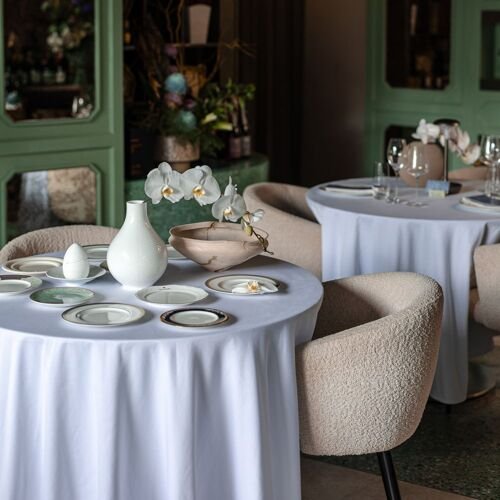
A European Table in a Fujian Lane
Wenrufang is one of those narrow commercial streets in Fuzhou's Gulou District that local residents treat as a neighbourhood resource rather than a destination in itself. Restaurants occupy converted shopfronts alongside tea merchants and small retailers, and the foot traffic is almost entirely domestic. Against that backdrop, Hatter occupies a quietly unusual position: a European contemporary dining room in a city where the prevailing fine-dining register runs toward Fujian tradition and Cantonese formality. The contrast is not accidental. It reflects a broader pattern visible across second-tier Chinese cities over the past decade, where returnees from Europe, Australia, and North America have opened small, format-driven restaurants that draw on foreign training while remaining tethered, in varying degrees, to local supply chains. For context on how Fuzhou's wider dining scene sits across price tiers and cuisines, see our full Fuzhou restaurants guide.
The Room: Compact, Continental, Deliberate
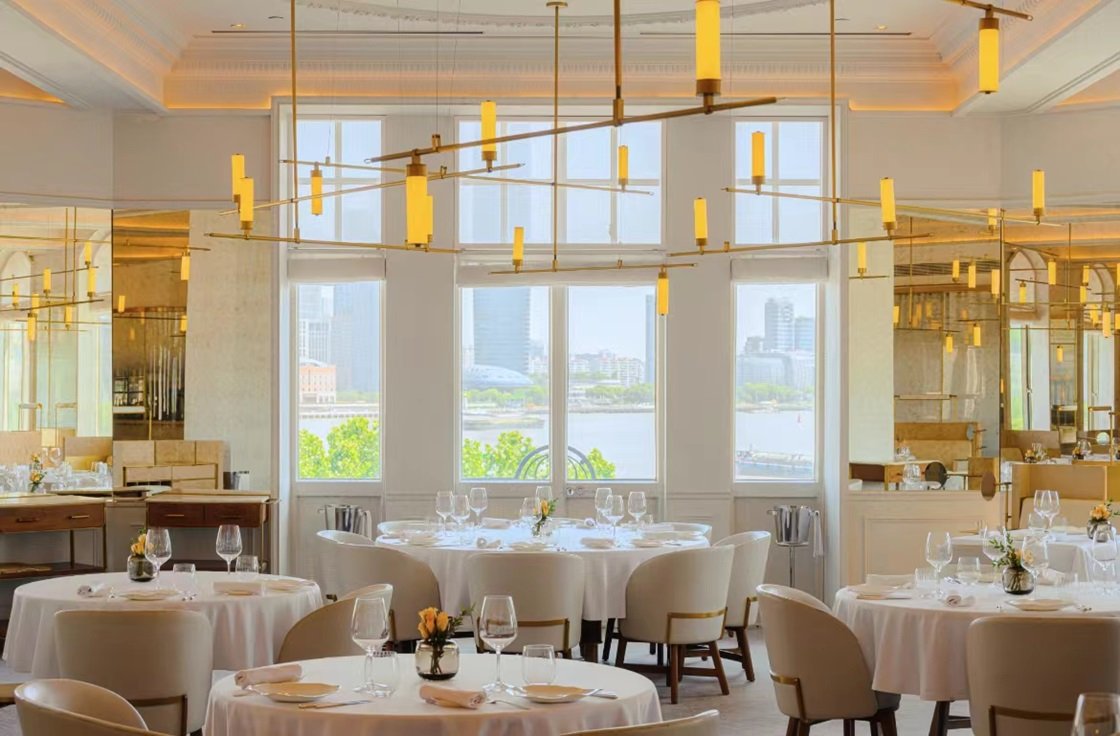
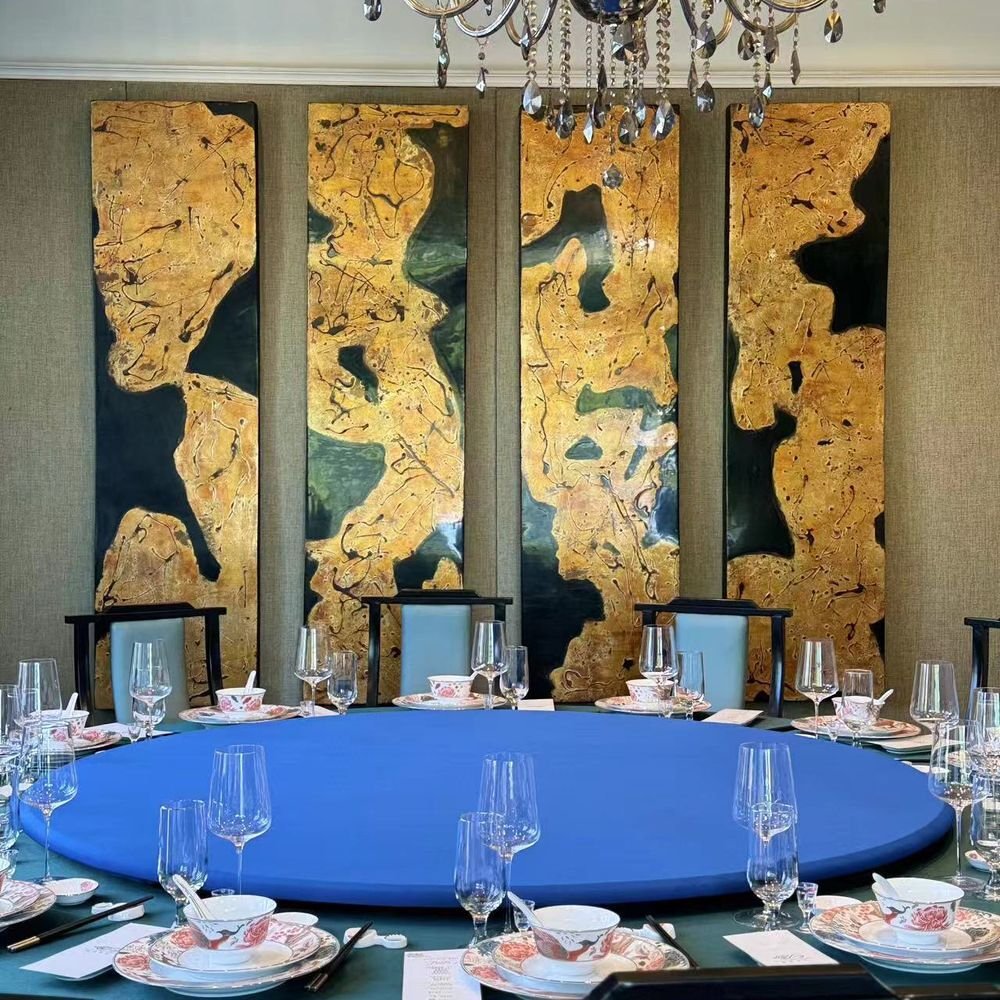
The dining room at Hatter is small by design. The space carries what the venue describes as a casual continental vibe, which in practice means the atmosphere reads closer to a European neighbourhood bistro than to the formal banquet rooms that still define celebrations in much of urban China. There is no grand entrance, no towering ceiling, no imported marble deployed as a status signal. The proportions encourage proximity, both between diners and between the table and the kitchen's logic. For a date dinner or a small gathering with friends who take food seriously, that scale works in the room's favour: conversation does not compete with spectacle. Compare this to the larger, more ceremonial formats at venues like Jiangnan Wok‧Rong, which holds a Michelin Star and operates in a more formal register with Huaiyang cuisine at the ¥¥¥ price point, and Hatter's identity becomes clearer. It is not competing on scale or ceremony. The room positions the food and the wine as the primary events.
The Menus: Seasonality as Structure
Hatter runs two tasting menus that rotate with the seasons, a format that places it in a peer set defined more by discipline than by geography. Seasonal tasting menus are a structural commitment: they require renegotiating supplier relationships, retraining front-of-house staff, and recalibrating wine pairings at regular intervals. At this price tier (¥¥¥¥, the highest bracket in Fuzhou's restaurant market), guests arrive with expectations shaped partly by international fine-dining experience, and a static menu would signal stagnation rather than confidence. The European slant of Hatter's menus is deliberate and consistent. The kitchen works with first-rate produce sourced internationally, which at the ¥¥¥¥ level reflects a procurement model that prioritises ingredient quality over local sourcing as the primary principle. For comparison, European contemporary restaurants operating at similar ambition levels in other Chinese cities include 102 House in Shanghai and, at the highest end of the regional spectrum, Chef Tam's Seasons in Macau. Internationally, the European contemporary format Hatter is working within also appears at venues like Zén in Singapore and Schwarzer Adler in Hall in Tirol, both of which illustrate the range of expression the format allows.
Fuzhou on the Plate: Red Wine Lees and Laver
Where Hatter diverges from a direct European import is in its selective use of Fuzhou's own condiment tradition. Red wine lees (糟) and laver both appear occasionally in the menus, and both are ingredients with genuine cultural weight in Fujian cooking. Red wine lees, the fermented residue of Fujian rice wine production, carry a distinctive earthy depth that functions differently from European wine reductions. Laver, a seaweed gathered along the Fujian coastline, brings a mineral salinity that European cooking rarely encounters from a local source. Using these ingredients inside a European framework is not simply an aesthetic gesture. It reflects the kind of dialogue between training and place that distinguishes the more considered returnee restaurants from those that simply transplant a foreign format without adaptation. Fuzhou's local dining scene, from the Fujian-focused menus at Wenru No.9 to the street-level precision of A Xin Xian Lao (Gongnong Road) and the broader Fujian cooking at 167 Shan Hai Li, makes the local ingredient references at Hatter legible and specific rather than decorative. Diners who arrive with knowledge of Fujian food will read those moments differently than visitors who don't.
The Wine Program: Ownership at the Table
One of the more unusual operational features at Hatter is that the owner functions as the sommelier. In most restaurants at this price tier, wine service is either delegated to a trained sommelier or, in China more broadly, handled by front-of-house staff with varying levels of expertise. When the owner carries both roles, the wine list becomes a direct expression of knowledge and preference rather than a professionally curated but depersonalised document. The list is described as extensive, which at the ¥¥¥¥ tier implies genuine depth, likely spanning major European wine regions with the breadth needed to pair across two distinct seasonal menus. The practical implication for diners is worth noting: asking the owner to pair wine to the tasting menu is the recommended approach, and given the dual role, those pairings are likely to reflect close familiarity with how the kitchen is currently thinking rather than a standardised pairing script. For those who want to explore Fuzhou's broader hospitality scene, our full Fuzhou bars guide, hotels guide, wineries guide, and experiences guide provide wider context.
Where Hatter Sits in Fuzhou's Fine-Dining Tier
Fuzhou has a small but legible fine-dining market. At the leading of that market, Michelin recognition serves as the most visible sorting mechanism. Jiangnan Wok‧Rong holds a Michelin Star for its Huaiyang cooking. Hatter holds a Michelin Plate for 2025, a distinction that places it in the recommended tier without yet reaching Star level. The Plate is awarded to restaurants where the food quality is noted as good, and in a city without a large cluster of European contemporary restaurants, it signals that Hatter is performing at a level that international inspectors consider worth recording. At ¥¥¥¥, Hatter prices at the ceiling of Fuzhou's restaurant market, above the ¥¥ tier occupied by Chosop and other mid-range specialists. For those who have dined at European contemporary tables in Shanghai, Beijing, or at venues like Xin Rong Ji in Beijing, Ru Yuan in Hangzhou, Xin Rong Ji in Chengdu, or Imperial Treasure Fine Chinese Cuisine in Guangzhou, Hatter operates in a comparable fine-dining bracket, adjusted for a market where the supply of peer competitors is thin.
Planning Your Visit
Hatter is located at 56 Wenrufang in the Gulou District, within the Dongjieko commercial zone. The address places it in an area accessible from central Fuzhou without significant difficulty. Given the small dining room and the tasting-menu format, bookings are advisable, particularly for weekend evenings. The ¥¥¥¥ price range means this is not a casual drop-in option; it is a planned evening with a specific format commitment. The dual tasting menu structure means that groups of two can, in principle, work through both menus across a shared table, though the intended experience is the full wine-paired progression. The owner's sommelier role makes the pairing format the most direct route to understanding what the kitchen and cellar are currently doing together.
At-a-Glance Comparison
A quick peer list to put this venue’s basics in context.
| Venue | Cuisine | Price | Awards | Notes |
|---|---|---|---|---|
| Hatter | European Contemporary | ¥¥¥¥ | The owner, a returnee from Australia, has worked closely with the chef to develo… | This venue |
| Hou Jie Lao Hua (Yadao Lane) | Noodles | ¥ | Noodles, ¥ | |
| Jing Li | Fujian | ¥¥ | Fujian, ¥¥ | |
| Mei Ya Bo Hua Sheng Tang | Small eats | ¥ | Small eats, ¥ | |
| Jiangnan Wok‧Rong | Huaiyang | ¥¥¥ | Michelin 1 Star | Huaiyang, ¥¥¥ |
| Chosop | Sichuan | ¥¥ | Sichuan, ¥¥ |
Continue exploring
More in Fuzhou
At a Glance
- Intimate
- Elegant
- Sophisticated
- Quiet
- Date Night
- Special Occasion
- Celebration
- Chefs Counter
- Private Dining
- Open Kitchen
- Extensive Wine List
- Sommelier Led
- Local Sourcing
- Farm To Table
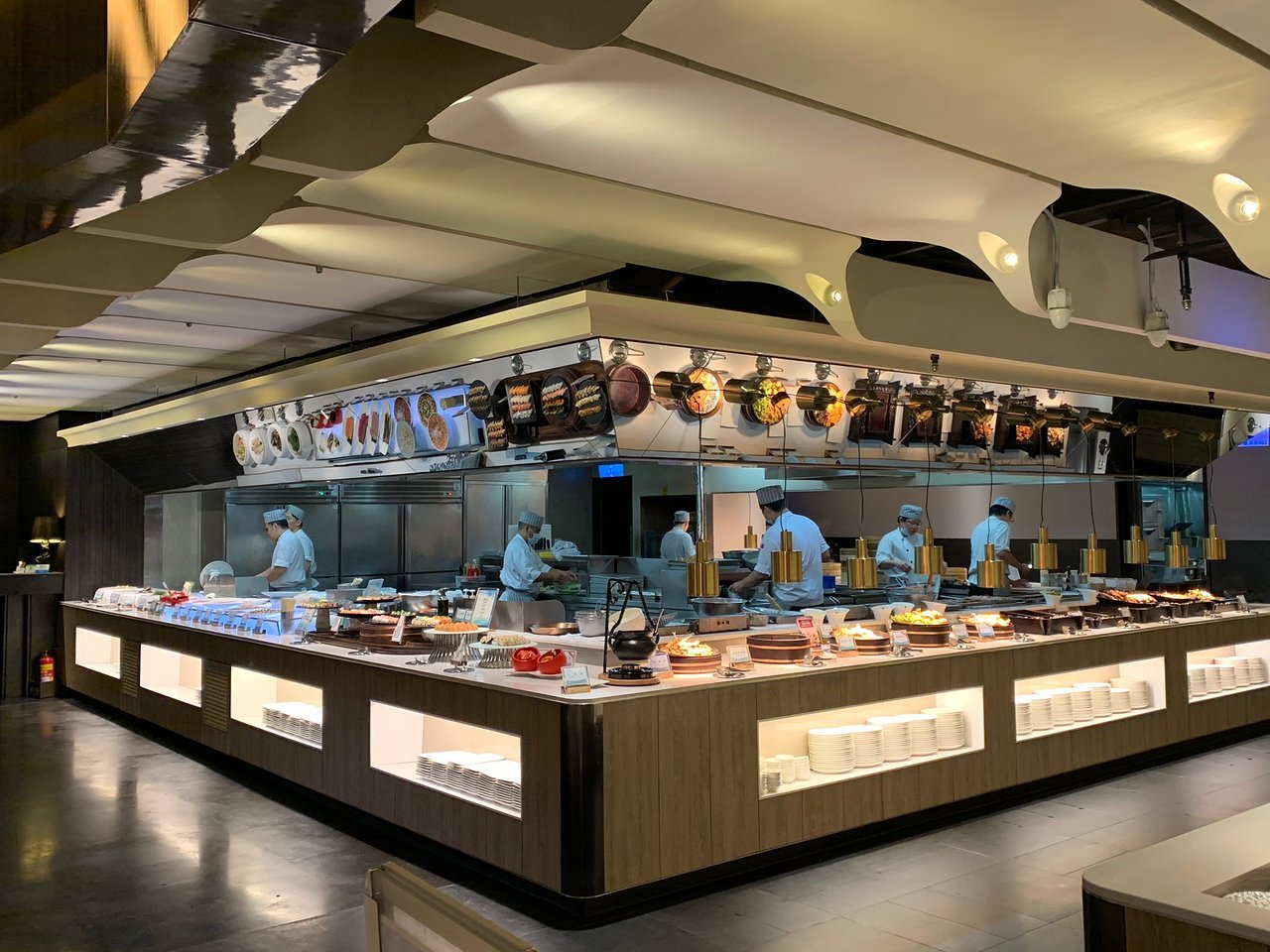
Warm woods, linen-draped tables, soft lighting, and a quietly convivial hum create a calm, sophisticated continental atmosphere ideal for intimate occasions.