
Tabelog 100 #57
Our verdict
Hasegawa belongs to Tokyo’s serious tonkatsu tier, where the meal is built around cut, set structure, rice, cabbage, miso soup and pacing rather than chef theatrics. Its repeated Tabelog Tonkatsu 100 selections, including 2026, place it among the city’s recognized pork-cutlet specialists, with Ryogoku giving the experience a more local register than Ginza or Aoyama dining rooms.

Pearl is the En Primeur Club membership app, where members save venues, book tables and use the concierge.
The menu
What to order
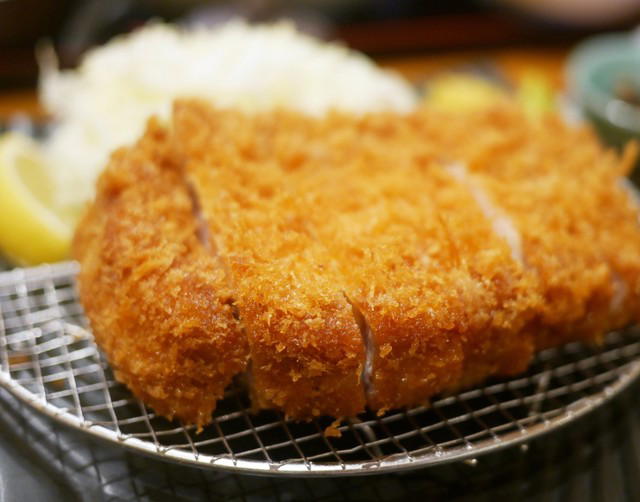
- Tonkatsu (pork cutlet) made with Hiraboku Bark Sangenton pork
- Fried items using house-made original panko
Tokyo changes the tone of a tonkatsu meal before the first order is placed. The city’s everyday dining rhythm gives pork cutlet a working-neighbourhood context rather than a luxury-district frame. In that setting, Hasegawa reads less as a destination staged for visitors and more as part of Tokyo’s precise everyday food culture: a restaurant category where small differences in cut selection, frying control and set composition carry the argument.
Tonkatsu in Tokyo has moved into two parallel lanes. One lane treats the dish as accessible comfort food, quick enough for lunch and familiar enough for families. The other has become a specialist field, with pork selection, controlled frying, cabbage, rice quality and sauce discipline scrutinised with unusual seriousness. Hasegawa sits in the second lane without abandoning the first. Its recognition in Tabelog’s Tonkatsu 100 for 2026 signals consistency in a category where repeat execution matters more than novelty.
A set-meal format that makes the cutlet the argument
The useful way to read a tonkatsu menu is not as a long list of fried pork options, but as a hierarchy of decisions. The central split is usually about texture, richness and restraint. Around that choice sits the architecture that defines the meal, often rice, shredded cabbage, pickles and soup. The cutlet is the headline, but the set is the grammar. A weak set exposes itself quickly because fried food needs contrast and pacing.
That structure explains why serious tonkatsu houses compete differently from other Japanese dining formats. The format is narrow, so the margins become visible. Batter thickness, pork juiciness, resting time and cabbage volume are not decorative details; they determine whether the meal feels heavy or calibrated. Hasegawa’s category listing as tonkatsu, rather than a broader everyday restaurant, matters because it places the kitchen inside a specialist tradition where repetition is the standard of judgment.
Tokyo’s pork-cutlet scene also rewards restraint in pricing and format. Unlike more elaborate reservation-led meals, where scarcity and counter intimacy can push prices into a separate economic tier, tonkatsu remains legible as an everyday luxury. The meal can be serious without becoming ceremonial. That is part of its appeal for travellers who already understand Tokyo’s high-end dining codes and want a meal that shows another form of precision: less theatre, more craft under pressure.
The drinks context, when approached simply, reinforces that middle register. Tonkatsu does not require an elaborate pairing logic; it needs drinks that can sit beside fat, salt, sauce and rice without taking over. In Tokyo, that modesty is often a strength.
Tokyo gives the meal a different accent
Tokyo is not a neutral backdrop. Its dining culture is shaped by office workers, residents, visitors and daily traffic, as well as by the city’s deep habit of taking familiar formats seriously. That makes it a useful counterpoint to design-led restaurant culture. A pork-cutlet meal here carries the feeling of a local routine refined over time rather than a concept built for a tasting-menu audience.
The comparison set sharpens the point. Kameido Gyoza Ryougoku shiten, Edosoba Hosokawa, Teuchi Ren, Echigoya Wakasa and Shiki no Aji Fujiyoshi help frame how varied Tokyo dining can be across specialist rooms, casual formats and more deliberate meals. Against those peers, tonkatsu functions as a bridge category: more deliberate than a fast snack, less formal than a full-course Japanese meal, and easy to fold into a Tokyo day.
This is where Hasegawa’s category recognition becomes relevant. It belongs to Tokyo’s field of specialists whose appeal is not dependent on a long narrative or a heavily staged concept. The restaurant’s Tabelog Tonkatsu 100 selection in 2026 shows current recognition within a narrow, competitive category. In a city where attention shifts quickly, that kind of notice is not about fashion; it is about a kitchen continuing to meet a precise brief.
For travellers, the decision is simple. This is not the place to seek a chef narrative or a sprawling menu. It is a place to understand how Tokyo turns an apparently familiar dish into a study of proportion. The value lies in seeing how much of the experience is carried by format: the set, the cut, the accompaniments and the rhythm of service. That makes it especially useful for diners building a broader Tokyo food map beyond sushi, ramen and tasting menus.
For wider context across the city, EP Club’s Tokyo coverage connects this kind of specialist meal with other formats: Our full Tokyo restaurants guide, Our full Tokyo hotels guide, Our full Tokyo bars guide, Our full Tokyo wineries guide and Our full Tokyo experiences guide. Other restaurant entries can be useful for contrast when read generically across Tokyo’s wider dining map. Beyond Tokyo, broader comparisons in Japanese dining formats are best treated as context for how specialist restaurants, casual counters and everyday set meals translate across different cities.
Frequently asked questions
Is Hasegawa expensive?
Pricing at Hasegawa is listed as Dinner: JPY 2,000 - JPY 2,999; Lunch: JPY 1,000 - JPY 1,999.
What are the operating hours at Hasegawa?
Operating hours for Hasegawa are not specified here; check directly with the restaurant before visiting.
What's the address for Hasegawa?
Tokyo.
What's the standout thing about Hasegawa?
Its clearest credential is selection for Tabelog 100 Tonkatsu in 2026. In practical terms, it is a tonkatsu restaurant in Tokyo, with dinner listed at JPY 2,000 - JPY 2,999 and lunch listed at JPY 1,000 - JPY 1,999.
Fast Comparison
Comparable venues at a similar level for quick context.
| Venue | Cuisine | Price | Awards | Notes |
|---|---|---|---|---|
| HasegawaThis venue (the venue you are viewing) | Tonkatsu (Japanese Pork Cutlet) | $20–30 | Tabelog 100 #57 | Not listed |
| Tsukiji Nagaya 6-7-7 | Fugu-focused Japanese Tachinomi | $30–50 | Tabelog 100 #33 | Chūō |
| Senju Takeyabu | Traditional Soba Noodle Shop | $10–20 | Tabelog 100 #62 | Adachi |
| 隼 | Japanese Cuisine | Not listed | Not listed | Minato |
| Nihon Saisei Sakaba | Traditional Japanese Grilled Offal Izakaya | $20–30 | Not listed | Shinjuku |
| 甚六 | Shinjuku Private Room Izakaya | Not listed | Not listed | Shibuya |
Recognition history
Dated appearances from independent guides and award organizations, with the underlying list record or original source where available.
Tabelog 100 #57 · No. 57
Tabelog · Tabelog 100 - Tonkatsu - 2026














