
Tabelog 100 #62
Our verdict
Senju Takeyabu is a 22-seat soba house in Adachi, selected for Tabelog 100 Soba EAST 2025 with prior Tabelog 100 selections across multiple years. The appeal is cultural rather than theatrical: buckwheat noodles, sake and shochu, a small room with counter and table seating, and a price band that keeps it closer to serious everyday Tokyo dining than luxury tasting-menu territory.

Pearl is the En Primeur Club membership app, where members save venues, book tables and use the concierge.
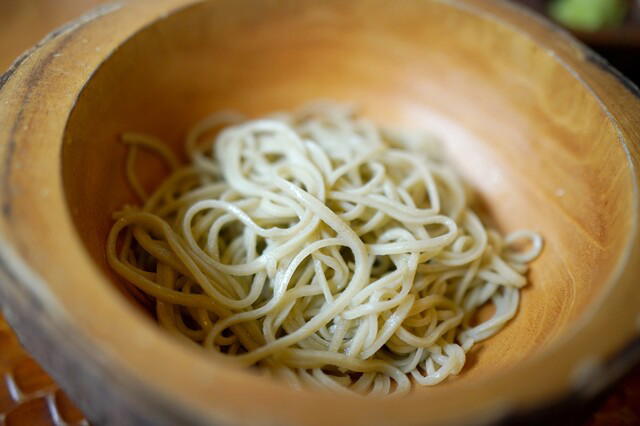
The menu
What to order
- Juwari soba (100% buckwheat)
- Coarse-ground soba
- Inaka soba (rustic buckwheat noodles)
- Kamo negi soba
Approaching Senju Takeyabu shifts the rhythm of a Tokyo meal. The city’s grand dining rooms often announce themselves through elevators, hotel lobbies, and polished counters; soba houses speak more quietly. Here the focus is on the essentials: buckwheat noodles, dipping sauce, timing, and the expectation that the craft of the meal carries more weight than spectacle.
Tokyo’s soba culture rewards precision without demanding sushi-omakase or kaiseki-level ceremony. The form is direct, but not careless. Noodles need texture, aroma, and speed; broth and dipping sauce need balance; drinks can lengthen a simple meal without changing the cuisine’s grammar. Senju Takeyabu belongs to that tradition, and its selection for Tabelog 100 Soba EAST 2025 places it among the region’s closely watched soba addresses rather than Tokyo’s louder destination restaurants.
Tokyo soba, viewed through the city's quieter dining tradition
Geography matters. Tokyo’s dining map often sends many visitors toward its most visible luxury districts and headline counters. Within the city, soba can take on a different function: not a substitute for a long tasting menu, but a self-contained meal built around a staple that has carried local food culture for generations. The category fits a cuisine where restraint, portion control, and repetition matter.
The restaurant’s Tabelog score of 3.73 and Tabelog 100 Soba EAST 2025 recognition are useful signals in a category where small differences are easy to miss from outside. That recognition suggests credibility in a field where regulars judge by texture, temperature, and the relationship between noodles and tsuyu rather than novelty. This is not the same competitive set as Sushi Tanaka, where sushi craft and counter pacing define the meal; nor is it the casual-price lane of BOSSA BURGER, Saiko Gyoza Bo, or Tachiataru. It sits in a narrower Tokyo category: specialist cooking, a clear soba focus, and enough reputation to justify a cross-town trip for diners who care about the form.
That distinction helps visitors plan. A soba lunch or early dinner does not compete with the city’s high-ticket counters; it fills another role, especially for travelers seeking one meal that feels local, disciplined, and low on theater. The listed category is soba, or buckwheat noodles. Expect not surprise for its own sake, but a focused meal whose craft is measured through fundamentals.
A compact room with a specialist rhythm
Format shapes the experience. Senju Takeyabu is best read as a focused soba address rather than a broad destination built around multiple cuisines or spectacle. The appeal is for diners who want the food to lead: noodles, dipping sauce, timing, and the quiet structure of a specialist meal.
The price band clarifies the decision. Lunch is listed at JPY 2,000 to JPY 2,999, and dinner at JPY 4,000 to JPY 4,999. In Tokyo terms, the meal sits above convenience soba and station-counter noodles, but far below expensive counter formats. The value is not portion size alone; it is the chance to treat soba as a primary meal rather than a quick carbohydrate stop between appointments.
Practical frictions matter. Because this is a specialist restaurant rather than a sprawling hospitality machine, diners should confirm current service details before going. The available venue details identify Senju Takeyabu as a Tokyo soba restaurant, with pricing in the lunch and dinner bands above and a listed phone number of +81-3-3888-5897. For a soba-focused meal, these basics determine whether the visit feels easy or improvised.
How to place it in a Tokyo itinerary
The strongest case for Senju Takeyabu is cultural specificity. Tokyo dining can become a checklist of sushi, wagyu, ramen, cocktail bars, and hotel breakfasts when built only around global recognition. Soba gives the city a different register: older, quieter, and less dependent on luxury cues. This meal suits travelers who want to see how a staple becomes specialist dining without losing everyday roots.
It also pairs well with a slower Tokyo day rather than an itinerary built solely around marquee reservations. This is not the address to squeeze between back-to-back bookings across town. Better to let it anchor a half-day where the meal’s focused nature aligns with the city’s quieter dining rhythm.
For wider planning, compare the city’s range through Our full Tokyo restaurants guide, then separate food from sleep and drinking through Our full Tokyo hotels guide, Our full Tokyo bars guide, Our full Tokyo wineries guide, and Our full Tokyo experiences guide. Other Tokyo dining shows how broad the city’s casual and specialist spectrum runs, from quick everyday meals and counter formats to quieter rooms built around a single craft. Unnamed regional comparisons can be useful for context, but Senju Takeyabu is best understood within Tokyo’s own soba tradition.
The verdict is restrained but clear: this is a soba address for travelers who value category depth over dining-room drama. Its credibility comes from Tabelog 100 Soba EAST 2025 recognition, a clear soba focus, and a grounded price structure. In a city where attention often goes to higher-stakes, higher-bill counters, this specialist soba is the corrective: culturally central, technically exposed, and easier to underestimate than to execute.
Frequently asked questions
What's the pricing like at Senju Takeyabu?
Pricing at Senju Takeyabu is listed as dinner JPY 4,000 - JPY 4,999 and lunch JPY 2,000 - JPY 2,999.
What days is Senju Takeyabu closed?
Specific closing days are not included in the provided venue details. Confirm directly with Senju Takeyabu before visiting.
Where is Senju Takeyabu located?
Tokyo.
What's Senju Takeyabu best at?
Its strongest case is soba, backed by a Tabelog 100 Soba EAST 2025 selection and a Tabelog score of 3.73.
Is Senju Takeyabu allergy-friendly?
The provided venue details do not include an allergy policy. For diners with allergies, the safest reference point is the restaurant directly at +81-3-3888-5897.
Would Senju Takeyabu be comfortable with kids?
The provided venue details do not specify a children policy. Families should confirm directly with Senju Takeyabu before visiting.
Price Lens
Comparable venues side-by-side for orientation.
| Venue | Cuisine | Price | Awards | Notes |
|---|---|---|---|---|
| Senju TakeyabuThis venue (the venue you are viewing) | Traditional Soba Noodle Shop | $10–20 | Tabelog 100 #62 | Not listed |
| tonkatsu.jp表参道 | Premium Tonkatsu Specialist | $20–30 | Tabelog 100 #86 | Omotesando, Premium Tonkatsu Specialist |
| Saryo Tsujiri Daimaru tokyo ten | Traditional Japanese matcha café & parfaits | $10–20 | Tabelog 100 #9 | Chiyoda, Traditional Japanese matcha café & parfaits |
| TORAYA TOKYO | Traditional Japanese Wagashi & Tea Café | $20–30 | Tabelog 100 #64 | Chiyoda, Traditional Japanese Wagashi & Tea Café |
| Agezuki | Tonkatsu (Japanese Pork Cutlet) | $20–30 | Tabelog 100 #21 | Shinjuku, Tonkatsu (Japanese Pork Cutlet) |
| 虎峰 | Modern Cantonese Omakase | $500+ | Tabelog 100 #87 | Minato, japanese |
Recognition history
Dated appearances from independent guides and award organizations, with the underlying list record or original source where available.
Tabelog 100 #62 · No. 62
Tabelog · Tabelog 100 - Soba - EAST - 2025
Continue exploring
More in Tokyo
Restaurants in Tokyo
All restaurants in Tokyo →



Bars in Tokyo
All bars in Tokyo →








Details
- Classic
- Cozy
- Quiet
- Solo
- Casual Hangout
- After Work
- Standalone
- Design Destination
- Local Sourcing
- A La Carte
- Counter Dining
Current opening hours
- Monday
- 11:30 AM–3 PM, 5:30–9 PM
- Tuesday
- 11:30 AM–3 PM
- Wednesday
- Closed
- Thursday
- 11:30 AM–3 PM, 5:30–9 PM
- Friday
- 11:30 AM–3 PM, 5:30–9 PM
- Saturday
- 11:30 AM–3 PM, 5:30–9 PM
- Sunday
- 11:30 AM–3 PM, 5:30–9 PM
Hours can change for holidays and private events. Hours as of .
The atmosphere is calm and traditional, with a simple, classic interior that focuses attention on the soba; reviews describe a serene, almost austere space suited to quiet appreciation rather than noisy gatherings.