
Tabelog 100 #33
Our verdict
A 13-seat standing bar in Tsukiji that puts fugu into Tokyo’s tachinomi ritual rather than a formal course-room frame. Tsukiji Nagaya 6-7-7 was selected for Tabelog 100 - Tachinomi - 2025, with sake, shochu, and wine shaping the drinking side of the experience.

Pearl is the En Primeur Club membership app, where members save venues, book tables and use the concierge.
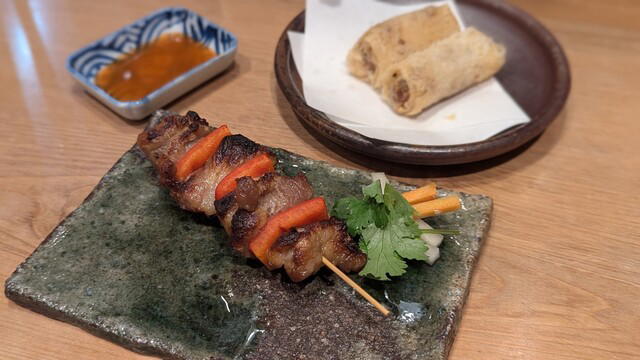
Tokyo’s side-street drinking culture shifts after the daytime trade thins. Shutters, narrow lanes, and compact counters create a Tokyo rhythm with less ceremony than polished dining districts, more appetite than office-district drinking, and a bias toward places where a short stop can become the evening. Tsukiji Nagaya 6-7-7 belongs to tachinomi, the standing-bar format built around pace, proximity, and a direct relationship between drink and small plates.
The point is not simply that fugu is part of the identity; Tokyo has more formal fugu rooms for that. The shift is format: pufferfish, usually tied to specialist settings, careful sequencing, and seated dinner tempo, is pulled into a stand-up bar where Japanese sake carries particular weight. The room fits a broader Tokyo pattern, where seafood culture survives not only in sushi counters and tempura rooms, but in tighter, flexible formats suited to efficient eating.
Fugu without the hushed course-room script
Fugu in Tokyo can read as formal theatre: controlled preparation, careful service, and a meal structure that asks diners to settle in. Tsukiji Nagaya 6-7-7 compresses that language into tachinomi. Dishes arrive as drinking companions rather than a long progression, and the bar’s category list, stand-up bar, fugu, and Japanese sake bar, tells the story better than a broad cuisine label.
That distinction matters for travellers comparing Tokyo’s many dining registers. Sushi Keita and Tempura Kurokawa sit in conventional Tokyo specialism: counter craft, reserved time, and a clear division between meal and drink. Fugu Club miyawaki Bettei, named in the same orbit, signals the more formal fugu lineage. Tsukiji Nagaya 6-7-7 moves differently: standing-drink grammar, where value lies in speed, focus, and reading the room without turning dinner into an event.
The Tabelog 100 - Tachinomi - 2025 selection is the key public credential, placing the bar in a competitive category Tokyo drinkers take seriously. Tachinomi is not novelty in Japan; it is a discipline with etiquette. Space is tight, orders should be considered, and lingering carries different social weight than in a lounge or hotel bar. A 3.62 Tabelog score in this category, attached to a standing bar rather than a destination dining room, points to local confidence over international spectacle.
The ritual is quick, close, and drink-led
Standing bars strip away the buffer between guest, counter, and kitchen. In a city with deep counter-dining culture, that intimacy can look familiar, but the expectation differs. Formal tasting meals ask diners to surrender to a sequence; tachinomi asks them to participate with pace. The drink order sets the tone. Japanese sake is the natural anchor here, and food acts as precise support rather than a parade of signatures.
Tokyo shapes the reading. The city’s dining identity is often reduced to a few famous genres, but the better lens is logistical: narrow supply chains, compact premises, and quick decisions. A standing fugu bar fits that character better than a grand dining room. It gives Tokyo’s seafood association a nighttime register, less polished than luxury districts, more specialised than a generic izakaya, and more adult than the visual-café circuit found elsewhere in the city.
The JPY 3,000 - JPY 3,999 spending band clarifies the role. This is not priced against luxury sushi counters or high-tempura rooms. It sits near the serious-drinking end of casual dining: structured enough to justify a detour for category-minded visitors, not so formal that the night must revolve around it. For how these formats sit beside sushi, curry, yakitori, cafés, and drinking-led rooms, use Our full Tokyo restaurants guide.
How to place it in a Tokyo eating itinerary
The useful comparison is not with every Tokyo restaurant, but with the traveller’s decision. If the night calls for a seated, higher-commitment meal, Takeno, Rokkan, Sushi Keita, or Tempura Kurokawa point elsewhere. If the aim is to see how Tokyo drinking culture absorbs specialist food without losing informality, Tsukiji Nagaya 6-7-7 is sharper. This is not old-market nostalgia, but a contemporary version of a working Tokyo habit.
The room’s constraints are the editorial point. A stand-up bar format makes it better for small adult groups than sprawling social dinners. The etiquette is closer to a tactical stop than a fixed, lingering appointment. Its Tokyo setting makes it easy to pair with a larger evening, but the bar rewards diners who accept standing rather than forcing it into a conventional restaurant plan.
Tokyo’s range means this place should be read alongside, not above, other specialisms. For seafood-and-grill context, compare the city’s appetite for direct cooking in other Tokyo dining rooms; for meat-focused counter culture, look to the city’s specialist counters; for late-night urban energy, Tokyo has plenty of other registers; and for curry as specialist genre, the city shows how narrow dining can become without losing seriousness.
Travellers building a Japan-wide itinerary should treat this as one point in a larger drinking-and-dining culture. The standing-bar rhythm contrasts with destination meals, café-led stops, regional rooms, and immigrant-dining threads elsewhere in Japan. The point is not to rank those genres against each other, but to understand how compact, drink-led formats give Tokyo another way to express specialism.
The wider planning layer matters in Tokyo because dinner rarely stands alone. Hotels shape the night’s geography, bars determine whether a standing meal becomes a longer crawl, and experiences fill the daytime around it. Use Tokyo hotel, bar, winery, and experience guides for that map. For overseas parallels in Japanese drinking culture, the grammar changes again once it leaves Japan.
Credentials Lens
Comparable venues at a glance for context.
| Venue | Cuisine | Price | Awards | Notes |
|---|---|---|---|---|
| Tsukiji Nagaya 6-7-7This venue (the venue you are viewing) | Fugu-focused Japanese Tachinomi | $30–50 | Tabelog 100 #33 | Not listed |
| Tonkatsu Maruichi (とんかつ丸一) | Tonkatsu Specialist | $20–30 | Tabelog 100 #44 | Fukagawa |
| 久丹 | Modern Classic Kappo-Kaiseki | $300–500 | 2 Michelin Stars · La Liste Top Restaurants | Chūō |
| . 鮪と炭火焼き うお炭 秋葉原店 | Maguro and Charcoal-Grilled Fish Izakaya | $50–100 | Not listed | Chiyoda |
| 根深 | Modern French Vegetable Omakase | $100–150 | Michelin Plate | Minato |
| Teuchi Soba Ginnan | Handmade Soba & Sake | $20–30 | Tabelog 100 #65 | Kōtō |
Recognition history
Dated appearances from independent guides and award organizations, with the underlying list record or original source where available.
Tabelog 100 #33 · No. 33
Tabelog · Tabelog 100 - Tachinomi - 2025
Continue exploring
More in Tokyo
Restaurants in Tokyo
All restaurants in Tokyo →
Bars in Tokyo
All bars in Tokyo →





Details
- Cozy
- Lively
- Classic
- Intimate
- Date Night
- After Work
- Solo
- Special Occasion
- Group Dining
- Standalone
- Design Destination
- Private Dining
- Sake Program
- Beer Program
- Sustainable Seafood
- Local Sourcing
- A La Carte
- Counter Dining
- Sake
- Beer
- Pescatarian Friendly
- Allergy Accommodating