Our verdict
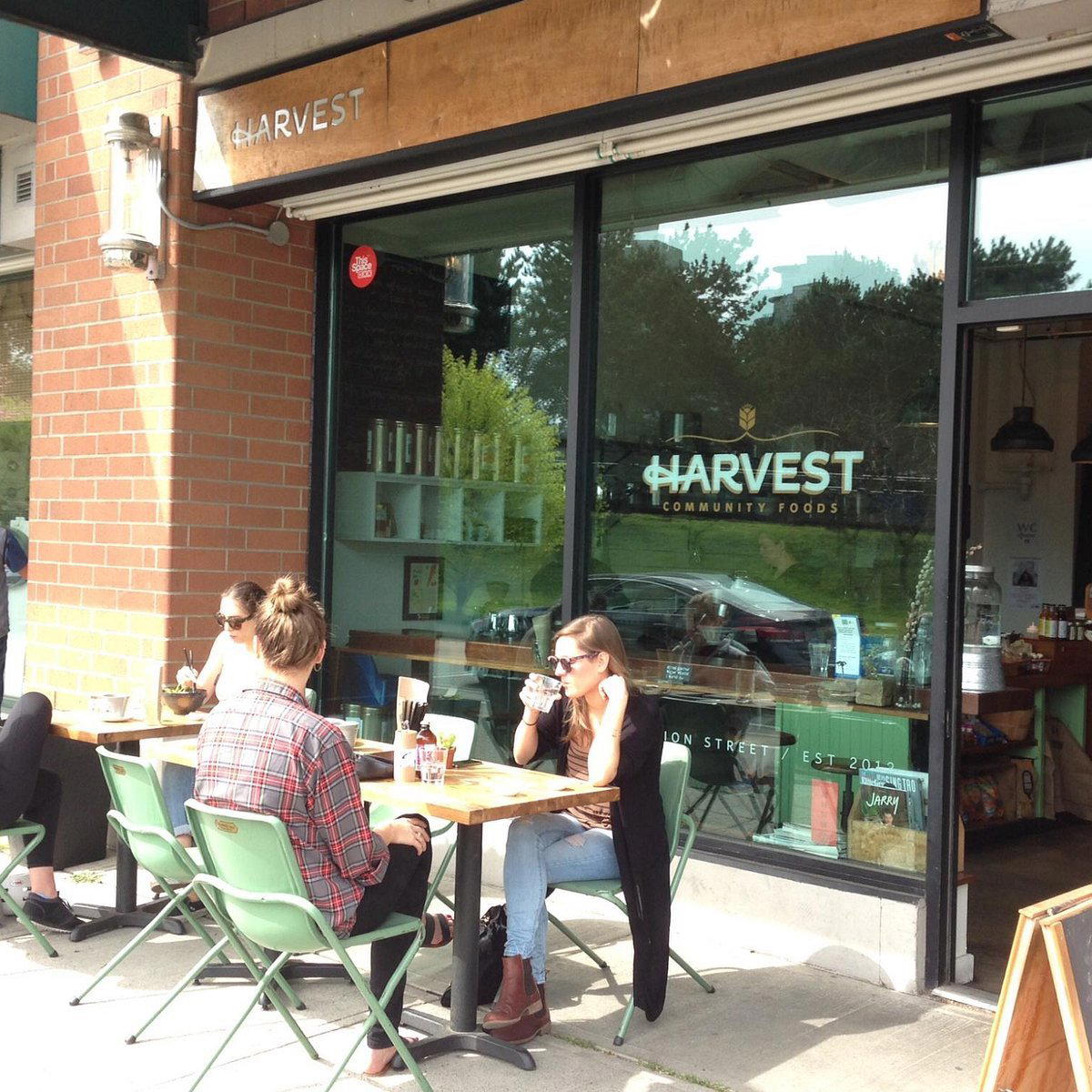
On Union Street in Vancouver's Strathcona neighbourhood, Harvest Community Foods operates at the intersection of local sourcing and community-scale hospitality. The kitchen draws on British Columbia's agricultural depth, positioning itself within the city's broader conversation about ingredient provenance and accessible, technique-driven cooking. It occupies a distinct tier from the high-spend counters of the downtown core.

Pearl is the En Primeur Club membership app — saves, bookings, and concierge access live there. Same editors, same standards.
- Address
- 243 Union St, Vancouver, BC V6A 2Z7, Canada
- Phone
- (604) 682-8851
- Hours
- Mon ClosedTue–Sun 12–6:30 PM
- Website
- harvestunion.ca
- Directions
- Get directions
The menu
What to order
- Pork Ramen
- Rice Noodle w/ Charred Chili+Almond Hazelnut Sauce
- Squash and Miso Broth
Union Street, Strathcona, and the Sourcing Conversation
Vancouver's east side has spent the better part of a decade redefining what community-scale dining looks like. Strathcona, the city's oldest neighbourhood, sits between the port's industrial edge and the residential blocks that have quietly accumulated some of the more interesting food operations in the region. The address at 243 Union Street places Harvest Community Foods inside that shift: a part of the city where the dining conversation tends to centre on provenance, accessibility, and the gap between farm-level production and what actually reaches the plate.
That conversation matters more here than in, say, the $$$$-tier corridors where restaurants like AnnaLena, Kissa Tanto, or Masayoshi operate. Harvest Community Foods addresses a different reader: someone interested in the ingredient first, the technique second, and the bill as something that does not require advance savings.
British Columbia's Agricultural Depth as a Kitchen Foundation
The editorial angle worth understanding here is not simply that BC produces good produce — the province's agricultural output across the Fraser Valley, the Okanagan, and the coastal fisheries is among the most varied in Canada. The more interesting question is what a kitchen does when it has direct access to that depth and chooses to foreground it rather than use it as backdrop for technique-heavy presentations.
The model being practised at Harvest Community Foods falls into a category that has gained traction across North American cities over the past decade: sourcing-first, method-light kitchens where the supply chain is as much a part of the identity as the menu itself. This is distinct from the high-production indigenous-ingredient programs at restaurants like Tanière³ in Quebec City or the hyper-local farm-to-table formats at Eigensinn Farm in Singhampton, both of which apply considerable technical infrastructure around their local sourcing. The Strathcona approach tends to be quieter: fewer theatrical elements, more direct lines between producer and plate.
Across Canada, kitchens that have made this choice well — from Restaurant Pearl Morissette in Lincoln to Fogo Island Inn Dining Room in Joe Batt's Arm, tend to build their credibility around consistency of supply relationships rather than seasonal novelty for its own sake. The point is not to chase what is briefly available but to understand what the land around a given city reliably produces and build a menu logic around that reliability.
Where This Sits in Vancouver's Dining Tiers
Vancouver's restaurant scene has compressed into a recognisable structure over the past several years. At the top tier sit the high-spend destination rooms: Barbara, iDen & QuanJuDe Beijing Duck House, and the Michelin-recognised counters that draw visitors specifically for a single meal. Below that tier, a middle band of serious neighbourhood restaurants operates with tighter margins, shorter menus, and a more local repeat-customer model. Harvest Community Foods occupies this second tier, where the metrics that matter are not awards or media cycles but whether the kitchen can hold a sourcing relationship across seasons and whether the room works for the surrounding community week after week.
That is a harder thing to sustain than it sounds. The restaurants that do it well in other cities, Cafe Brio in Victoria is a useful BC comparison, tend to have a specific kind of operational discipline that does not photograph well but creates loyalty over time. For a broader view of where this kind of operation fits within Vancouver's full dining range, the EP Club Vancouver restaurants guide maps the competitive set across price points and cuisines.
The Local Ingredients, Global Technique Question
The intersection of imported cooking methods and local produce is one of the more generative tensions in contemporary Canadian restaurants. At Alo in Toronto or Jérôme Ferrer - Europea in Montréal, the answer leans heavily toward European classical training applied to Canadian produce. At places like Narval in Rimouski, the technique is more restrained and the ingredient is asked to do more of the work.
Harvest Community Foods sits closer to the latter end of that spectrum. The name itself signals the orientation: harvest first, production second. In a city where kitchens like Lazy Bear in San Francisco have shown how community-format dining can carry serious culinary ambition, and where Le Bernardin in New York City represents the far end of what technique alone can achieve, the middle ground occupied by sourcing-forward community kitchens has its own logic and its own audience. That audience is not choosing between Harvest and a Michelin counter. It is choosing between Harvest and not eating particularly well that day.
Planning Your Visit
Harvest Community Foods is located at 243 Union Street in Strathcona, accessible from downtown Vancouver by a short drive east or via transit along the Main Street corridor. Given the sparse publicly available data visitors are advised to check current hours and booking requirements directly, as community-scale kitchens in this neighbourhood frequently adjust their formats seasonally. The Strathcona area rewards arriving on foot or by bike: the surrounding blocks contain several other independent food operations that reflect the same sourcing orientation. For context on the broader neighbourhood dining scene, and for comparison venues across price tiers, the EP Club Vancouver guide provides a mapped overview. Those planning a longer BC food itinerary might also consider The Pine in Creemore and Busters Barbeque in Kenora as reference points for how sourcing-first kitchens operate at different scales and in different regional contexts.
Frequently asked questions
What part of town is Harvest Community Foods in?
Harvest Community Foods is located at 243 Union St, Vancouver, BC V6A 2Z7, Canada, Vancouver.
How does Harvest Community Foods reflect Vancouver's broader BC sourcing movement?
Located at 243 Union Street in Strathcona, one of Vancouver's oldest and most agriculturally connected neighbourhoods, Harvest Community Foods operates within a district that has long hosted urban agriculture projects and food cooperatives. The Fraser Valley, within roughly an hour of the city, supplies some of Canada's most productive farmland, giving Vancouver's community-scale kitchens a sourcing depth that few Canadian cities can match. This positioning places Harvest squarely within a generation of east-side venues treating BC's agricultural output as the structural foundation of the menu rather than a marketing point.
What do regulars order at Harvest Community Foods?
The kitchen's documented focus on BC-sourced ingredients means the menu tracks seasonal availability across the Fraser Valley and surrounding growing regions rather than anchoring to year-round fixed items. Regulars at community-scale venues like this tend to follow what's market-fresh rather than returning for a single signature dish. The most reliable approach is to ask staff what has come in recently, as the sourcing model at 243 Union Street is designed around that kind of direct conversation.
Do I need a reservation for Harvest Community Foods?
Reservation policy details are not listed on a public booking platform for this address, which is consistent with how many community-dining operations in Strathcona run their floor. Walk-in availability at Union Street kitchens of this scale tends to be more accessible than destination-tier Vancouver restaurants, though weekend evenings in the neighbourhood have tightened considerably as east-side dining has grown in profile. Contacting the venue directly before visiting is the practical route.
Same-City Peers
| Venue | Cuisine | Price | Awards | Notes |
|---|---|---|---|---|
| Harvest Community FoodsThis venue — the venue you are viewing | Local Noodle Soups & Asian Comfort Food | $20–30 | Not listed | Not listed |
| AnnaLena | Modern Canadian Tasting Menu | $100–150 | 1 Michelin Star · World's 50 Best #35 | Contemporary |
| iDen & QuanJuDe Beijing Duck House | Beijing Roast Duck Fine Dining | $100–150 | 1 Michelin Star | Chinese |
| Kissa Tanto | Japanese-Italian Fusion | $100–150 | 1 Michelin Star · La Liste Top Restaurants | Fusion |
| Masayoshi | Modern Japanese Omakase | $200–300 | 1 Michelin Star | Japanese |
| Published on Main | Contemporary Canadian | $150–200 | 1 Michelin Star · World's 50 Best #17 | Contemporary |
Continue exploring
More in Vancouver
Restaurants in Vancouver
Browse all →
Bars in Vancouver
Browse all →

Details
- Cozy
- Rustic
- Casual Hangout
- Standalone
- Farm To Table
- Local Sourcing
- Organic
- A La Carte
- Vegetarian Friendly
- Vegan Options
Current opening hours
- Monday
- Closed
- Tuesday
- 12–6:30 PM
- Wednesday
- 12–6:30 PM
- Thursday
- 12–6:30 PM
- Friday
- 12–6:30 PM
- Saturday
- 12–6:30 PM
- Sunday
- 12–6:30 PM
Hours can change for holidays and private events. Last verified .
Cozy neighborhood spot with a welcoming, community-focused atmosphere and focus on seasonal, sustainable produce.