Our verdict
Kokoro Tokyo Mazesoba serves Tokyo-style mazesoba at 551 Seymour St, with Zenbu Mazesoba and Niku Mazesoba, plus a sake program for lunch or dinner.

Pearl is the En Primeur Club membership app, where members save venues, book tables and use the concierge.

Mazesoba in the Downtown Grid
On Seymour Street, in the dense commercial corridor that connects Vancouver's financial district to its entertainment strip, Kokoro Tokyo Mazesoba occupies a direct premise: it serves mazesoba, and it does little else. That focus is worth pausing on. The Vancouver ramen scene has expanded considerably over the past decade, with shops pulling in influences from Hakata tonkotsu to Sapporo miso to Hong Kong-style wonton noodle traditions. Mazesoba sits adjacent to that conversation but is technically distinct from it. Where ramen is defined by broth, mazesoba is defined by its absence. The noodles arrive in a bowl with a concentrated sauce, fat-rendered tare, and a series of toppings that are mixed tableside before eating. The result is a denser, more direct expression of flavour than broth-based formats allow.
That format originated in Nagoya and Tokyo, and its spread to Vancouver is part of a wider pattern in which Japanese regional noodle traditions that were once inaccessible outside their originating cities have found footholds in North American markets with sizable Japanese-diaspora and food-curious dining populations. Vancouver, with one of Canada's largest Japanese-Canadian communities and a concentrated restaurant culture in its downtown and East Side neighbourhoods, has been an early landing point for several of those formats.
The Logic of Broth-Free Noodles
Understanding what mazesoba asks of its ingredients clarifies why sourcing matters more in this format than in many broth-based noodle dishes. In ramen, a long-cooked broth can mask inconsistency in individual components. In mazesoba, there is no broth to integrate and smooth. The sauce, the noodle texture, the fat quality, and each topping element are all directly exposed to the palate. A poorly rendered pork fat or a noodle with insufficient chew registers immediately because nothing covers it.
That structural transparency places higher demands on the kitchen's sourcing decisions. The noodle itself, typically thick and wavy and produced to hold sauce rather than float in liquid, needs to be calibrated precisely. The tare, often built from soy and mirin with additions of vinegar or chili oil depending on the house style, needs to be consistent batch to batch because the diner is mixing it in rather than tasting it diluted across a bowl of soup. When the format works as intended, the result is a bowl that reads as concentrated and intentional. When any element is off, the diner notices.
This is the culinary context in which Kokoro Tokyo Mazesoba operates at 551 Seymour Street. The venue positions itself within the Tokyo mazesoba tradition specifically, signalling an alignment with the style that emerged from the Japanese capital's specialist shops rather than the Nagoya origination point of the broader category.
Where It Sits in Vancouver's Japanese Dining Tiers
Vancouver's Japanese restaurant scene is stratified across several distinct tiers. At the upper end, omakase and kaiseki-influenced counters like Masayoshi operate at high price points with extended tasting formats, and fusion approaches like those at Kissa Tanto blend Japanese technique with Italian or other Western frameworks. Kokoro Tokyo Mazesoba belongs to a different tier entirely: the specialist casual format, where the value proposition is depth in a narrow category rather than breadth across a menu.
That tier has significant precedent in Japan, where single-discipline noodle shops with decades of operation and fierce local loyalties are common. In Vancouver, the model is less established, which makes the presence of a dedicated mazesoba operation on a downtown block something worth registering. The contemporary dining options nearby, including AnnaLena and Barbara, occupy a different segment of the market, oriented around tasting menus and ingredient-forward contemporary Canadian cooking. Kokoro operates at the intersection of accessibility and specificity, a format that is easy to enter but requires some knowledge to fully appreciate.
Across Canada, other cities have their own reference points for specialist Japanese dining. In Toronto, Alo anchors the fine-dining tier, while Montreal's Europea represents a parallel strain of European-influenced ambition. Quebec City's Taniêre³ has pushed local-sourcing frameworks in a different direction. None of these, however, operate in the same category as a downtown mazesoba shop, which is the point: Kokoro is drawing from a tradition with its own internal logic, independent of the broader Canadian fine-dining conversation.
For diners who have experience with Chinese duck preparations, the iDen & QuanJuDe Beijing Duck House on the Vancouver scene offers an instructive parallel: a format-specific restaurant where a single dish or preparation anchors the entire identity. That category discipline, uncommon in North American dining culture, is exactly what Kokoro brings to the mazesoba space.
Know Before You Go
- Address: 551 Seymour St, Vancouver, BC V6B 3H6, Canada
- Cuisine: Tokyo-style mazesoba (broth-free noodles)
- Booking: Walk-in format typical for this category; specific reservation policy not confirmed
- Price: Price range not confirmed; mazesoba specialists in this tier typically sit in the accessible casual range
- Nearest context: Downtown Vancouver, between the financial district and entertainment corridor
- Further reading: Our full Vancouver restaurants guide
Frequently asked questions
What makes Kokoro Tokyo Mazesoba worth seeking out?
The case for visiting rests on format specificity. Dedicated mazesoba operations are uncommon in Vancouver's noodle scene, which skews heavily toward broth-based ramen. The broth-free format exposes each ingredient more directly than soup-based noodles do, which means the kitchen has limited room to mask inconsistency. For diners familiar with the Japanese noodle spectrum, a shop that commits entirely to one format, rather than offering mazesoba as a single menu item alongside ramen, represents a different kind of kitchen discipline. The broader Vancouver dining scene, from omakase counters like Masayoshi to fusion-led venues like Kissa Tanto, offers more elaborate options; Kokoro operates on a different register of value.
Is Kokoro Tokyo Mazesoba allergy-friendly?
Mazesoba typically contains soy-based tare, wheat noodles, and pork-derived fat as core components, which means the format presents challenges for diners with gluten, soy, or pork restrictions. If you have dietary requirements, contacting the venue directly before visiting is the appropriate step. Vancouver Public Health resources and the venue itself are the authoritative sources on current ingredient handling and cross-contamination practices.
How does Kokoro Tokyo Mazesoba fit into Vancouver's broader noodle scene?
Vancouver's noodle culture draws from Japanese, Chinese, Vietnamese, and Korean traditions, with ramen shops representing the most developed Japanese noodle segment. Mazesoba, as a broth-free subcategory, occupies a niche within that broader field, and a dedicated mazesoba shop is a less common proposition than a multi-format ramen operation. Kokoro's positioning on Seymour Street, in a high-foot-traffic downtown block, places it in reach of both office lunch crowds and evening diners exploring the area around the entertainment district. For a fuller picture of where it sits relative to the city's dining options, see our complete Vancouver restaurants guide.
Cost Snapshot
Comparable venues nearby, for context on price, style, and recognition.
| Venue | Cuisine | Price | Notes |
|---|---|---|---|
| Kokoro Tokyo MazesobaThis venue (the venue you are viewing) | Tokyo-Style Mazesoba | $20–30 | Not listed |
| Kamei on Broadway | Authentic Japanese Fusion Sushi | $30–50 | Fairview, Authentic Japanese Fusion Sushi |
| Nomo Nomo | Yoshoku Japanese Snack Bar | Not listed | Commercial, Yoshoku Japanese Snack Bar |
| Vegan Shoku Japanese Restaurant | Vegan Japanese Sushi | $20–30 | Arbutus Ridge, Vegan Japanese Sushi |
| Maruhachi Ra-men Westend | Creamy Chicken Broth Ramen (Tori-Paitan) | $10–20 | West End, Creamy Chicken Broth Ramen (Tori-Paitan) |
| Guu with Garlic | Authentic Japanese Izakaya with Garlic Specialties | $30–50 | West End, Authentic Japanese Izakaya with Garlic Specialties |
Continue exploring
More in Vancouver
Restaurants in Vancouver
All restaurants in Vancouver →
Bars in Vancouver
All bars in Vancouver →
Details
- Trendy
- Modern
- Industrial
- Casual Hangout
- After Work
- Open Kitchen
- Sake Program
- A La Carte
Current opening hours
- Monday
- 11 AM–9:30 PM
- Tuesday
- 11 AM–9:30 PM
- Wednesday
- 11 AM–9:30 PM
- Thursday
- 11 AM–9:30 PM
- Friday
- 11 AM–10 PM
- Saturday
- 11:30 AM–10 PM
- Sunday
- 11:30 AM–9:30 PM
Hours can change for holidays and private events. Hours as of .
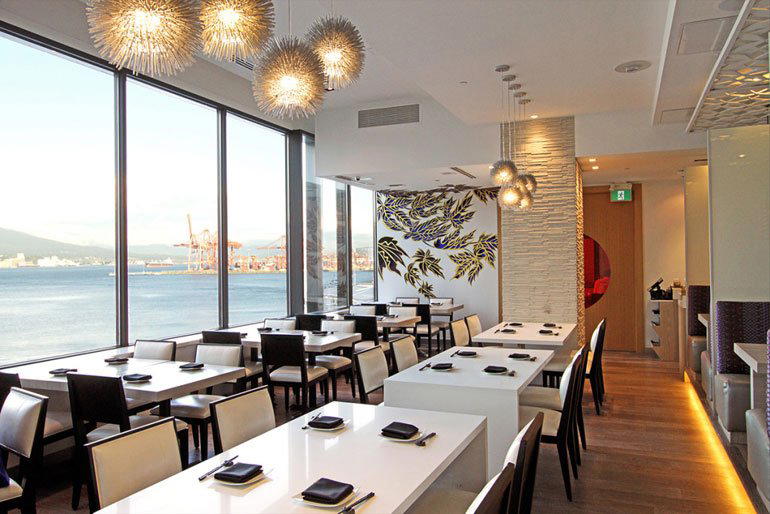
Casual and lively atmosphere with train station theme, brick walls, street signs, and metal handle bars, reminiscent of a European restaurant in Japan.