Ramen Danbo on Robson Street brings Fukuoka-style tonkotsu ramen to one of Vancouver's most walkable dining corridors. The format is casual and counter-friendly, placing it firmly in the accessible end of the city's Japanese dining spectrum — a deliberate contrast to the omakase-driven rooms that define the upper tier of Vancouver's Japanese restaurant scene.
Pearl is the En Primeur Club membership app — saves, bookings, and concierge access live there. Same editors, same standards.
- Address
- 1333 Robson St, Vancouver, BC V6E 1C6, Canada
- Phone
- +16045598112
- Website
- ramendanbo.com
- Directions
- Get directions
 Saves & bookings on Pearl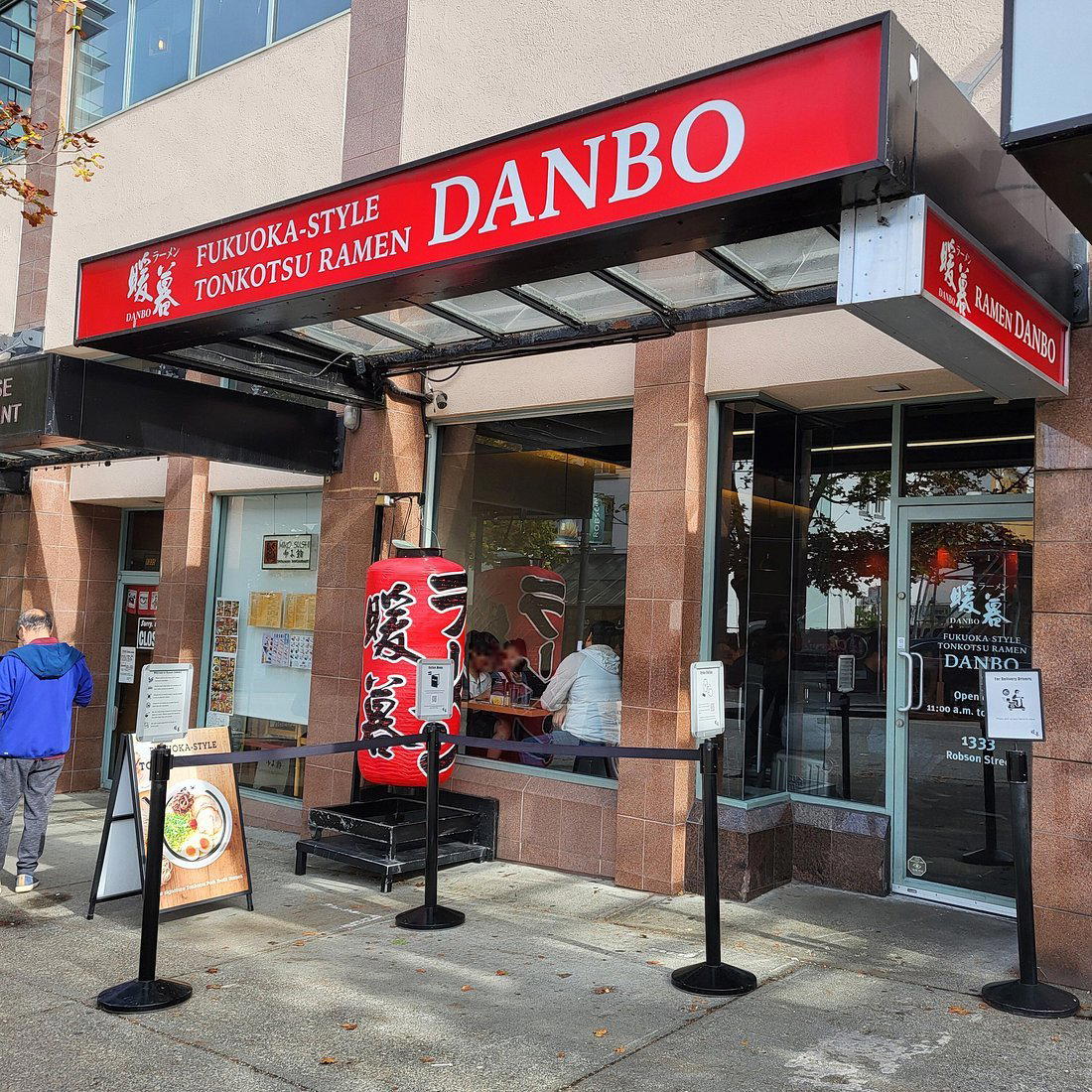
Tonkotsu in the West End: What Ramen Danbo Represents on Robson Street
Robson Street occupies a particular position in Vancouver's dining geography. Stretching through the West End toward downtown, it functions as one of the city's most walkable food corridors, drawing a mix of residents, visitors, and office workers who want something direct and satisfying rather than ceremonial. Ramen sits naturally in that context. The Japanese noodle format — specifically the Fukuoka-derived tonkotsu style — has moved steadily through North American cities over the past two decades, shifting from novelty to expectation in urban centres with strong Japanese communities or high culinary literacy. Vancouver qualifies on both counts.
Ramen Danbo is a Japanese chain with roots in Fukuoka, the city on Kyushu island historically credited with developing the pork-bone broth that defines tonkotsu ramen. That geographic origin matters editorially: Fukuoka's ramen culture is specific, built around milky, collagen-heavy broth, thin straight noodles, and a set of table condiments that allow diners to adjust seasoning and richness incrementally. When a Fukuoka-lineage brand expands internationally, the reference point is that precise tradition rather than a generalized idea of Japanese noodles. It places Ramen Danbo in a different conversation than, say, the broader Japanese dining scene represented by Masayoshi ($$$$ · Japanese), where the register is omakase and the price tier is significantly higher.
The Sensory Register: Counter Seating, Steam, and the Logic of the Bowl
The defining sensory experience of a tonkotsu ramen counter is not subtle. The smell of pork bone broth, rendered for hours until the collagen breaks down and the liquid turns opaque, arrives before the bowl does. At Ramen Danbo's Robson Street location, the room operates at a tempo that suits the format: relatively compact, counter-friendly, with the kitchen close enough that the sounds of preparation are part of the atmosphere rather than background noise. This is intentional in the genre. The open kitchen format common to serious ramen shops functions as a transparency signal, letting the pace and heat of production be visible to the diner.
Customization is structural to the Danbo experience. The chain's format allows diners to specify broth richness, noodle firmness, and seasoning levels at the point of ordering, a practice drawn directly from how Fukuoka ramen shops operate for regulars. It is a system that rewards repeat visits, because the bowl calibrated to your preference on the fifth visit is a different object than the default bowl on the first. That model contrasts with the fixed-menu logic of the high-end Japanese rooms in Vancouver, such as Kissa Tanto ($$$$ · Fusion), where the kitchen's decisions take precedence over the diner's adjustments.
Where Ramen Danbo Sits in Vancouver's Japanese Dining Spectrum
Vancouver's Japanese restaurant scene is unusually stratified. At the upper end, omakase counters and chef-driven rooms operate at price points and booking windows that reflect their international peer sets. At the accessible end, ramen, izakaya, and casual sushi formats serve a much broader daily audience. Ramen Danbo occupies the casual tier with some authority derived from its Fukuoka pedigree, distinguishing it from the many independent ramen shops in the city that draw on mixed or undefined regional references.
That said, the competitive set for Ramen Danbo is not the fine-dining rooms. It is the cluster of ramen specialists across Robson, Denman, and the broader West End who are competing on broth quality, noodle texture, and value. Against that peer group, the chain's standardization is both an asset and a constraint: diners get a consistent product rooted in a documented tradition, but the ceiling on distinction is lower than at an independent kitchen with more latitude to experiment.
For diners moving between price tiers on a Vancouver visit, Ramen Danbo functions well as a counterpoint to the evening meals at AnnaLena ($$$$ · Contemporary) or Barbara ($$$$ · Contemporary). A lunch at Danbo before a dinner reservation at a higher-tier room is a logical sequencing that keeps spending calibrated across a multi-day itinerary.
Across Canada's broader dining scene, the casual Japanese format Ramen Danbo represents sits at a very different register from the destination restaurants that define the country's culinary reputation, from Alo in Toronto and Tanière³ in Quebec City to the agricultural seriousness of Eigensinn Farm in Singhampton. That contrast is not a criticism, it reflects how a functioning food culture actually operates, with multiple tiers serving distinct needs.
The Robson Street Context: Foot Traffic, Access, and When to Go
The 1333 Robson Street address places the restaurant in a section of the street with consistent pedestrian flow, close to the West End's residential density and within walking distance of the downtown core and Stanley Park approach. That positioning suits the walk-in, low-ceremony format the ramen genre requires. Ramen is not a reservation-first category in most markets, and Robson Street's foot-traffic patterns mean peak times, lunch and early evening, typically see queues, while late-afternoon visits or later weeknight arrivals tend to be more relaxed.
Vancouver's ramen culture also skews toward the colder months, when the steam and weight of a tonkotsu bowl carry more contextual logic. The city's mild but wet winters make October through March the period when demand across all ramen formats in the city runs highest. Visiting during summer remains worthwhile, but the sensory alignment between weather and bowl is strongest in the grey season.
For diners also exploring the Chinese dining end of Vancouver's Asian restaurant spectrum, the contrast with a room like iDen & QuanJuDe Beijing Duck House ($$$$ · Chinese) is informative: both draw on specific regional traditions from Asia, but operate at very different price points and ceremony levels. Vancouver's strength as a dining city is partly that it sustains both ends of that spectrum with genuine depth.
Know Before You Go
- Address: 1333 Robson St, Vancouver, BC V6E 1C6
- Neighbourhood: West End / Robson Street corridor
- Format: Counter and table seating, casual walk-in ramen
- Cuisine origin: Fukuoka-style tonkotsu ramen
- Booking: Walk-in format; reservations not standard for this category
- Leading timing: Late afternoon or later weeknights for shorter waits; October to March for seasonal alignment
- Price tier: Accessible; significantly below the $$$$-tier Japanese dining rooms in the city
- More Vancouver dining: Our full Vancouver restaurants guide
How Ramen Danbo Vancouver compares with similar nearby venues.
| Venue | Cuisine | Price |
|---|---|---|
| Sushi Hyun | Japanese | $$$$ |
| Kirin Seafood | Chinese Seafood | Not listed |
| Sushi Bar Maumi | Japanese | $$$$ |
Continue exploring
More in Vancouver
Restaurants in Vancouver
Browse all →
Bars in Vancouver
Browse all →
At a Glance
- Trendy
- Cozy
- Lively
- Casual Hangout
- Solo
- After Work
- Open Kitchen
- Sake Program
Current opening hours
- Monday
- 11 AM–11 PM
- Tuesday
- 11 AM–11 PM
- Wednesday
- 11 AM–11 PM
- Thursday
- 11 AM–11 PM
- Friday
- 11 AM–11 PM
- Saturday
- 11 AM–11 PM
- Sunday
- 11 AM–11 PM
Hours can change for holidays and private events. Last verified .
Compact, bustling space with quick service and lines of ramen enthusiasts, offering comforting warmth from steaming bowls in a no-frills, authentic Japanese noodle bar atmosphere.
Know Before You Go
- Getting there
- 1333 Robson St, Vancouver, BC V6E 1C6, Canada