Hans Kebab on Leopoldstraße sits at the accessible end of Munich's street-food spectrum, where the question is less about atmosphere and more about what lands on the plate. On a boulevard that runs from student bars to gallery cafés, a kebab counter operating at this address is positioning itself against a specific kind of daily hunger. Arrive with low ceremony and clear expectations.
Pearl is the En Primeur Club membership app — saves, bookings, and concierge access live there. Same editors, same standards.
- Address
- Leopoldstraße 182, 80804 München, Germany
- Phone
- +49 89 12628130
- Website
- hanskebab.de
- Directions
- Get directions
 Saves & bookings on Pearl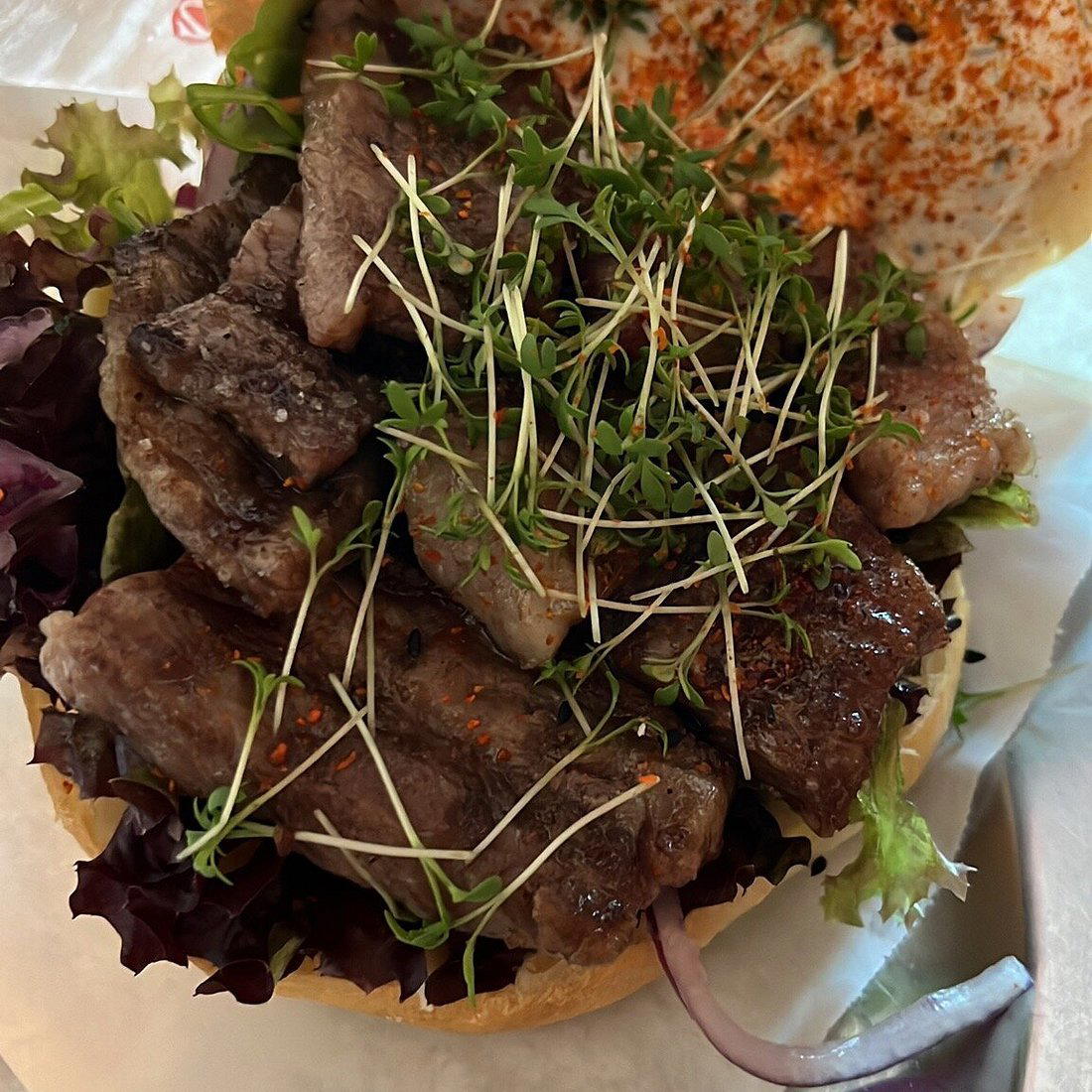
Leopoldstraße and the Street-Food Tier That Feeds Munich Daily
Leopoldstraße is one of Munich's longer north-south arteries, running through Schwabing with a mix of pavement cafés, late-night bars, and the kind of quick-service counters that survive on foot traffic and repeat custom rather than destination dining. At number 182, Hans Kebab occupies this functional tier of the city's eating habits. That positioning matters because Munich's dining conversation tends to cluster around either its fine dining rooms or its established beer hall culture, leaving the middle and street-food layers less examined. A kebab counter on this strip is not competing with Tantris or Atelier. It is competing with every other fast-service option within a ten-minute walk, and the standard against which it should be judged is consistency, speed, and the integrity of its core product.
Menu Architecture: What a Kebab Counter Reveals by What It Offers
The structure of a kebab menu is one of the more honest formats in street food. There is almost nowhere to hide. A döner-focused counter typically builds its offer around three or four decisions: the bread (dürüm wrap or pide pocket), the protein (beef, chicken, or mixed), the garnish line, and the sauce. Each of those decisions is either done with care or it isn't. Freshly baked bread or mass-produced flatbread, rotisserie meat carved to order or pre-cut and sitting, sauce made in-house or from a catering container, the gap between those options is immediately legible to anyone eating the result.
Germany's kebab tradition, shaped heavily by the Turkish-German communities that built it over decades, has its own regional inflections. Berlin's version tends toward a heavily loaded pide with aggressive sauce. Munich's street-food scene has historically been more conservative in its fast-food diversity, with the beer hall and pretzel culture taking up cultural oxygen that other cities spread more evenly. That makes a well-executed kebab counter on a Munich street more notable than it might appear on the surface, because the competition for that specific product type is less saturated here than in the German north.
For context, the broader German dining scene ranges from three-Michelin-star operations like Aqua in Wolfsburg and Vendôme in Bergisch Gladbach down through every register of casual and street-level eating. The street-food tier is not lesser, it is simply operating by different rules, where volume, pricing transparency, and daily consistency carry more weight than any single polished service.
The Schwabing Context: Who Is Eating Here and Why
Schwabing has a long history as Munich's student and creative quarter, and Leopoldstraße runs through its commercial spine. The demographic eating on this street at any given hour skews younger and more cost-conscious than the clientele at Alois - Dallmayr Fine Dining or Tohru in der Schreiberei, both of which occupy the city's fine dining register at the €€€€ price tier. A kebab counter here is feeding people between lectures, after late shifts, or on the way between one place and another. That is a specific and legitimate function, and venues that do it reliably build the kind of local loyalty that no marketing effort can manufacture.
The address at number 182 puts Hans Kebab toward the northern stretch of Leopoldstraße. That portion of the street sees consistent foot traffic without the concentrated tourist density of areas closer to the English Garden entrances. For anyone exploring Munich's eating habits beyond the postcard version, this part of Schwabing is worth understanding as a neighbourhood that feeds itself rather than performing for visitors.
Placing Hans Kebab in Munich's Broader Eating Pattern
Munich's restaurant coverage tends to follow its awards trail. The city has a respectable concentration of Michelin-recognised rooms, including JAN and the long-established Tantris, and those venues draw the majority of editorial attention. What gets less coverage is the daily eating infrastructure that most residents actually depend on. The kebab counter, the Turkish bakery, the Vietnamese soup kitchen, these form a parallel food economy that is no less meaningful for being less photographed.
Germany's street-food kebab sector is, by any measure, a serious culinary tradition. The döner kebab as adapted in Germany is a distinct product from its Turkish origins, shaped by decades of local modification and regional preference. Evaluating a counter like Hans Kebab means applying the right frame: is the product made with attention, does the rotation of meat suggest regular throughput rather than sitting meat, and does the garnish reflect any seasonal or quality consideration? Those are the questions that separate a functional counter from a good one.
For readers building a broader picture of German dining at every level, the EP Club guide covers venues from Schwarzwaldstube in Baiersbronn and Waldhotel Sonnora in Dreis at the fine dining end through to street-level addresses like this one. The full picture of how a city eats includes all of those registers. Our full Munich restaurants guide maps the city across price tiers, neighbourhoods, and cuisine types for anyone planning a visit with more than one meal in mind.
For international reference points on what rigorous menu architecture looks like at any price tier, the approach taken by venues like Atomix in New York City or Le Bernardin in New York City, where every element of the offer is deliberately structured, is instructive. The principles are the same regardless of price point: know what you are making, make it consistently, and let the product speak without decoration.
Planning a Visit
The restaurant is located at Leopoldstraße 182, 80804 München, in the Schwabing district of Munich. The address is reachable by U-Bahn via the Münchner Freiheit station on the U3 and U6 lines, making it direct to combine with other stops in the northern part of the city. The restaurant is walk-in friendly, with casual dress appropriate. It is open Mon-Sat 9 AM-9 PM and Sun 1-9 PM, making it easy to plan around a daytime or early evening stop.
The Essentials
Comparable venues nearby, for context on price, style, and recognition.
| Venue | Cuisine | Price |
|---|---|---|
| Hans KebabThis venue — the venue you are viewing | Freimann, Premium Turkish Döner Kebab | $$ |
| Bosporus | Au, Turkish Döner Kebab | $$ |
| Pera Meze | Isarvorstadt, Modern Turkish Meze | $$ |
| Taverna Diyar | Haidhausen, Kurdish-Turkish | $$ |
| Restaurant Merhaba | Haidhausen, Traditional Turkish | $$ |
| Bowls & Blenders | Neuhausen, Fresh Superfood Bowls | $$ |

At a Glance
- Trendy
- Lively
- Casual Hangout
- After Work
- Standalone
- Local Sourcing
Current opening hours
- Monday
- 9 AM–9 PM
- Tuesday
- 9 AM–9 PM
- Wednesday
- 9 AM–9 PM
- Thursday
- 9 AM–9 PM
- Friday
- 9 AM–9 PM
- Saturday
- 9 AM–9 PM
- Sunday
- 1–9 PM
Hours can change for holidays and private events. Last verified .
Modern fast-casual spot blending Turkish tradition with premium ingredients in a trendy atmosphere.