Our verdict
On Aungier Street in Dublin 2, La Strada by Manifesto occupies a stretch of the city where neighbourhood Italian has quietly become a serious dining category. The Manifesto group brings a sourcing-led approach to pasta and Italian staples, positioning the restaurant within Dublin's growing tier of casual-format venues where ingredient provenance is treated with the same seriousness as fine dining rooms nearby.

Pearl is the En Primeur Club membership app — saves, bookings, and concierge access live there. Same editors, same standards.
- Address
- 10A Aungier St, Dublin 2, D02 XT98, Ireland
- Phone
- +353894695983
- Hours
- Mon ClosedTue–Sat 12–11 PMSun 1–10 PM
- Website
- opentable.com
- Directions
- Get directions
- Booking
- Book on OpenTable
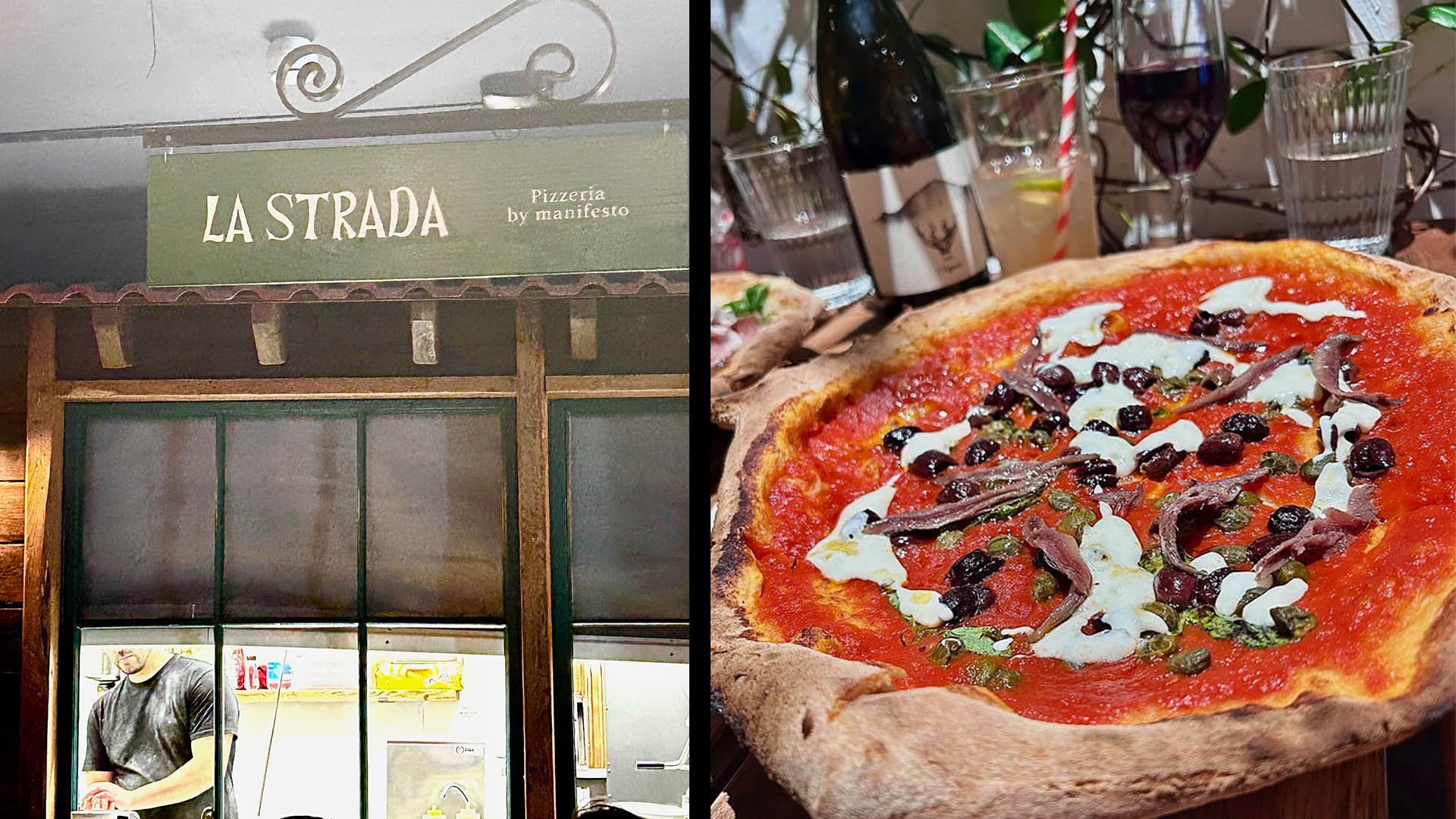
Aungier Street and the Italian Question
Aungier Street sits at the edge of Dublin 2's Georgian grid, close enough to the canal to feel slightly removed from the tourist circuits of Temple Bar and Grafton Street, but busy enough to sustain a genuine local dining scene. The street has accumulated a critical mass of independent restaurants over the past decade, and the building at 10A is the kind of address that rewards foot traffic from the surrounding offices and apartments rather than destination diners arriving by taxi. Walking in from the street, the name above the door connects immediately to the Manifesto group, which has built a reputation in Dublin for Italian-leaning food that takes sourcing seriously without theatricalising it.
That context matters. Italian cuisine in Dublin spent years occupying two distinct tiers: high-end trattorias serving expense-account pasta, and budget-led chains. The middle ground, where ingredient quality and casual format coexist, remained underdeveloped relative to what London or Edinburgh were building in the same period. La Strada by Manifesto sits in that middle ground, and its location on Aungier Street places it near a cluster of independently minded restaurants that have collectively shifted what Dublin diners expect at the neighbourhood level. For a broader map of where this fits in the city's dining picture, the full Dublin restaurants guide gives useful orientation.
What the Manifesto Name Signals
In Dublin's restaurant shorthand, the Manifesto group carries a specific meaning. It signals Italian food anchored in sourced ingredients rather than manufactured sentiment about nonna's kitchen. The group's approach reflects a wider shift visible across Irish cities: chefs and operators who came of age watching the farm-to-table wave in the United States and the ingredient-obsession of London's Italian revival, then applied those instincts to the Irish supply chain, which is itself unusually strong for a small island economy.
Ireland's dairy, beef, and coastal produce have long attracted international attention, but the application of that supply chain to Italian formats is a more recent development. Restaurants like Bastible on Leonard's Corner have demonstrated that modern Irish sourcing can underwrite ambitious cooking without defaulting to fine dining prices or format. La Strada operates in a different register, Italian rather than broadly modern Irish, but the underlying logic is similar: start with provenance, build the menu around what that provenance allows.
Across Ireland, this sourcing-led model has produced some of the country's most interesting restaurants at multiple price points. Aniar in Galway applies Connacht produce to a tasting menu format. dede in Baltimore uses West Cork's coastal larder as the foundation for its menu. Chestnut in Ballydehob has built a following around hyper-local West Cork ingredients. The thread connecting these venues and La Strada by Manifesto is a shared conviction that the sourcing decision is also a culinary argument.
Italian Format, Irish Context
The specific challenge of Italian food in Ireland is that the cuisine travels with strong expectations attached. Diners arrive knowing what pasta should taste like, having eaten it in Rome or Bologna or at countless Italian restaurants in London, and the comparison is immediate. That pressure cuts both ways: it creates a high baseline for technical execution, but it also rewards operators who source Italian staples with care, because the difference between imported dried pasta and a well-made fresh alternative, or between generic imported tomatoes and a properly sourced variety, is perceptible to anyone who has eaten widely.
The Manifesto group's positioning at La Strada suggests an awareness of this expectation. The venue name itself, La Strada, references the Italian tradition of street-level, accessible eating, which sits at some distance from the formal dining approach of Dublin's two-Michelin-star rooms. Patrick Guilbaud and Chapter One by Mickael Viljanen occupy the leading formal tier. Glovers Alley and D'Olier Street represent the modern tasting-menu format. La Strada by Manifesto positions below that bracket in format and price, which is where the sourcing argument becomes commercially meaningful: it is the difference between a venue that charges for ambiance and one that puts its budget into what arrives on the plate.
Sourcing as the Editorial Argument
In cities where ingredient provenance has become a genuine marker of quality rather than a marketing line, the question of where food comes from has shifted from background detail to front-of-house talking point. Dublin has moved in that direction, slower than London or Copenhagen but faster than the city's reputation sometimes suggests. The restaurants that have built durable followings in the past five years, across formats from casual to tasting-menu, share a sourcing discipline that was less common a decade ago.
For Italian-format venues specifically, this means decisions about flour, cured products, olive oil, and aged cheeses that are invisible to most diners but determine whether the food reads as authentic or approximate. The venues in Ireland that have managed this most successfully, including Liath in Blackrock, Terre in Castlemartyr, and Bastion in Kinsale, tend to be the ones where the sourcing story is legible in the cooking rather than confined to a website paragraph. La Strada by Manifesto's connection to the broader Manifesto group suggests a similar orientation.
Internationally, the benchmark for sourcing-led Italian-adjacent cooking at accessible price points is set by venues that treat their supply chain as a competitive advantage rather than a cost to be minimised. Le Bernardin in New York City demonstrates what ingredient-first thinking produces at the fine dining end; Atomix, also in New York, shows how sourcing can become a structural element of a restaurant's identity rather than a secondary consideration. At the neighbourhood Italian level, the ambition is different in scale but the underlying discipline is the same.
Practical Notes
La Strada by Manifesto is at 10A Aungier Street, Dublin 2, a ten-minute walk from St Stephen's Green and accessible from several bus routes running through the south city centre. The Aungier Street corridor also connects easily to venues across Dublin 2 and Dublin 8, making it a reasonable anchor point for an evening that starts or ends elsewhere in the neighbourhood. For venues that represent the wider Irish restaurant scene worth knowing alongside La Strada, Campagne in Kilkenny, Homestead Cottage in Doolin, House in Ardmore, and Lady Helen in Thomastown each represent different expressions of what Irish hospitality looks like beyond the capital. Booking details, current hours, and any seasonal menu changes are best confirmed directly with the venue before visiting.
Frequently asked questions
Would La Strada by Manifesto be comfortable with kids?
La Strada by Manifesto sits on Aungier Street in Dublin 2, a neighbourhood that draws a mixed crowd rather than a purely fine-dining one. Italian formats — pasta-led menus, relaxed pacing — tend to work well for families, though the venue's specific seating and noise levels are worth checking directly before booking with young children.
What's the vibe at La Strada by Manifesto?
The Manifesto group in Dublin has built its reputation on Italian food that feels considered rather than performative, and La Strada carries that tone onto Aungier Street. Expect something closer to a neighbourhood trattoria in spirit than a formal dining room — ingredients-forward, unhurried, with the slightly off-circuit feel that comes with a Dublin 2 address a few blocks from the canal.
How does La Strada by Manifesto fit into Dublin's Italian restaurant scene?
Dublin's Italian offering has historically skewed toward mid-market crowd-pleasers, which makes the Manifesto group's sourcing-led approach a meaningful departure. It occupies the same conversation as other Dublin independents prioritising provenance over formula.
What's the must-try dish at La Strada by Manifesto?
The Manifesto group's broader identity is built around sourced Italian cooking, which typically means pasta and seasonal produce are the focal points worth paying attention to when the menu lands on your table.
Where is La Strada by Manifesto in Dublin?
La Strada by Manifesto is located at 10A Aungier St, Dublin 2, D02 XT98, Ireland, Dublin.
Is La Strada by Manifesto reservation-only?
Given the venue's location in Dublin 2 and the Manifesto group's following in the city, reservations in advance are a reasonable precaution, particularly for weekend sittings.
What's La Strada by Manifesto best at?
Within the Manifesto group's Dublin operation, the consistent argument is Italian cooking anchored in ingredient sourcing rather than adaptation for local palates. La Strada on Aungier Street extends that position — the kitchen's focus is on letting provenance do the editorial work, which in practice means the pasta and produce-driven dishes are where the approach is most legible.
A Quick Peer Check
Comparable venues nearby, for context on price, style, and recognition.
| Venue | Cuisine | Price | Notes |
|---|---|---|---|
| La Strada by ManifestoThis venue — the venue you are viewing | Authentic Italian Wood-Fired Pizzeria | $20–30 | Not listed |
| Doppio Zero | Authentic Italian Pizza & Pasta | Not listed | North City |
| Virtuoso Restaurant | Authentic Italian | $20–30 | North City |
| Momento | Authentic Italian Trattoria | $20–30 | Saint Kevin'S |
| Hidden By One Society | Italian Brunch & Pizza | $20–30 | Arran Quay B |
| La Cosa Nostra | Authentic Italian Pizza & Pasta | $20–30 | Merchants Quay A |
Continue exploring
More in Dublin
Restaurants in Dublin
Browse all →
Bars in Dublin
Browse all →

Hotels in Dublin
Browse all →
Wineries in Dublin
Browse all →
Details
- Cozy
- Elegant
- Intimate
- Classic
- Date Night
- Casual Hangout
- Open Kitchen
- A La Carte
- Vegan Options
Current opening hours
- Monday
- Closed
- Tuesday
- 12–11 PM
- Wednesday
- 12–11 PM
- Thursday
- 12–11 PM
- Friday
- 12–11 PM
- Saturday
- 12–11 PM
- Sunday
- 1–10 PM
Hours can change for holidays and private events. Last verified .
Casual Neapolitan terrazza with pretty fitout evoking a Naples backstreet, cozy and seductive Italian atmosphere.