Our verdict
"Hand Roll, Warsaw by Praesens. The little restaurant serves an unusual take on Japanese food. Rolls, which would be normally sliced into maki, are served as whole, wrapped in paper. Apart from the typical ingredients (fish, shrimps, tempura, vegetables) the rolls can also include raspberries, or chilli. It’s certainly a healthier alternative to fast food, and a breath of fresh air to the local street food scene."

Pearl is the En Primeur Club membership app — saves, bookings, and concierge access live there. Same editors, same standards.
- Address
- Francuska 32, 03-905 Warszawa, Poland
- Phone
- +48 576 032 777
- Hours
- Daily 11 AM–10 PM
- Website
- handroll.pl
- Directions
- Get directions
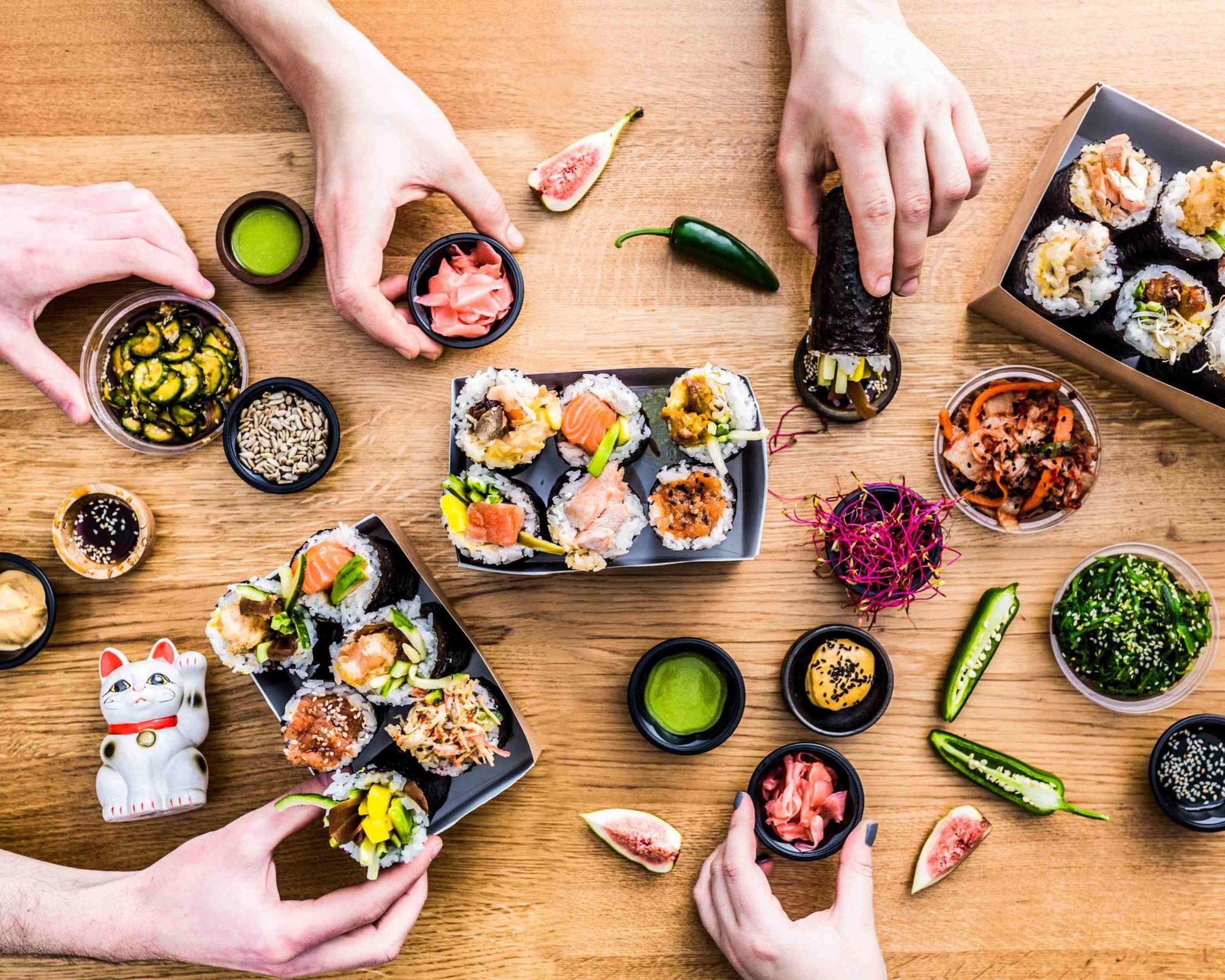
Japanese Craft on the Praga Side
Francuska Street in Warsaw's Praga-Południe district carries a quieter register than the city centre's more conspicuous dining corridors. The neighbourhood has been accumulating serious restaurants at a pace that suggests consolidation rather than hype, and Handroll at number 32 belongs to that pattern: a focused concept with a clear format in a part of the city that rewards deliberate exploration rather than casual foot traffic. For anyone tracking Warsaw's evolution from a post-transition dining scene into something with genuine range and conviction, the eastbank address is no longer a detour. It is a destination in its own right, alongside neighbours like hub.praga, which has anchored modern cuisine in the district for several years.
The Handroll as a Format: What the Concept Signals
Across Japanese dining culture, the handroll, or temaki, occupies a specific and underappreciated position. It is not the omakase counter with its extended sequence and ceremonial pacing, nor is it the izakaya's loose, sociable disorder. The handroll format demands precision in a compressed window: nori, rice, and filling must be consumed within seconds of assembly to preserve the contrast between crisp seaweed and seasoned grain. That structural constraint imposes a discipline on the kitchen that mirrors more overtly demanding Japanese formats while remaining accessible in price and pace.
In Tokyo and New York, dedicated handroll bars have emerged as a distinct category over the past decade, positioning between the fast-casual sushi roll and the high-ceremony omakase. Warsaw's arrival at this format is a meaningful data point. It reflects a dining public that has moved past introductory Japanese food and now supports specialist sub-formats. The trajectory echoes what happened in London and Berlin when ramen gave way to tsukemen specialists, or when izakayas fragmented into yakitori-only houses. Warsaw is at that inflection point now, and Handroll on Francuska is part of the evidence.
Cultural Roots and What They Require
The handroll's technical demands place real obligations on any kitchen attempting the format seriously. Sushi rice, or shari, requires a calibrated balance of rice vinegar, salt, and sugar, and the grain must be held at body temperature throughout service. Nori degrades fast in humidity, which is why the leading handroll operations assemble to order and insist on immediate consumption. These are not atmospheric choices; they are structural requirements that distinguish a format-disciplined operation from a novelty menu addition.
Poland's relationship with Japanese cuisine has deepened considerably since the mid-2010s. Warsaw now supports a range of Japanese-adjacent formats, from traditional sushi to ramen, with increasing granularity at each tier. That maturation creates the conditions in which a handroll-specific venue becomes viable. For context on where sushi craft sits elsewhere in Poland, Nare Sushi in Skórzewo represents a different regional interpretation of Japanese tradition, while at the international reference end of the spectrum, Le Bernardin in New York City demonstrates how Japanese technique can migrate into fine dining seafood at scale.
Where Handroll Sits in Warsaw's Current Scene
Warsaw's restaurant scene in 2024 has a recognizable upper tier, anchored by modern European and modern Polish formats operating at the €€€ price band. Venues like Rozbrat 20 and NUTA represent that category's ambitions, while alewino occupies the more accessible modern Polish bracket. Handroll's format places it in a different competitive logic: not competing directly with tasting-menu operations but rather with casual-premium concepts where format specificity and ingredient quality do the differentiation work. That is a viable and growing niche in the city. Baken operates in a comparable register of focused, ingredient-led informality.
Beyond Warsaw, the broader Polish dining conversation now includes destinations that would have seemed unlikely even five years ago. Bottiglieria 1881 in Kraków has set a benchmark for fine dining ambition outside the capital, while Arco by Paco Pérez in Gdańsk imports Michelin-level Spanish technique to the north coast. Muga in Poznań adds another node to what is becoming a genuinely distributed national scene rather than a Warsaw-centric one. Handroll's position in this landscape is not as a fine dining statement but as a format-disciplined specialist that the Warsaw market can now sustain.
Planning Your Visit
Handroll is located at Francuska 32 in the Praga-Południe district, on Warsaw's right bank. The Praga side is most directly accessed via tram along Targowa or from Dworzec Wileński station, making it practical from the city centre without requiring a taxi. As with most specialist dining concepts in Warsaw's eastern neighbourhoods, booking in advance is advisable, particularly for evenings and weekends when neighbourhood traffic is at its highest. For a wider orientation to eating and drinking across the capital, our full Warsaw restaurants guide covers the city by neighbourhood and format, including other Praga-side openings worth scheduling around a visit to Franciscka.
Elsewhere in Poland, coastal and mountain alternatives offer different rhythms: Bar Przystań in Sopot handles seafood in a Baltic register, Giewont in Kościelisko provides a Tatra counterpoint, and OK Wine Bar in Wrocław anchors a different kind of specialist format in the south-west. La Cucina Ristorante in Gdańsk and Luneta and Lorneta Bistro Club in Ciekocinko extend the options further along the northern coast. For those benchmarking against the outer edge of international dining ambition, Lazy Bear in San Francisco shows what a format-committed, experience-first concept can achieve at the highest level of execution. And if Kraków is on the itinerary alongside Warsaw, Ariel in Krakow offers historical and cultural depth of a different kind entirely.
Frequently asked questions
What's the address for Handroll?
Handroll is located at Francuska 32, 03-905 Warszawa, Poland, Warsaw.
How does Handroll in Praga-Południe compare to Warsaw's central Japanese restaurants?
Handroll at Francuska 32 operates on Warsaw's right bank, physically and conceptually at a distance from the city centre's more established Japanese addresses. The Praga-Południe location places it within a neighbourhood that has built a coherent dining identity in recent years, making it a complement to rather than a substitute for central Warsaw's Japanese offer. The temaki-specific format is itself a differentiator in a scene still dominated by broader sushi menus.
What should I order at Handroll?
The format at Francuska 32 is built around temaki: nori cones assembled to order and eaten immediately before the seaweed loses its crispness. That time-sensitive logic means ordering in small rounds rather than all at once is the disciplined approach. Let the counter guide the sequence if staff offer one.
What's the best way to book Handroll?
No third-party reservation platform is currently listed for Handroll, so direct contact with the venue at Francuska 32 in Praga-Południe is the practical route. For a format-specific counter of this kind, arriving early or checking in advance on walk-in availability is advisable, particularly on weekends.
What makes Handroll worth seeking out?
Warsaw's Japanese dining offer has broadened considerably, but a venue built entirely around the temaki format remains a specific proposition rather than a general sushi menu. The Praga-Południe address on Francuska 32 also places it within a right-bank dining cluster that operates at a remove from the city centre's more crowded corridors.
Is Handroll allergy-friendly?
Soy, sesame, fish, and shellfish are structurally embedded in Japanese handroll cuisine and should be assumed present across the menu at Francuska 32.
Is a meal at Handroll worth the investment?
The temaki format typically positions below omakase counters and multi-course Japanese restaurants on price, which makes Handroll at Francuska 32 a lower-commitment entry point into Warsaw's Japanese dining scene. Format discipline, specifically rice quality and nori timing, is where the value argument is won or lost at any serious handroll venue.
Cost and Credentials
Comparable venues nearby, for context on price, style, and recognition.
| Venue | Cuisine | Price | Notes |
|---|---|---|---|
| HandrollThis venue — the venue you are viewing | Handroll Sushi | $10–20 | Not listed |
| Tomo Sushi | Traditional Japanese Sushi | $20–30 | Ujazdow, Traditional Japanese Sushi |
| Yak&Yeti | Indian and Thai Restaurant | $10–20 | Czerniakow, Indian and Thai Restaurant |
| Baken | Artisanal Bakery & Breakfast | $10–20 | Srodmiescie, Artisanal Bakery & Breakfast |
| Żebra i Kości | Modern Polish Steakhouse and Barbecue | $30–50 | Srodmiescie, Modern Polish Steakhouse and Barbecue |
| Dom Funkcjonalny | Rotating international and plant-based cuisines | Not listed | Saska Kępa, Rotating international and plant-based cuisines |
Details
- Trendy
- Modern
- Minimalist
- Casual Hangout
- A La Carte
Current opening hours
- Monday
- 11 AM–10 PM
- Tuesday
- 11 AM–10 PM
- Wednesday
- 11 AM–10 PM
- Thursday
- 11 AM–10 PM
- Friday
- 11 AM–10 PM
- Saturday
- 11 AM–10 PM
- Sunday
- 11 AM–10 PM
Hours can change for holidays and private events. Last verified .
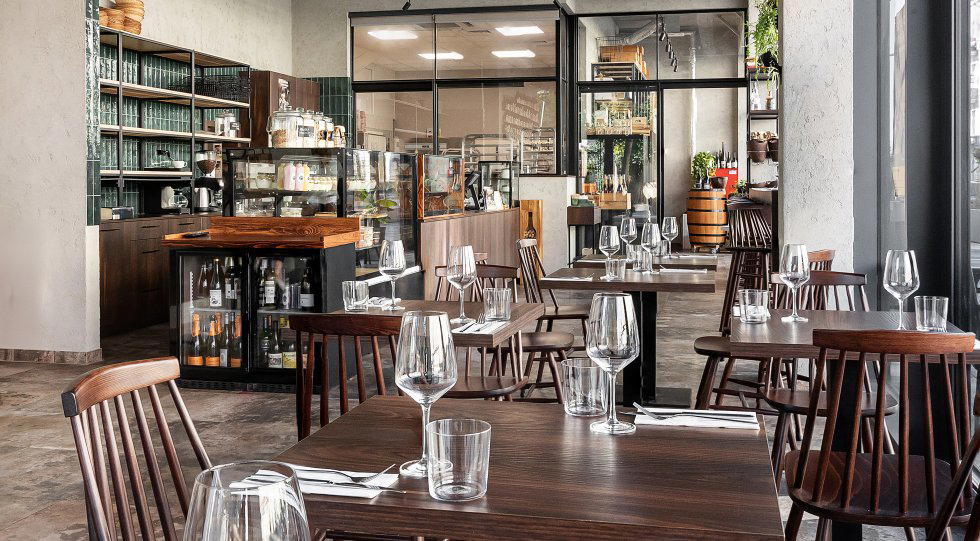
Casual grab-and-go spot with limited seating and a fresh, fast-paced street food atmosphere.