



NUTA Warsaw elevates fine dining through Chef Andrea Camastra's Michelin-starred fusion of Italian, Polish, and Asian influences, where molecular gastronomy meets multicultural mastery. This sophisticated restaurant near Plac Trzech Krzyży features innovative tasting menus, an on-site culinary laboratory, and notable wine pairings in an elegant, jazz-inspired setting.
Pearl is the En Primeur Club membership app — saves, bookings, and concierge access live there. Same editors, same standards.
- Address
- LOKALIZACJA: ETHOS, plac Trzech Krzyży 10/14, 00-499 Warszawa, Poland
- Phone
- +48 570 007 772
- Website
- nuta.com.pl
- Directions
- Get directions
 Saves & bookings on Pearl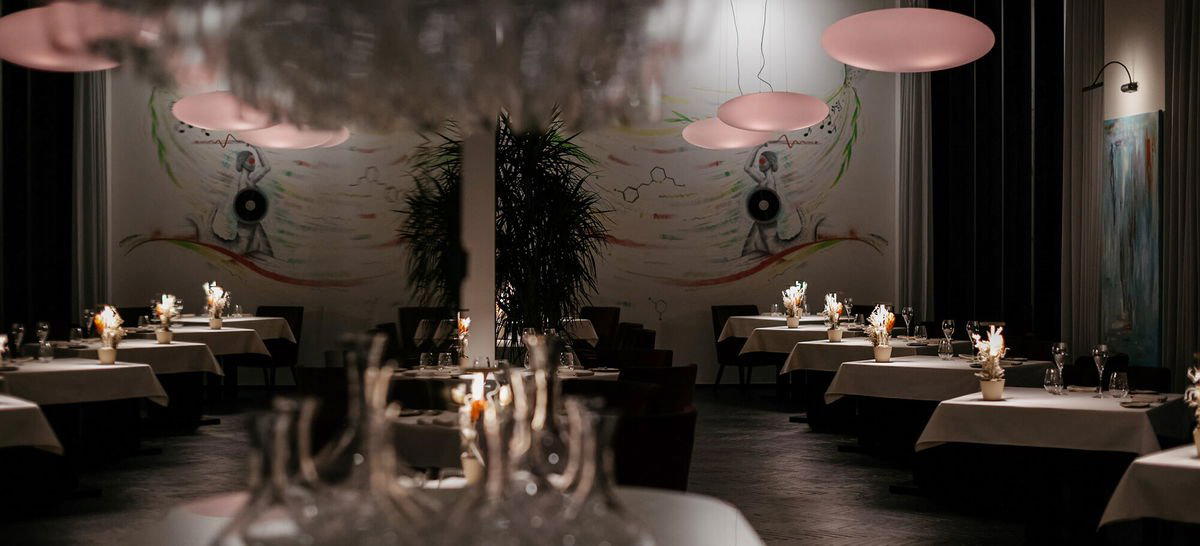
Fine Dining at Plac Trzech Krzyży: Where Warsaw's Creative Scene Concentrates
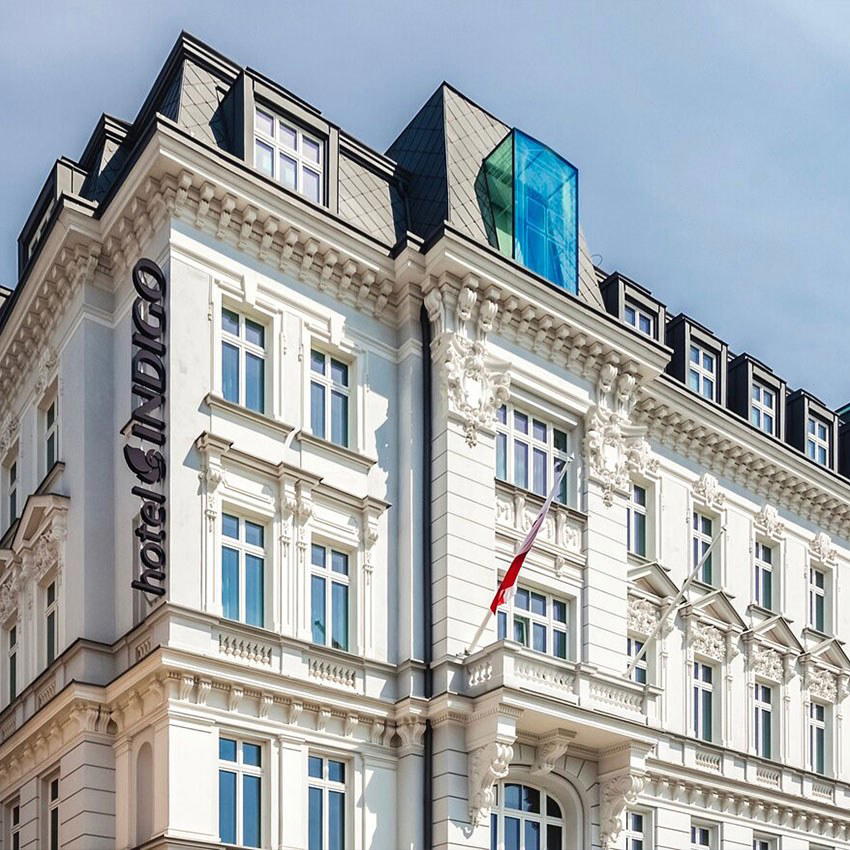
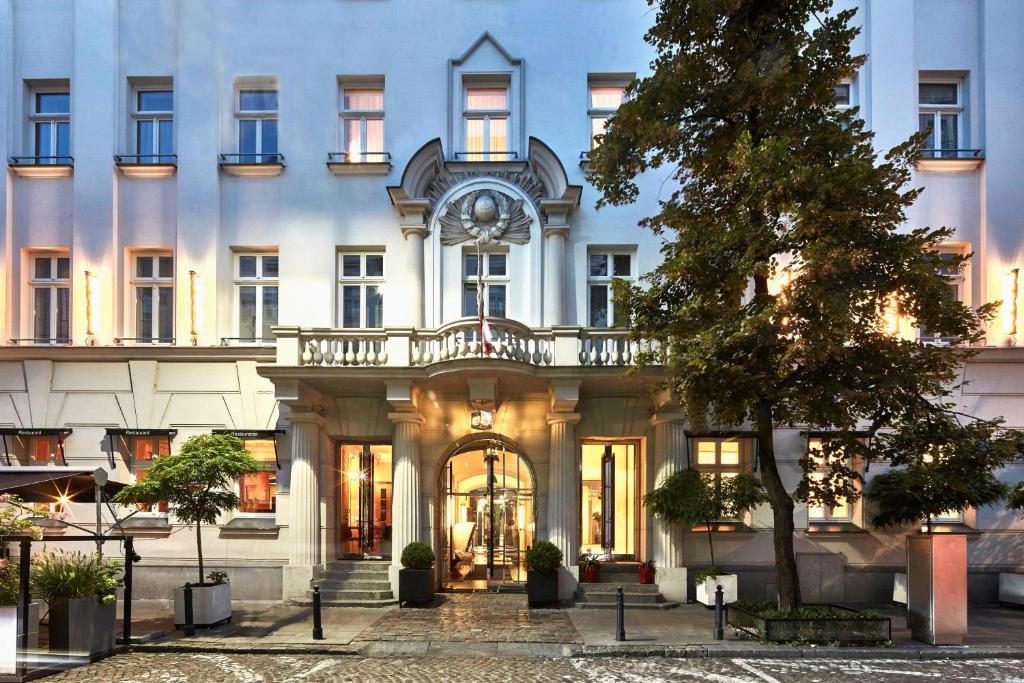
Plac Trzech Krzyży sits at the edge of Śródmieście, a square whose neoclassical symmetry gives way, on closer inspection, to one of Warsaw's most concentrated stretches of serious dining and hospitality. The Ethos building, which anchors the north side of the square, houses NUTA inside its lower levels, a location that places the restaurant at the intersection of old-city formality and the more restless creative energy that has redefined Polish fine dining over the past decade. Arriving here in the evening, when the square's lamps reflect off the stone facades, the setting quietly signals that what follows will sit closer to the ceremonial than the casual end of Warsaw's dining spectrum.
What Warsaw's Michelin Map Reveals About This Tier
Poland's Michelin footprint remains small relative to its Central European peers, which means each starred address carries disproportionate weight in shaping how the city's fine dining identity reads internationally. NUTA holds one Michelin star, awarded in both 2024 and 2025, and registers 87 points on La Liste's 2025 global ranking. At the €€€€ price tier, it occupies a bracket above the city's strong middle ground of €€€ modern Polish operators such as Bez Gwiazdek and hub.praga, and well above the accessible modern Polish registers at venues like alewino. That stratification matters: Warsaw diners booking at this level are not making the same calculation as those choosing a neighbourhood bistro. They are selecting within a small cohort of addresses where the kitchen's creative programme, wine approach, and service formality operate as a unified proposition.
The creative fine dining category in Warsaw differs from its equivalents in Paris or Milan because it sits inside a city still consolidating its restaurant culture. Addresses like Rozbrat 20 and Bar Rascal work different registers, the former operating a more polished Modern European format, the latter representing the natural wine and small-plates current that has grown rapidly across Polish cities. NUTA sits apart from both of these, in a narrower corridor where the format is explicitly tasting-menu-led and the creative ambition is evaluated against European comparators rather than domestic ones alone.
Andrea Camastra and the Cross-Border Creative Tradition
The contemporary European creative fine dining category has a recognisable genealogy: Italian- or French-trained chefs who carry technique from one culinary tradition into the ingredients and cultural context of another. That pattern, which produces restaurants like Enrico Bartolini in Milan or Alléno Paris au Pavillon Ledoyen at the summit of the French register, plays out at a different scale in Warsaw, where the pool of international talent with deep Polish roots is smaller. Andrea Camastra, an Italian chef who has spent many years based in Poland and worked through France, represents an unusual convergence: the technical formation of a French-Italian fine dining background applied to a Polish context, with enough time in-country to have built real familiarity with local sourcing and seasonal rhythms. His previous project, the Senses restaurant in Warsaw, held Michelin recognition before NUTA, which means the current address is not a first chapter but a continuation and refinement of an already-credentialed creative programme.
That lineage matters more than biography. The relevant point is that kitchens shaped by cross-border formation tend to produce menus where the logic of the technique is explicit, where what is on the plate reflects a clear set of decisions about sourcing, preparation, and restraint rather than a default to national cuisine clichés. Warsaw's other starred-adjacent creative addresses are operating inside similar frameworks, but NUTA's particular formation makes the Italian-French-Polish triangle its distinctive operating axis.
Sourcing, Restraint, and the Sustainability Frame in Polish Creative Fine Dining
Across Central and Northern Europe, the creative fine dining category has moved steadily toward a model in which ingredient sourcing and waste reduction are not peripheral concerns but structural ones. The Nordic wave, which reshaped how European restaurants think about locality and seasonality, has had measurable downstream effects on the Polish kitchen: more chefs sourcing from named regional producers, more menus built around what is available at a given moment rather than a fixed repertoire maintained year-round. In Warsaw, this shift is visible across price tiers, but it carries interpretive weight at the summit of the market, where the decision to work with a Polish forager or a small dairy farm rather than an imported ingredient is also a statement about what the cuisine is for.
At the €€€€ level, sustainability in a kitchen like NUTA's is most legibly expressed through the quality of ingredient selection, the discipline of the tasting menu format, and the coherence of sourcing decisions across the menu as a whole. Waste reduction at this tier tends to manifest not in visible zero-waste theatre but in the structural logic of multi-course formats where trim and secondary cuts are absorbed into stocks, sauces, and preparatory elements rather than discarded. That is a quieter form of environmental discipline, less photogenic than a front-of-house composting display, but more deeply embedded in kitchen practice. The tasting menu format itself, common across European creative fine dining from Bottiglieria 1881 in Kraków to Arco by Paco Pérez in Gdańsk, is structurally more efficient than à la carte in terms of ingredient planning: the kitchen knows what it is serving, can source accordingly, and can calibrate quantities to actual covers rather than speculative demand.
Poland's agricultural geography gives creative fine dining kitchens here a genuine sourcing advantage in certain categories: game, freshwater fish, root vegetables, wild herbs, and dairy from small producers in the Mazovian and Podlasian regions all represent a differentiated ingredient base relative to what a comparably ambitious kitchen in Western Europe would have access to locally. That advantage becomes visible at the plate level when the kitchen is attentive to it, and NUTA's positioning within the creative fine dining category suggests an orientation toward exactly that kind of ingredient specificity.
Planning a Visit: Practicalities at Ethos, Plac Trzech Krzyży
NUTA is located inside the Ethos building at plac Trzech Krzyży 10/14, Warsaw, a well-connected address in central Warsaw. At the €€€€ tier The restaurant operates in a bracket where advance reservations are standard practice. Those assembling a fuller Warsaw programme will find complementary registers across the city, from the modern European approach at Rozbrat 20 to the natural wine and small plates focus at Bar Rascal. For context on the broader Polish fine dining circuit, addresses like Muga in Poznań, 1911 in Sopot, Giewont in Kościelisko, and Acquario in Wrocław each operate within their own city's premium tier and reward comparison with what Warsaw's scene offers.
Fast Comparison
Comparable venues nearby, for context on price, style, and recognition.
| Venue | Cuisine | Price | Awards | Notes |
|---|---|---|---|---|
| NUTAThis venue — the venue you are viewing | Modern Polish-Italian-Asian Fusion | $$$$ | Michelin 1 Star | Not listed |
| Rozbrat 20 | Modern Polish Fine Dining | $$$$ | Michelin 1 Star | Ujazdow |
| Bez Gwiazdek | Modern Polish Regional | $$$$ | Michelin Plate | Mariensztat |
| Epoka | Modern Historic Polish Fine Dining | $$$$ | Michelin Plate | Mariensztat |
| hub.praga | Modern Polish Fine Dining | $$$ | Michelin 1 Star | Stara Praga |
| Opasły Tom | Modern Polish Fine Dining | $$$$ | Not listed | Mariensztat |
Recognition history
Dated appearances from independent guides and award organizations, with the underlying list record or original source where available.
Michelin 1 Star
Michelin
Star Wine List
Star Wine List
La Liste Top Restaurants
La Liste
Michelin 1 Star
Michelin
The Best Chef One Knife
The Best Chef
Michelin 1 Star
Michelin
At a Glance
- Elegant
- Sophisticated
- Modern
- Cozy
- Date Night
- Special Occasion
- Celebration
- Open Kitchen
- Extensive Wine List
- Local Sourcing
- Garden
Current opening hours
- Monday
- Closed
- Tuesday
- 6 PM–12 AM
- Wednesday
- 6 PM–12 AM
- Thursday
- 6 PM–12 AM
- Friday
- 6 PM–12 AM
- Saturday
- 6 PM–12 AM
- Sunday
- Closed
Hours can change for holidays and private events. Last verified .
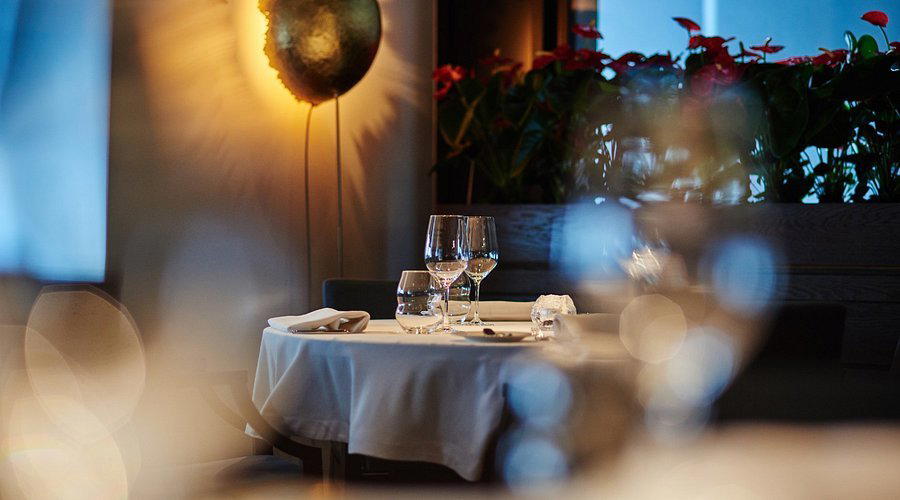
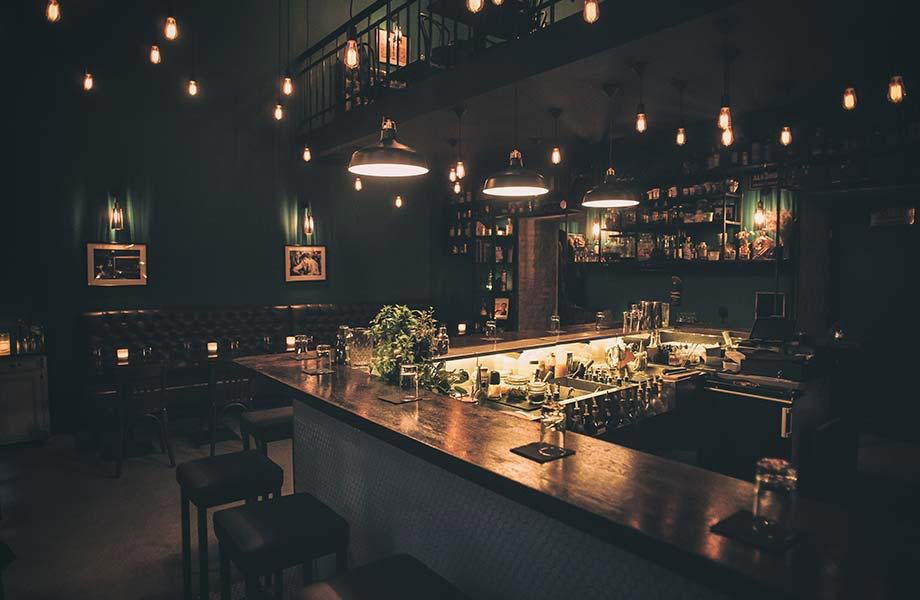
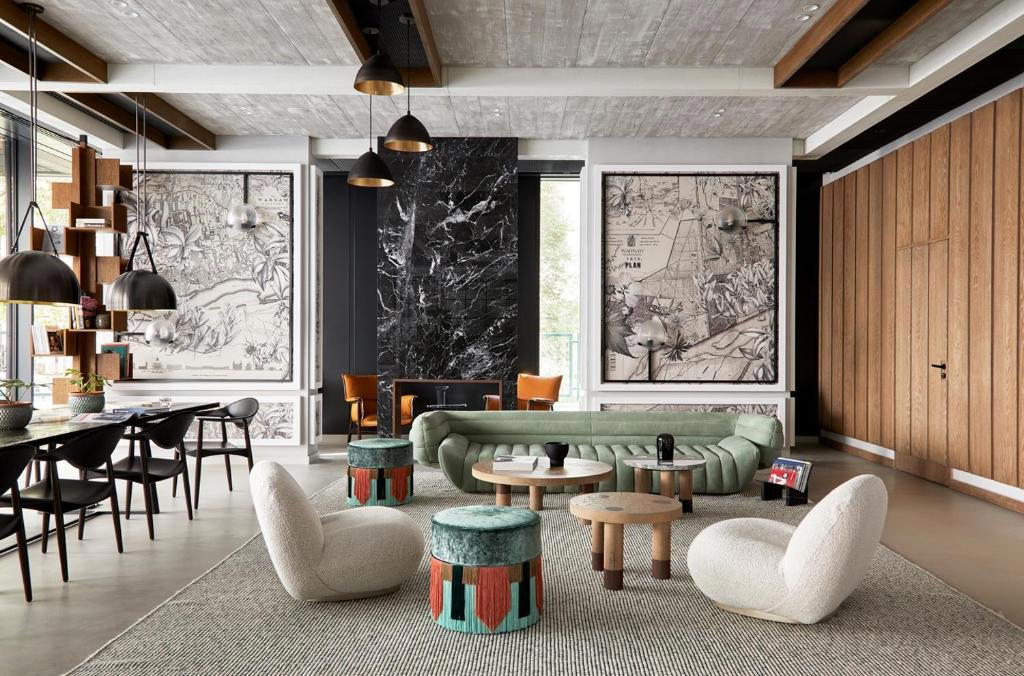
Well-lit dining room with large windows overlooking a garden, elegant yet cozy atmosphere with jazz-inspired murals and soundtrack.