
Tabelog 100 #80
Our verdict
Hajime Ya places Uozu’s ramen culture in the same conversation as Toyama Bay sushi and coastal casual dining, with a Tabelog Ramen WEST “Tabelog 100” selection in 2025 and a format built for everyday use rather than ceremony. The appeal is direct: a ramen house with counter seating, table space, and enough local recognition to justify a detour within the city’s compact dining circuit.

Pearl is the En Primeur Club membership app — saves, bookings, and concierge access live there. Same editors, same standards.
- Address
- 67-1 Kichijima, Uozu, Toyama 937-0041, Japan
- Phone
- +81 765-23-1789
- Hours
- Mon ClosedTue–Sun 11 AM–10 PM
- Website
- ieke1.com
- Directions
- Get directions
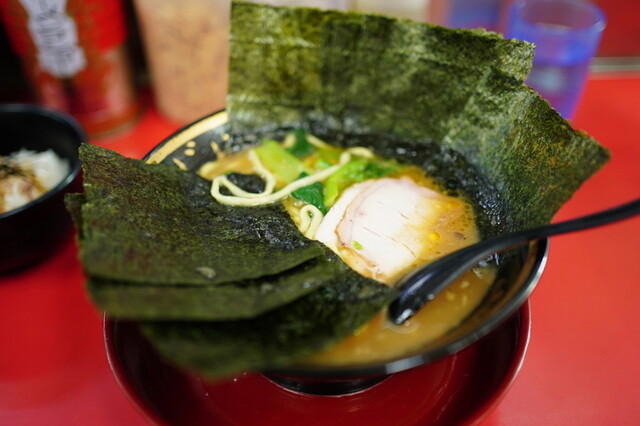
Approaching a ramen house in Uozu is a different proposition from entering a sushi counter. The city’s dining identity is often read through Toyama Bay seafood, but its everyday appetite is broader: ramen shops, family tables, solo counters, and small rooms that make sense before or after a rail journey, a market stop, or time elsewhere in the city. Hajime Ya belongs to that practical side of Uozu, where the room matters less as theatre than as a place for quick turnover, repeat customers, and bowls that compete on consistency.
That distinction is useful for travelers building a food day here. Uozu has sushi addresses such as 太助鮨 and 鮨大門, where the local conversation naturally turns toward fish, season, and counter pacing. Ramen operates by another logic. It compresses sourcing, broth discipline, noodle texture, and shop rhythm into a meal that is faster, cheaper, and more democratic, while still allowing serious scrutiny. Hajime Ya’s 2025 Tabelog recognition places it inside a regional ramen conversation rather than merely a neighborhood one.
Ramen as Uozu's everyday counterpoint to the seafood circuit
Ingredient sourcing is often discussed with sushi because the fish is visible and named. Ramen asks for a less obvious reading. The central question is not only what sits on the surface of the bowl, but how stock, tare, fat, noodles, and toppings are balanced into a repeatable house style. In regional Japan, that repeatability matters. A ramen shop can become a civic habit because it can serve lunch, dinner, solo diners, families, and friends without changing the terms of the meal.
Hajime Ya’s 2025 Tabelog recognition gives that local habit a broader frame. Tabelog’s ramen attention rewards places that have earned sustained user interest in a category where price is modest and competition is dense. The point is not luxury. It is evidence that a casual ramen format can carry enough craft to register beyond its immediate neighborhood, with Hajime Ya listed at a 3.68 score and a JPY 1,000–JPY 1,999 budget for both lunch and dinner.
Uozu’s wider restaurant map helps explain the appeal. A traveler can read the city through seafood-focused counters, casual rooms such as ボケリア, and ramen houses that anchor regular eating. For planning across categories, the wider city index is useful: Our full Uozu restaurants guide covers the restaurant spread, while Our full Uozu hotels guide, Our full Uozu bars guide, Our full Uozu wineries guide, and Our full Uozu experiences guide place the meal within a fuller itinerary.
A room built for repeat eating, not ceremony
The shop format tells a clear story. Hajime Ya belongs to the practical rhythm common to serious ramen rooms, while remaining accessible for everyday meals rather than formal occasions. That distinction matters in a city such as Uozu, where destination dining and resident dining overlap more tightly than they do in Japan’s largest metropolitan centers. The restaurant is not asking for a long tasting-menu mindset; it is asking whether a bowl can earn attention without ceremony.
That casual format also places it in the ramen tradition rather than the appointment-only dining economy. For travelers, this changes how the meal should be used. It works as a flexible anchor around a day in Uozu rather than a fixed centerpiece. The listed budget keeps the experience in an approachable bracket, which is typical of strong regional ramen shops whose reputations are built on repeat use rather than luxury signals.
Compared with higher-spend Japanese dining, the value proposition is blunt. Comparison venues such as GEJO and Saseki sit in different spending and dining contexts, while ramen at this level sits in its own lane, where recognition comes from execution within a modest category rather than from luxury cues. That is why Hajime Ya’s 2025 Tabelog recognition carries weight: it evaluates the shop within a ramen frame, not against sushi counters or other formal dining rooms.
How to place it in a Japan food itinerary
For visitors moving through Japan, Hajime Ya is a reminder that regional food credibility is not confined to capital-city counters. The country’s dining map is full of specialized rooms with narrow formats, from casual counters and everyday restaurants to cafes and other tightly defined places across different cities. Each belongs to a different culinary lane, but the shared lesson is the same: format discipline often matters more than grand setting.
That logic travels beyond any single city as well. Specialist Japanese and Japanese-adjacent addresses show how tightly focused concepts can carry cultural weight when the format is clear. In Uozu, ramen performs that role with fewer export signals and more local utility. The stronger move is to treat Hajime Ya not as a substitute for sushi, but as the city’s casual counterweight to it: a recognized ramen stop that makes the food day feel less curated and more grounded.
Frequently asked questions
Does Hajime Ya work for a family meal?
Yes. Hajime Ya’s casual ramen format can suit a low-key meal in Uozu, especially for diners looking for something practical rather than ceremonial.
What's the vibe at Hajime Ya?
It reads as a practical ramen house in Uozu. The appeal is built around quick meals, regular use, and the kind of everyday focus that supports repeat visits rather than ceremony.
What does dinner at Hajime Ya typically cost?
Pricing at Hajime Ya is listed as JPY 1,000 - JPY 1,999 for dinner, with lunch also listed at JPY 1,000 - JPY 1,999.
Where do I go for Hajime Ya?
Uozu.
What's the standout thing about Hajime Ya?
The clearest calling card is its 2025 Tabelog recognition for ramen, alongside a listed score of 3.68 and a JPY 1,000–JPY 1,999 budget.
Quick Comparison
Comparable venues by cuisine and price in the same metro.
| Venue | Cuisine | Price | Awards | Notes |
|---|---|---|---|---|
| Hajime YaThis venue — the venue you are viewing | Iekei tonkotsu‑shoyu ramen shop | $1–10 | Tabelog 100 #80 | Not listed |
| 太助鮨 | Japanese Kaiseki | Not listed | Not listed | Uozu |
| ボケリア | Mediterranean Fusion with Toyama Seafood | Not listed | Not listed | Uozu Station area |
| 鮨大門 | Traditional Kaiseki | $50–100 | Not listed | Uozu |
| Sukesama (ぎょうざ処 亮昌) | Kyoto Gyoza Specialist | $10–20 | Not listed | Gion |
| Nakakooriten Kakigori | Japanese Kakigori | $1–10 | Not listed | Shingu |
Recognition history
Dated appearances from independent guides and award organizations, with the underlying list record or original source where available.
Tabelog 100 #80 · No. 80
Tabelog · Tabelog 100 - Ramen - WEST - 2025
Continue exploring
More in Uozu
Restaurants in Uozu
Browse all →
Hotels in Uozu
Browse all →

Wineries in Uozu
Browse all →
Details
- Lively
- Casual
- Cozy
- Solo
- Casual Hangout
- Family
- Group Dining
- Late Night
- Standalone
- A La Carte
- Counter Dining
- Soft Drinks
- Beer
Current opening hours
- Monday
- Closed
- Tuesday
- 11 AM–10 PM
- Wednesday
- 11 AM–10 PM
- Thursday
- 11 AM–10 PM
- Friday
- 11 AM–10 PM
- Saturday
- 11 AM–10 PM
- Sunday
- 11 AM–10 PM
Hours can change for holidays and private events. Last verified .
Simple counter‑style ramen shop with bright practical lighting, a compact dining room, and a bustling, everyday local atmosphere focused on quick, satisfying meals rather than design.