Our verdict
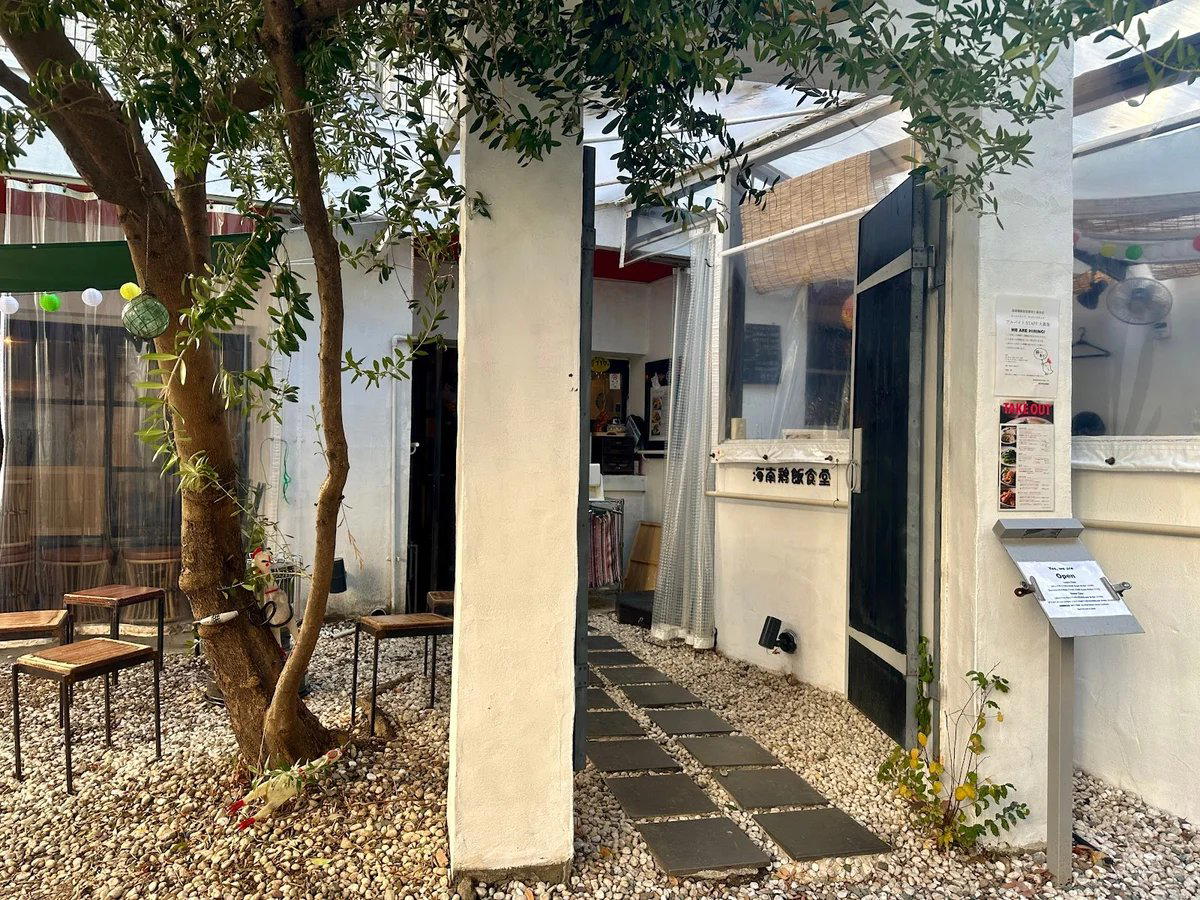
A specialist in Hainanese chicken rice operating from a ground-floor address behind the Nakagín Mansion in Azabu-Jūban, this Tokyo shop brings one of Southeast Asia's most disciplined single-dish traditions into a neighbourhood better known for high-end French and kaiseki. The format is focused and the offer narrow, placing it at the opposite end of the spectrum from the city's multi-course tasting counters.

Pearl is the En Primeur Club membership app, where members save venues, book tables and use the concierge.
The menu
What to order
- Hainanese Chicken Rice
- Wonton Noodles
- Coconut Chicken Curry
A Single Dish in a City of Many Courses
Tokyo's dining scene is frequently mapped by its tasting-menu culture: the long kaiseki progression at places like RyuGin, the precision French service at L'Effervescence, the omakase discipline at Harutaka. Against that backdrop, a restaurant built around a single Southeast Asian dish occupies an entirely different register. Hainanese chicken rice is not a format that rewards elaboration or theatre. It rewards precision: the quality of the bird, the temperature of the rice cooked in chicken fat and stock, the calibration of the accompanying sauces. In the cities where this dish has been refined over generations, Singapore and Malaysia chief among them, entire reputations are staked on subtle distinctions that a casual diner might not even register. The arrival of a dedicated specialist in Azabu-Jūban places that tradition inside one of Tokyo's more quietly affluent neighbourhoods, where the competition runs more toward Sézanne-level French and inventive contemporary cooking like Crony than toward hawker-stall heritage.
The Neighbourhood and What It Signals
Azabu-Jūban sits between the embassy district of Minato and the international energy of Roppongi, and the neighbourhood's residential density gives it a different character from the high-traffic dining corridors of Ginza or Shinjuku. Restaurants here tend to survive on repeat locals rather than tourist footfall, which shapes the kind of operation that takes root. A single-dish specialist with no obvious concession to variety or upselling is exactly the kind of format that works in a neighbourhood like this: the offer is clear, the audience self-selecting. The address, listed as behind the Nakagín Mansion on Roppongi's fringe, occupies a ground-floor position of the kind that in Tokyo often signals a quietly confident rather than attention-seeking operation.
For readers building a broader picture of Japan's dining scene, the specialist single-dish format appears across the country in different guises: the ramen shop that has served one broth for decades, the tempura counter that does nothing else. Outside Tokyo, comparable discipline shows up in very different cuisines at places like Goh in Fukuoka and akordu in Nara. The common thread is not cuisine type but operational philosophy: depth over breadth.
The Dish Itself: What the Tradition Demands
Hainanese chicken rice arrived in Southeast Asia with Hainanese migrants in the nineteenth and early twentieth centuries, and the dish's apparent simplicity belies the technical demands it places on a kitchen. The chicken, typically a younger bird, is poached at a temperature low enough to keep the meat just past translucent at the bone. Rice is cooked in the resulting stock with rendered chicken fat, giving it a particular richness and fragrance. The accompaniments, a fresh ginger and scallion paste, a dark soy reduction, and a chili sauce, are not garnishes; they are the dish's second and third movements. In Singapore, where the dish is considered a national food, hawker stalls and dedicated restaurants are judged with the same rigour that Tokyo's omakase counters apply to nigiri. Bringing that standard to Tokyo is a specific proposition, one that requires either sourcing the right bird or finding a Japanese equivalent with comparable characteristics.
The question of sourcing is where the team dimension becomes relevant. A kitchen operating this discipline cannot rely on front-of-house charm or a complex menu to compensate for a weak supply chain. The service model at a specialist like this is less about sommelier pairings or elaborate plate presentation and more about the kitchen's relationship with its suppliers and the front-of-house team's ability to communicate a focused offer without apology. In a city where many diners at this level expect a multi-act performance, asking them to commit to one dish requires confidence from every person in the room.
Where This Sits in Tokyo's Broader Offer
Tokyo's restaurant population is large enough to support almost any degree of specialisation, and the city has historically been receptive to foreign cuisines executed at a high technical level. The Michelin Guide covers the city more extensively than almost any other in the world, and that coverage extends well beyond Japanese and French cuisine. Within that context, a Hainanese chicken rice specialist in Azabu-Jūban is neither an anomaly nor a novelty. It belongs to a pattern of single-discipline venues that treat a specific tradition as worthy of the same focus that a kaiseki kitchen applies to the Japanese seasons.
For those comparing options across Japan's cities, the EP Club's coverage extends to venues with very different approaches to focus and precision: HAJIME in Osaka, Gion Sasaki in Kyoto, Abon in Ashiya, affetto akita in Akita, Aji Arai in Oita, Ajidocoro in Yubari District, Akakichi in Imabari, and aki nagao in Sapporo. Internationally, the same discipline-over-breadth logic applies at venues as different as Le Bernardin in New York City and Lazy Bear in San Francisco. See the full picture in our Tokyo restaurants guide.
Planning Your Visit
The address places it behind the Nakagín Mansion in the Roppongi section of Minato City, accessible from Azabu-Jūban Station on the Namboku and Ōedo lines, or from Roppongi Station on the Hibiya and Ōedo lines. Given the neighbourhood's residential character and the focused format, this is a daytime or early-evening proposition rather than a late-night stop. As with any specialist single-dish operation, arriving with a clear sense of what the format offers, one dish executed with care rather than a long menu of choices, makes for a more productive visit.
Frequently asked questions
Where is Hainanese Chicken Rice Azabujuban Main Shop located?
Hainanese Chicken Rice Azabujuban Main Shop is located at Japan, 〒106-0032 Tokyo, Minato City, Roppongi, 6 Chome−11−16 中銀マンション 裏手1F, Tokyo.
How does Hainanese Chicken Rice Azabujuban Main Shop differ from Southeast Asian chicken rice shops elsewhere in Tokyo?
The venue's positioning as a named main shop, implying an anchor location with a defined identity, sets it apart from the loose cluster of Southeast Asian casual spots that serve chicken rice as one item among many across Tokyo. Located in Minato City's Roppongi district, within the residential density of Azabu-Jūban, it draws on a neighbourhood that selects for repeat local custom rather than passing trade, which tends to sharpen kitchen consistency over time. That address context, combined with the single-dish format, suggests a more focused operation than the broader pan-Asian casual category in the city.
What dish is Hainanese Chicken Rice Azabujuban Main Shop famous for?
The venue is built entirely around Hainanese chicken rice, a dish rooted in Hainanese Chinese migration to Southeast Asia in the nineteenth and early twentieth centuries. The tradition centres on poached chicken, rice cooked in the resulting stock, and a set of accompanying sauces, a format that demands technical consistency rather than variety. In a Tokyo dining scene dominated by multi-course tasting menus, a restaurant that commits to a single preparation from this tradition occupies a specific and deliberate position.
Should I book Hainanese Chicken Rice Azabujuban Main Shop in advance?
The location on a residential side street in Minato City, rather than a high-traffic tourist corridor, suggests the operation serves a regular local clientele, which can mean limited walk-in capacity during peak lunch hours. Verifying hours and seat availability in advance will save a wasted trip.
What makes Hainanese Chicken Rice Azabujuban Main Shop worth seeking out?
Tokyo's restaurant culture is unusually receptive to specialist formats, and a venue that has positioned itself around a single Southeast Asian dish in Azabu-Jūban, a neighbourhood where restaurants typically survive on residential loyalty rather than tourist footfall, is making a deliberate argument about the dish's standalone depth. Hainanese chicken rice is frequently reduced to a casual canteen offering elsewhere, but a dedicated main shop format implies a higher standard of sourcing and consistency. That specificity, in a city of Michelin counters and kaiseki progressions, is the point.
Is Hainanese Chicken Rice Azabujuban Main Shop good for vegetarians?
Hainanese chicken rice is a meat-centred dish by construction: the chicken and its poaching stock are structural to the preparation, not optional components. A specialist venue built around this single dish is unlikely to offer substantive vegetarian alternatives as a matter of format. Vegetarians visiting Azabu-Jūban would be better served by the neighbourhood's broader restaurant mix.
Booking and Cost Snapshot
A quick snapshot of similar venues for side-by-side context.
| Venue | Cuisine | Price | Awards | Notes |
|---|---|---|---|---|
| Hainanese Chicken Rice Azabujuban Main ShopThis venue (the venue you are viewing) | Singaporean Hainanese Chicken Rice | $10–20 | Not listed | Not listed |
| Harutaka | Edo-Style Omakase Sushi | $200–300 | 3 Michelin Stars · World's 50 Best #76 | Sushi |
| L'Effervescence | Modern French with Japanese Influences | $200–300 | 3 Michelin Stars · World's 50 Best #69 | French |
| RyuGin | Modern Kaiseki | $500+ | 3 Michelin Stars · World's 50 Best #41 | Kaiseki, Japanese |
| Crony | Modern French with Japanese Influences | $150–200 | 2 Michelin Stars · World's 50 Best #34 | Innovative, French |
| Den | Modern Japanese Kaiseki | $150–200 | 2 Michelin Stars · World's 50 Best #51 | Innovative, Japanese |
Continue exploring
More in Tokyo
Restaurants in Tokyo
All restaurants in Tokyo →


Bars in Tokyo
All bars in Tokyo →





Details
- Lively
- Cozy
- Trendy
- Casual Hangout
- Terrace
- Open Kitchen
- Sake Program
- Street Scene
- A La Carte
Current opening hours
- Monday
- 11:30 AM–2:30 PM, 5:30–10 PM
- Tuesday
- 11:30 AM–2:30 PM, 5:30–10 PM
- Wednesday
- 11:30 AM–2:30 PM, 5:30–10 PM
- Thursday
- 11:30 AM–2:30 PM, 5:30–10 PM
- Friday
- 11:30 AM–2:30 PM, 5:30–11 PM
- Saturday
- 11:30 AM–3 PM, 5:30–11 PM
- Sunday
- 11:30 AM–3 PM, 5:30–10 PM
Hours can change for holidays and private events. Hours as of .
Lively atmosphere with tightly packed seats, modern jazz background music, and a tropical vibe enhanced by surrounding trees.