
Tabelog 100 #81
Our verdict
A seven-seat counter in Abeno puts Osaka’s dumpling culture into a compact, serious register. Gyoza no Mise Momo is a Tabelog 100 Dumplings 2024 selection, with earlier selections in 2021 and 2019, making it a useful lens on how small-format gyoza shops have moved from neighbourhood habit to destination dining without adopting fine-dining theatre.

Pearl is the En Primeur Club membership app, where members save venues, book tables and use the concierge.
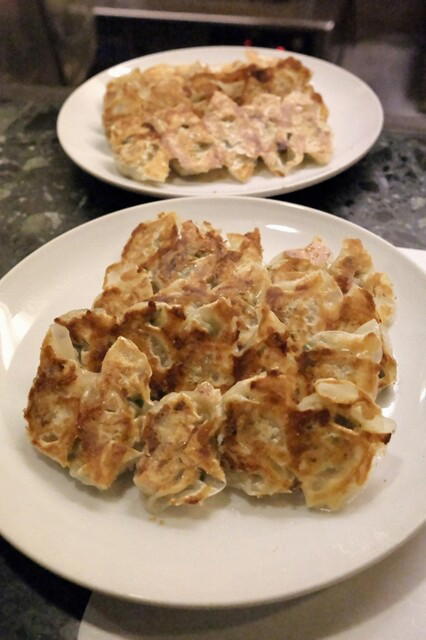
The room is best understood through focus before any menu does. In Osaka, where casual eating has long carried as much civic weight as formal dining, a dedicated dumpling venue makes a clear argument: scale can be a virtue when the format is narrow, the turnover is focused, and the cooking is judged by repetition rather than range.
Gyoza no Mise Momo belongs to a category that has become more visible in Japan’s restaurant culture over the past decade. Tabelog’s specialist lists have helped turn everyday genres, ramen, soba, curry, bakeries, and gyoza among them, into fields of close comparison. A 2024 Tabelog Hyakumeiten recognition for dumplings places this Osaka venue inside that shift. The point is not luxury; it is evidence that a modest genre now has its own critical hierarchy.
Osaka's small-format gyoza belongs to the city's specialist turn
Osaka’s eating identity is often flattened into street-food shorthand, but the city’s stronger pattern is specialization. Shops narrow the offer, repeat the craft, and let regulars compare details that tourists often miss. That logic connects dumplings with other tightly defined Osaka formats, from exacting specialist rooms to the city’s enduring appetite for everyday comfort. Different scale, different audience, same civic comfort with food that does not need a long explanation.
Osaka sharpens that reading. It is not only a city of neon shorthand or polished hotel dining; it is also a place where local, compact rooms can carry serious weight. Comparison venues underline the spread: Menya Saisai Shouwa chou honten, Usagi to Boku, Sumisho Kishimoto, and Soba Kiri Kamonohashi each point to different versions of focused Osaka dining. The gyoza venue sits between routine and pilgrimage, which is exactly where much of Osaka’s serious casual dining now lives.
That evolution matters because gyoza has often been treated as a side order in English-language dining coverage, attached to ramen shops or izakaya drinking. Dedicated dumpling venues change the frame. They ask diners to pay attention to a narrow craft rather than a broad meal structure, closer in spirit to how tempura specialists such as Tempura Kozaki are judged through focus, pacing, and repetition. The Tabelog recognition signals that this is not merely a convenient local stop; it is part of a national conversation around single-category excellence, even when the overall experience remains modest.
The format favours repetition over spectacle
The most useful way to read a place like this is through constraints. A focused dumpling venue creates a different kind of meal from a large, wide-ranging dining room: less wandering, fewer distractions, more direct attention to the cooking sequence. The appeal stays tied to everyday practicality rather than turning the visit into a tasting-menu set piece. The overall frame is grounded, with the food allowed to remain the main reason for being there.
There is also a quiet historical point here. The shop sits within a Japanese tradition of narrow-format everyday dining, while its Tabelog Hyakumeiten recognition shows how neighbourhood-style formats can be reclassified through contemporary attention. Reinvention, in this case, is not a dramatic pivot. It is a change in how the city, and then travelling diners, read a focused local venue: what once might look like a narrow everyday shop now functions as a marker in Osaka’s dumpling map.
For travellers building a larger Osaka itinerary, this is not the same decision as choosing a long dinner. It works better as a focused stop in a day built around Osaka, especially for diners who value small formats and do not need a room designed for lingering. For broader planning, Our full Osaka restaurants guide gives the citywide restaurant frame, while Our full Osaka hotels guide, Our full Osaka bars guide, Our full Osaka wineries guide, and Our full Osaka experiences guide cover the surrounding trip architecture.
How to place it in a wider Japan food itinerary
Small-format Japanese dining rewards careful sequencing. A dumpling venue of this kind makes more sense beside other focused rooms than beside grand comparative claims. In Osaka, that could mean pairing the city’s casual specialists with other tightly run dining rooms, each showing a different version of how the city absorbs local and global formats without losing its appetite for informality.
The same logic can apply across Japan without needing to force direct comparisons. A specialist route might move from dumplings to noodles, soba, tempura, coffee, or other narrow formats, using each stop to understand how a single category can carry the weight of a meal. Other cities add different pressures, but Osaka’s strength is the way it lets compact, everyday rooms feel central rather than marginal.
The editorial case for Gyoza no Mise Momo is therefore precise: it is not a grand Osaka meal, and that is the point. It represents the city’s confidence in small, category-specific dining, where a focused format and Tabelog recognition can carry more meaning than a longer menu. For diners who understand Osaka through everyday craft rather than spectacle, it gives the dumpling category its own seat at the table.
Frequently asked questions
Would Gyoza no Mise Momo be comfortable with kids?
It can work for diners comfortable with a focused, casual setting, but the format makes it feel built for short, direct visits. The JPY 1,000 - JPY 1,999 price range keeps it approachable, and the Osaka location makes it easy to slot into a simple meal.
Is Gyoza no Mise Momo formal or casual?
Casual. The focused dumpling format and JPY 1,000 - JPY 1,999 price range point to a low-key stop rather than a formal dining room. The Tabelog Hyakumeiten 2024 recognition adds status, but not ceremony.
What's the price range at Gyoza no Mise Momo?
Pricing at Gyoza no Mise Momo is listed as JPY 1,000 - JPY 1,999 View spending breakdown.
What is Gyoza no Mise Momo known for?
Gyoza no Mise Momo is known as an Osaka dumpling venue with Tabelog Hyakumeiten recognition in 2024.
At-a-Glance Comparison
Comparable venues at the same tier for side-by-side context.
| Venue | Cuisine | Price | Awards | Notes |
|---|---|---|---|---|
| Gyoza no Mise MomoThis venue (the venue you are viewing) | Osaka gyoza counter | $10–20 | Tabelog 100 #81 | Not listed |
| Sukiyaki Nabemono Nabeya | Traditional Sukiyaki & Japanese Hot Pot | $20–30 | Tabelog 100 #60 | Nishinari |
| Kamaage Udon Raku | Kamaage udon and tempura shop | $10–20 | Tabelog 100 #97 | Nishinari |
| Okonomiyaki Momiji | Osaka-style okonomiyaki restaurant | $20–30 | Tabelog 100 #95 | Tennōji |
| Washington Shokudo | Standing Japanese bar (tachinomi izakaya) | $10–20 | Tabelog 100 #6 | Miyakojima |
| Men Kui Yamachan | Udon and Tempura Shop | $10–20 | Tabelog 100 #5 | Sakai Ward, Sakai City |
Recognition history
Dated appearances from independent guides and award organizations, with the underlying list record or original source where available.
Tabelog 100 #81 · No. 81
Tabelog · Tabelog 100 - Dumplings - 2024
Continue exploring
More in Osaka
Restaurants in Osaka
All restaurants in Osaka →


Bars in Osaka
All bars in Osaka →
Hotels in Osaka
All hotels in Osaka →

Wineries in Osaka
Browse all →
Details
- Cozy
- Intimate
- Solo
- Casual Hangout
- After Work
- Chefs Counter
- Standalone
- Sake Program
- A La Carte
- Counter Dining
- Small Plates
- Sake
- Shochu
- Wine
Current opening hours
- Monday
- 5–10 PM
- Tuesday
- 5–10 PM
- Wednesday
- Closed
- Thursday
- Closed
- Friday
- 5–10 PM
- Saturday
- 5–10 PM
- Sunday
- Closed
Hours can change for holidays and private events. Hours as of .
A small, non-smoking counter-only shop with just seven seats, giving it a cozy hideout feel suited to solo diners and friends, where guests focus on freshly cooked dumplings and drinks in an unpretentious, casual setting.