Tabelog 100 #5
Our verdict
Men Kui Yamachan belongs to Osaka’s serious daytime udon circuit rather than the city’s late-night dining mythology. The Sakai counter is small, lunch-led, and recognised in Tabelog 100 - Udon - WEST - 2024, making it a useful read on how Kansai noodle culture rewards focus over theatre.

Pearl is the En Primeur Club membership app, where members save venues, book tables and use the concierge.
The menu
What to order
- Udon (wheat noodles)
- Tempura
- Oyako-don (chicken and egg bowl)
- Cold udon set
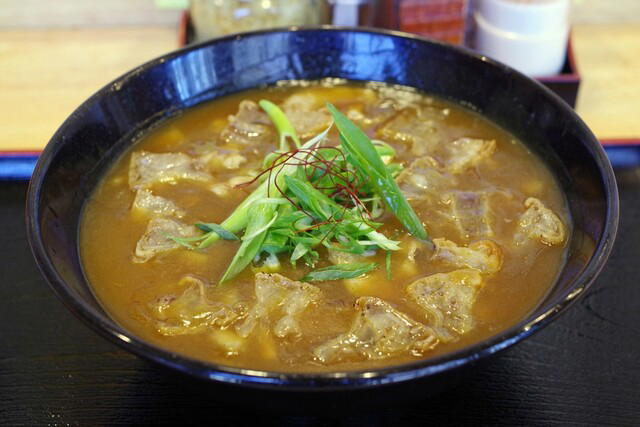
Approaching Men Kui Yamachan in Osaka shifts the city’s dining conversation away from neon, snack queues, and late-night spectacle. The mood is more focused: a straightforward local meal built around noodles rather than ceremony. Men Kui Yamachan fits that Osaka tradition clearly. It is not best understood as a grand destination defined by luxury signals; its value sits in an accessible format, where udon, tempura, and oyako-don can carry serious local weight without tasting-menu choreography.
That accessible identity matters in Osaka. The city’s casual food culture is often flattened into takoyaki, okonomiyaki, and department-store counters, but the noodle tier has its own hierarchy. Udon shops compete on texture, broth discipline, and the ability to make a modest meal feel exacting. A place selected for Tabelog Hyakumeiten Udon WEST 2024 enters a regional conversation where udon is judged with real local intensity.
Daytime udon, not dinner theatre
The clearest way to understand the appeal here is by category rather than spectacle. Osaka has restaurants that expand into alcohol, courses, private rooms, and longer pacing; this is a more focused model. The format is direct and efficient, with the meal centred on wheat noodles and supporting categories rather than a long evening arc. That makes the decision simple: come for a focused udon stop, not for a lingering multi-course night out.
In practical dining terms, that puts Men Kui Yamachan closer to the city’s specialist noodle conversation than to its celebratory restaurants. Among Osaka comparison points, Sakai Udon Chihaya and Menza Gin help frame the noodle conversation, while Kuku Hanare and 99 Pizza Napoletana Gourmet show how different Osaka dining formats can serve very different occasions. The useful distinction is not which venue is grander; it is whether the meal is built for a quick, exact stop or a longer night.
Udon culture also rewards restraint. The category looks simple from the outside, but the better shops are rarely about novelty. Noodle texture, broth balance, frying, rice bowls, and pacing do the work. The listed categories here, udon, tempura, and oyako-don, describe a familiar grammar: wheat noodles as the anchor, fried items for contrast, and a rice-bowl option for diners who want a fuller meal without changing the register of the visit.
An Osaka specialist lane
Osaka changes the read. Much of the city’s dining carries a visitor-facing intensity, especially around busy shopping and transit areas. Men Kui Yamachan asks for a different kind of attention. Its focused category makes the restaurant part of the argument: a narrow field and a clear purpose are not limitations; they are how this style of dining keeps its focus.
The 2024 Tabelog Hyakumeiten selection gives that modest format a public credential without changing its category. Tabelog’s Hyakumeiten lists are especially useful for Japanese casual dining because they recognise genres that international guide coverage can underrepresent: udon, curry, tonkatsu, ramen, bakeries, and other everyday forms where local diners often maintain sharp hierarchies. In that context, Men Kui Yamachan reads as a serious udon address inside an accessible price and format band, not as a luxury restaurant wearing casual clothes.
For travellers building an Osaka itinerary, this is the kind of stop that works better when the day is planned around movement through the city rather than a single trophy booking. Pairing Men Kui Yamachan with broader Osaka dining gives a clearer picture of the city’s range: casual institutions, bakery stops, coffee-led pauses, and fuller dinner rooms all have their place. Seen together, they show a city where a simple meal can be as revealing as dinner.
How to place it in an Osaka eating day
The strongest use case is a noodle-focused meal within a wider Osaka schedule. The format favours diners who are comfortable with specialist restaurants and direct pacing. Travellers expecting English-language hospitality rituals, extended wine service, or a long booking runway are looking at the wrong category. This is a precision-casual meal, and the pleasure is in accepting the genre on its own terms.
That genre also travels well across Japan. A serious casual specialist in Osaka has more in common with a tightly defined curry shop, onigiri counter, or other focused casual room than with a general restaurant trying to cover every occasion. For a broader national map of focused formats, compare other unnamed specialist counters and casual rooms across Japan, where the point is not breadth but control. Outside Japan, the same narrow-format logic appears in similarly focused dining rooms, where a limited register can make the meal feel more exact rather than less ambitious.
For Osaka planning beyond one meal, use this as a calibration point. It reminds diners that the city’s serious food culture is not confined to expensive counters or nightlife districts. The more useful itinerary balances noodle specialists, bakeries, casual institutions, and appointment dining, then leaves room for bars, hotels, and cultural stops rather than treating every meal as a climax. For broader planning, see Our full Osaka restaurants guide, Our full Osaka hotels guide, Our full Osaka bars guide, Our full Osaka wineries guide, and Our full Osaka experiences guide.
Frequently asked questions
What are the operating hours at Men Kui Yamachan?
Check the latest operating hours directly before visiting Men Kui Yamachan, as schedules can change.
What should I budget for a meal at Men Kui Yamachan?
Pricing at Men Kui Yamachan is listed as JPY 1,000 - JPY 1,999.
Where exactly is Men Kui Yamachan?
Osaka.
What is Men Kui Yamachan known for?
Men Kui Yamachan is known for udon, tempura, and oyako-don in Osaka, and was selected for Tabelog Hyakumeiten Udon WEST 2024.
Comparable Options
Nearby venues at a similar price tier for orientation.
| Venue | Cuisine | Price | Awards | Notes |
|---|---|---|---|---|
| Men Kui YamachanThis venue (the venue you are viewing) | Udon and Tempura Shop | $10–20 | Tabelog 100 #5 | Not listed |
| Sakai Udon Chihaya | Traditional Udon & Tempura | $1–10 | Tabelog 100 #91 | JPY 999 - JPY 999 |
| Menza Gin | Ramen & Tsukemen Shop | $10–20 | Tabelog 100 #84 | JPY 1,000 - JPY 1,999 - JPY 999 |
| Kuku Hanare | High-end Yakiniku (Japanese BBQ) Counter | $100–150 | Tabelog 100 #23 | JPY 15,000 - JPY 19,999 |
| 99 Pizza Napoletana Gourmet | Authentic Neapolitan Pizza | $30–50 | Tabelog 100 #44 | JPY 4,000 - JPY 4,999 JPY 1,000 - JPY 1,999 |
| Tsunechan | Premium Yakiniku | $100–150 | Tabelog Bronze #488 | Not listed |
Recognition history
Dated appearances from independent guides and award organizations, with the underlying list record or original source where available.
Tabelog 100 #5 · No. 5
Tabelog · Tabelog 100 - Udon - WEST - 2024