Tabelog 100 #90
Our verdict
A 16-seat counter in Higashishinsaibashi puts Osaka’s gyoza culture into close quarters: late-evening, cash-only, and built around dumplings rather than a sprawling izakaya script. Selected for Tabelog 100 Dumplings 2024, Gyoza no Danchan Mikuni Tei Yahatasuji ten suits diners who want a compact, local-feeling stop inside the city’s snack-and-drink rhythm.

Pearl is the En Primeur Club membership app, where members save venues, book tables and use the concierge.
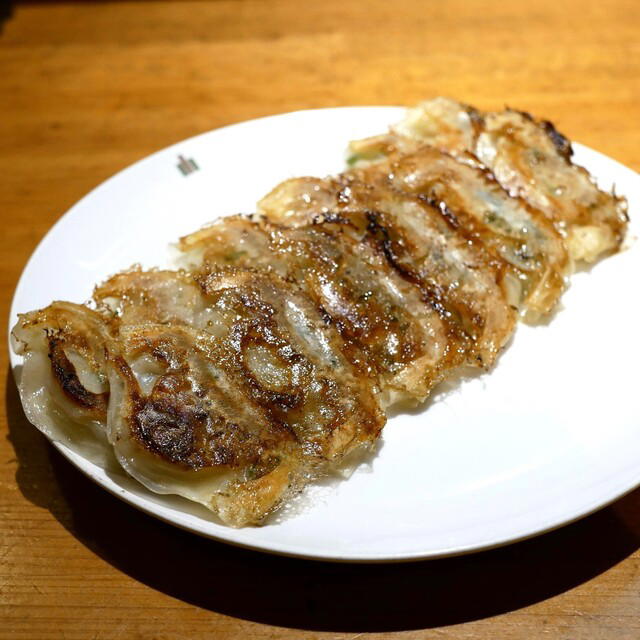
Osaka changes character after dark: office edges soften, small-room restaurants fill, and the city’s appetite moves from formal dinner to compact rooms where the cooking can feel close at hand. In that setting, gyoza is not merely a side order. It is a drinking-food discipline, judged by pace, consistency, and how well a small team can keep the room moving without turning the meal into theatre.
Gyoza no Danchan Mikuni Tei Yahatasuji ten belongs to that Osaka category: focused, evening-friendly, and more useful to serious eaters than its modest format suggests. Its selection for Tabelog 100 Dumplings 2024 places it inside a national conversation about a dish that rarely receives the same international attention as sushi, tempura, or ramen. That recognition matters because gyoza shops operate in a crowded field, where the difference between a casual stop and a destination-level specialist is usually measured in repeat local demand rather than ceremony.
Osaka gyoza as a counter craft, not a tasting-menu performance
Osaka’s restaurant culture has long rewarded formats that compress skill into quick service: okonomiyaki grills, kushikatsu counters, standing bars, ramen shops, and dumpling rooms all share an intolerance for wasted motion. The compact dining room is not decorative here. It is the operating system. The experience depends on coordination between the cooking line and the person managing the room: orders need to land cleanly, drinks need to keep pace, and the rhythm has to suit quick meals as naturally as more leisurely groups.
That team dynamic is the real story. A gyoza specialist does not have the luxury of hiding behind a long menu or a procession of courses. The front-of-house role is practical, not performative: read the room, keep diners oriented, and preserve momentum. The kitchen’s role is just as exposed. Repetition becomes the test, because dumplings punish inconsistency more than many casual foods. A slightly slow hand or uneven batch changes the meal quickly.
This is why Tabelog’s dumpling category has become a useful filter for visitors. It separates specialists from general-purpose izakaya menus, and it gives dumpling-focused rooms a form of visibility that guidebooks often reserve for higher-spend genres. The award does not turn a gyoza counter into fine dining, and that is the point. It signals that the venue is being judged within the grammar of dumplings: speed, comfort, repeatability, and enough character to justify a dedicated stop.
Where Osaka's late-night dining logic helps
Osaka rewards short, focused meals. A diner can start with gyoza, move to bars, or fold the stop into a broader evening without committing to a long reservation window. That flexibility is part of the appeal, especially in a city where the strongest eating often happens across several small stops rather than one grand room.
Within Osaka, the comparison is less about cuisine match than use case. Tori Ichi belongs to a different planning category. Pome and Okonomiyaki Izakaya Gen point toward the city’s broader comfort-food habits, while Wagyu Japanese BBQ Yakiniku & Hamburger Ramen Dotonbori Restaurant Namba-Beef and Shōwaji reflect how visitors often read Osaka through heavier dinner formats. Gyoza no Danchan Mikuni Tei Yahatasuji ten is narrower and more useful when the night calls for a specialist counter rather than a full-course commitment.
That narrowness should be seen as a strength. Osaka’s casual dining canon is full of places that do one thing with enough confidence to survive repeat custom. Visitors often over-plan the city around famous districts and under-plan the spaces between them. A dumpling-focused stop in Osaka solves that problem: it gives structure to an evening without forcing the rest of the night to orbit around one booking.
How to place it in an Osaka food itinerary
Use this as a specialist stop rather than the anchor for an entire trip. The smarter Osaka itinerary layers formats: a bakery in the morning, a casual lunch, a counter dinner, then a bar. For a wider city map, start with Our full Osaka restaurants guide, then cross-check nearby drinking plans through Our full Osaka bars guide. Travellers building a longer stay can pair dining research with Our full Osaka hotels guide, Our full Osaka experiences guide, and, for broader category browsing, Our full Osaka wineries guide.
Osaka’s food range is broad enough that dumplings should not be read in isolation. For daytime contrast, look to the city’s bakeries, cafes, and casual lunch rooms. For take-away and snack culture, Osaka offers a different view of dumpling-adjacent appetite. For non-Japanese counterpoints, other dining rooms show how the city absorbs imported formats without losing its preference for immediacy.
Across Japan, the same small-format logic appears in different costumes: compact specialists, quick-service counters, snack-driven rooms, and casual restaurants built around one clear reason to visit. Even outside Japan, the same reader decision applies: choose the narrow specialist when the format is the reason to go, not an afterthought.
The critical read is simple. This is not the Osaka address for diners chasing luxury signals or a long chef-led narrative. It is for those who understand that the city’s intelligence often sits in rooms with tight menus and service teams built for momentum. In that frame, a recognized gyoza counter in Osaka has a clear role: compact, social, and grounded in the part of Osaka dining that values execution over display.
Frequently asked questions
How would you describe the vibe at Gyoza no Danchan Mikuni Tei Yahatasuji ten?
It is a compact-feeling gyoza spot in Osaka, with a brisk, no-frills rhythm. The Tabelog 100 Dumplings 2024 selection gives it clear credibility, while the listed JPY 4,000–4,999 dinner range keeps it in casual territory.
What price level is Gyoza no Danchan Mikuni Tei Yahatasuji ten?
Pricing at Gyoza no Danchan Mikuni Tei Yahatasuji ten is listed as JPY 4,000 - JPY 4,999 View spending breakdown.
What are the opening hours for Gyoza no Danchan Mikuni Tei Yahatasuji ten?
What is Gyoza no Danchan Mikuni Tei Yahatasuji ten known for?
Gyoza no Danchan Mikuni Tei Yahatasuji ten is known as a dumpling venue in Osaka and was selected for Tabelog 100 Dumplings 2024.
Standing Among Peers
Comparable venues at similar price and category levels.
| Venue | Cuisine | Price | Awards | Notes |
|---|---|---|---|---|
| Gyoza no Danchan Mikuni Tei Yahatasuji tenThis venue (the venue you are viewing) | Gyoza & Chinese small plates | $20–30 | Tabelog 100 #90 | Not listed |
| Tachinomi Izakaya LIBERTY | Chinese Izakaya / Standing Bar | $20–30 | Tabelog 100 #64 | Kita |
| Shokudo Kuro Usagi | Modern Chinese Izakaya | $30–50 | Tabelog 100 #54 | Kita |
| Human beings everybody noodles (人類みな麺類) | Traditional Shoyu Ramen | $1–10 | Tabelog 100 #65 | Nishinakajima, Yodogawa-ku |
| Lakshmi | Indian Curry House | $10–20 | Tabelog 100 #5 | Nishi |
| Ikareta Noodle Fish Tons | Japanese Ramen & Tsukemen | $1–10 | Tabelog 100 #14 | Nishi |
Recognition history
Dated appearances from independent guides and award organizations, with the underlying list record or original source where available.
Tabelog 100 #90 · No. 90
Tabelog · Tabelog 100 - Dumplings - 2024