Guang Xing Pork Knuckle

Michelin Bib Gourmand
Our verdict
Open since 1998, Guang Xing Pork Knuckle on Ren'ai Street in Sanchong has built a following on a short, focused menu of braised pork trotter, pork knuckle, and chitterlings, all at everyday prices. Dine-in orders come as bento boxes with rice and three sides. The house-made anchovy chilli sauce is the condiment worth knowing about.
- Address
- 124 Ren'ai Street, Sanchong District
- Phone
- +886 2 2973 7085
- Directions
- Get directions
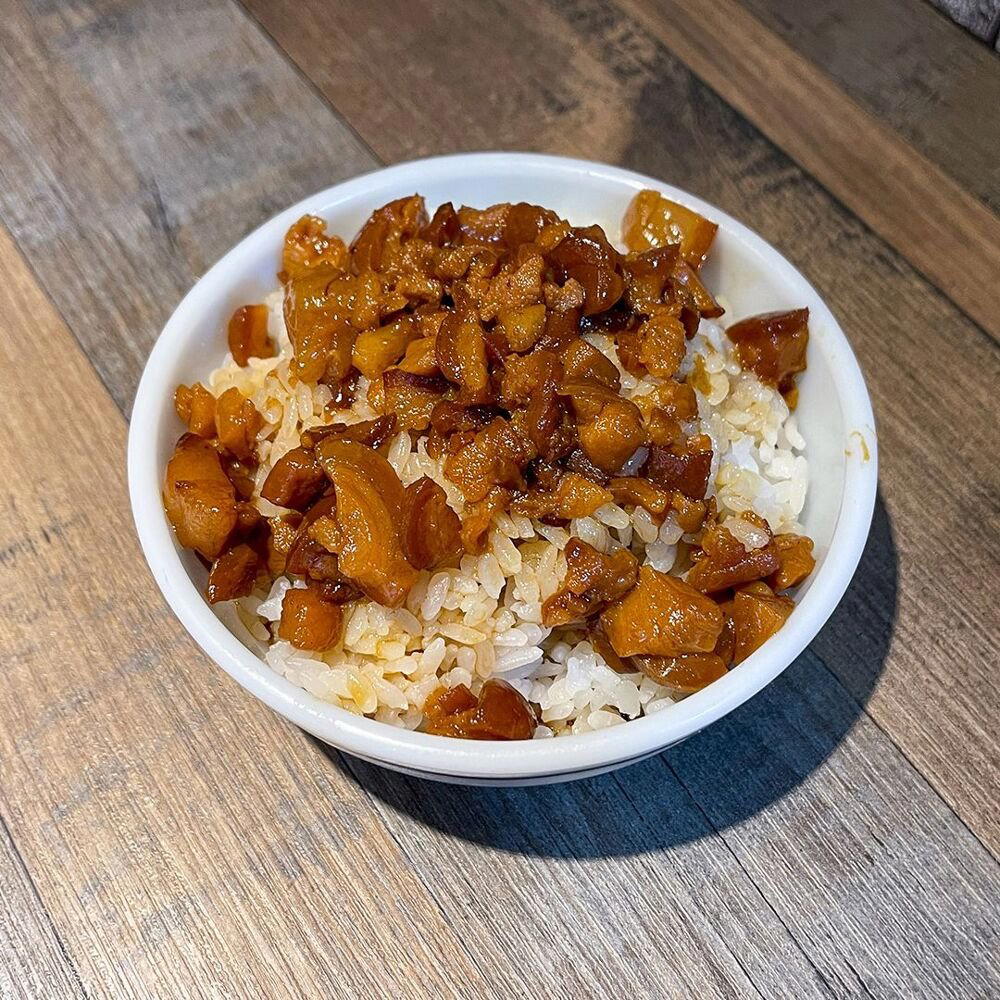
The menu
What to order
- Braised_pork_knuckle
- Pork_trotter
- Braised_pork_chitterlings
- Leg_bento
Sanchong's Braised Pork Counter and What It Tells You About New Taipei's Eating Culture
Arrive on Ren'ai Street in Sanchong District during the lunch hour and the visual language is familiar to anyone who has eaten their way through New Taipei's older residential neighbourhoods: a compact shopfront, steam rising from a pot, and a queue that operates on the shared understanding that turnover is fast and the food is worth it. Guang Xing Pork Knuckle sits in that tradition, a small operation that has occupied the same address at 124 Ren'ai Street since 1998. The physical space reads as functional rather than decorative, which is exactly the point. In this tier of Taiwanese eating, the room exists to serve the food, not the other way around.
New Taipei, as a city, contains multitudes. At one end of the dining register, polished addresses compete with the kind of tasting-menu ambition you find at logy in Taipei or the contemporary precision of JL Studio in Taichung. At the other end sit places like Guang Xing, where the benchmark is consistency, value, and the accumulated trust of a neighbourhood over decades. Both registers matter. Neither is more authentically Taiwanese than the other. But the latter is where daily eating actually happens for most people, and it is where a city's food identity is most honestly expressed.
The Menu Logic: Short, Specific, Pork-Led
The menu at Guang Xing follows a format common to Taiwanese braised-pork specialists: a small number of proteins, a rotating selection of sides, and rice as the structural anchor. What distinguishes the better operators in this format is not variety but execution, and execution here means getting the braise right across multiple cuts with different fat contents, textures, and cooking tolerances.
The braised pork trotter is gelatinous and flavoursome, which in practice means the collagen has broken down properly over a long cook, producing that particular lip-coating quality that separates a well-made Taiwanese lu rou from a rushed version. The pork knuckle is tender and juicy, a cut that demands patience and temperature control to prevent the meat from tightening before the connective tissue softens. The braised pork chitterlings are fatty and toothsome, offering the kind of textural contrast that appeals to diners who know their way around offal. These are not dishes that benefit from novelty or reinvention. Their value is in how consistently they hit the same target.
Dine-in customers order as bento boxes: a portion of the chosen meat, three sides, and rice. The format is efficient and allows the kitchen to run at speed without compromising portion integrity. For comparison, the bento-box structure also functions as a useful entry point for first-time visitors who want to sample the menu without committing to a single protein. This kind of format discipline is part of what keeps a place like this operating for over two decades in the same location.
The house-made anchovy chilli sauce is noted separately because it earns the distinction. In a city where chilli condiments are taken seriously, a house-made version points to a kitchen that views the accompaniments as part of the dish, not an afterthought. Fans of heat should treat it as a required addition rather than an optional one.
Sanchong and the Residential Dining Belt
Sanchong District sits across the Tamsui River from central Taipei, close enough to the city core to function as a commuter district but with its own residential density and eating culture. The neighbourhood supports the kind of everyday food operations, braised-meat counters, noodle shops, and traditional breakfast stalls, that thrive on repeat local custom rather than destination traffic. Guang Xing fits that pattern precisely. It is not a tourist destination in the conventional sense, and it does not need to be. Its customer base is built from the surrounding streets, and the prices reflect a menu positioned for daily eating rather than occasional visits.
For visitors building a broader picture of New Taipei's food geography, the city's dining map extends well beyond this register. Our full New Taipei restaurants guide covers the range from neighbourhood staples to destination addresses. Those looking at other Sanchong-adjacent pork-focused cooking might also consider BAK KUT PAN, which approaches the pork category from a different angle, or Amajia for a different read on the district's eating options. For a contrast in register, Chi Yuan offers a different format within the broader New Taipei dining conversation.
Taiwan's braised-pork tradition is one of the country's most consistent culinary exports, appearing in everything from casual street-side bowls to the kind of refined presentations emerging at addresses like GEN in Kaohsiung or Zhu Xin Ju in Tainan. The gap between those registers is wide in presentation but narrower in underlying technique than it might appear. Both depend on understanding how heat, fat, and time interact with different cuts of pork. Guang Xing operates at the accessible end of that spectrum, but the craft is present.
New Taipei's broader appeal extends well beyond its restaurant scene. Our full New Taipei hotels guide, bars guide, and experiences guide provide context for building a full visit. For those combining a New Taipei stay with excursions further afield, Akame in Wutai Township and Volando Urai Spring Spa and Resort in Wulai District represent two very different expressions of the region's broader hospitality range. The New Taipei wineries guide is also worth consulting for those planning a longer itinerary.
Getting There and Planning Your Visit
Guang Xing Pork Knuckle is at 124 Ren'ai Street, Sanchong District, New Taipei. The address is accessible by MRT via the Sanchong station on the Luzhou line, placing the restaurant within walking distance of the broader Sanchong commercial strip. Given the format, and the lack of a reservations infrastructure typical of operations in this tier, arriving early or during off-peak hours reduces waiting time. The kitchen's bento-box format is structured for efficient service, so waits, when they occur, tend to be short. No website or phone contact is listed, which is consistent with how most neighbourhood specialists of this type operate in Taiwan: walk-in, pay, eat.
For visitors whose Taiwan itinerary extends to sweet finishes after a pork-heavy lunch, A Gan Yi Taro Balls and A-ba's Taro Ball both represent the New Taipei taro-ball tradition and sit within the same informal eating register. The contrast between the savoury weight of a pork-knuckle bento and the cool, starchy texture of taro balls is one of those pairings that Taiwanese street eating has refined over generations, even if no single operator planned it that way.
Frequently asked questions
What part of town is Guang Xing Pork Knuckle in?
Guang Xing Pork Knuckle is located at 124 Ren'ai Street, Sanchong District, New Taipei.
Has Guang Xing Pork Knuckle won any awards?
Guang Xing Pork Knuckle has received recognition including: Opening its doors in 1998, this tiny gem has stood the test of time. The short but sweet menu is packed with well-made small bites at competitive prices: gelatinous and flavoursome braised pork trotter, tender and juicy pork knuckle, and fa….
What dish is Guang Xing Pork Knuckle famous for?
The pork knuckle and braised pork trotter are the two anchors of the menu — the trotter is gelatinous and intensely flavoured from long braising, while the knuckle is known for its tenderness. Braised pork chitterlings round out the protein selection for regulars who return specifically for them. The house-made anchovy chilli sauce, served alongside, is the detail that distinguishes the counter from comparable spots in Sanchong District.
What's the best way to book Guang Xing Pork Knuckle?
Guang Xing operates as a walk-in counter — no phone or website booking is listed. Arriving outside peak lunch hours is the practical approach, as the small format fills quickly with neighbourhood regulars. The address is 124 Ren'ai Street, Sanchong District, New Taipei.
What is Guang Xing Pork Knuckle known for?
Guang Xing has been operating since 1998 at 124 Ren'ai Street, building its reputation on a short, pork-focused menu at competitive prices. Dine-in customers can order bento boxes combining a meat portion, three sides, and rice — a format that makes it a reliable lunch stop for the Sanchong District working crowd. The house-made anchovy chilli sauce is a consistent draw for those who want heat alongside the braised proteins.
Can Guang Xing Pork Knuckle adjust for dietary needs?
The menu is structured around pork — trotter, knuckle, and chitterlings — so options for non-pork eaters are limited by design. The bento box format allows some flexibility in side selection, but the kitchen's identity is built on braised pork preparations. Guests with strict dietary requirements should confirm directly with the counter before visiting.
Does Guang Xing Pork Knuckle offer bento boxes, and what do they include?
Dine-in customers can order bento boxes made up of a chosen meat portion, three sides, and rice — a format common to Taiwanese braised-pork specialists but executed here with proteins the counter has refined since opening in 1998. It makes Guang Xing a practical single-dish lunch destination in Sanchong, New Taipei, where the bento structure lets first-time visitors sample the kitchen's range without committing to individual plates.
Cuisine Lens
A compact comparison to help you place this venue among nearby peers.
| Venue | Cuisine | Price | Awards |
|---|---|---|---|
| Guang Xing Pork KnuckleThis venue — the venue you are viewing | Taiwanese Braised Pork Knuckle | Not listed | Michelin Bib Gourmand |
| A Gan Yi Taro Balls | Traditional Taiwanese Taro Balls | $1–10 | Michelin Plate |
| Amajia | Traditional Taiwanese Seafood | $20–30 | Michelin Plate |
| BAK KUT PAN | Traditional Taiwanese Bak Kut Teh | $1–10 | Michelin Plate |
Recognition history
Dated appearances from independent guides and award organizations, with the underlying list record or original source where available.
Michelin Bib Gourmand
Michelin
Continue exploring
More in New Taipei
Restaurants in New Taipei
Browse all →
Bars in New Taipei
Browse all →
Hotels in New Taipei
Browse all →

Wineries in New Taipei
Browse all →
Details
- Cozy
- Casual Hangout
- Open Kitchen
- A La Carte
Clean, bright, and comfortable with transparent glass windows offering views into the open kitchen.