Grøften
Our verdict
Grøften is one of Copenhagen's oldest open-air restaurants, operating inside the Tivoli Gardens since 1874. The kitchen draws on Danish smørrebrød tradition and seasonal produce to deliver straightforward, ingredient-led cooking in a setting that connects the city's pleasure-garden heritage with its present-day food culture. It sits at a different register from the city's Michelin-driven fine dining circuit, and is more honest for it.

Pearl is the En Primeur Club membership app — saves, bookings, and concierge access live there. Same editors, same standards.
The menu
What to order
- Herregårdsböf
- Smørrebrød
- Baked Salmon
- Theatre Platter
Where Tivoli's Pleasure-Garden Tradition Meets the Danish Table
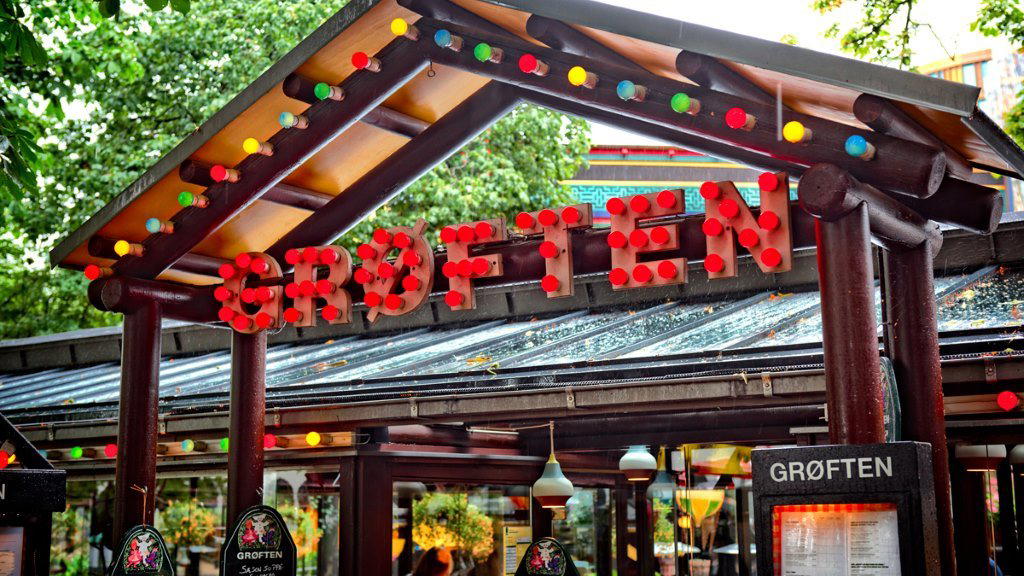
Approaching Grøften on a summer evening, the route takes you past Tivoli's lanterns and the distant rumble of wooden roller coasters before the restaurant announces itself with the sound of cutlery on porcelain and the low murmur of a crowd that has been coming here, in one form or another, since 1874. The terrace spreads wide beneath mature trees, and the room beyond it carries the particular weight of a place that does not need to reintroduce itself to the city. This is not a new restaurant performing confidence; it is an old one that simply continues.
That longevity matters in a Copenhagen dining context increasingly defined by international attention and creative reinvention. The city's upper tier, occupied by houses like Geranium, Noma, Alchemist, and Koan, operates through tasting menus, controlled theatrics, and waiting lists that stretch months ahead. Grøften operates on a different axis entirely, one rooted in the Danish tradition of eating well in a public garden, where the point is the occasion itself rather than the choreography surrounding it.
The Smørrebrød Tradition and Why Sourcing Defines It
Danish open-faced sandwich culture, smørrebrød, is one of the more demanding formats in Nordic cooking precisely because its restraint exposes every ingredient. There is nowhere to hide behind a sauce or a technique when the product is a slice of dark rye bread, a piece of cured herring, and a scattering of onion. The tradition lives or dies on the quality of what is sourced, and in Denmark that conversation has always been local: herring from the cold waters of the North and Baltic Seas, potatoes from Zealand's sandy soils, cold cuts from producers whose names are known to the kitchen by generations of use rather than by trend cycle.
This is the frame within which Grøften operates. The Danish smørrebrød canon that kitchens like this one carry forward is explicitly a cuisine of provenance, where the geographic origin of an ingredient is part of the dish's meaning. A herring plate here is not just a preparation; it is an argument about where Danish food comes from and why the conditions that produce it, the cold water, the short growing season, the curing traditions, are worth preserving at the table. The same logic applies to the warm dishes on a menu like this: roast pork, frikadeller, plaice from Danish coastal waters. These are foods that make sense in the place they come from.
This sourcing-first sensibility has deep roots in the pleasure-garden tradition specifically. Tivoli opened in 1843 and Grøften followed three decades later as a restaurant designed for extended leisure, the kind of eating that is embedded in an afternoon rather than bracketed by a booking window. The food had to be recognisable and seasonal, connected to what Danish producers were bringing to Copenhagen's markets. That logic has not changed, even as the city around it has accumulated a density of fine dining infrastructure that would have been unimaginable to the restaurant's founders.
Placing Grøften in Copenhagen's Dining Structure
Copenhagen now operates a two-speed dining economy. At the leading, the city's most discussed restaurants, including Kadeau, with its Bornholm island sourcing philosophy, and the conceptually dense progressivism of Alchemist, compete at an international level and price accordingly. The broader scene below that tier includes a wide range of neighbourhood bistros, natural wine bars, and market-driven lunch spots that are increasingly sophisticated without aspiring to the same register.
Grøften occupies a specific position within that structure: a full-service, established restaurant inside a major cultural institution, serving food that is recognisably and deliberately Danish. It is not competing with the tasting-menu circuit, and it is not trying to. For a traveller whose Copenhagen itinerary already includes a reservation at Geranium or one of the city's other €€€€ operations, an afternoon meal at Grøften represents the other pole of what the city's food culture contains. The high-modernist Nordic cooking that has drawn international attention for two decades is, in a sense, an argument with the tradition that Grøften represents. Eating at both is the more complete picture.
Denmark's broader restaurant geography reinforces this point. Outside Copenhagen, the country has developed serious dining destinations across a range of formats: Jordnær in Gentofte, Frederikshøj in Aarhus, Henne Kirkeby Kro in Henne, Frederiksminde in Præstø, Ti Trin Ned in Fredericia, Dragsholm Slot Gourmet in Hørve, LYST in Vejle, Tri in Agger, Pearl by Paul Proffitt in Kruså, and Syttende in Sønderborg. What connects many of these is a commitment to Danish ingredient culture that traces back through the smørrebrød tradition to the same sourcing logic that Grøften embodies in its own, less formally ambitious way. The national food culture is coherent, and Grøften sits near its historical centre.
For international comparison, the dynamic is not unlike what separates a Le Bernardin in New York from the fish shacks of the Northeast coast, or what distinguishes the tasting-menu programming at Lazy Bear in San Francisco from a long-running neighbourhood tavern operating the same culinary tradition in its least complicated form. High technique and deep tradition are not in opposition; they are in conversation, and you need both sides to hear it properly.
Planning a Visit
Grøften is located within Tivoli Gardens at Vesterbrogade 3, which means entry to the gardens is required to reach the restaurant. Tivoli operates seasonally, with its main summer season running from mid-April through late September, a winter season around the Christmas period, and a Halloween program in October. The restaurant's own calendar follows Tivoli's, so visits must be timed accordingly. Summer evenings, particularly on weekends when the gardens are busiest, attract the largest crowds, and a table on the terrace during that period is a genuine Copenhagen experience rather than a retreat from the city. Check the Tivoli website directly for current opening dates and ticket pricing before planning. For a full overview of where Grøften sits in the city's broader dining map, see our full Copenhagen restaurants guide.
Frequently asked questions
What should I eat at Grøften?
The kitchen's strongest ground is the Danish smørrebrød tradition: open-faced rye bread preparations built around seasonal and cured ingredients. Cold herring preparations, roast pork, and fish dishes sourced from Danish coastal waters represent the core of what this format does well. The cuisine here is not designed around invention or surprise; it is designed around ingredient quality and the logic of the Danish table. Order accordingly, meaning go deep on the classics rather than looking for creative outliers.
Should I book Grøften in advance?
Tivoli Gardens draws significant visitor numbers during its summer season, and Grøften, as one of the gardens' most established restaurants, sees corresponding demand particularly on weekend evenings. If your visit falls during peak summer months or coincides with Tivoli's special event programming, securing a reservation ahead of time is the practical approach. Copenhagen's top-tier restaurants, Geranium, Alchemist, and their peers, operate months-long waiting lists; Grøften's booking window is more accessible, but the terrace does not expand to meet demand on busy nights.
Is Grøften the oldest restaurant inside Tivoli Gardens?
Grøften, operating since 1874, is among the oldest dining establishments within Tivoli, which itself opened in 1843. That makes it one of the longer-running continuously operating restaurant sites in Copenhagen's history, predating the modern Nordic food movement by well over a century. For a city whose contemporary food reputation is built almost entirely on the past two decades of creative and New Nordic cooking, that kind of institutional continuity is genuinely rare and gives the restaurant a different kind of authority from the Michelin-tracked houses that now define the city's international profile.
A Credentials Check
Comparable venues nearby, for context on price, style, and recognition.
| Venue | Cuisine | Price | Awards | Notes |
|---|---|---|---|---|
| GrøftenThis venue — the venue you are viewing | Traditional Danish | $50–100 | Not listed | Not listed |
| Restaurant Petra | Modern Nordic | Not listed | Michelin Bib Gourmand | Indre By |
| Bang & Jensen | Danish Cafe | Not listed | Not listed | Vesterbro-Kongens Enghave |
| Garden | Danish Bistro | $50–100 | We're Smart World 1 Radish | Indre By |
| Sticks'n'Sushi | Japanese Sushi and Yakitori with Nordic Fusion | $50–100 | Not listed | Vesterbro-Kongens Enghave |
| Den Lille Fede | New Nordic Fine Dining | Not listed | Not listed | Indre By |
Continue exploring
More in Copenhagen
Restaurants in Copenhagen
All restaurants in Copenhagen →
Bars in Copenhagen
All bars in Copenhagen →



Details
- Classic
- Lively
- Well Known
- Cozy
- Family
- Celebration
- Casual Hangout
- Historic Building
- Garden
- Garden
- A La Carte
- Schnapps
- Vegetarian Friendly
- Vegan Options
- Gluten Free Options
Current opening hours
- Monday
- 12–10 PM
- Tuesday
- 12–10 PM
- Wednesday
- 12–10 PM
- Thursday
- 12–10 PM
- Friday
- 12–11 PM
- Saturday
- 12–11 PM
- Sunday
- 12–10 PM
Hours can change for holidays and private events. Last verified .
Nostalgic atmosphere featuring red-chequered tablecloths, colorful lights, and a lively, traditional vibe in Granny's Garden outdoor area.