Bang & Jensen
Bang & Jensen on Istedgade is a Vesterbro neighbourhood institution that functions as café, bar, and gathering place across the full arc of the day. The drinks program draws a local crowd that skews knowledgeable, and the room carries the particular lived-in quality that Copenhagen's most durable neighbourhood spots tend to accumulate over years of daily use.
- Address
- Istedgade 130, 1650 København, Denmark
- Phone
- +45 33 25 53 18
- Website
- bangogjensen.dk
- Directions
- Get directions
Istedgade and the Vesterbro Café Tradition
Copenhagen's Vesterbro district has undergone a well-documented shift over the past two decades, moving from one of the city's more marginal neighbourhoods to one of its most closely watched. That transformation didn't happen through demolition and replacement — it happened through accumulation, with independent cafés, wine bars, and small restaurants filling ground-floor spaces along streets like Istedgade and holding them through successive waves of gentrification. Bang & Jensen, at number 130 on that stretch, is among the places that predates the neighbourhood's current reputation and helped define what a Vesterbro local looks like in practice.
The Vesterbro café format occupies a specific niche in Copenhagen's broader hospitality structure. It is not the tasting-menu restaurant that attracts international attention — venues like Geranium, Noma, or Alchemist operate in a different register entirely, where reservation windows extend months ahead and the meal is structured as a set progression. Nor is it the approachable New Nordic bistro tier represented by places like Kadeau or Koan. The neighbourhood café sits between those coordinates and the purely functional: it is a place where the drink matters as much as the food, where the room is meant to be occupied at length, and where the audience is primarily local and repeat rather than destination-driven.
The Room on Istedgade
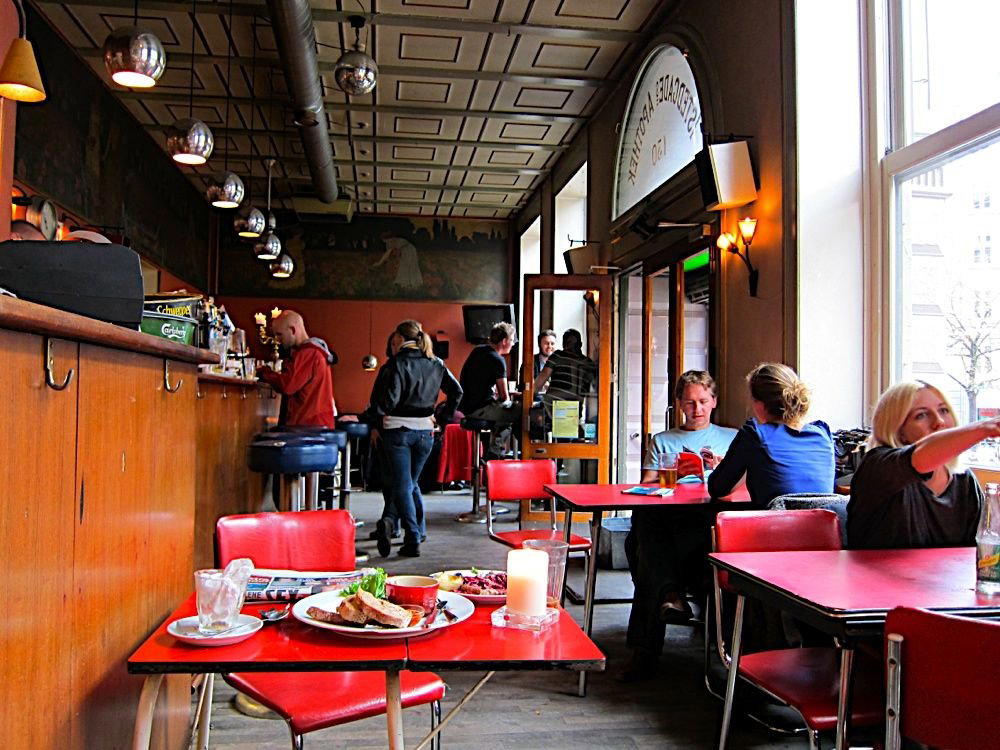
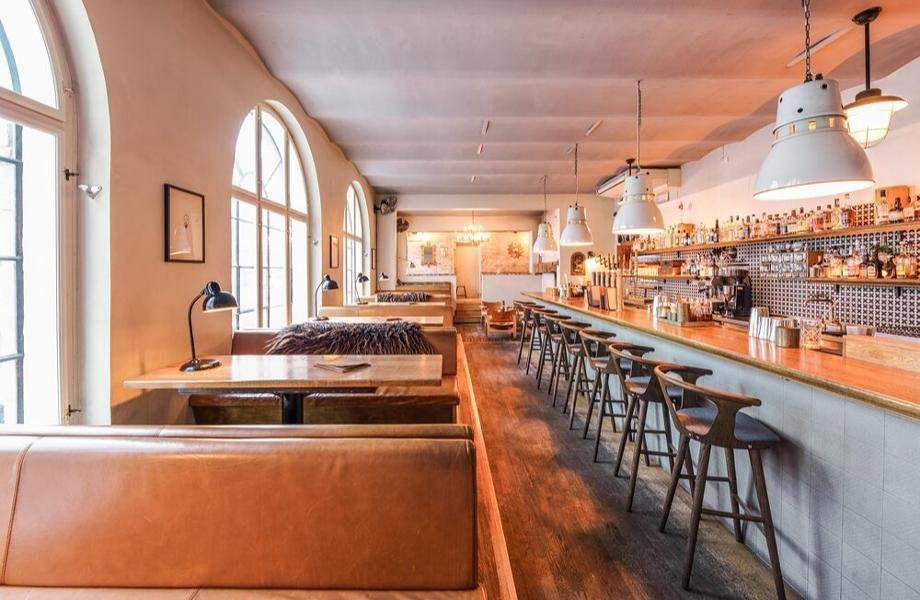
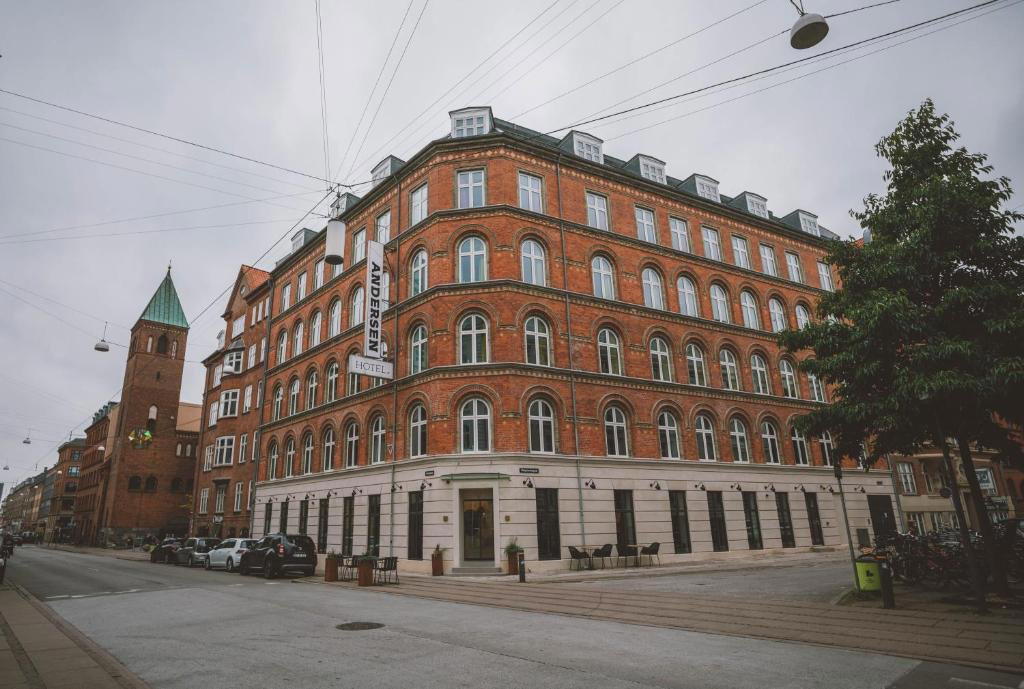
Approaching Bang & Jensen from street level, the facade reads as it has for years, paint worn to a particular shade, windows that let the interior light bleed onto the pavement in the evening, the kind of exterior that communicates continuity rather than renovation. Inside, the furniture has the density of a space that has never been art-directed into sparseness. Tables are close. The bar is present and functional. The noise level at peak hours sits at the higher end of convivial, conversations overlap, the room absorbs people rather than arranging them.
This physical character is not incidental. Copenhagen has produced a number of cafés that perform neighbourhood warmth through careful design; Bang & Jensen reads differently because its texture appears accumulated rather than constructed. That distinction matters to the segment of the city's population that treats the place as a regular rather than a destination, and it is that regularity of return that sustains Istedgade institutions through the shifts in what is fashionable in any given season.
The Drinks Program in Neighbourhood Context
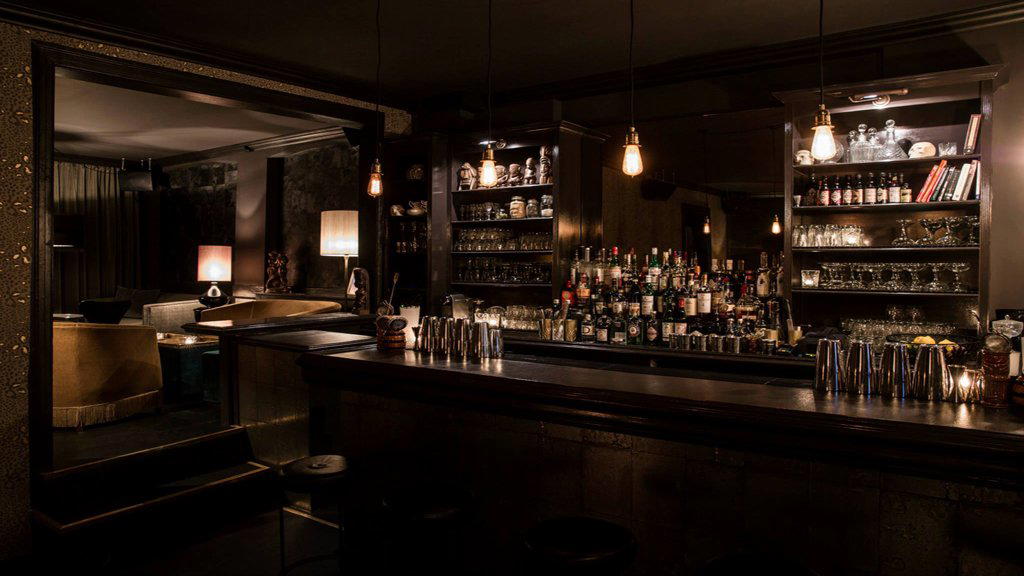
The editorial angle most relevant to Bang & Jensen is the drinks side of the operation, specifically what a neighbourhood café at this address communicates about wine and bar culture in Copenhagen more broadly. The city's drinking culture has developed a particular character: there is serious wine knowledge distributed through venues that do not position themselves as wine bars in any formal sense. A café on Vesterbro can carry a list that would not embarrass a dedicated wine room elsewhere, and the crowd that fills it on a weekday evening often knows what it is ordering.
Bang & Jensen fits within that pattern. The drinks program is the through-line that connects the daytime café function to the evening bar function, and the list tends to reflect the neighbourhood's general orientation toward natural and low-intervention producers, a preference that has become so embedded in Vesterbro's hospitality culture that it now reads as a default rather than a statement. For context on how that sensibility compares to the structured sommelier programs at Copenhagen's Michelin tier, the contrast is instructive: at a table in Geranium, wine service is formal and the list is deep with aged European references; at a Vesterbro neighbourhood café, the list is shorter, rotates more frequently, and skews toward producers with smaller allocations and more recent vintages. Both are coherent approaches, they address different audiences with different expectations about formality and depth.
What Bang & Jensen offers within that neighbourhood tier is a list that rewards attention. The regulars who return on consecutive evenings are not doing so despite the drinks, they are doing so in part because of them. That sustained local loyalty is the clearest available signal about the program's quality, and it is a more reliable indicator than formal recognition in a category where awards rarely reach.
Placing Bang & Jensen in the Broader Danish Scene
Copenhagen concentrates most of Denmark's fine dining attention, but the country's broader restaurant geography is more distributed than that concentration suggests. Venues like Jordnær in Gentofte, Frederikshøj in Aarhus, and Henne Kirkeby Kro draw serious attention outside the capital, alongside destination spots such as Dragsholm Slot Gourmet in Hørve, Frederiksminde in Præstø, LYST in Vejle, Ti Trin Ned in Fredericia, Tri in Agger, Pearl by Paul Proffitt in Kruså, and Syttende in Sønderborg. Within Copenhagen itself, the concentration of internationally recognised tasting-menu restaurants creates a gravitational pull that shapes how visitors allocate their meals. Bang & Jensen is not competing in that register. It operates in the space that sits between the high-formal and the purely casual, a tier that every functional city needs and that Copenhagen's neighbourhood structure, particularly in Vesterbro, has historically produced well.
For visitors planning a Copenhagen itinerary around the tasting-menu circuit, Bang & Jensen functions as counter-programming: the evening where the format is open, the pacing is self-directed, and the bill reflects a different set of priorities. For those planning broader Danish itineraries, our full Copenhagen restaurants guide maps the city's dining tiers in more detail. For international comparison, the neighbourhood café format that Bang & Jensen represents has parallels in other cities, the sustained local institution that outlasts trends, much as Le Bernardin in New York City or Lazy Bear in San Francisco each anchor specific segments of their respective city's dining culture, Bang & Jensen anchors the particular social function of the Vesterbro neighbourhood bar.
Planning a Visit
Bang & Jensen is located at Istedgade 130 in Copenhagen's Vesterbro district, accessible by foot from the central station or by bicycle along the main Istedgade corridor. The venue operates across the day, shifting character from café to bar as the evening develops. Given the venue's neighbourhood-local orientation and the absence of a formal tasting-menu format, walk-in is a practical option for most visits, though weekend evenings on Istedgade fill across the strip and arriving early is the more reliable approach. Vesterbro's concentration of independent cafés and bars means that the area rewards time rather than a single stop: building an evening around Istedgade and the surrounding streets gives the neighbourhood its proper context.
Standing Among Peers
| Venue | Cuisine | Price | Awards |
|---|---|---|---|
| Bang & JensenThis venue — the venue you are viewing | Not listed | Not listed | This venue |
| Geranium | New Nordic, Creative | €€€€ | Michelin 3 Star |
| Noma | Creative | €€€€ | Michelin 3 Star |
| Alchemist | Progressive, Creative | €€€€ | Michelin 2 Star |
| Koan | New Nordic, Kaiseki, Creative | €€€€ | Michelin 2 Star |
| a|o|c | New Nordic, Mediterranean Small Plates, Creative | €€€€ | Michelin 2 Star |
Continue exploring
More in Copenhagen
Restaurants in Copenhagen
Browse all →
Bars in Copenhagen
Browse all →
Hotels in Copenhagen
Browse all →

At a Glance
- Cozy
- Lively
- Trendy
- Brunch
- Casual Hangout
- Standalone
Know Before You Go
- Getting there
- Istedgade 130, 1650 København, Denmark