Gro Spiseri

We're Smart World 3 Radishes
Our verdict
A rooftop greenhouse restaurant in Østerbro where a fully plant-based menu of three to five courses changes daily and every element of the operation loops back into the same closed-cycle logic. Gro Spiseri positions itself differently from Copenhagen's tasting-menu circuit: open seven days a week, with ingredients drawn from the roof garden above your table and supplemented by local producers. It is one of the more coherent expressions of circular dining in the city.

Pearl is the En Primeur Club membership app — saves, bookings, and concierge access live there. Same editors, same standards.
- Address
- Æbeløgade 4, 2100 Østerbro, Denmark
- Phone
- +45 31 72 99 69
- Hours
- Mon–Wed ClosedThu 6:30–9 PMFri 12:30–3 PM, 5:30–8 PM, 8:30–11 PMSat 10–11:30 AM, 12:30–3 PM, 5:30–8 PM, 8:30–11 PMSun 10–11:30 AM, 12:30–3 PM, 6:30–9 PM
- Website
- grospiseri.dk
- Directions
- Get directions
- Booking
- Book on the venue's website
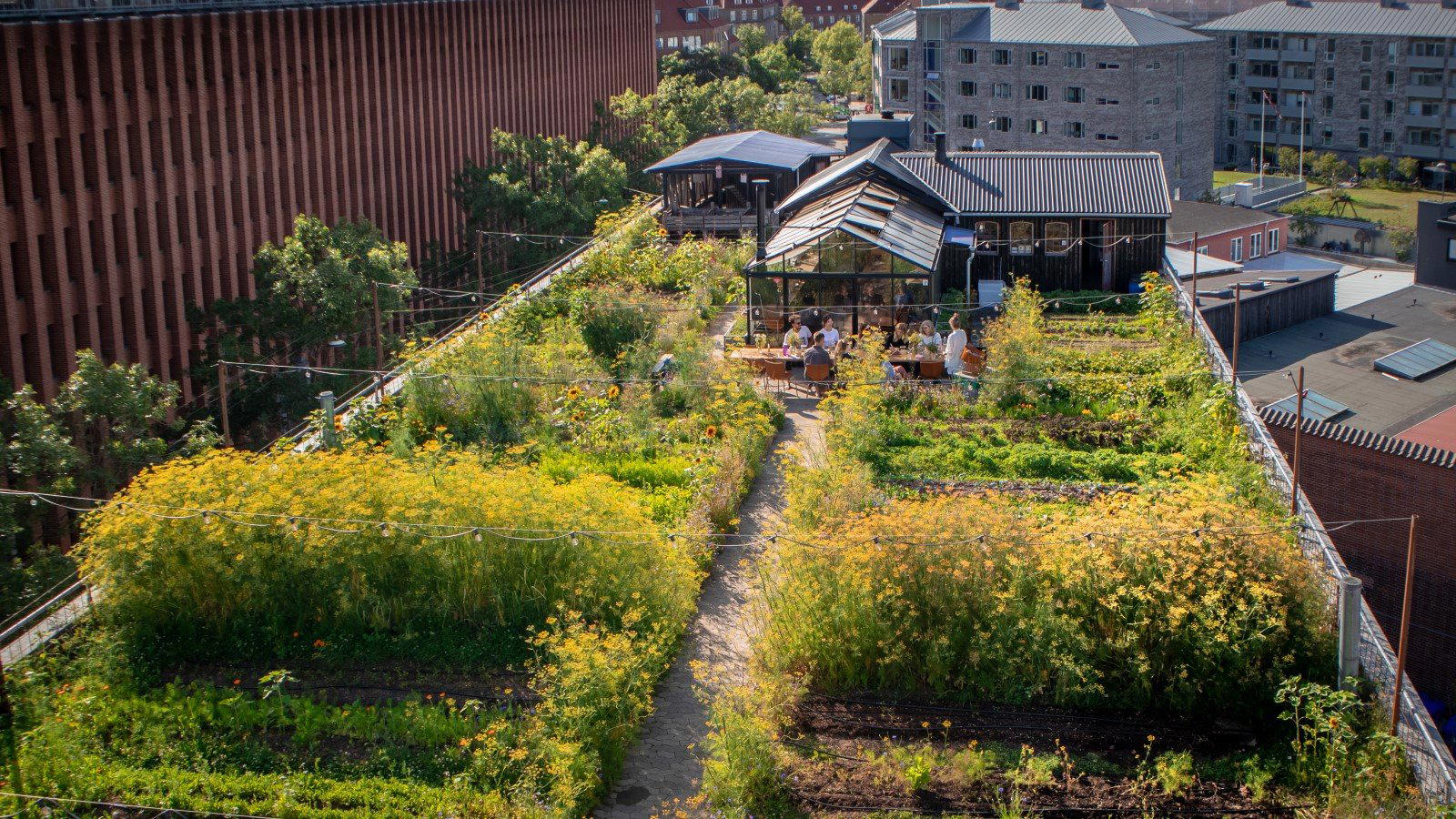
Up the Spiral Staircase, Into the Garden
There is a moment, partway up the steep spiral staircase that leads to Gro Spiseri's rooftop at Æbeløgade 4 in Østerbro, when the destination feels earned. That slight physical effort is not incidental. It frames what arrives at the leading: a working greenhouse and garden where aperitifs are served among the plants, and where the distinction between kitchen and growing space is deliberately thin. The setting is not decorative — the roof garden is the supply chain, the dining room, and the conceptual argument of the restaurant all at once.
Copenhagen's plant-forward dining scene has grown considerably since Noma made fermentation and foraged vegetables central to the global conversation. Since then, the city has seen a range of responses: some restaurants incorporate vegetables as a gesture toward balance, others as a premium add-on. Gro Spiseri's approach is more structural. The menu is 100% plant-based, every day of the week, and what appears on the table is shaped by what the rooftop is producing that day.
What Keeps Regulars Coming Back
For restaurants in Copenhagen's higher dining tier — Geranium, Alchemist, Koan, the visit tends to be a single, occasion-defining event. The format rewards first-timers. Gro Spiseri operates differently. The menu changes daily, which means regulars return not for a fixed signature experience but because each visit is compositionally distinct. That daily rotation is not a marketing claim but a structural feature: the kitchen works with whatever the roof garden yields on a given day, supplemented by locally sourced ingredients. Over multiple visits, a guest builds a relationship with the seasons rather than with a fixed dish list.
This is an approach that demands discipline from the kitchen. Daily menu changes at a restaurant with a three-to-five-course fixed format mean no coast-and-repeat cooking. For the regulars who return weekly or monthly, the unwritten menu is the one they carry in memory: the dish from three weeks ago, the way a particular vegetable came through at its peak, the slight shift in the greenhouse atmosphere as the season turns. That accumulated knowledge is the loyalty driver, and it is more durable than any single set piece.
The setting reinforces this. Eating among the plants, aperitifs first, then the courses moving between the greenhouse and the dining space, means that return visitors watch the roof garden change. A plant that was flowering on one visit will have been harvested by the next. The environment itself becomes a record of time passed.
The Circular Logic of the Operation
What distinguishes Gro Spiseri from other plant-forward restaurants in the city is not the absence of meat but the coherence of the closed cycle behind the menu. Potentially edible food waste feeds the chickens kept on the property. Those chickens, in turn, produce material that fertilises the rooftop garden. The garden grows ingredients that return to the table. Cutlery is reused across the meal rather than replaced between courses. These are small operational decisions, but taken together they describe a restaurant that treats sustainability as an organisational principle rather than a brand value.
Restaurants like Kadeau have built reputations around rigorous sourcing from specific island ecologies. Henne Kirkeby Kro in Henne and Jordnær in Gentofte each represent different models of how Danish fine dining handles the relationship between environment and plate. Gro Spiseri's model is more immediate and more visible: the supply source is directly overhead, and the feedback loop is short enough to follow across visits.
Seven Days, Three to Five Courses
The decision to open seven days a week is worth pausing on. Most tasting-menu restaurants in Copenhagen operate on a compressed weekly schedule, Geranium and Alchemist both run limited days. That scarcity is part of their positioning. Gro Spiseri does not operate that way. The seven-day schedule serves both lunch and dinner and makes the restaurant accessible for the kind of repeat visits that the daily-changing format rewards.
The three-to-five-course structure sits at a format that is neither a quick lunch nor a three-hour tasting marathon. It is calibrated for a meal with pace and intention, without demanding an entire evening. For Østerbro locals, that combination of accessibility, daily availability, and genuine menu variation makes it a different kind of institution from the destination restaurants that define Copenhagen's international reputation. Those wanting the full city tasting-menu circuit can consult our full Copenhagen restaurants guide, where properties like Noma and Alchemist sit at the top of a very particular competitive bracket.
Finding It and Getting There
Gro Spiseri is at Æbeløgade 4 in the 2100 Østerbro postcode, a neighbourhood that sits northeast of the city centre. The address is not in the dense restaurant cluster around Nørreport or the Inner City, which means that first-time visitors should allow time to locate the entrance and move through the staircase. A lift exists, though guests report discovering this only after climbing the spiral stairs, worth knowing before arrival if that matters. Booking in advance is advisable, particularly for weekend dinners, given the daily-changing format attracts a core of returning guests who plan ahead. For those building a wider Copenhagen itinerary, the city's hotels guide, bars guide, and experiences guide cover the broader picture, and the wineries guide addresses the natural wine scene that pairs naturally with a dinner of this kind.
Where Gro Sits in the Wider Danish Scene
Copenhagen dominates Denmark's dining conversation, but the country's restaurant culture extends well beyond the capital. Frederikshøj in Aarhus, Alimentum in Aalborg, ARO in Odense, and Domæne in Herning each represent regional expressions of what has become a distinctly Danish approach to tasting-menu cooking. Gro Spiseri does not sit in that formal fine-dining tier, but it shares the underlying commitment to ingredient provenance and seasonal specificity that runs through the whole tradition.
Internationally, the model of the vertically integrated restaurant, where growing, cooking, and composting are collapsed into a single operation, has become a reference point in conversations about where formal dining goes next. Restaurants in other cities, from those in New York's tasting-menu circuit like Le Bernardin to destination properties like Emeril's in New Orleans, work from very different paradigms. Gro Spiseri's rooftop-to-table loop is about as compressed as the model gets at a functioning urban restaurant scale.
Frequently asked questions
What awards or recognition does Gro Spiseri have?
Gro Spiseri has received recognition including: The setting is magisterial: rooftop garden with greenhouse where aperitifs and lunch/dinner pass between the plants. What is unique these days is that you can come here all days of the week to enjoy a fixed 100% pure plant menu of 3 to 5 co….
How do I find Gro Spiseri?
Gro Spiseri is located at Æbeløgade 4, 2100 Østerbro, Denmark, Copenhagen.
What's the must-try dish at Gro Spiseri?
The menu at Gro Spiseri changes daily, built around what is growing in the rooftop greenhouse and locally sourced produce, so no single dish repeats reliably enough to single out. The format is a fixed 3–5 course plant menu, meaning the kitchen decides what you eat based on what is ready that day. Coming with that expectation — seasonal, variable, vegetable-led — is the point.
How far ahead should I plan for Gro Spiseri?
Unlike Copenhagen's occasion-dining restaurants such as Geranium or Alchemist, which require months of advance planning, Gro Spiseri opens seven days a week, which spreads demand across the full week. Specific booking lead times are not published, but the seven-day schedule makes a last-minute visit more plausible than at most tasting-menu restaurants in the city.
What's Gro Spiseri best at?
Gro Spiseri makes the closed-loop argument concrete: the rooftop garden feeds the kitchen, food waste feeds the chickens, and the chickens fertilise the garden. That circularity is backed by a 100% plant menu that changes daily, which places it in a different category from Copenhagen's narrative-heavy tasting counters — less theatrical occasion, more rigorous ongoing practice. The greenhouse setting at Æbeløgade 4 in Østerbro adds a spatial coherence most urban restaurants cannot replicate.
Just the Basics
Comparable venues nearby, for context on price, style, and recognition.
| Venue | Cuisine | Price | Awards | Notes |
|---|---|---|---|---|
| Gro SpiseriThis venue — the venue you are viewing | Organic Seasonal European | Not listed | We're Smart World 3 Radishes | Not listed |
| Noma Under The Bridge | Not listed | Not listed | Not listed | Christianshavn, Nordic Coal-Grilled Family Style |
| Kalaset | European Cafe Brunch | $20–30 | Not listed | Indre By, European Cafe Brunch |
| Orangeriet | Traditional Danish Smørrebrød | $30–50 | Star Wine List | Indre By, Traditional Danish Smørrebrød |
| Øens Have | Seasonal Organic Farm-to-Table | $50–100 | We're Smart World 3 Radishes | Indre By, Seasonal Organic Farm-to-Table |
| Sticks'n'Sushi | Japanese Sushi and Yakitori with Nordic Fusion | $50–100 | Not listed | Vesterbro-Kongens Enghave, Japanese Sushi and Yakitori with Nordic Fusion |
Recognition history
Dated appearances from independent guides and award organizations, with the underlying list record or original source where available.
We're Smart World 3 Radishes
We're Smart World
Continue exploring
More in Copenhagen
Restaurants in Copenhagen
Browse all →
Bars in Copenhagen
Browse all →
Hotels in Copenhagen
Browse all →

Details
- Cozy
- Scenic
- Modern
- Intimate
- Special Occasion
- Date Night
- Rooftop
- Open Kitchen
- Natural Wine
- Farm To Table
- Organic
- Local Sourcing
- Street Scene
- Tasting Menu
- Vegetarian Friendly
- Vegan Options
- Gluten Free Options
Current opening hours
- Monday
- Closed
- Tuesday
- Closed
- Wednesday
- Closed
- Thursday
- 6:30–9 PM
- Friday
- 12:30–3 PM, 5:30–8 PM, 8:30–11 PM
- Saturday
- 10–11:30 AM, 12:30–3 PM, 5:30–8 PM, 8:30–11 PM
- Sunday
- 10–11:30 AM, 12:30–3 PM, 6:30–9 PM
Hours can change for holidays and private events. Last verified .
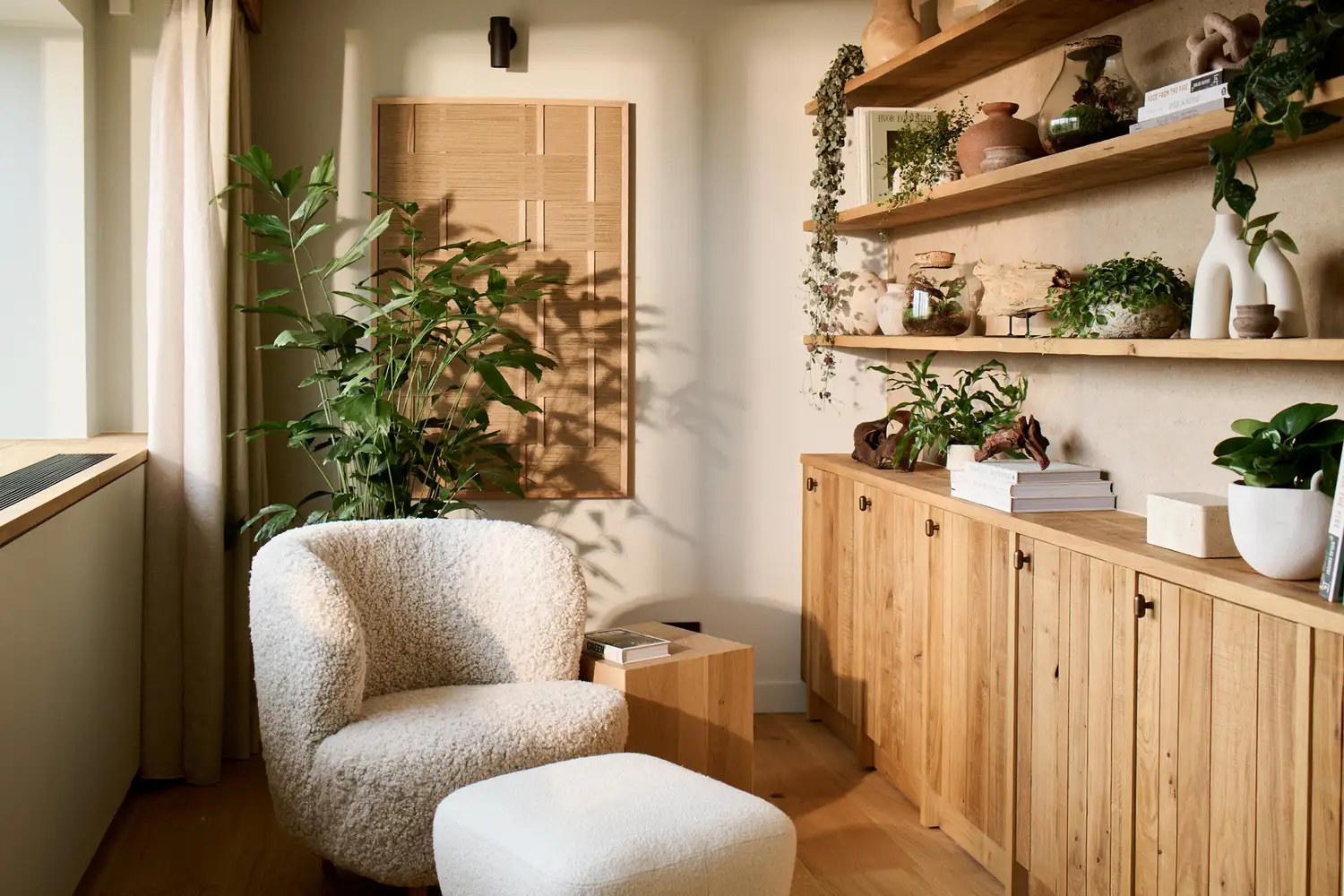
Charming greenhouse atmosphere with plants, communal long table, warmed by wood stove, scenic rooftop views.