Sushi Anaba






Sushi Anaba holds a Michelin star and an Opinionated About Dining top-100 ranking for its edomae-format counter in Copenhagen's Nordhavn district, where chef Mads Battefeld applies Tokyo training to Nordic catches including Norwegian scallop and Jutland lobster. The sake list reaches beyond familiar labels into lesser-known producers. The kitchen runs Thursday through Saturday evenings, with Friday and Saturday lunch service also available.
Pearl is the En Primeur Club membership app — saves, bookings, and concierge access live there. Same editors, same standards.
- Address
- Mariehamngade 23, 2150 København, Denmark
- Phone
- +45 61 61 51 86
- Website
- sushianaba.com
- Directions
- Get directions
 Saves & bookings on Pearl
Where Edomae Discipline Meets the North Sea
Sushi Anaba sits on Mariehamngade in Nordhavn, Copenhagen's repurposed harbour district, a setting that quietly underscores its premise: the raw materials of Nordic waters, handled through the protocols of Edo-period Tokyo. The address sits in Nordhavn, and that separation matters. It places Sushi Anaba inside a neighbourhood defined by water, industrial retrofitting, and a loose cluster of destination-driven venues that people travel to rather than stumble upon.
Edomae sushi, in its original sense, referred to fish taken from the waters around Edo (present-day Tokyo) and prepared with techniques designed to preserve and transform, curing, marinating, ageing, drying, rather than simply slicing raw fish. That tradition, when transplanted to a different coastline, raises an immediate question: which elements travel and which are irreplaceable? At Sushi Anaba, the techniques travel. The fish doesn't need to.
Nordic Waters, Tokyo Protocols
The culinary argument underpinning Sushi Anaba is that Scandinavian waters produce raw material of sufficient quality to hold up under the scrutiny of edomae technique. Norwegian scallop and lobster from Jutland appear in the kitchen's rotation, sourced from the same cold, clean Atlantic-adjacent fisheries that have supplied the Nordic fine dining movement since well before Copenhagen's restaurant reputation solidified globally. What distinguishes the approach here is that those materials are not being used for New Nordic plating or fermentation-led experimentation, the frame in which venues like Geranium, Noma, and Kadeau have built their reputations. Instead, they are being passed through a strictly Japanese formal logic: rice temperature, knife geometry, seasoning via nikiri, and the particular discipline of letting a well-prepared piece of seafood speak without architectural intervention.
Chef Mads Battefeld's Tokyo training is the hinge. In Copenhagen's dining scene, Japanese technique tends to appear as an influence absorbed into a Nordic framework, kaiseki structure informing a tasting menu, Japanese precision cited as an inspiration. At the restaurant, the hierarchy runs in the other direction: edomae is the foundation, and the Nordic materials are what fill it. That inversion is exactly what has earned the restaurant an Opinionated About Dining ranking of #110 in Europe in 2024, rising to #137 in 2025 within a upper-tier European field that includes hundreds of Michelin-recognised addresses. The OAD methodology is particularly attentive to precision and culinary integrity, which makes those rankings a useful signal about what the kitchen is actually doing.
Where This Fits in Copenhagen's Restaurant Scene
Copenhagen has spent two decades building a reputation almost entirely on New Nordic logic. The wave that moved through Noma and into venues like Alchemist and Koan emphasised foraged ingredients, fermentation, regional identity, and a visible creative authorship. The restaurant operates outside that tradition without operating in opposition to it. The sourcing philosophy, local, seasonal, water-led, is shared with much of the city's serious dining. The expression is different: no visible creative invention at the plate level, just the accumulated skill of edomae preparation applied to excellent fish.
Within global sushi specifically, the reference points are counters like Masa in New York City and Sushi Masaki Saito in Toronto, both of which represent the transplanted Japanese counter tradition at its most serious in Western cities. The restaurant belongs to that category of address: a counter operating with Japanese formal discipline in a non-Japanese city, differentiated by the specific character of locally sourced seafood. In Europe, that category is thin.
The Michelin star awarded in 2025 confirms institutional recognition, and the Star Wine List White Star designation signals that the drinks program is taken as seriously as the food. An extensive sake selection oriented toward lesser-known producers is a deliberate contrast to the standard approach of anchoring a sake list at well-distributed names. That kind of selection requires genuine expertise and supplier relationships, and it extends the edomae logic into the glass: the drink should complement the fish, not override it.
The Sake Dimension
Copenhagen's bar and drinks culture has matured significantly over the past decade, with natural wine, producer-direct sourcing, and list curation becoming a meaningful part of how serious venues differentiate themselves. The restaurant's approach to sake fits that broader shift in emphasis, applying the same producer-level attention to Japanese brewing that the leading wine lists here apply to European viticulture. For guests with serious sake interest, the list rewards attention in the same way a sommelier-curated wine program does at similarly exacting venues.
Planning Your Visit
The restaurant is located at Mariehamngade 23 in the 2150 postcode, placing it in Nordhavn. The kitchen is closed Monday, Tuesday, and Sunday. Thursday and Friday evening service runs from 5 pm to midnight; Friday and Saturday add a lunch service from noon to 3 pm, with the evening session resuming at 5 pm. Saturday follows the same lunch-and-dinner structure. The price positioning places it in the premium category, with a per-person spend of about $232.Geranium and Alchemist, while still sitting firmly in the premium category.9 across 219 reviews.
The Broader Danish Fine Dining Picture
Copenhagen is the obvious anchor for international visitors, but Denmark's fine dining extends outward in ways worth knowing. Jordnær in Gentofte, just north of the capital, holds multiple Michelin stars and is regarded as among the more serious kitchens in Scandinavia. Beyond the Copenhagen metro area, Frederikshøj in Aarhus, Henne Kirkeby Kro in Henne, Alimentum in Aalborg, ARO in Odense, and Domæne in Herning represent the country's culinary reach beyond its capital. Within the capital itself, the combination of New Nordic flagships and a specialist edomae counter at Michelin level gives Copenhagen a range that few European cities of its size can match.
The restaurant occupies a specific gap in that picture: Japanese formalism at the same sourcing latitude as Nordic cuisine, arriving at the same fish from a different technical tradition.
FAQ
What should I eat at Sushi Anaba?
The kitchen's orientation is edomae omakase, meaning the progression is determined by the chef rather than selected from a menu. The guiding principle is Nordic seafood, Norwegian scallop and Jutland lobster are among the documented anchor ingredients, prepared through traditional Edo-period techniques: curing, ageing, and seasoning with nikiri rather than relying on soy and wasabi as correctives. Battefeld's Tokyo training gives the preparation its formal logic. Given the Michelin star and the kitchen's OAD ranking, the sake pairing is worth considering alongside the food: the list is built around lesser-known producers and is designed to work with the fish rather than alongside it incidentally.
How It Stacks Up
Comparable venues nearby, for context on price, style, and recognition.
| Venue | Cuisine | Price | Awards | Notes |
|---|---|---|---|---|
| Sushi AnabaThis venue — the venue you are viewing | Traditional Edomae Omakase with Nordic Seafood | $$$$ | Michelin 1 Star | Not listed |
| Alouette | Modern Nordic Fine Dining | $$$$ | Michelin 1 Star | Indre By |
| Jatak | Nordic-Asian Fusion | $$$$ | Michelin 1 Star | Nørrebro |
| Møntergade | Classic Danish Smørrebrød & Danish-French Brasserie | $$$$ | Bib Gourmand | Indre By |
| Marchal | Modern French with Nordic Influences | $$$$ | Michelin 1 Star | Indre By |
| Søllerød Kro | Modern French Fine Dining | $$$$ | Michelin 1 Star | Holte |
Recognition history
Dated appearances from independent guides and award organizations, with the underlying list record or original source where available.
Falstaff Restaurant - 94 Falstaff Points
Falstaff
Michelin 1 Star
Michelin
Opinionated About Dining Top Restaurants in Europe Ranked #125
Opinionated About Dining
Star Wine List
Star Wine List
White Guide Denmark Restaurants - Global Masters Level
White Guide
Michelin 1 Star
Michelin
Opinionated About Dining Top Restaurants in Europe Ranked #137
Opinionated About Dining
The Best Chef One Knife
The Best Chef
Michelin Plate
Michelin
Opinionated About Dining Top Restaurants in Europe Ranked #110
Opinionated About Dining
Opinionated About Dining Top New Restaurants in Europe Recommended
Opinionated About Dining
Continue exploring
More in Copenhagen
Restaurants in Copenhagen
Browse all →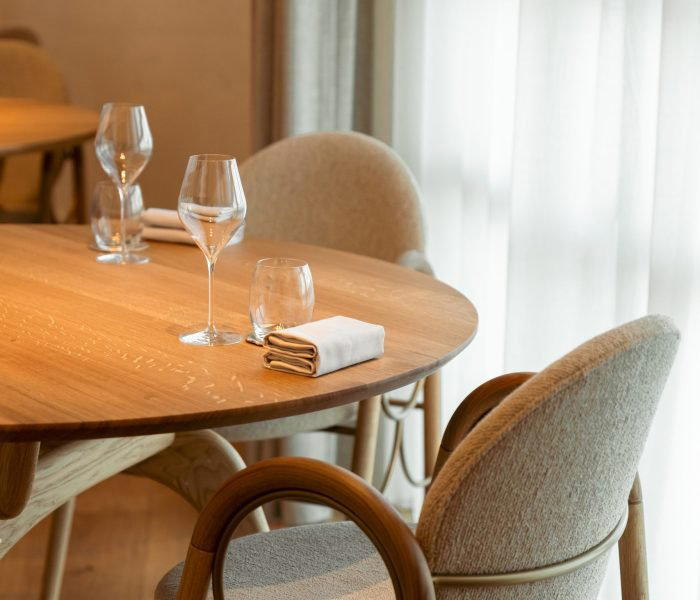
Bars in Copenhagen
Browse all →
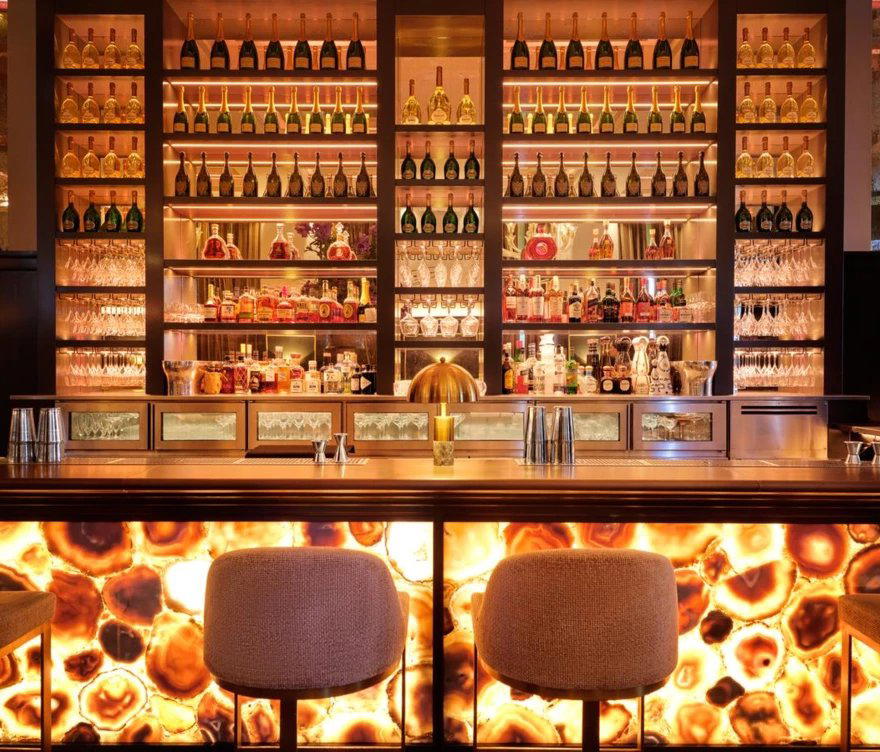
Hotels in Copenhagen
Browse all →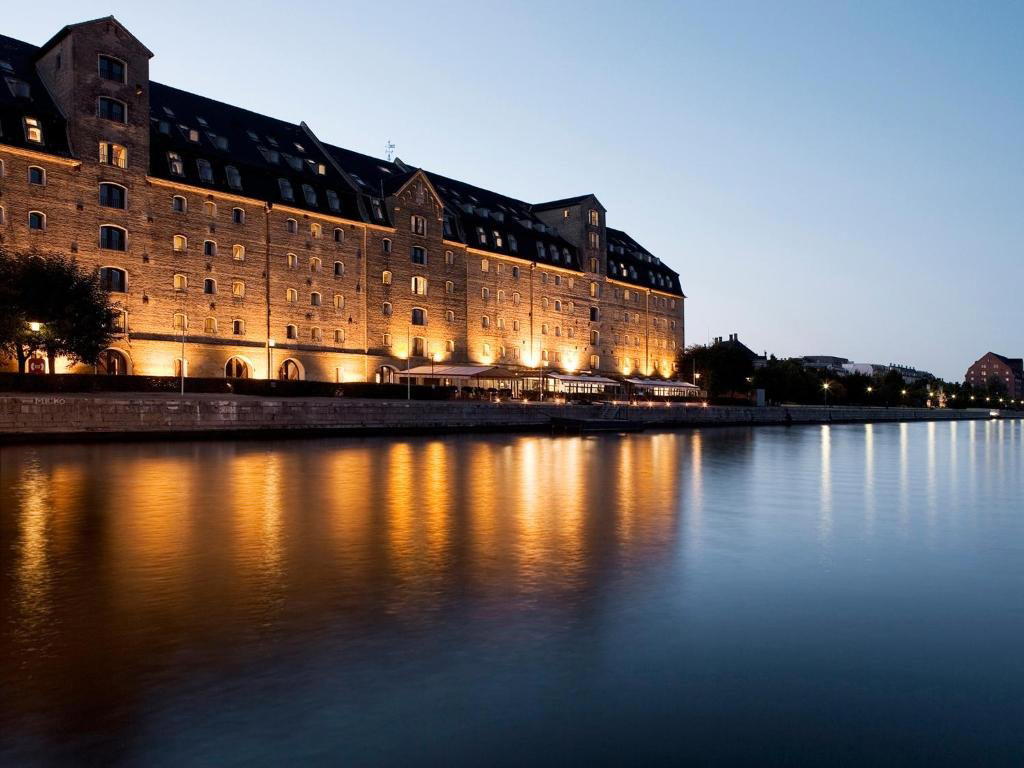

At a Glance
- Intimate
- Elegant
- Minimalist
- Sophisticated
- Date Night
- Special Occasion
- Chefs Counter
- Waterfront
- Sake Program
- Natural Wine
- Sustainable Seafood
- Local Sourcing
- Waterfront
Current opening hours
- Monday
- Closed
- Tuesday
- Closed
- Wednesday
- 5 PM–12 AM
- Thursday
- 5 PM–12 AM
- Friday
- 12–3 PM, 5 PM–12 AM
- Saturday
- Closed
- Sunday
- Closed
Hours can change for holidays and private events. Last verified .
Calm and precise atmosphere with soft movements, panoramic windows covered by curtains, and an intimate counter setting focused on the chef's craftsmanship.