


1 Michelin Key · Mr & Mrs Smith Seal of Approval · Small Luxury Hotels of the World Member
A converted cinema building on Strandvejen, Park Lane Copenhagen occupies a quietly prestigious stretch of Hellerup with 69 rooms, high-ceilinged bedrooms, and a wine bar and restaurant opening onto its own terrace. Rates from $358 place it in the upper tier of design-led townhouse hotels north of central Copenhagen, within walking distance of Øregård Park and the coast.

Pearl is the En Primeur Club membership app, where members save venues, book tables and use the concierge.
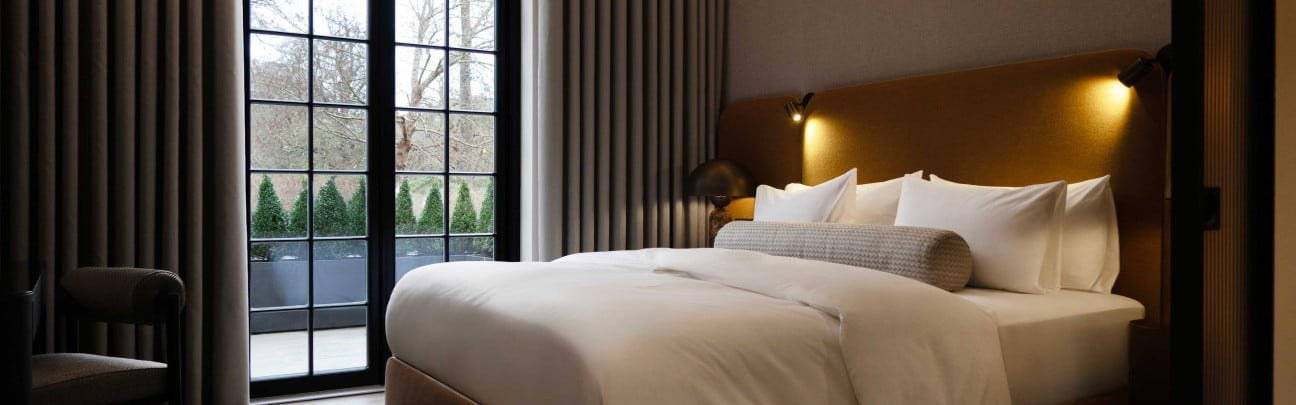
Where Hellerup's Residential Calm Meets Period Architecture
The northern suburbs of Copenhagen have long operated on a different register from the capital's inner districts. Hellerup, the prosperous residential quarter that stretches along Strandvejen between the city and the Øresund coast, is less a tourist zone than a place where old money, embassies, and understated design-led hospitality coexist. The small hotels that succeed here tend to do so by reading the neighbourhood rather than importing a generic luxury template onto it. Our full Hellerup restaurants guide gives a broader picture of what the area offers, but the hospitality story is meaningfully shaped by a building stock that rewards adaptive reuse.
Park Lane Copenhagen sits on Strandvejen 203, in a period building that previously served as a cinema. That origin is not incidental: the conversion has preserved high ceilings throughout, and the sense of volume those ceilings create distinguishes the interior from the lower, more compressed proportions you find in many contemporary boutique hotels. Arriving from the street, the building reads as a substantial townhouse of its era, with the kind of facade that signals civic confidence rather than commercial ambition. The gardens of Øregård Park begin immediately adjacent, and the coastline is within a few minutes on foot, meaning the property occupies one of the more considered positions available in this part of the city.
The Architecture of a Former Cinema, Put to Hotel Use
Adaptive reuse projects succeed or fail on the same question: does the new programme respect what made the original building legible? In Hellerup, where the streetscape along Strandvejen is defined by late nineteenth and early twentieth century residential and civic architecture, a conversion that stripped the original character would read as a mismatch. The approach at Park Lane Copenhagen has been to retain the spatial generosity that cinema construction typically produced, most notably in ceiling height, while introducing a decorative scheme that sits closer to the townhouse tradition than to the industrial-chic vocabulary that often accompanies repurposed buildings.
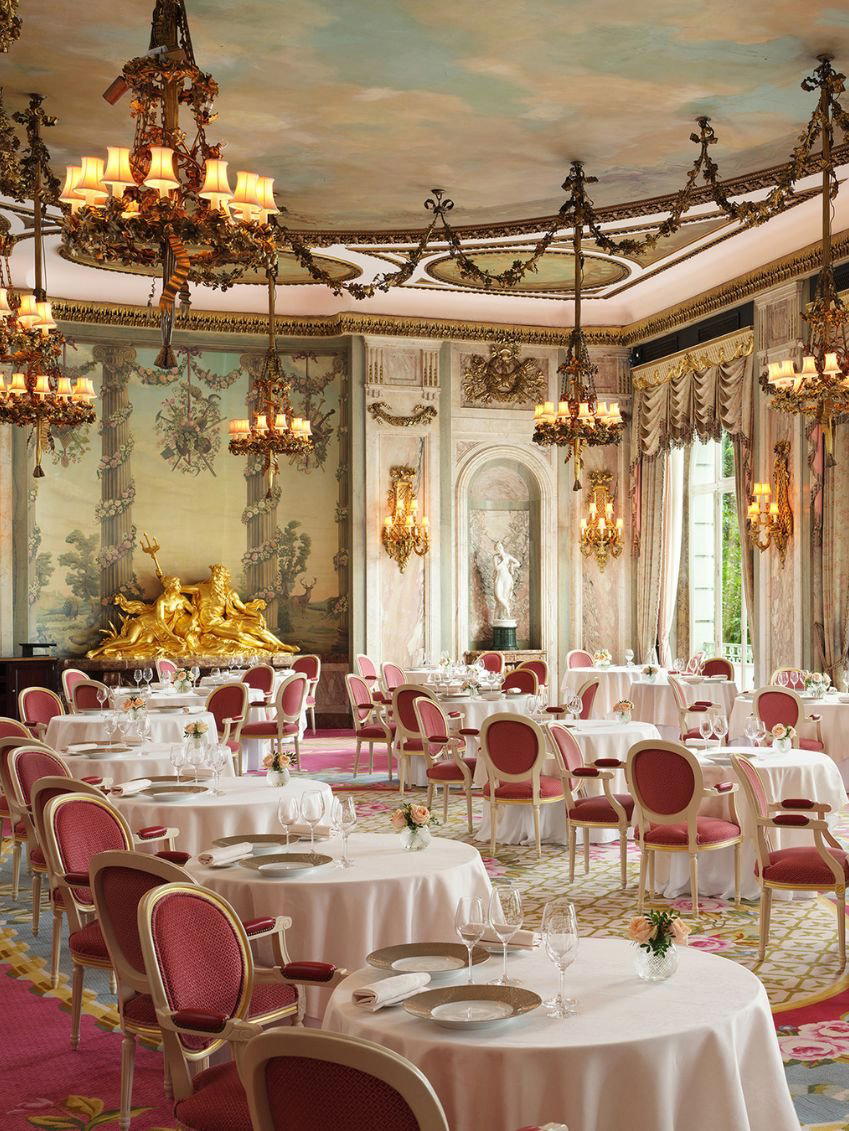
The 69 rooms distribute across the building in a configuration that reflects the original floorplate rather than forcing a grid of identical boxes. High ceilings in the bedrooms are not a marketing detail: they alter the proportion of a room in ways that affect how it feels to spend time there, particularly on overcast Scandinavian winter days when artificial light carries more of the burden. The stylistic approach throughout, what the property's positioning describes as timeless sophistication with a modern touch, is the kind of language that can cover a range of outcomes. The physical evidence, a wine bar, a restaurant with its own terrace, and a decorative scheme that extends consistently across public and private spaces, suggests the ambition is coherent rather than merely declarative.
Among Danish hotel properties that have made a point of design continuity and architectural heritage, Park Lane Copenhagen occupies a different niche from the conversion projects further afield, such as Dragsholm Slot in Hørve or Kokkedal Castle Copenhagen in Horsholm, both of which draw on older country-house or castle typologies. The Hellerup property is a different proposition: urban in address, suburban in pace, and period in character without leaning on aristocratic precedent.
The Wine Bar, Restaurant, and Terrace
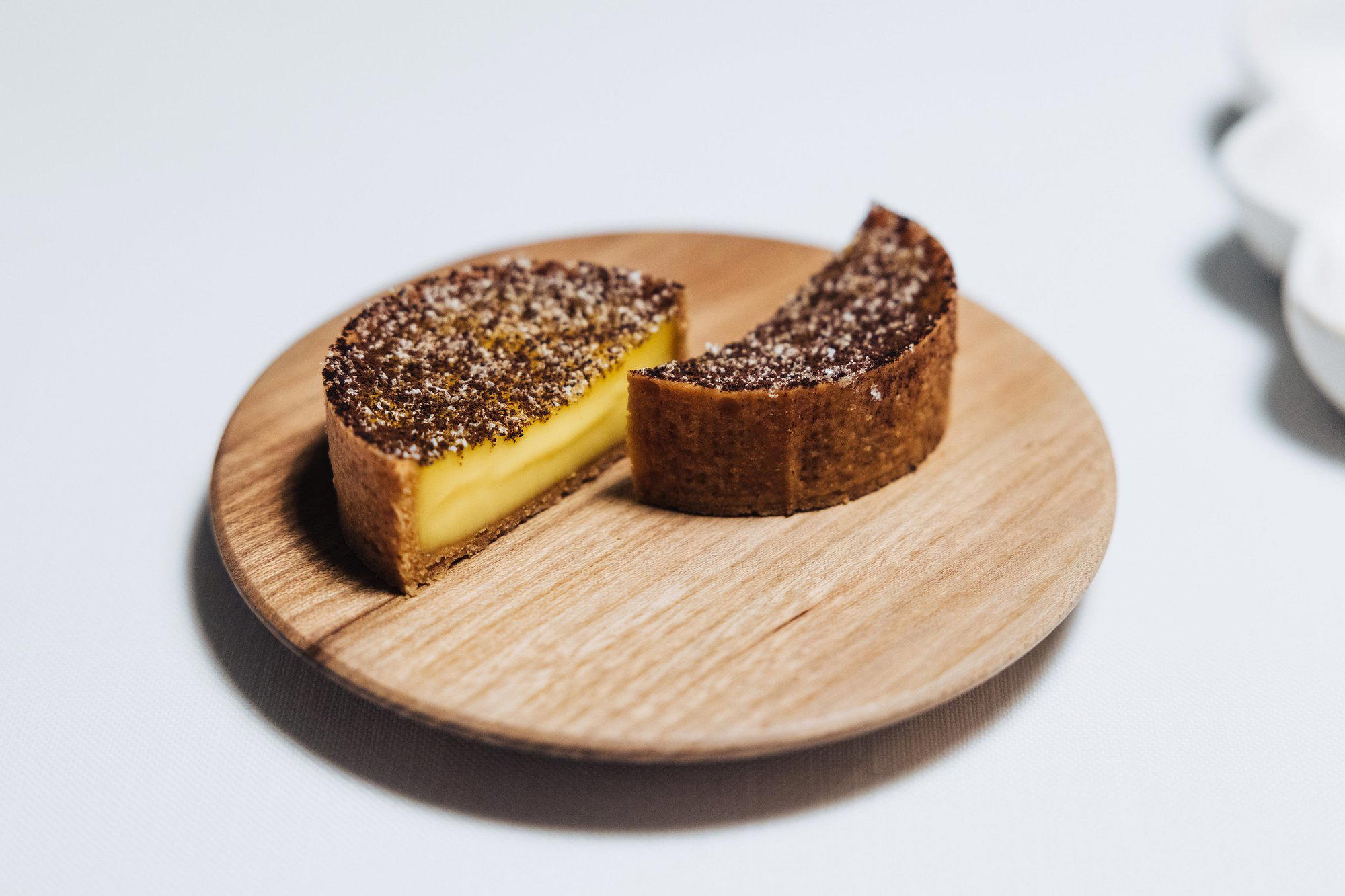
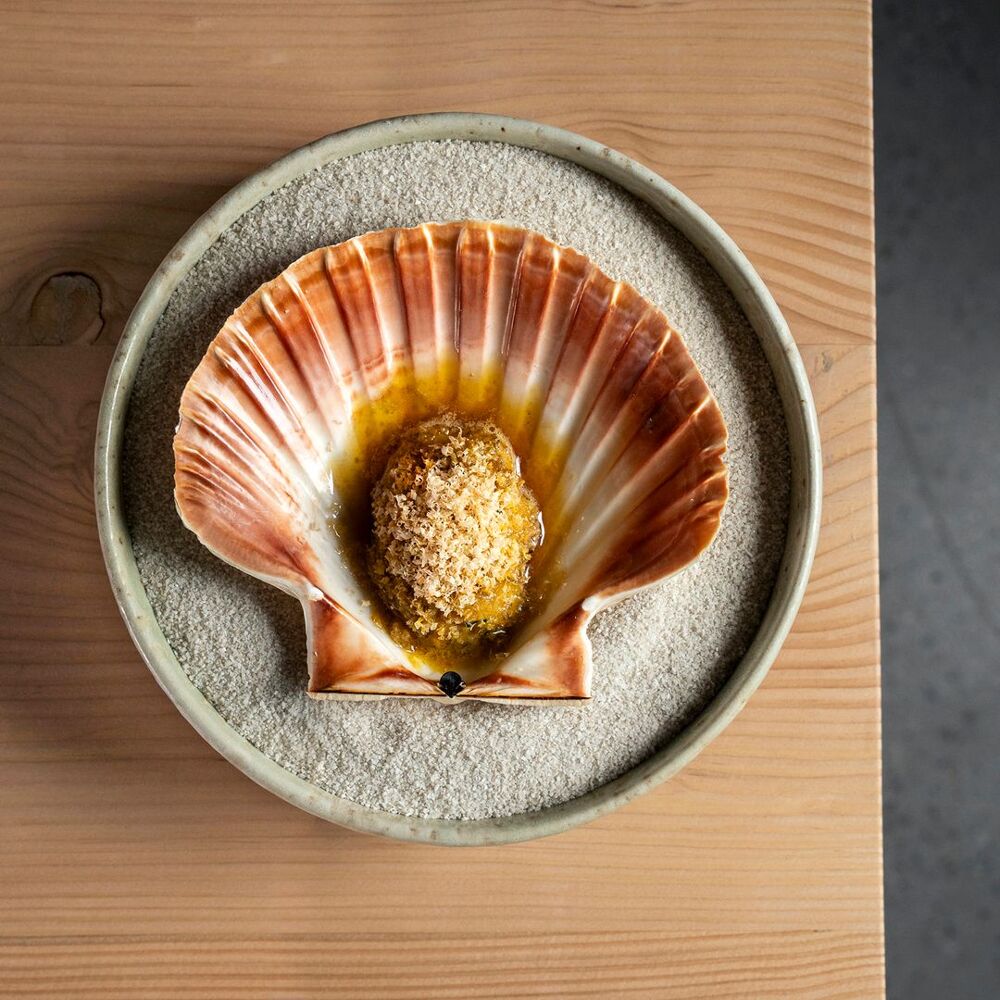
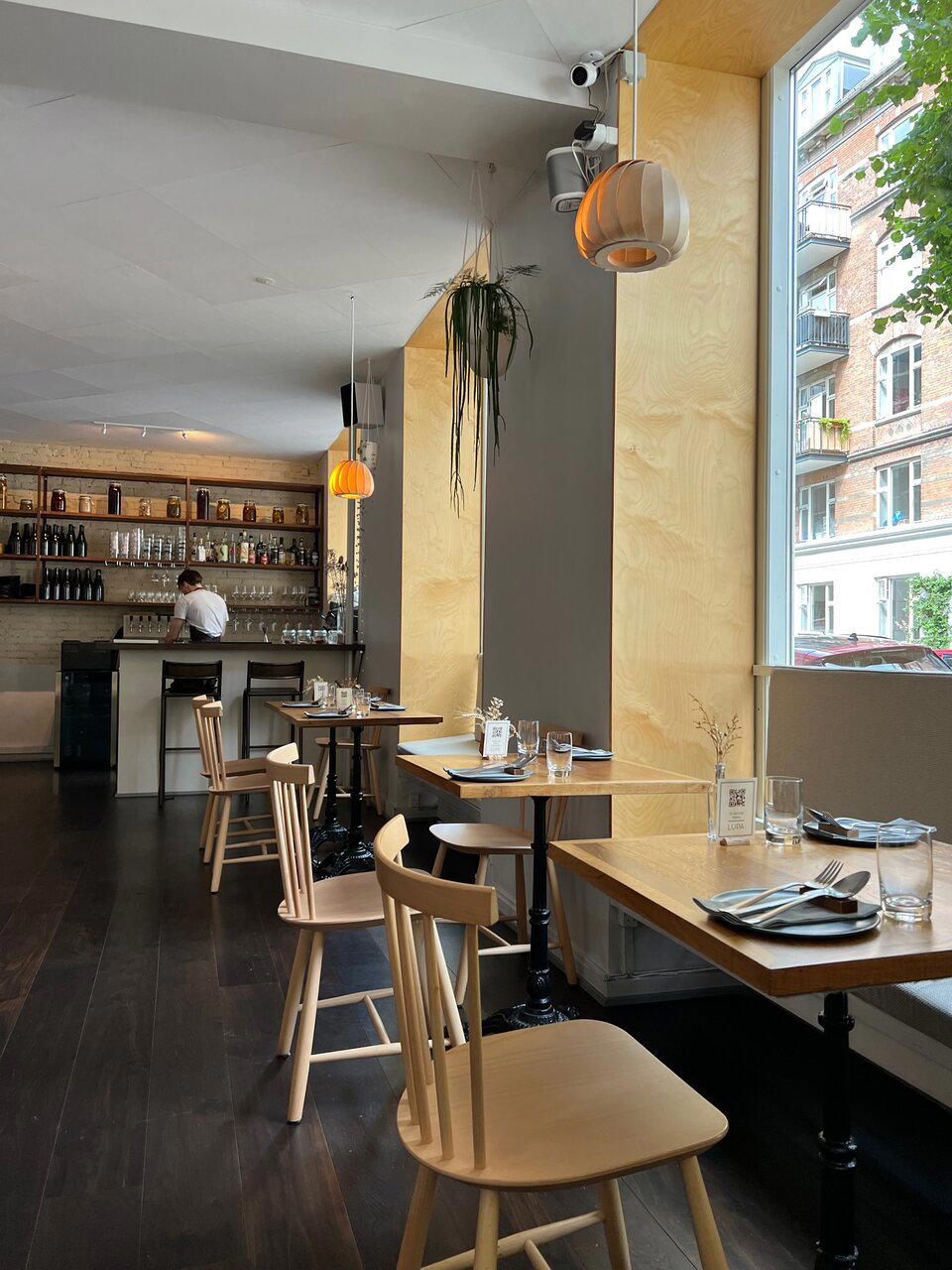
The in-house food and drink programme at Park Lane Copenhagen runs to a wine bar and restaurant, with a terrace attached. In the context of a 69-room hotel in a residential suburb, this is a meaningful amenity: the alternative for guests is the wider Hellerup dining scene or a commute into central Copenhagen. The terrace opens the restaurant toward the park and the prevailing natural light from that direction, which in Danish summer months runs long into the evening. The decorative consistency that characterises the rest of the building extends into the restaurant and bar spaces, which avoids the common problem of hotel dining rooms that feel decoratively disconnected from the accommodation above.
The wine bar format, as opposed to a full lobby bar, reflects a broader pattern visible in Scandinavian hospitality: a preference for focused, well-beverage programmes over the generalist bar menus that larger international hotels tend to run.
Positioning Within the Danish Boutique Hotel Category
At a starting rate of $358, Park Lane Copenhagen prices in a range that sits above the mid-market but below the top tier of Copenhagen hotel accommodation. That position is consistent with a 69-room period property in a premium residential suburb rather than a central city address. For context within the Danish market, properties like Dyvig Badehotel in Nordborg, Falsled Kro in Falsled, and Allinge Badehotel in Allinge occupy the design-led regional hotel category, each with a different relationship to landscape and scale. Park Lane Copenhagen's competitive set is defined more by its suburban Copenhagen location and period architecture than by rural retreat credentials.
At the international scale, the townhouse hotel format has proven a durable premium niche in European cities, with properties like Herman K in Copenhagen offering a point of direct city comparison. Further afield, the design-led small hotel model that prioritises architectural coherence over brand scale is represented across the EP Club portfolio by properties including La Réserve Paris, Castello di Reschio in Lisciano Niccone, and HOTEL THE MITSUI KYOTO in Kyoto, each of which deploys a distinct architectural identity as its primary differentiator in the premium tier.
Practical Details for Planning a Stay
Park Lane Copenhagen is located at Strandvejen 203, 2900 Hellerup, directly adjacent to Øregård Park and a short walk from the Øresund shore. Rates begin at $358, placing the 69-room property in the upper-mid tier of the Copenhagen area market. The hotel's position on Strandvejen gives direct access to both the centre of Copenhagen via the coastal road and to the broader North Zealand region for day travel. Guests arriving by train will find Hellerup station within practical walking distance of the property. Given the relatively small room count for a period building of this character, advance booking is advisable, particularly during the summer months when Hellerup's proximity to the water makes it a draw beyond the standard business travel season.
Comparable Spots, Quickly
Comparable venues nearby, for context on price, style, and recognition.
| Venue | Cuisine | Price | Awards | Notes |
|---|---|---|---|---|
| Park Lane CopenhagenThis venue (the venue you are viewing) | Renovated historic boutique hotel with timeless elegance and personal service. | $100–200 | 1 Michelin Key · Mr & Mrs Smith Seal of Approval | Not listed |
| Hotel Sanders | Neoclassical townhouse with bespoke local craftsmanship celebrating Danish heritage. | $500–750 | 1 Michelin Key · Forbes Recommended | Indre By |
| Nobis Hotel Copenhagen | Contemporary five-star luxury blending Danish classicism with modern minimalism, designed by Swedish architect Gert Wingårdh. | $300–500 | 1 Michelin Key · La Liste Top Hotels | Indre By |
| Falsled Kro | Historic Mediterranean-styled heritage inn reimagined as a luxury retreat, blending 18th-century charm with contemporary comfort across charming farm buildings. | $500–750 | 1 Michelin Key · Relais Chateaux Award | Falsled, South Funen |
| 1 Hotel Copenhagen | Nature-inspired sustainable luxury | Not listed | 1 Michelin Key · Travel + Leisure It List Hotels | Indre By |
| Nimb Copenhagen | Moorish-inspired palace with Venetian marble façade, blending 1909 heritage architecture with contemporary luxury and Danish design minimalism. | $500–750 | 1 Michelin Key · La Liste Top Hotels | Indre By |
Recognition history
Dated appearances from independent guides and award organizations, with the underlying list record or original source where available.
Michelin 1 Key
Michelin
Mr & Mrs Smith Seal of Approval
Mr & Mrs Smith
Small Luxury Hotels of the World Member
Small Luxury Hotels of the World
Full recognition history (4 entries)
Michelin 1 Key
Michelin
Continue exploring
More in Hellerup
Hotels in Hellerup
All hotels in Hellerup →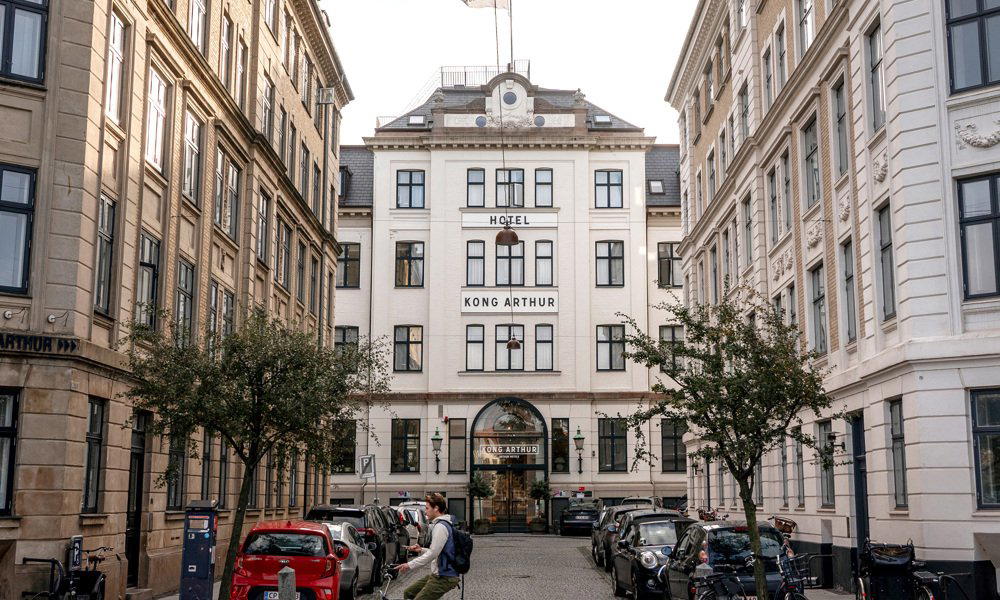
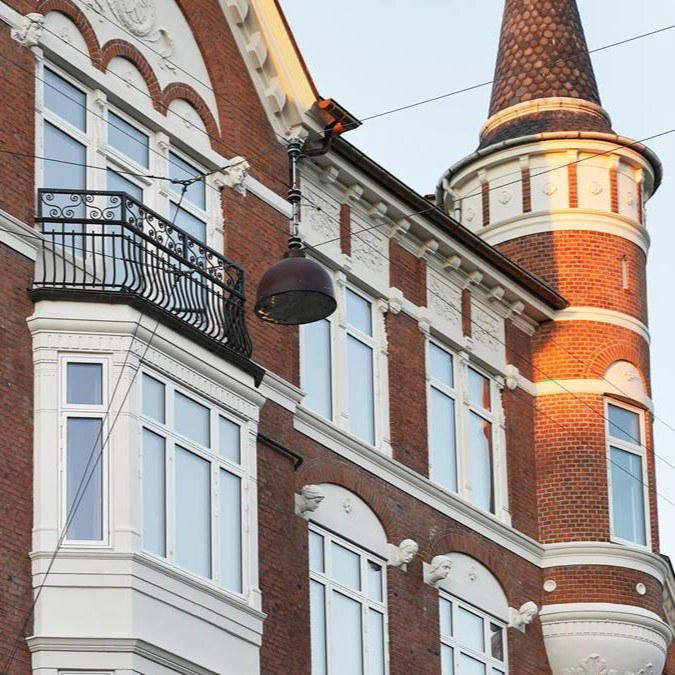
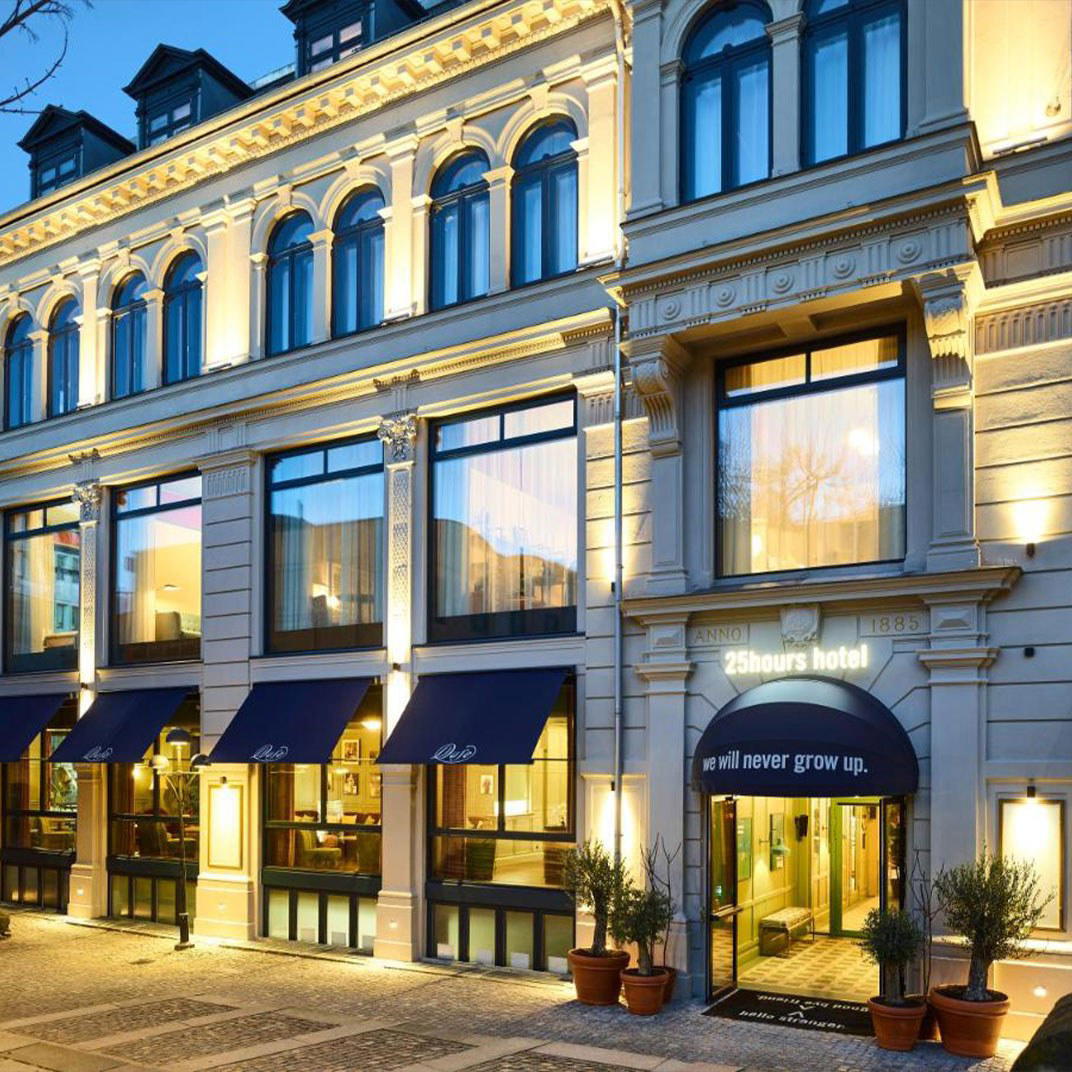
Bars in Hellerup
Browse all →
Restaurants in Hellerup
All restaurants in Hellerup →

Details
- Elegant
- Sophisticated
- Modern
- Quiet
- Cozy
- Romantic Getaway
- Business Trip
- Weekend Escape
- Terrace
- Historic Building
- Design Destination
- Wi Fi
- Fitness Center
- Room Service
- Concierge
- Restaurant
- Meeting Rooms
- Business Center
- Garden
- Wheelchair Accessible
- Elevator
- Step Free Entrance
Timeless elegance blending historic architecture with contemporary Nordic design, featuring high ceilings, designer lighting, and a serene, sophisticated atmosphere.