On Tianmu East Road in Taipei's Shilin district, Golden Formosa Taiwanese Cuisine 金蓬萊遵古台菜餐廳 occupies a distinct position among restaurants committed to classical Taiwanese cooking traditions. The kitchen draws on time-honoured techniques and locally sourced ingredients rather than the fusion-forward approach now common across the city's dining scene. For anyone tracing the roots of Taiwanese table culture, it belongs near the top of the research list.
 Discover on Pearl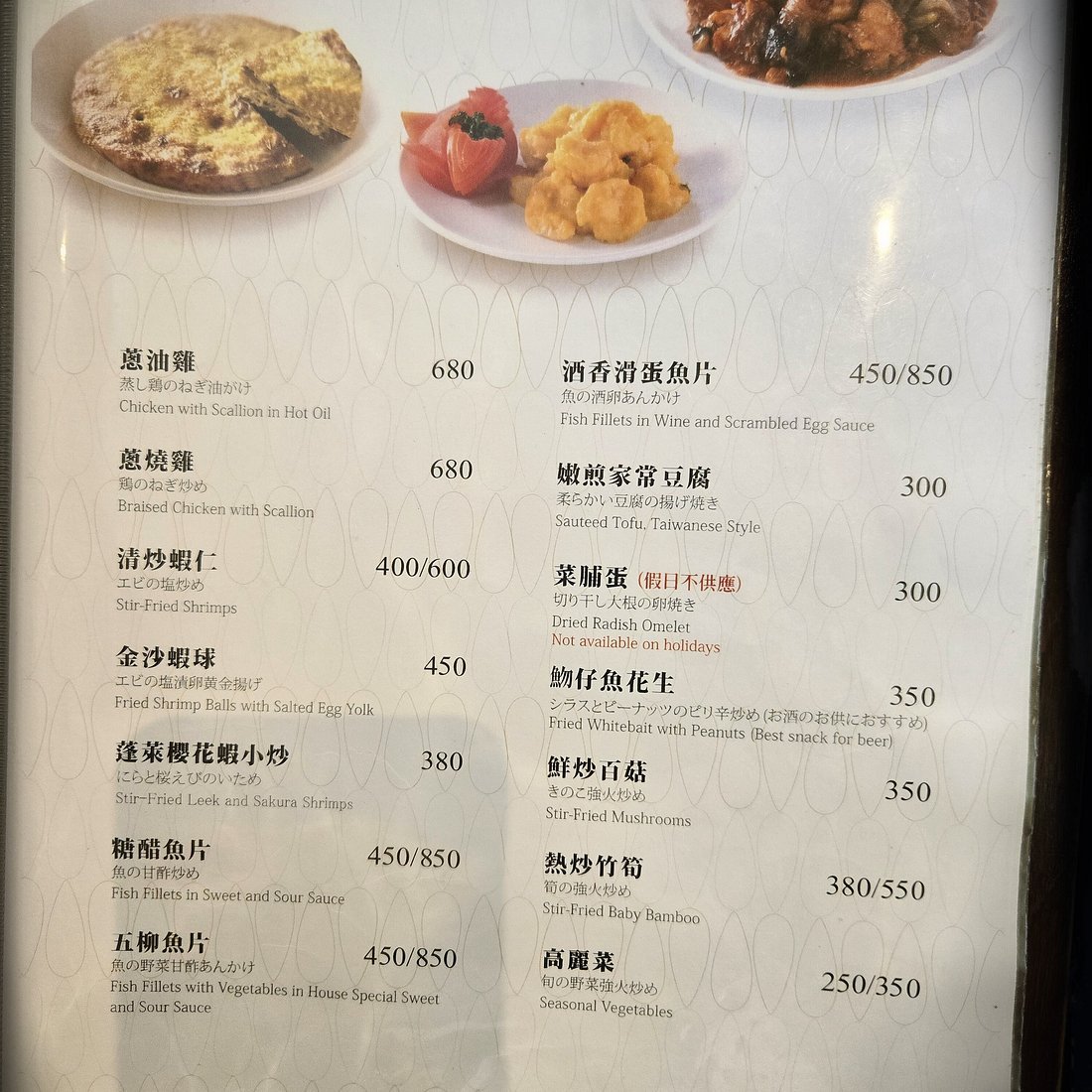
Classical Taiwanese Cooking in the Tianmu Quarter
Tianmu East Road runs through one of Taipei's most residential northern corridors, a neighbourhood that has long attracted diplomats, expatriates, and the families of returning overseas Taiwanese. The food culture here reflects that layered history: Japanese izakaya sit alongside Sichuan hotpot shops and a handful of establishments serious about pre-modernisation Taiwanese table traditions. Golden Formosa Taiwanese Cuisine 金蓬萊遵古台菜餐廳, located at 101 Tianmu East Road, belongs to that last category, and in the broader context of Taipei's dining scene, that positioning carries real significance.
Across Taiwan, the conversation around indigenous culinary identity has intensified as restaurants at the high end of the market experiment with hybridised formats. JL Studio in Taichung works within a modern Singaporean framework, while logy in Taipei applies European contemporary technique to local produce. These are serious, award-recognised kitchens, but they operate in a fundamentally different register from a restaurant that frames its identity around the phrase 遵古 — meaning, roughly, adherence to ancient method. That framing tells you something before you even read a menu.
The shortlist, unlocked.
Hard-to-book tables, cellar releases, and concierge-planned trips.
Get Exclusive Access →What 遵古台菜 Actually Means on the Plate
Classical Taiwanese cuisine, known as 台菜 (tâi-tshài), developed across centuries of layered influence: Hoklo and Hakka settler cooking, the Japanese colonial period's reorganisation of agricultural production, and postwar mainland Chinese arrivals who brought entirely different pantry logic. The 遵古 tradition within that broader category refers to kitchens that anchor their approach in the pre-fusion, pre-modernisation techniques associated with ceremonial banquet cooking, temple feast traditions, and the domestic registers of Minnan-descended households.
Ingredient sourcing sits at the core of this practice. Classical 台菜 cooking relies on a particular relationship with seasonal Taiwanese produce, river fish, coastal shellfish, air-dried preserved meats, and fermented condiments that are increasingly difficult to source as industrial supply chains have standardised flavour profiles across the region. Where contemporary restaurants might source broadly or substitute freely, adherence to the 遵古 standard implies a commitment to tracking down the specific regional ingredients that give dishes their historical character. That commitment is materially expensive and logistically demanding, which is part of why so few restaurants sustain it across decades.
For broader reference on how traditional ingredient sourcing shapes identity across Taiwan's dining geography, Amei in Tainan and Akame in Wutai Township each represent distinct regional approaches to the same underlying question of provenance and technique.
Shilin's Dining Position in Taipei's Restaurant Map
Shilin District is leading known internationally as the home of the Shilin Night Market, which draws enormous visitor volumes and operates at a completely different pitch from sit-down restaurant dining. The district's full geography is considerably more varied. Tianmu, the sub-area within Shilin where Golden Formosa operates, runs at higher price points and quieter registers than the night market zone, attracting a dinner-out crowd with more interest in composed, full-service meals than quick street eats.
That neighbourhood dynamic matters for understanding why a restaurant committed to classical Taiwanese banquet traditions can operate sustainably here. The Tianmu clientele has historically included Taipei residents willing to spend for quality over novelty, along with a significant proportion of Taiwanese returning from abroad who want to reconnect with food that predates the globalised restaurant formats that now dominate urban dining internationally. You can read more about the area's full dining context in our full 士林 restaurants guide.
Elsewhere across northern Taiwan, restaurants working adjacent territory include Chi Yuan in New Taipei and Volando Urai Spring Spa and Resort in Wulai District, both of which engage with Taiwanese culinary heritage through different formats and guest demographics.
How Golden Formosa Sits in the Broader Taiwan Scene
Taiwan's high-end restaurant conversation in recent years has concentrated heavily on fusion credentials, international accolades, and chef pedigrees traceable to European or Japanese training. GEN in Kaohsiung and Shen Yen in Yilan represent different ends of that spectrum. Golden Formosa operates outside this framework. Its competitive peer set is not the modern tasting-menu circuit but rather a much smaller group of family-run or generationally operated restaurants across Taipei and the northern counties that have maintained classical 台菜 standards without pivoting toward contemporary plating conventions.
That positioning makes it a different kind of reference point for serious diners. The absence of fusion ambition is not a limitation but a deliberate editorial choice about what the kitchen is for. Comparative visits to Bebu in Hsinchu County or Dongmen Rice Noodle Soup in Hsinchu City illustrate how different that positioning is from the range of approaches Taiwanese regional cooking supports.
For diners who have built their Taiwan itinerary around internationally recognised names, adding a classical 台菜 restaurant to the rotation produces a sharper sense of what local culinary identity actually looks like below the level of the modernised tasting menu. The analogy is not exact, but it is instructive: in the same way that Le Bernardin in New York City and Lazy Bear in San Francisco sit within fine dining but serve completely different ideas about what fine dining is for, classical 台菜 and contemporary Taiwanese fusion share a geography without sharing a project.
Other restaurants in Taiwan's traditional register worth cross-referencing include AKAME in Neipu, which approaches indigenous Paiwan cooking with a different sense of preservation, and Abura Yakiniku in Taichung City for grilled-format comparison. Wonder.land 仙境 takes a more theatrical approach to the Taiwanese dining experience altogether.
Planning a Visit
Golden Formosa is located at 101 Tianmu East Road in the Tianmu area of Shilin District, Taipei (postal code 11153). Tianmu is accessible from central Taipei by taxi or by combining the MRT red line to Shilin Station with a short taxi or bus ride north toward the Tianmu commercial strip. The neighbourhood restaurants along Tianmu East Road generally run dinner from early evening through to around nine or ten at night, though specific hours for Golden Formosa should be confirmed directly before visiting, as they are not published in available listings. Reservations for restaurants of this type in Taipei are advisable, particularly for weekend evenings and for larger groups seeking banquet-format dining. The address is direct to provide to any Taipei taxi driver or navigation app.
Visitors to the broader northern coastal area can combine a Tianmu dinner with stops at 海鮮小館 in Gongliao District or 台北二路燒鵝飯 in Sanchong District for a more complete picture of greater Taipei's range.
Frequently Asked Questions
- Is Golden Formosa Taiwanese Cuisine child-friendly? Classical Taiwanese banquet-style restaurants generally accommodate families, and Taiwanese dining culture is broadly inclusive of children at the table. That said, the format and setting at a traditional 台菜 restaurant in a Tianmu address, which typically draws an adult dinner crowd, may suit older children more readily than very young ones. For family dining in Taipei, pricing tier and formality level are worth confirming with the restaurant directly before booking.
- What is the atmosphere like at Golden Formosa Taiwanese Cuisine? Tianmu dining rooms committed to classical 台菜 traditions tend toward established, comfortable settings rather than the spare minimalism or theatrical staging now common in Taipei's newer award-circuit restaurants. The reference points are not the open kitchens of logy or the contemporary design of Taïrroir, but the warm, full-table format associated with Taiwanese ceremonial dining. Expect a room oriented around groups and shared dishes rather than individual tasting progressions.
- What is the signature dish at Golden Formosa Taiwanese Cuisine? Specific dish details are not confirmed in available data, and fabricating menu items for a classical 台菜 kitchen would misrepresent what the kitchen actually serves. In the 遵古 tradition broadly, signature preparations tend to anchor around slow-braised proteins, fermented and preserved condiments, and ceremonial dishes associated with Taiwanese banquet sequences. Confirming the current menu directly with the restaurant will give a more accurate picture than any secondhand listing.
- How does Golden Formosa relate to Taipei's tradition of classical banquet-style Taiwanese cooking? The 遵古台菜 category it occupies is one of the smallest and most demanding niches in Taipei's restaurant map. While the modern Taiwanese dining scene has produced internationally recognised names working in fusion or contemporary formats, the classical banquet tradition requires sourcing relationships and technical commitments that fewer kitchens maintain. For diners interested in tracing Taiwanese culinary history rather than its contemporary reinterpretation, a restaurant that names its identity around 遵古 methodology provides a different kind of reference than anything on the current award-circuit roster.
Quick Comparison
These are the closest comparables we have in our database for quick context.
| Venue | Cuisine | Price | Awards | Notes |
|---|---|---|---|---|
| Golden Formosa Taiwanese Cuisine 金蓬萊遵古台菜餐廳 | This venue | |||
| JL Studio | Modern Singaporean, Singaporean | $$$$ | Michelin 3 Star | Modern Singaporean, Singaporean, $$$$ |
| logy | Modern European, Asian Contemporary | $$$$ | Michelin 2 Star | Modern European, Asian Contemporary, $$$$ |
| Le Palais | Cantonese | $$$$ | Michelin 3 Star | Cantonese, $$$$ |
| Taïrroir | Taiwanese/French, Taiwanese contemporary | $$$$ | Michelin 3 Star | Taiwanese/French, Taiwanese contemporary, $$$$ |
| Mudan Tempura | Tempura | $$$$ | Michelin 2 Star | Tempura, $$$$ |
Need a table?
Our members enjoy priority alerts and concierge-led booking support for the world's most difficult tables.
Get Exclusive AccessThe shortlist, unlocked.
Hard-to-book tables, cellar releases, and concierge-planned trips.
Get Exclusive Access →