Goldammer Restaurant
Goldammer Restaurant occupies a defined address on Würzburger Strasse in Aschaffenburg, Bavaria, placing it within a city whose dining scene sits in the productive shadow of Frankfurt and Franconian wine country. Details on cuisine format, pricing, and booking are best confirmed directly with the venue before visiting.
 Discover on Pearl
Pearl is the En Primeur Club membership app — saves, bookings, and concierge access live there. Same editors, same standards.
- Address
- Würzburger Str. 200, 63743 Aschaffenburg, Germany
- Phone
- +4960214420033
- Website
- restaurant-goldammer.de
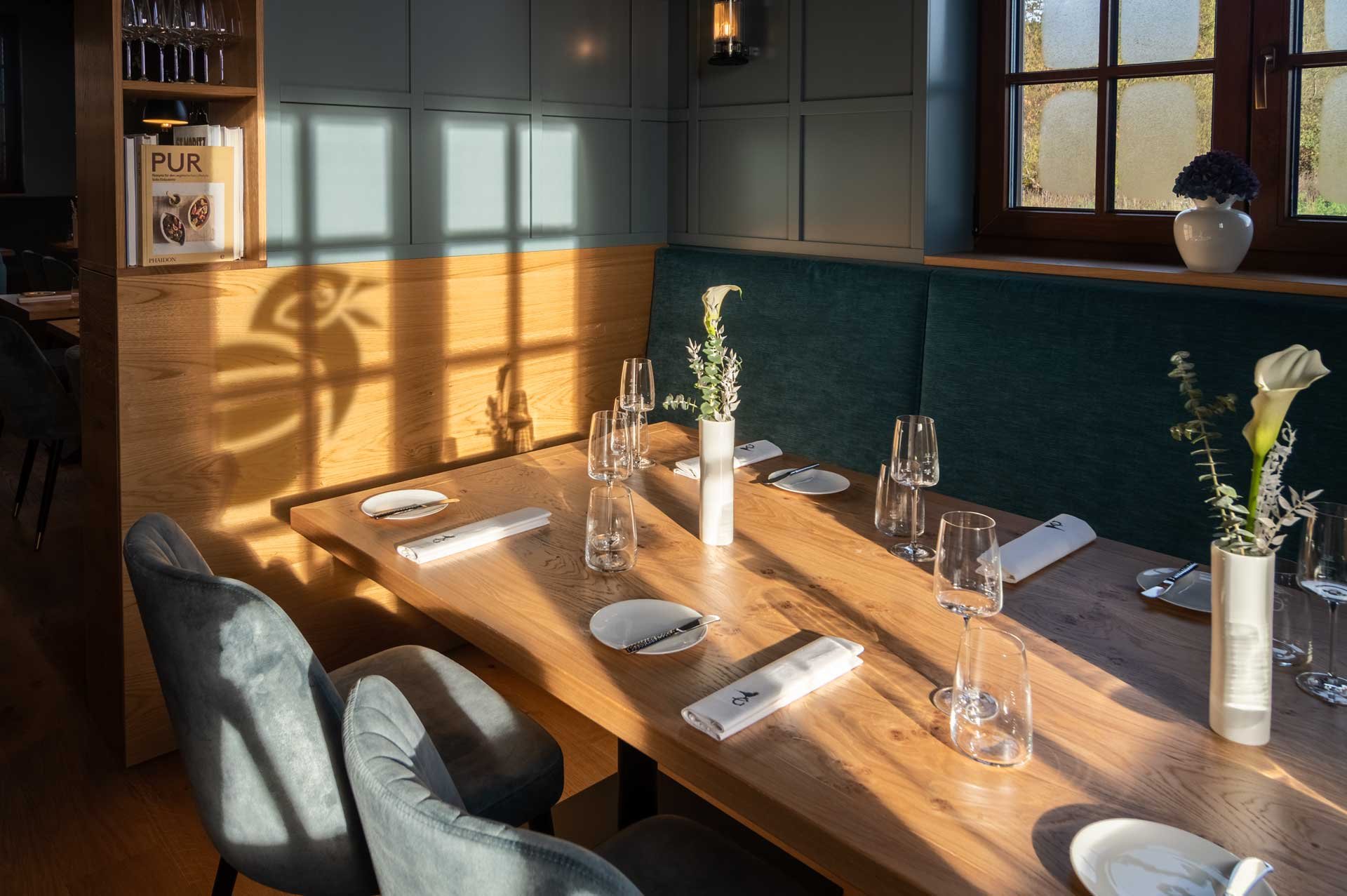
Aschaffenburg at the Table: A City Finding Its Register
The drive along Würzburger Strasse into Aschaffenburg carries the particular quality of a Franconian approach road: wide, lined with the kind of civic architecture that suggests a city comfortable with its own scale, neither reaching for Frankfurt's density nor retreating into provincial diffidence. Goldammer Restaurant sits at number 200 on that stretch, which places it at a remove from the old town's medieval core, a positioning that, in German dining culture, often signals a destination rather than a footfall operation. You go because you mean to.
Aschaffenburg itself occupies a productive culinary position. Geographically, it belongs to Bavaria but culturally it leans west toward the Rhine-Main corridor, giving it proximity to Frankfurt's ingredient supply networks and the Franconian wine appellations that run north toward Würzburg. That combination, city infrastructure with regional produce logic, is the same axis that has supported serious cooking in mid-sized German cities for decades. The question for any restaurant here is how it uses that position.
Where German Regional Cooking Stands Right Now
To understand what a serious restaurant in a city like Aschaffenburg is working against and within, it helps to know what the German fine dining conversation looks like at the top of its range. The €€€€ tier of German restaurants has bifurcated over the past decade. One branch follows the internationalist model, contemporary tasting menus where Franconian rye sits alongside Japanese technique, as seen at Aqua in Wolfsburg, where the kitchen synthesises German, Italian, and Japanese reference points into a singular creative format. The other branch works closer to the classical French tradition that shaped German haute cuisine through the 1980s and 1990s, a lineage visible at Schwarzwaldstube in Baiersbronn, where that inheritance is carried with considerable discipline.
Between those poles sits a productive middle register of restaurants in mid-sized German cities that do not operate at three-star ambition but sustain genuine cooking with regional coherence. This is the tier where places like Bagatelle in Trier and L.A. Jordan in Deidesheim have built followings, not by competing with the Michelin flagship circuit but by becoming the most considered option in their respective cities. Aschaffenburg fits that pattern, and Goldammer Restaurant occupies a notable address within it.
The Cultural Grammar of Franconian Dining
Franconian cuisine carries a distinct cultural logic that separates it from the more internationally legible cooking of Bavaria proper or the Rhine-influenced kitchens of Baden. The region's cooking is rooted in a set of ingredients, carp from the ponds of the Aischgrund, game from the Spessart forest immediately north of Aschaffenburg, Bocksbeutel-bottled Franken wines with their dry, mineral character, that resist the smoothing effects of pan-European technique. A restaurant on the western edge of Franconia, as Aschaffenburg sits, can draw on both that local idiom and the broader Rhine-Main supply chain, which includes some of Germany's most developed restaurant trade networks.
This dual access is not available to kitchens deeper in the Bavarian interior or further east. It is one reason why the stretch of Germany running from Aschaffenburg through Darmstadt toward Frankfurt has produced restaurants that operate with more technical flexibility than their regional classification might suggest. The Spessart, which begins almost at the city's northern boundary, has historically been one of Germany's significant game-producing areas, a fact that shapes autumn and winter menus across kitchens in the region in ways that are difficult to replicate from a distance.
For a counterpoint in how German regional identity translates into fine dining format, ES:SENZ in Grassau in the Chiemgau shows how Alpine Bavarian context can be worked into a contemporary tasting structure, while Schanz in Piesport demonstrates how Moselle wine country shapes a kitchen's identity in a directly comparable mid-sized city context.
The Wider German Fine Dining Reference Frame
Any assessment of Goldammer Restaurant in isolation would miss the productive comparison set available to visitors planning a more extensive itinerary. Germany's serious dining scene is genuinely distributed: the country does not concentrate its leading cooking in one or two cities the way France does in Paris, or the way the United States does in New York. Vendôme in Bergisch Gladbach and GästeHaus Klaus Erfort in Saarbrücken are both reference-point restaurants in smaller cities, building international reputations from addresses that require deliberate travel. Waldhotel Sonnora in Dreis and Victor's Fine Dining by Christian Bau in Perl extend that distributed logic into the Eifel and Saar respectively.
At the more experimental end of the German spectrum, CODA Dessert Dining in Berlin has built an international profile around a format that barely exists elsewhere, a full tasting menu constructed around dessert thinking, which signals how far the creative conversation has moved in the country's larger cities. JAN in Munich and Restaurant Haerlin in Hamburg anchor the major-city end of the range. Ösch Noir in Donaueschingen is a useful comparable for understanding how hotel-adjacent fine dining operates in smaller German cities with good regional produce access.
Internationally, the structural comparison to a place like Le Bernardin in New York City or Lazy Bear in San Francisco illustrates how defined culinary identity and deliberate format help a restaurant hold position in a competitive market regardless of city size.
Also in Aschaffenburg
Pier 18 represents the other anchor of Aschaffenburg's dining conversation, offering a contrasting format and price register for visitors building a multi-meal itinerary in the city.
Planning Your Visit
Goldammer Restaurant's address at Würzburger Str. 200 in Aschaffenburg places it in the western approach corridor of the city, accessible by car from the A3 motorway, which links Frankfurt Airport (roughly 40 kilometres west) directly to the Aschaffenburg interchange. The city also has direct rail connections from Frankfurt Hauptbahnhof on the Main-Spessart-Bahn, with journey times under an hour, making Goldammer a viable evening destination from the Frankfurt hotel base without requiring overnight accommodation. Visitors arriving from Munich can reach Aschaffenburg by fast train in approximately two hours. Goldammer Restaurant is open Tuesday and Friday through Sunday for dinner, with Wednesday and Thursday also offering lunch; reservations are recommended.
Budget Reality Check
Comparable venues nearby, for context on price, style, and recognition.
| Venue | Cuisine | Price | Awards | Notes |
|---|---|---|---|---|
| Goldammer RestaurantThis venue — the venue you are viewing | $$$ | , | ||
| Pier 18 | Am Flosshafen, Modern Fusion | $$ | , | |
| Bistro Mars | Mainviertel, Seasonal German Bistro | $$$ | , | |
| Gerbermühle | $$$ | , | Im Teller, Modern German with International Influences | |
| Stanley Diamond | Goethehaus, Modern German Comfort Food | $$$ | , | |
| Restaurant Traube Eichelberg | Eichelberg, Traditional Swabian German | $$$ | , |
Continue exploring
More in Aschaffenburg
Restaurants in Aschaffenburg
Browse all →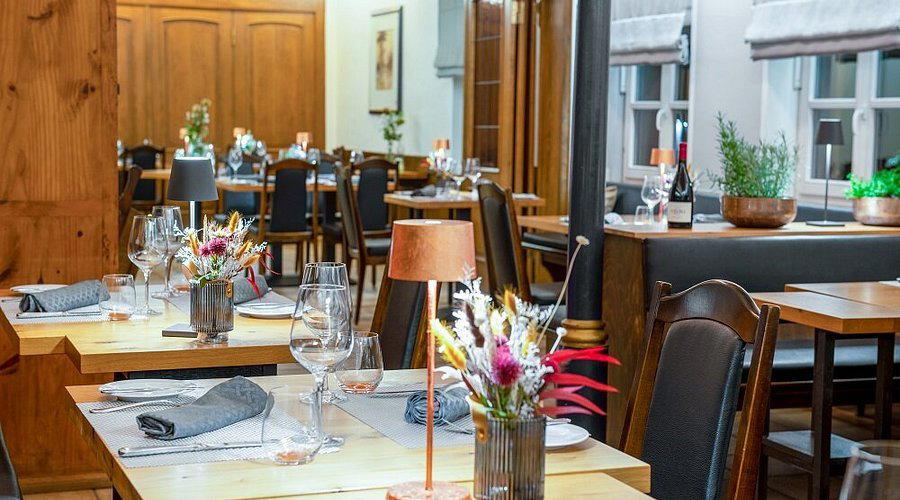
Bars in Aschaffenburg
Browse all →
Hotels in Aschaffenburg
Browse all →
Wineries in Aschaffenburg
Browse all →
At a Glance
- Romantic
- Elegant
- Modern
- Date Night
- Special Occasion
- Business Dinner
- Garden
- Garden
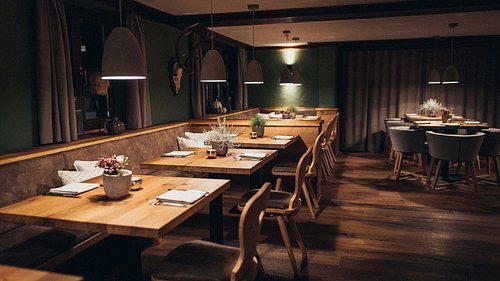
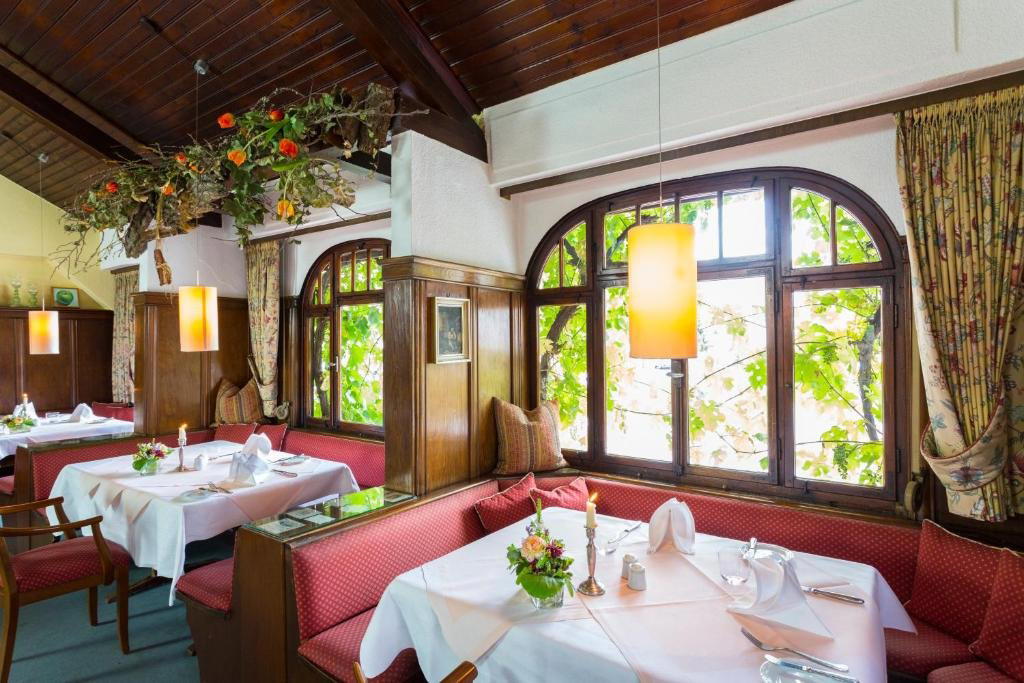
Modern and stylish atmosphere with garden views, described as romantic, elegant, and welcoming.