Goesting
Goesting occupies an address in Utrecht's Veeartsenijpad district that sits outside the city's obvious dining circuit, placing it among a small tier of neighbourhood-anchored restaurants that earn their following without the scaffolding of central visibility. The venue operates in a Dutch dining context where reinvention and editorial restraint increasingly define credibility, and where proximity to the canal-ring scene is no longer a prerequisite for serious attention.
Pearl is the En Primeur Club membership app — saves, bookings, and concierge access live there. Same editors, same standards.
- Address
- Veeartsenijpad 150, 3572 DH Utrecht, Netherlands
- Phone
- +31302733346
- Website
- restaurantgoesting.nl
- Directions
- Get directions
 Saves & bookings on Pearl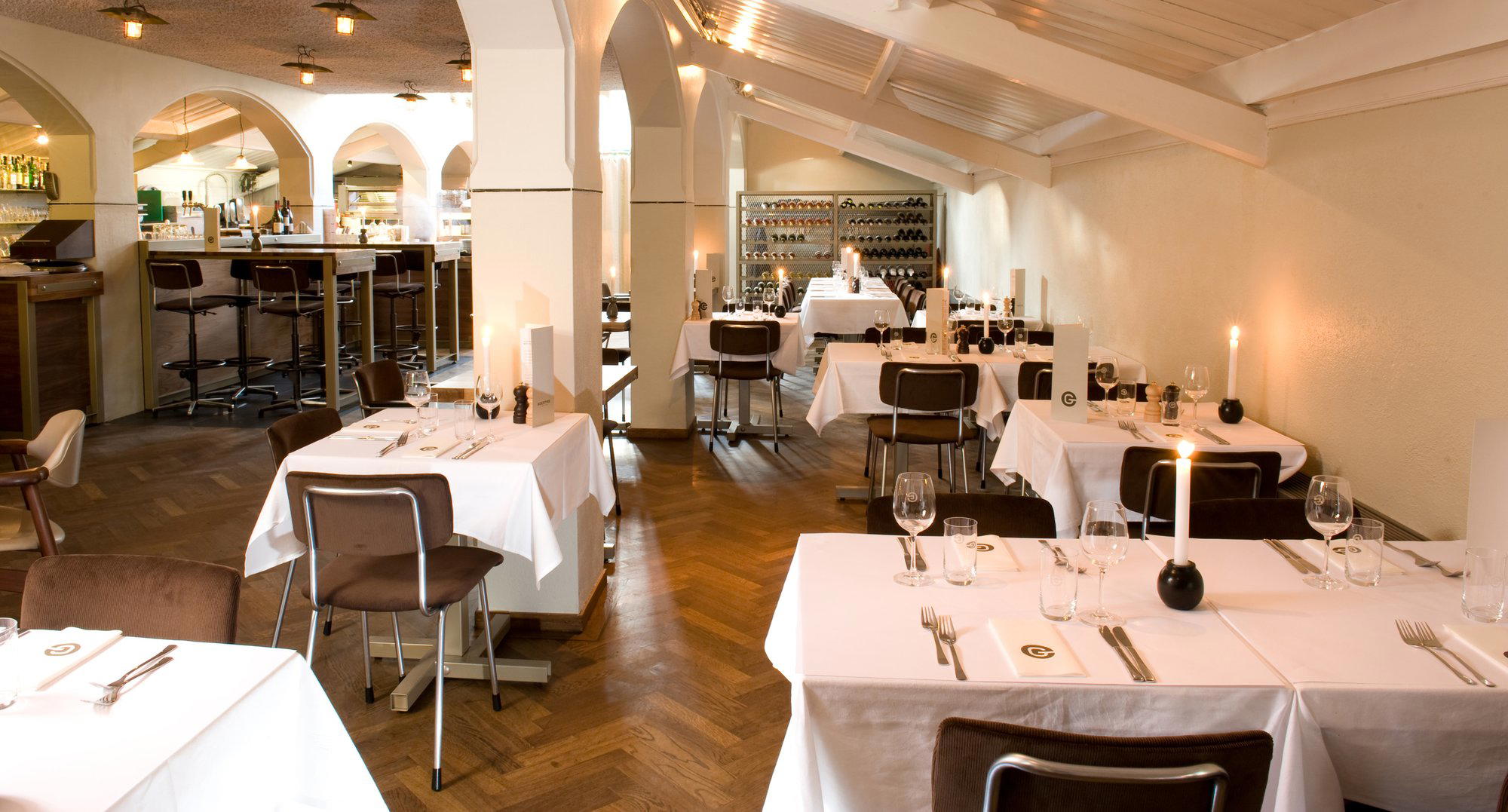
Utrecht's Quieter Dining Tier and Where Goesting Sits Within It
Utrecht's restaurant scene has split along a familiar axis. On one side: the city-centre addresses around Oudegracht and Springweg, where footfall and visibility do some of the work, and where venues like Karel 5 (€€€€ · Creative) and Maeve (€€€ · Creative French) have carved out well-documented positions at the upper end of the city's creative dining bracket. On the other: a quieter tier of neighbourhood-rooted restaurants that earn their audience without the advantage of a canal-side postcode. Goesting, addressed at Veeartsenijpad 150 in the 3572 postcode zone, belongs to this second cohort. It is not a city-centre proposition. The address places it in a residential corridor southeast of the historic ring, which means that everyone who arrives has made a deliberate choice to be there. That dynamic shapes the room before anyone sits down.
Across the Netherlands, the most editorially discussed restaurants increasingly operate outside their region's obvious tourist circuit. De Nieuwe Winkel in Nijmegen, De Groene Lantaarn in Staphorst, and De Lindenhof in Giethoorn are all working examples of how Dutch fine and near-fine dining has decoupled from metropolitan address logic. Goesting's Veeartsenijpad location positions it in the same structural category: a restaurant that earns credibility through the quality of what reaches the table rather than through proximity to a city's most photographed street.
The Evolution of the Address
Veeartsenijpad — the street name translates roughly to veterinary path — carries traces of Utrecht's institutional past. The 3572 district grew up around the former veterinary faculty of Utrecht University, a campus corridor that has since been partly reclaimed for residential and mixed-use development. That shift from functional institutional territory to a neighbourhood with its own character is the kind of urban transition that, in other European cities, tends to generate exactly the sort of low-key, locally committed restaurant that Goesting represents. The address is less about prestige and more about rootedness.
This matters editorially because reinvention in Dutch dining is not always the story of a chef changing menus or pivoting format. Sometimes it is the slower evolution of a neighbourhood arriving at the point where it can sustain serious hospitality, where the local audience has the appetite and the visiting audience has learned to travel for the meal. Goesting sits at that kind of inflection point.
How Goesting Compares to Utrecht's Established Tier
Utrecht's most formally recognised restaurants operate with price ranges and formats that anchor them clearly in the regional hierarchy. Karel 5 at the €€€€ mark, Maeve at €€€, and neighbourhood-format venues like Badhuis and Bar Bet each occupy distinct positions along the spend-versus-formality curve. Goesting's available data does not confirm a price point, which means it cannot be placed precisely in that hierarchy from the outside. What the address and neighbourhood context suggest is a venue calibrated for regulars rather than occasion dining, the kind of restaurant that fills on a Tuesday as reliably as a Saturday, because its audience is local and its proposition is consistent.
For comparison within the broader Dutch scene, the venues that most closely resemble this structural position, neighbourhood-anchored, address-agnostic in terms of prestige, credibility-driven, include Brut172 in Reijmerstok and Tribeca in Heeze. At the far end of the Dutch fine-dining register, venues like De Librije in Zwolle and Inter Scaldes in Kruiningen show what the best of the national hierarchy looks like. Goesting operates in a different register, and that is a structural observation, not a criticism. The Netherlands has historically produced its most interesting neighbourhood restaurants precisely because the fine-dining pressure at the top of the market is intense enough to push creative energy into less formal formats.
Internationally, the shift toward deliberate, non-central restaurant positioning has been well-documented. Formats like Lazy Bear in San Francisco have shown that guest willingness to travel for a meal is not limited to starred rooms, while Le Bernardin in New York City represents the opposite pole: a venue where address and legacy are inseparable. Goesting occupies neither extreme, it is a neighbourhood proposition in a mid-sized Dutch city, and the honest read is that it succeeds or fails on what it puts in front of the people who choose to make the trip.
Planning a Visit
Veeartsenijpad 150 is not served by Utrecht's immediate centre infrastructure, so arriving by bicycle, the default for most Utrecht residents, or by car is the practical approach. The 3572 postcode is navigable by tram and bus from the city centre, though the specific connections will depend on live network data. Because no booking method, hours, or contact information is available in the public record at the time of writing, the most reliable approach is to check current details through Utrecht's local dining directories or through a direct search of the address before planning. Venues at this tier and location in the Netherlands do not always maintain active online booking platforms, particularly if their model is built around neighbourhood regulars who call ahead. Bakkerswinkel Utrecht operates nearby in Utrecht's broader neighbourhood fabric and is a useful data point for the kind of locally embedded, non-central hospitality the city supports outside its canal-ring core. For a broader orientation to Utrecht's dining options across price points and styles, the full Utrecht restaurants guide provides the necessary context. Dutch neighbourhood restaurants at this address type tend to have limited walk-in capacity on weekends; contacting ahead is advisable if your schedule is fixed.
Other Dutch destinations worth holding alongside Goesting for comparison include De Lindehof in Nuenen, De Bokkedoorns in Overveen, and De Treeswijkhoeve in Waalre, each representing the same pattern of serious hospitality operating outside the headline city-centre slot.
How Goesting Utrecht compares with similar nearby venues.
| Venue | Cuisine | Price |
|---|---|---|
| Heimat | Farm to table | €€€ |
| Concours | Modern Cuisine | €€€ |
| Rosie | Modern French | €€ |
Continue exploring
More in Utrecht
Restaurants in Utrecht
Browse all →
Bars in Utrecht
Browse all →
Hotels in Utrecht
Browse all →
Wineries in Utrecht
Browse all →
At a Glance
- Cozy
- Elegant
- Date Night
- Casual Hangout
- Terrace
- Historic Building
- Extensive Wine List
- Local Sourcing
- Garden
Current opening hours
- Monday
- 12 PM–12 AM
- Tuesday
- 12 PM–12 AM
- Wednesday
- 12 PM–12 AM
- Thursday
- 12 PM–12 AM
- Friday
- 12 PM–12 AM
- Saturday
- 12 PM–12 AM
- Sunday
- 12 PM–12 AM
Hours can change for holidays and private events. Last verified .
Relaxed and cozy atmosphere in a charming historic setting with beautiful terrace greenery.