
Tabelog 100 #58
Our verdict
Gion Duck Noodles sits in Kyoto’s compact ramen counter culture rather than its formal kaiseki circuit: a nine-seat, no-reservations shop in Gion built around duck ramen and tsukemen. Its repeated selection for Tabelog Ramen WEST “Tabelog 100” in 2023, 2024, and 2025 places it in a serious regional noodle conversation, with pricing kept in the everyday-luxury range.

Pearl is the En Primeur Club membership app, where members save venues, book tables and use the concierge.
The menu
What to order
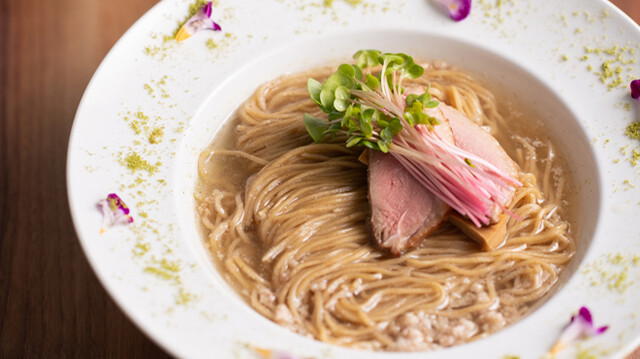
- Signature Duck Ramen with Kishu Duck and Organic Sansho
- Mikan (Mandarin Orange) Tsukemen
- Cherry Tsukemen
- Duck Tsukemen with Orange Sauce
- Gion Duck Beer
Kyoto’s compact dining culture does not divide food genres as neatly as visitors expect. A few turns from polished dining rooms, noodle culture can run at another tempo: steam, queue discipline, counter turnover, and rooms small enough that regulars learn the rhythm before the full menu. Gion Duck Noodles belongs to that Kyoto, where pleasure comes less from ceremony than repetition, and return visits mean reading the format rather than chasing novelty.
Kyoto ramen is often framed through broth, noodles, and the pace of a small specialist shop. Gion Duck Noodles fits that grammar through ramen and tsukemen, two forms rewarding different regulars. Soup ramen is the direct read. Tsukemen makes the meal a slower exchange between noodle and dipping broth, suited to diners who like controlling intensity.
Ramen in Kyoto's counter economy
The counter matters. Kyoto has formal restaurants where the room announces the occasion before the first course, but ramen works through compression: fewer distractions, faster decisions, closer attention to the bowl. A compact setup changes the social contract, favoring solo diners, couples, and repeat customers who know a small room cannot absorb indecision. That is part of the appeal. The meal feels calibrated for people who know why they came, not for those trying to turn ramen into a long-form tasting menu.
The Tabelog Hyakumeiten recognition in 2025 gives the place a useful credential without inflating the category. This is not Michelin-style fine dining, and treating it that way misses the point. The recognition places the shop in Japan’s competitive ramen conversation, where consistency, reputation, and diner response matter. A Tabelog score of 3.68 further signals sustained interest in a market where small numerical differences separate serious specialists from casual stops.
That position is telling in Kyoto. The city’s restaurant reputation is shaped by kaiseki, sushi counters, and Kyoto-style hospitality, but daily eating is broader. Comparison venues show the range: Izuju for old Kyoto sushi traditions, Chihana for kaiseki formality, Teppan Tavern Tenamonya for casual griddle dining, 祇園 楽味 for refined Japanese cooking, and 鮨よし田 for counter-based sushi culture. A ramen and tsukemen specialist sits outside those prestige lanes, yet the discipline is similar: tight preparation, limited format, and a style revealed through repeat eating.
The regulars' order is about format, not novelty
Regulars at serious ramen counters return for structure. They know whether they want broth immersion or dipping noodles, a quick bowl or a more deliberate tsukemen pace. That unwritten menu is not secret; it is a pattern of decisions. At Gion Duck Noodles, the useful choice starts with ramen versus tsukemen, then appetite and timing. Ramen gives the clearest direct expression of the category. Tsukemen suits diners who want the noodles to stay more assertive through the meal.
The format also explains why it works for solo dining. Japanese ramen counters have long been built for efficient individual meals, and Kyoto’s visitor-heavy areas can make that function feel rarer than it is. A small counter restores the old logic: order decisively, eat while the bowl is at its intended temperature, clear the seat. The deeper comfort is the form itself. Ramen is one of Japan’s easiest serious meals alone because the counter requires no performance.
Price strengthens the editorial case. A JPY 2,000 to JPY 2,999 range for lunch and dinner puts the meal above low-cost chain ramen but far below Kyoto’s formal dinner categories. That middle tier matters in Japanese travel dining: small specialist rooms with a clear point of view, affordable enough for repeat visits, precise enough to earn destination attention. It suits travelers who have booked the set-course dinner and want another Kyoto meal that feels specific without becoming ceremonial.
How to fit it into a Kyoto food day
Think of the stop as a Kyoto reset. It can sit between city walking and a later bar, or between a traditional lunch and a lighter evening. The shop belongs in a flexible Kyoto itinerary rather than a plan built only around formal reservations. For small ramen counters, demand is often part of the rhythm, and the practical question is less ceremony than timing.
For a fuller Kyoto plan, treat this as one expression of the city’s specialist-food culture, not the whole story. A day might contrast counter noodles with sweets, casual volume eating, or a contemporary table elsewhere in Kyoto. Nearby planning can also include other dining in Kyoto, depending on whether the day moves toward formal Japanese cooking, casual Kyoto dining, or a second counter meal.
Readers building a wider itinerary should use Our full Kyoto restaurants guide for dining context, then match the food plan with Our full Kyoto hotels guide, Our full Kyoto bars guide, Our full Kyoto wineries guide, and Our full Kyoto experiences guide. For how Japanese casual formats travel across cities, compare the everyday specificity of other specialist dining rooms in Japan and abroad, where a narrow format can carry as much identity as a larger restaurant.
The critical read is clear: this is a specialist ramen and tsukemen counter with enough recognition to justify attention and enough restraint to keep the meal grounded. Gion Duck Noodles is most compelling for diners who understand Kyoto food culture is not only temples, tea, and set-course dining. Sometimes the sharper memory is a small counter, a noodle decision, and the satisfaction of a room that knows exactly how long a bowl should take.
Frequently asked questions
What's the address for Gion Duck Noodles?
Gion Duck Noodles is located in Kyoto.
When is Gion Duck Noodles open?
Current opening hours for Gion Duck Noodles are not provided here; diners should confirm directly before going.
What does dinner at Gion Duck Noodles typically cost?
Pricing at Gion Duck Noodles is listed as JPY 2,000 - JPY 2,999 JPY 2,000 - JPY 2,999.
What is Gion Duck Noodles known for?
Gion Duck Noodles is known for ramen and tsukemen in Kyoto. It was recognized in Tabelog Hyakumeiten in 2025, with a listed score of 3.68.
Can Gion Duck Noodles accommodate dietary restrictions?
The menu is centered on ramen and tsukemen in Kyoto. Diners with dietary restrictions can contact the restaurant at +81-75-708-7261 before going.
Where the Accolades Land
Comparable venues for context, by category and price tier.
| Venue | Cuisine | Price | Awards | Notes |
|---|---|---|---|---|
| Gion Duck NoodlesThis venue (the venue you are viewing) | Duck Ramen with French-Japanese Fusion | $20–30 | Tabelog 100 #58 | Not listed |
| Takatsuji Kasui | Seasonal Kyoto Izakaya | $50–100 | Tabelog 100 #32 | Shimogyō |
| 德まる | Seasonal À La Carte Japanese | $100–150 | Michelin Plate | 中京区 |
| 肉料理 澁谷 | Yakiniku (Japanese BBQ) | Not listed | Not listed | Nakagyō |
| Hirasansou Chicken Hotpot Takeout | Seasonal Japanese Mountain Cuisine | $200–300 | Not listed | Katsuragawa valley |
| Kyoto Uji Kintoki Ya | Kyoto kakigori, soft‑serve & udon shop | $10–20 | Tabelog 100 #60 | Higashiyama |
Recognition history
Dated appearances from independent guides and award organizations, with the underlying list record or original source where available.
Tabelog 100 #58 · No. 58
Tabelog · Tabelog 100 - Ramen - WEST - 2025
Continue exploring
More in Kyoto
Restaurants in Kyoto
All restaurants in Kyoto →
Bars in Kyoto
All bars in Kyoto →
Hotels in Kyoto
All hotels in Kyoto →
Wineries in Kyoto
Browse all →
Details
- Modern
- Cozy
- Trendy
- Solo
- Casual Hangout
- After Work
- Date Night
- Design Destination
- Standalone
- Historic Building
- Beer Program
- Local Sourcing
- Street Scene
- A La Carte
- Counter Dining
- Beer
Current opening hours
- Monday
- 11 AM–9 PM
- Tuesday
- 11 AM–9 PM
- Wednesday
- 11 AM–9 PM
- Thursday
- 11 AM–9 PM
- Friday
- 11 AM–9 PM
- Saturday
- 11 AM–9 PM
- Sunday
- 10 AM–9 PM
Hours can change for holidays and private events. Hours as of .
A small, tucked-away ramen shop in a narrow Gion alley, with a modern and playful design that feels casual yet refined; the atmosphere is lively due to frequent lines and counter-style service, but still cozy and welcoming rather than cramped or noisy.