Our verdict
On Maaseik's historic Markt, Gastronomia Inglima occupies one of the most prominent addresses in this Limburgian market town. The name signals Italian roots embedded in Belgian dining culture, a pairing that defines much of the restaurant's appeal. For visitors working through the region's dining options, it represents a distinct point on the local map.

Pearl is the En Primeur Club membership app, where members save venues, book tables and use the concierge.
The menu
What to order
- Monkfish carpaccio
- Ravioli trio
- Ribeye with Marsala
A Market Square Address and What It Means
Maaseik's Markt is the kind of square that does a lot of work. It anchors the old town, frames the weekly market, and concentrates the restaurants that serve both locals and visitors crossing from the Dutch border just kilometres away. An address at Markt 2 places a restaurant at the civic centre of a town that takes its food seriously for its size. Belgium's Limburg province has quietly produced a dining culture that punches above its population weight, and Maaseik sits at the northern edge of that tradition, drawing from both the Flemish interior and the Meuse valley corridor that connects it to Liège and Maastricht.
Within that context, Gastronomia Inglima occupies a specific position. The name itself carries a thesis: gastronomia as a framing word announces ambition, an intention to treat eating as a considered act rather than a convenience. On a square where several kitchens compete for the same passing trade, that framing matters. It positions the restaurant inside the category of places that ask something of their guests, at minimum that they show up with appetite and attention.
Menu Architecture as Editorial Statement
In Belgian dining, how a menu is structured often tells you more than what appears on it. The tension between à la carte freedom and tasting-menu discipline has played out across the country's restaurant scene for two decades, with different resolutions depending on the ambitions of the kitchen and the expectations of the local clientele. A town like Maaseik, with a mixed audience of regulars, day-trippers, and border-crossers, typically demands flexibility. The restaurants that hold their ground here tend to find structures that allow the kitchen to cook with purpose while giving the table enough agency to feel at ease.
The Italian inflection in Gastronomia Inglima's name points toward a menu logic rooted in the Italian tradition of courses as distinct acts: antipasto establishing the kitchen's register, pasta or risotto as the technical centrepiece, secondi carrying the weight of the main protein, and dessert as punctuation rather than afterthought. That architecture, when applied rigorously, produces a different dining rhythm than the Franco-Belgian progression of amuse, entrée, plat, fromage, dessert. It tends to place carbohydrates at the structural heart of the meal rather than relegating them to bread service, and it demands a kitchen with genuine pasta craft rather than one that treats it as an optional supplement.
Belgian restaurants working with Italian frameworks occupy a niche that rewards close attention. The best of them, as seen in kitchens across Flanders and Wallonia, treat Belgian ingredient sourcing and Italian technique as complementary rather than competing. Maaseik's agricultural hinterland, with its proximity to the Meuse valley's vegetable production and the Campine heathland, offers a larder that maps reasonably well onto Italian seasonal logic. Whether Gastronomia Inglima exploits that alignment fully is a question the menu itself answers on any given visit.
Where Inglima Sits in Maaseik's Restaurant Set
Maaseik's dining options cluster into recognisable tiers. At the more formal end, kitchens produce multi-course work with Belgian classical technique as the foundation. At the casual end, brasserie formats and tavern menus serve the square's daily foot traffic. The middle tier, where ambition and accessibility meet, is where restaurants like Gastronomia Inglima typically operate, alongside Bienvenue, which works a modern cuisine format at the €€ price point, and Bonaparte, d'Olivio, De Bokkerijder, and De Loteling, all part of a compact local scene worth mapping before you visit. A fuller survey of the town's options is available in our full Maaseik restaurants guide.
The Italian-named restaurant in a Flemish market town is not an unusual format in Belgium, where Italian immigration waves from the mid-twentieth century onwards seeded trattorias and gastronomie across the country, particularly in the industrial Limburg and Liège provinces. What differentiates the serious operators from the routine ones is depth of technique and supply chain discipline, pasta made in-house rather than bought in, sauces built from stock rather than base, and produce sourced with the same care a Belgian classical kitchen would apply. These signals are worth looking for when evaluating any Belgian-Italian hybrid.
The Belgian Context Beyond Maaseik
Belgium's dining reputation at the national level is carried by its Michelin-starred kitchens, concentrated in Ghent, Antwerp, Brussels, and the West Flemish coast. Kitchens like Zilte in Antwerp, Boury in Roeselare, Hof van Cleve in Kruishoutem, and Vrijmoed in Gent define the country's upper register, while Bozar Restaurant in Brussels represents the capital's formal dining tier. Further afield, international reference points for disciplined tasting-menu formats, from Le Bernardin in New York City to Lazy Bear in San Francisco, set the global benchmark for what structured multi-course dining can achieve when kitchen philosophy and format align.
Limburgian dining, by contrast, operates under less critical scrutiny and with a different set of pressures: a provincial clientele that values consistency, a tourist flow tied to cycling routes and Meuse valley recreation, and the proximity of Dutch diners crossing for Belgian price-to-quality ratios. Restaurants like Ralf Berendsen in Neerharen and Cuchara in Lommel show what the broader Limburg region can produce when a kitchen has clear identity. Elsewhere in Belgium, Willem Hiele in Oudenburg, La Durée in Izegem, and d'Eugénie à Emilie in Baudour each illustrate how regional kitchens build authority outside the major cities.
Planning a Visit
Gastronomia Inglima sits at Markt 2, the central square of Maaseik's old town, reachable by car from Hasselt in under an hour and from Maastricht across the Dutch border in roughly thirty minutes. The Markt is the natural orientation point for any visit to the town, and the square's pedestrian character makes it easy to arrive and settle before a meal. The Markt address means parking is leading approached via the town's peripheral car parks rather than the square itself.
Frequently asked questions
Where do I go for Gastronomia Inglima?
Gastronomia Inglima is located at Markt 2, 3680 Maaseik, Belgium, Maaseik.
Is Gastronomia Inglima a good dining option for visitors arriving from Maastricht or Hasselt?
Maaseik sits within an hour's drive of both Hasselt and Maastricht, making Gastronomia Inglima at Markt 2 a workable destination for a cross-border or regional day trip anchored around a meal. The market square address means parking and orientation in the old town are straightforward. For visitors coming specifically for dinner rather than passing through, booking ahead is advisable given the square's position as Maaseik's primary dining concentration.
What should I order at Gastronomia Inglima?
The name gastronomia signals a kitchen oriented toward considered, composed cooking rather than quick plates. At Markt 2 on Maaseik's central square, the Italian-inflected identity suggests pasta or risotto are likely structural anchors on the menu. Ordering around those courses gives the clearest read on what the kitchen is doing. Confirm the current menu directly with the venue before visiting, as seasonal changes are standard practice in this category of Belgian dining.
Can I walk in to Gastronomia Inglima?
Maaseik's Markt draws consistent foot traffic from day-trippers, cyclists on Meuse valley routes, and visitors crossing from the Netherlands, which puts pressure on the better-regarded addresses around the square. Walking in is possible during quieter weekday periods, but weekend tables at restaurants of this type in Belgian market towns are typically claimed by reservation. Contacting the venue in advance is the practical approach, particularly for Friday or Saturday evenings.
Reputation First
Comparable venues nearby, for context on price, style, and recognition.
| Venue | Cuisine | Price | Notes |
|---|---|---|---|
| Gastronomia InglimaThis venue (the venue you are viewing) | Modern Sicilian-Italian | $50–100 | Not listed |
| Smaakkamer Lavendel | French-Belgian with Eastern Influences | $50–100 | Markt |
| d'Olivio | Mediterranean & Belgian Bistro | Not listed | Maaseik |
| De Bokkerijder | Traditional Belgian-French Brasserie | Not listed | Marktplein |
| Ratatouille | Modern Belgian Gastronomic | $100–150 | Maaseik |
| TIFFANY'S BY PASCAL | Contemporary Classical French-Belgian | $50–100 | Maaseik |
Continue exploring
More in Maaseik
Restaurants in Maaseik
All restaurants in Maaseik →
Bars in Maaseik
Browse all →

Details
- Cozy
- Elegant
- Intimate
- Date Night
- Special Occasion
- Open Kitchen
- Extensive Wine List
- Street Scene
- A La Carte
- Tasting Menu
- Vegetarian Friendly
Current opening hours
- Monday
- Closed
- Tuesday
- 6 PM–12 AM
- Wednesday
- 6 PM–12 AM
- Thursday
- 6 PM–12 AM
- Friday
- 6 PM–12 AM
- Saturday
- 6 PM–12 AM
- Sunday
- Closed
Hours can change for holidays and private events. Hours as of .
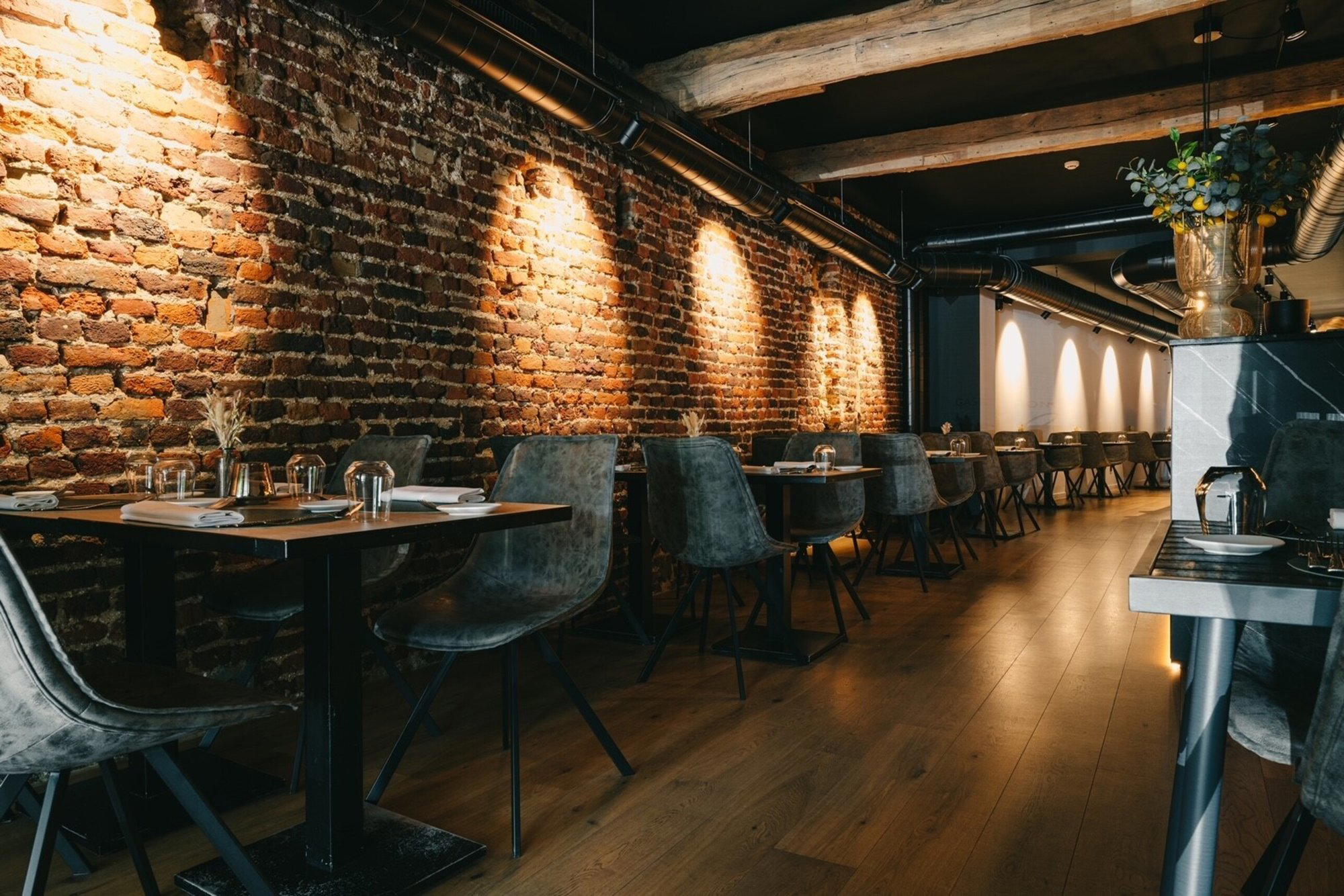
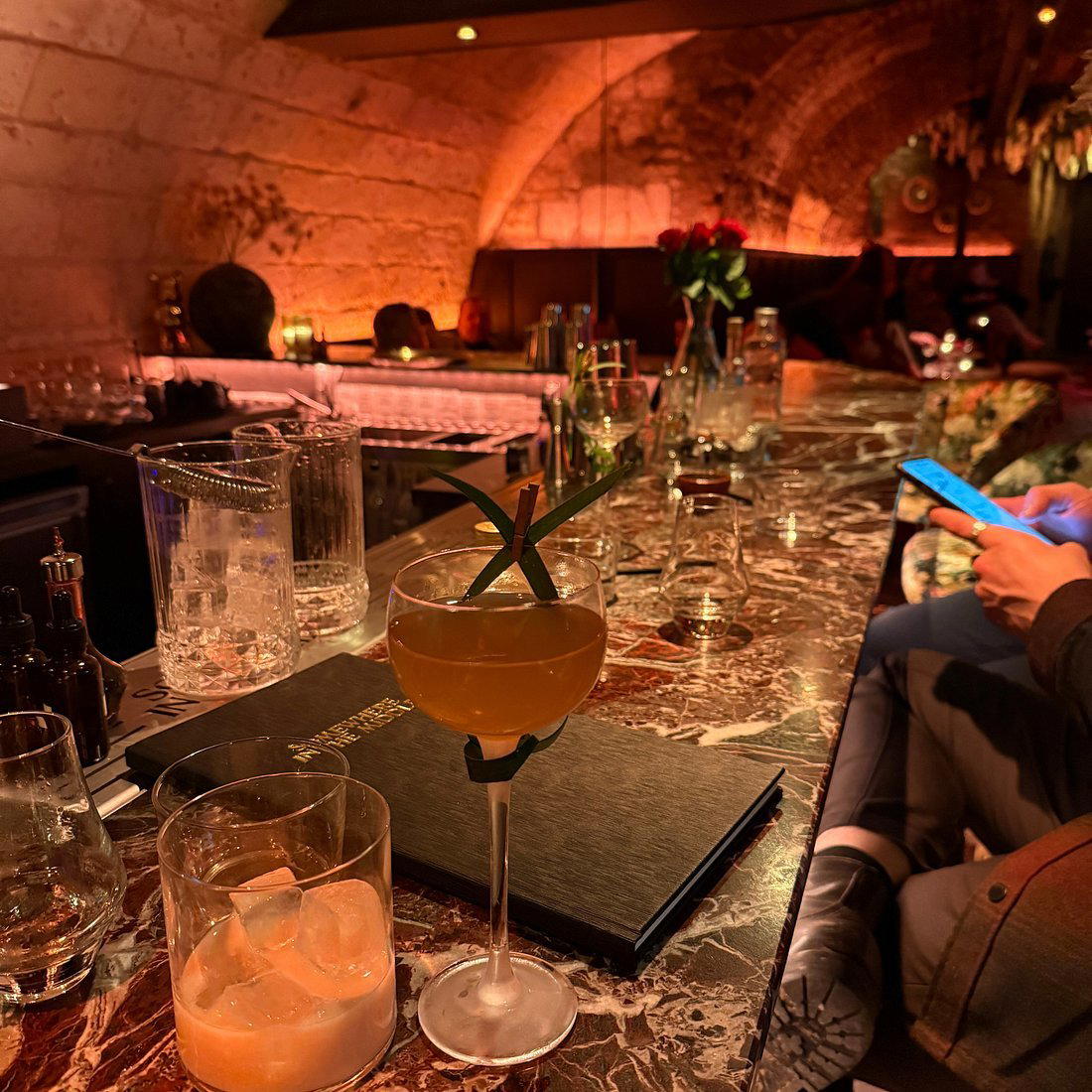
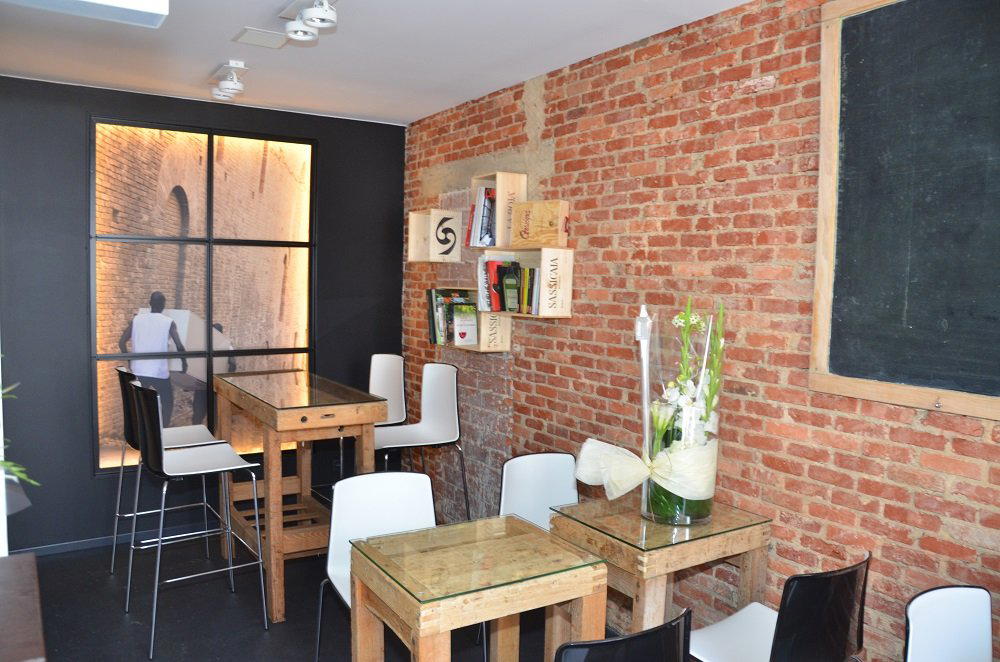
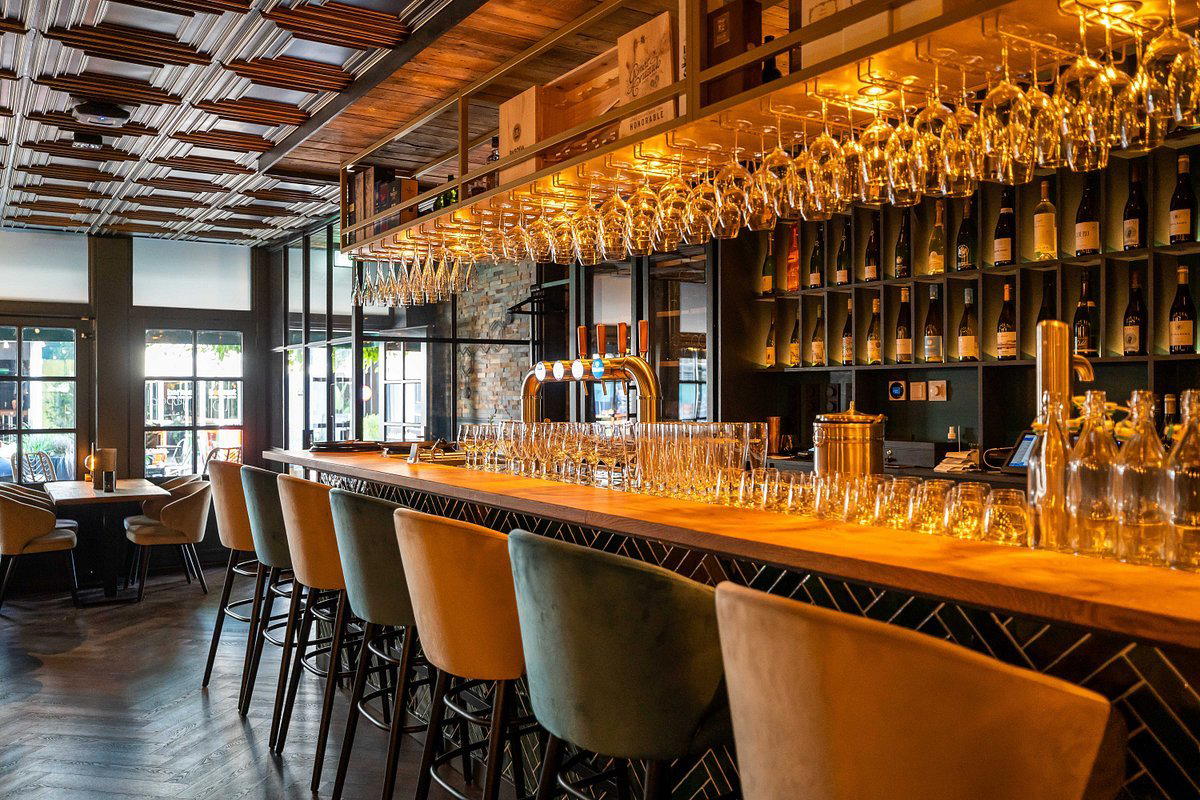
Cozy and warm interior with beautiful open kitchen, creating an inviting and atmospheric dining experience.