fumi
Our verdict
fumi occupies a quiet address at Im Kathrinenbild 1 in Deidesheim, a village in the Palatinate wine country that punches well above its size for serious dining. Positioned within a town that houses multiple high-calibre restaurants, fumi offers a counterpoint worth examining in a region where sourcing and regional produce define the conversation.

Pearl is the En Primeur Club membership app — saves, bookings, and concierge access live there. Same editors, same standards.
- Address
- Im Kathrinenbild 1, 67146 Deidesheim, Germany
- Phone
- +4963267001210
- Hours
- Mon–Tue ClosedWed–Fri 6–10 PMSat–Sun 12–3 PM, 6–10 PM
- Website
- josef-biffar.de
- Directions
- Get directions
- Booking
- Book on the venue's website
Deidesheim and the Question of Provenance
In the Palatinate, the relationship between what grows in the ground and what ends up on the plate is not a stylistic choice — it is a structural fact. The region's soft climate, sheltered by the Haardt hills to the west, produces Riesling, Saumagen pork, asparagus, and a range of vegetables that travel short distances from field to kitchen. Deidesheim sits at the centre of this corridor, a small town whose restaurant scene is disproportionately dense and, in several cases, internationally recognised. fumi, addressed at Im Kathrinenbild 1, operates within this context, where every kitchen in the village is, in some sense, in conversation with the land around it.
The broader pattern in serious German dining has shifted over the past decade toward a more explicit acknowledgment of sourcing geography. Where earlier fine dining generations reached toward French technique and international produce as markers of ambition, a younger cohort of kitchens across the country has repositioned regional provenance as the credibility signal itself. You can observe the same impulse at Schwarzwaldstube in Baiersbronn and, at a more technically extreme level, at JAN in Munich, where hyper-local sourcing structures the entire menu logic. fumi's placement in Deidesheim puts it inside this broader movement by geography alone.
Arriving at Im Kathrinenbild
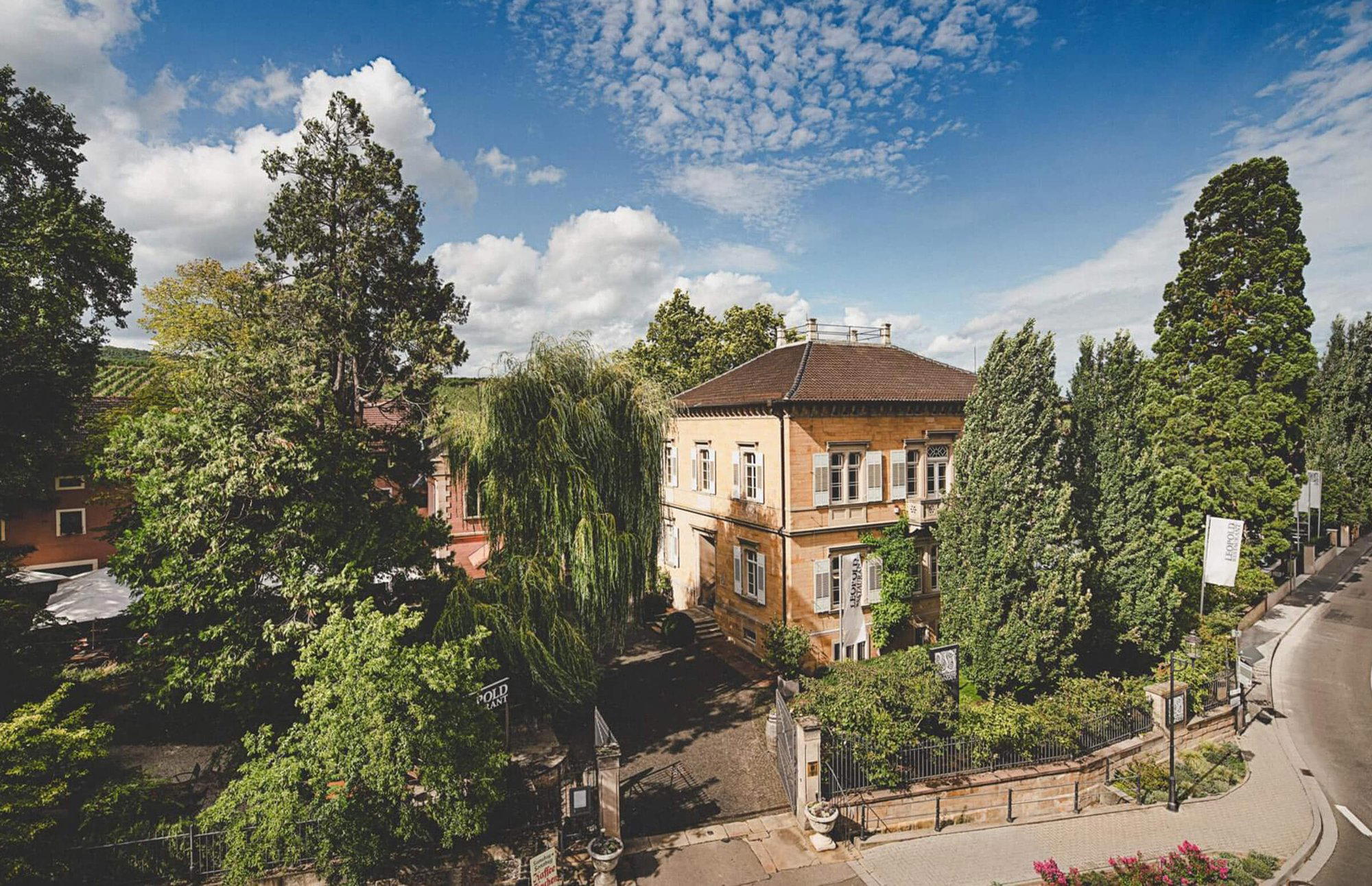
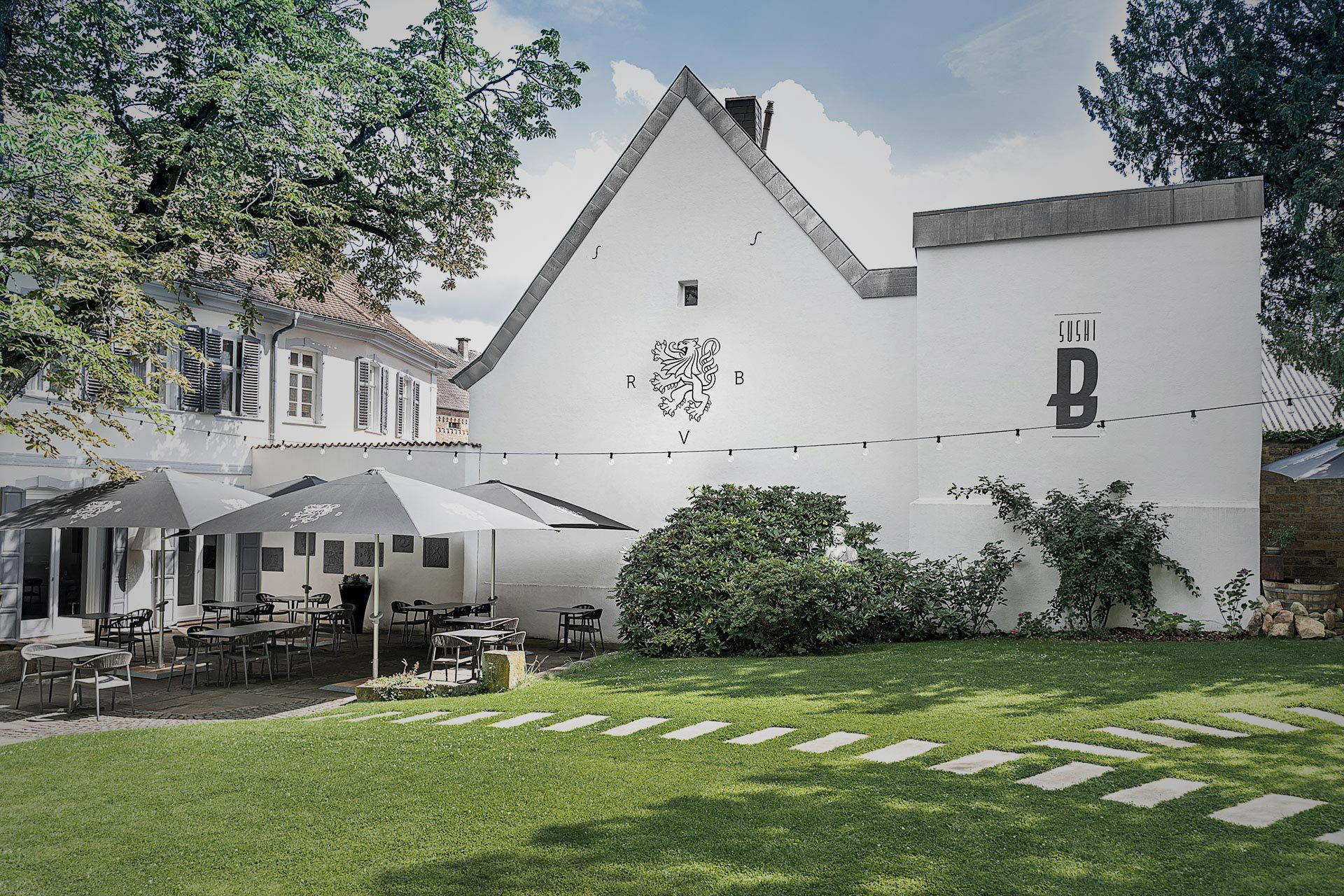
Deidesheim's historic centre is compact enough that most of its restaurants are reachable on foot from the market square. The address Im Kathrinenbild 1 sits within this walkable core, adjacent to the vineyards and stone-built lanes that give the town its character. The Palatinate in autumn, when the harvest is underway and the light falls at a low angle across the vine rows, provides the kind of backdrop that makes a dining destination feel earned rather than manufactured. Arriving here is a different experience from pulling up to a restaurant in a German city — the rural density of quality is part of what sets the expectation before you sit down.
For context on how Deidesheim distributes across price tiers, it is useful to triangulate. L.A. Jordan and Schwarzer Hahn both operate at the top of the local price register, in the €€€€ bracket, with Modern German and Modern French orientations respectively. Gasthaus zur Kanne anchors the other end with country cooking at €€.
What Sourcing Means in This Region
The Palatinate's agricultural specificity matters because it narrows the possible sourcing radius in ways that distinguish this region from, say, a metropolitan kitchen drawing on national distributors. The Rhineland-Palatinate state produces more wine than any other German state, and the food culture that developed alongside viticulture is closely tied to pig, potato, and root vegetables, ingredients with genuine regional identity rather than generic European provenance. A kitchen serious about Palatinate sourcing is making an editorial statement about what the region actually tastes like, as opposed to what international fine dining is supposed to taste like.
This distinction has become increasingly legible to international diners over the past five years. Restaurants like Waldhotel Sonnora in Dreis and Schanz in Piesport demonstrate that serious recognition and regional identity are not competing priorities in the German context, they are complementary ones. The Moselle and Palatinate corridors have produced a density of recognised kitchens that operates independently of the major German cities, drawing visitors who are specifically seeking the combination of wine country, produce-driven cooking, and a slower pace than Frankfurt or Hamburg offers.
The Deidesheim Scene in Full
Understanding where fumi sits requires reading the full map. Deidesheim's dining offer spans several registers. At the international end, Leopold and Restaurant 1718 provide broader, globally-oriented menus. The town's accumulated restaurant quality has made it a meaningful detour for visitors routing between Mannheim and Kaiserslautern, or arriving via the Neustadt an der Weinstraße rail connection, which connects to the broader Deutsche Bahn network. For a comprehensive picture of what the town offers across cuisines and budgets, our full Deidesheim restaurants guide covers the complete set.
Germany's serious dining outside the major cities has become more legible to international audiences partly because of how recognition systems have caught up with non-urban kitchens. Venues like Victor's Fine Dining by Christian Bau in Perl and ES:SENZ in Grassau both demonstrate that three-star-level ambition operates at significant remove from city centres in Germany. The Palatinate has its own version of this argument, and Deidesheim is its strongest physical evidence.
Practical Notes for Visitors
For visitors comparing the full range of what Germany's recognised dining scene offers beyond the Palatinate, it is worth cross-referencing against city-based operations: Restaurant Haerlin in Hamburg, Aqua in Wolfsburg, Vendôme in Bergisch Gladbach, and the more conceptually experimental CODA Dessert Dining in Berlin each represent distinct positions on Germany's dining spectrum. For international travellers flying into the region, Frankfurt Airport is the most practical gateway, with Deidesheim reachable by train and road in roughly one hour. Seasonal timing matters here: spring asparagus season and the autumn wine harvest are the two periods when Palatinate sourcing is at its most legible on local menus.
For those exploring wine-country dining beyond Germany, the sourcing-first logic that defines the Palatinate's leading kitchens finds parallels at Le Bernardin in New York City, where ingredient provenance is the organising principle, and at Lazy Bear in San Francisco, where a produce-forward approach shapes both menu structure and dining format.
Frequently asked questions
Does fumi work for a family meal?
The address at Im Kathrinenbild 1 places it in a quieter part of the historic centre, away from the busier market square restaurants. That setting tends to suit a more measured pace rather than a casual, high-energy family outing.
What's the overall feel of fumi?
fumi sits in Deidesheim, a town whose restaurant culture is shaped by proximity to Palatinate vineyards and agricultural land — context that typically informs the tone of dining rooms in the area as much as the food. The Im Kathrinenbild address is away from the main square, which suggests a quieter, more deliberate atmosphere than the town's higher-profile tourist-facing venues.
How does fumi's location in Deidesheim relate to the Palatinate wine region?
fumi's address at Im Kathrinenbild 1 places it inside Deidesheim, a town that sits at the heart of the Pfalz wine region — Germany's second-largest by production area and one of its warmest growing zones. That geography matters practically: restaurants in Deidesheim have direct access to local Riesling and Burgundian-style producers whose estates are within cycling distance of the town centre.
What's the must-try dish at fumi?
What is clear is that Deidesheim's dining scene is built around Palatinate sourcing — seasonal produce, regional proteins, and local wine — so the menu at any serious restaurant here tends to reflect what is growing and available close by. Checking fumi's current menu directly before visiting will give the clearest picture.
What's fumi's location?
fumi is located at Im Kathrinenbild 1, 67146 Deidesheim, Germany, Deidesheim.
Can I walk in to fumi?
In Deidesheim, where the better-regarded restaurants fill quickly — particularly during the Palatinate wine calendar's peak periods — advance contact is advisable. Search directly for fumi at Im Kathrinenbild 1, Deidesheim to find current booking options.
What's the signature at fumi?
Deidesheim's position in the Palatinate — one of Germany's warmest and most agriculturally productive wine regions — means that restaurants here typically anchor their identity in local produce and regional wine pairings.
Side-by-Side Snapshot
Comparable venues nearby, for context on price, style, and recognition.
| Venue | Cuisine | Price | Awards | Notes |
|---|---|---|---|---|
| fumiThis venue — the venue you are viewing | Modern Japanese Fine Dining | Not listed | Not listed | Not listed |
| Sushi B. | Modern Japanese Sushi | Not listed | Not listed | Deidesheim |
| St. Urban | Traditional Palatinate Country Cooking | $50–100 | Michelin Plate | Marktplatz |
| Restaurant 1718 | French-inspired Bistro | Not listed | Michelin Plate | Deidesheim |
| riva | Modern Mediterranean with Italian influences | $50–100 | Michelin Plate | central Deidesheim |
| Leopold | Modern Palatinate Country Cooking | $50–100 | Michelin Plate · Falstaff Restaurant - 87 Falstaff Points | Deidesheim |
Continue exploring
More in Deidesheim
Restaurants in Deidesheim
Browse all →
Bars in Deidesheim
Browse all →
Hotels in Deidesheim
Browse all →
fumi
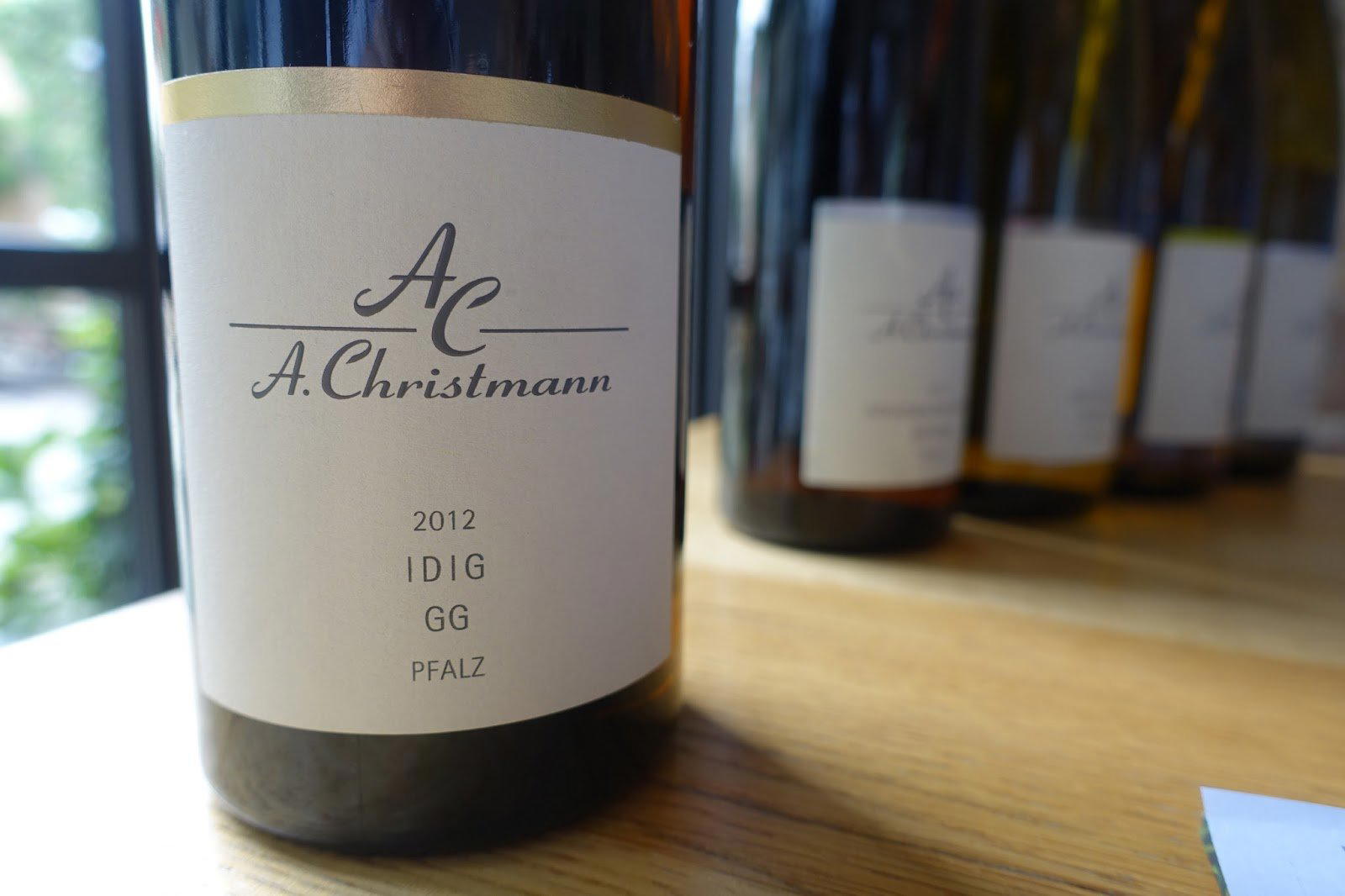
The wine
- Wine program
- Exceptional wine program
- Extensive wine list
Details
- Modern
- Elegant
- Sophisticated
- Date Night
- Special Occasion
- Group Dining
- Wine Cellar
- Extensive Wine List
- Vineyard
- Tasting Menu
- Vegetarian Friendly
- Vegan Options
Current opening hours
- Monday
- Closed
- Tuesday
- Closed
- Wednesday
- 6–10 PM
- Thursday
- 6–10 PM
- Friday
- 6–10 PM
- Saturday
- 12–3 PM, 6–10 PM
- Sunday
- 12–3 PM, 6–10 PM
Hours can change for holidays and private events. Last verified .
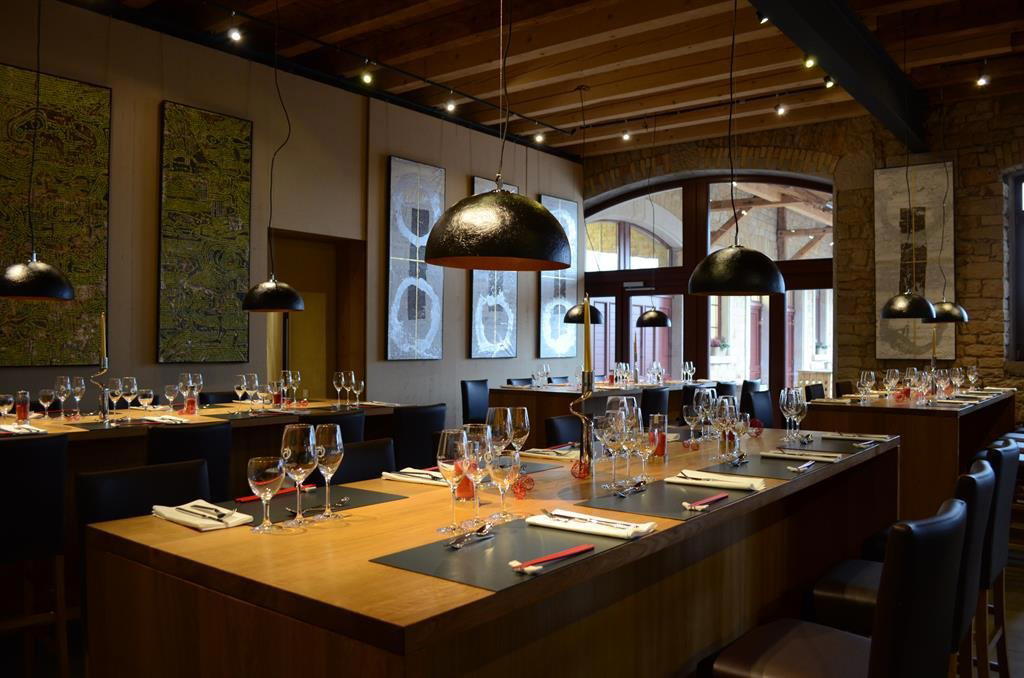
Modern and airy atmosphere with sophisticated lighting.