Schwarzer Hahn

Schwarzer Hahn holds a Michelin star for the second consecutive year, placing it among the Palatinate's most serious fine-dining addresses. Chef Stefan Neugebauer works within a Modern French framework on Deidesheim's central market square, with one of Germany's foremost Riesling-producing regions on the doorstep. The setting rewards visitors who pair a meal here with the broader wine-country itinerary the town affords.
Pearl is the En Primeur Club membership app — saves, bookings, and concierge access live there. Same editors, same standards.
- Address
- Marktpl. 1, 67146 Deidesheim, Germany
- Phone
- +49 6326 96870
- Website
- deidesheimerhof.de
- Directions
- Get directions
 Saves & bookings on Pearl
A Market Square Address in Germany's Wine Country
Germany's Palatinate region has long occupied an unusual position in the country's fine-dining geography: dense with serious wine production, historically rural in character, yet capable of sustaining restaurants that hold their own against urban competition. Deidesheim sits at the centre of that tension. The town's market square, stone-paved, flanked by half-timbered facades, quiet on a weekday morning, does not immediately signal a destination for Michelin-starred cooking. Schwarzer Hahn is a one-star restaurant in Deidesheim, Germany, serving Modern German/Palatine Fine Dining at a €€€€ price tier. That contrast is precisely what makes the room at Schwarzer Hahn worth seeking out. Arriving at Marktplatz 1, the address feeds into a broader pattern visible across several German wine regions: a premium restaurant embedded in a working market town, drawing its authority from local provenance rather than urban density.
This dynamic is not specific to Deidesheim. Along the Moselle, in Bernkastel-Kues and Piesport, the same geography repeats: serious kitchens operating within a few hundred metres of vineyard-facing guesthouses, with Schanz in Piesport offering a parallel reference point for Modern French ambition rooted in wine-country terrain. In the Black Forest, Schwarzwaldstube in Baiersbronn has demonstrated for decades that rural settings can sustain the highest tiers of French-influenced cooking. Schwarzer Hahn operates in that same tradition, with the Palatinate's Riesling and Spätburgunder producers providing an obvious pairing context that few restaurants in more metropolitan settings can replicate as naturally.
Modern French Cooking in the Palatinate Context
The editorial angle that matters for Schwarzer Hahn is not the restaurant's individual story but the broader condition of Modern French cooking when it relocates to a wine-producing region of this character. French culinary technique has been the dominant grammar of German fine dining for several decades, and the restaurants that have sustained recognition within that tradition are those able to move beyond imitation and use local ingredients as the primary argument. The Palatinate provides an unusually strong hand: white asparagus from Schwetzingen in spring, game in autumn, and a wine culture whose Riesling and Burgundy-style Pinot Noir production gives a kitchen access to pairings that would be operationally difficult to replicate elsewhere in the country.
Chef Stefan Neugebauer works within this framework. In a regional context where L.A. Jordan offers creative Modern German cooking at the same price tier and carries its own serious reputation, the restaurant's French orientation represents a deliberate positioning choice rather than a default. Across the wider German fine-dining circuit, the relationship between French training and regional identity has produced some of the country's most discussed kitchens: Vendôme in Bergisch Gladbach and Aqua in Wolfsburg have navigated similar questions of French influence within German settings, each arriving at different answers. The restaurant's answer involves staying close to the Palatinate's seasonal rhythms while maintaining a kitchen grammar that is recognisably French in structure.
The Star, the Recognition, and What It Means Here
Michelin awarded the restaurant a star in both 2024 and 2025, a consecutive recognition that shifts the restaurant from a promising address to a confirmed one. In the Palatinate, where competition for fine-dining attention is spread across several towns and where the wine calendar pulls visitor traffic in predictable seasonal waves, sustained Michelin recognition matters more than a single-year award. It signals that the kitchen is performing consistently, not peaking for a guide visit.
At the €€€€ price point, the restaurant sits alongside L.A. Jordan at the summit of Deidesheim's restaurant hierarchy, with a clear separation from mid-range options including riva at €€€, and the more accessible Gasthaus zur Kanne, Leopold, and Restaurant 1718 at the €€ level. For visitors building an itinerary around the wine route, this tiering is useful: it is entirely possible to construct a two- or three-day Deidesheim stay with one meal at the restaurant and others distributed across the lower-price-point options without compromising the overall experience.
Across Germany, the one-star tier has become increasingly competitive, with kitchens like JAN in Munich, ES:SENZ in Grassau, and CODA Dessert Dining in Berlin each carving out distinct format identities. The restaurant's distinction is geographic as much as culinary: few one-star restaurants in Germany operate from a market square in a town this small, with a wine region this significant as immediate context.
The Wine Region as Dining Infrastructure
One of the structural advantages Deidesheim offers any serious restaurant is that the surrounding wine culture functions as dining infrastructure rather than merely backdrop. The Palatinate (Pfalz) is Germany's second-largest wine-producing region by area and its output has shifted substantially in the past two decades, with producers such as Bassermann-Jordan and von Winning generating international attention for their Riesling and Burgundy-style reds. A kitchen operating in this environment has direct access to producers, and the pairing conversation between the food and the cellar carries a credibility that imported wine lists elsewhere cannot replicate.
For visitors arriving from outside the region, this suggests a sequencing logic: the winery visits and the market-square dinner reinforce each other rather than competing for attention. The combination of winery visit, walk through the old town, and dinner at a starred table makes for a compact day in Deidesheim.
Planning a Visit
Deidesheim sits roughly 15 kilometres south of Neustadt an der Weinstraße and is accessible by rail via the Weinstraße regional network, with the town itself manageable on foot. For visitors combining a restaurant dinner with a longer stay, the town's accommodation options range from wine-estate guesthouses to the Deidesheimer Hof, the traditional hotel that has historically anchored the town's hospitality offering. Advance booking is advisable, particularly during the spring asparagus season (mid-April through June) and the autumn wine harvest period (September to October), when the Palatinate draws concentrated visitor traffic and tables at starred restaurants fill well ahead of time. The restaurant's address at Marktplatz 1 places it at the centre of the old town, reachable from most accommodation options within a short walk. Those travelling from further afield may want to fill out the rest of an itinerary around the meal.
For comparative context, visitors considering Modern French cooking at a similar register in different German settings might weigh Schanz in Piesport for its Moselle wine-country parallel, or look further afield to Sketch's Lecture Room and Library in London for an example of Modern French ambition in a completely different register. The restaurant's argument is quieter and more geographically specific: the market square, the Palatinate vintage, and a kitchen that has held its Michelin standing across two consecutive years.
What Should I Order at Schwarzer Hahn?
Trust the kitchen's lead. At a one-star Modern French restaurant in a wine-producing region, the menu structure typically follows seasonal availability closely, and the strongest choices tend to be those that reflect the Palatinate's most distinctive produce, white asparagus in spring, game in autumn, local Pinot Noir as the pairing throughline for richer dishes. The chef is Stefan Neugebauer, and the Michelin record suggests consistency in the kitchen's execution. Use the sommelier's guidance on Palatinate wines to anchor the meal. The wine list in this setting is as much a statement of culinary intent as the food itself.
Comparable Spots
Comparable venues nearby, for context on price, style, and recognition.
| Venue | Cuisine | Price | Notes |
|---|---|---|---|
| Schwarzer HahnThis venue — the venue you are viewing | Modern German/Palatine Fine Dining | $$$$ | Not listed |
| Leopold | Modern Palatinate Country Cooking | $$$ | Deidesheim |
| St. Urban | Traditional Palatinate Country Cooking | $$$ | Marktplatz |
| L.A. Jordan | Modern French-Japanese Fusion | $$$$ | Deidesheim, Rhineland-Palatinate |
| fumi | Modern Japanese Fine Dining | $$$ | Deidesheim |
| Gasthaus zur Kanne | German | $$ | Deidesheim |
Recognition history
Dated appearances from independent guides and award organizations, with the underlying list record or original source where available.
Michelin 1 Star
Michelin
Michelin 1 Star
Michelin
Michelin 1 Star
Michelin
Continue exploring
More in Deidesheim
Restaurants in Deidesheim
Browse all →
Bars in Deidesheim
Browse all →
Hotels in Deidesheim
Browse all →
At a Glance
- Elegant
- Sophisticated
- Classic
- Special Occasion
- Date Night
- Business Dinner
- Historic Building
- Extensive Wine List
Current opening hours
- Monday
- Closed
- Tuesday
- Closed
- Wednesday
- Closed
- Thursday
- 6–10 PM
- Friday
- 6–10 PM
- Saturday
- 6–10 PM
- Sunday
- Closed
Hours can change for holidays and private events. Last verified .
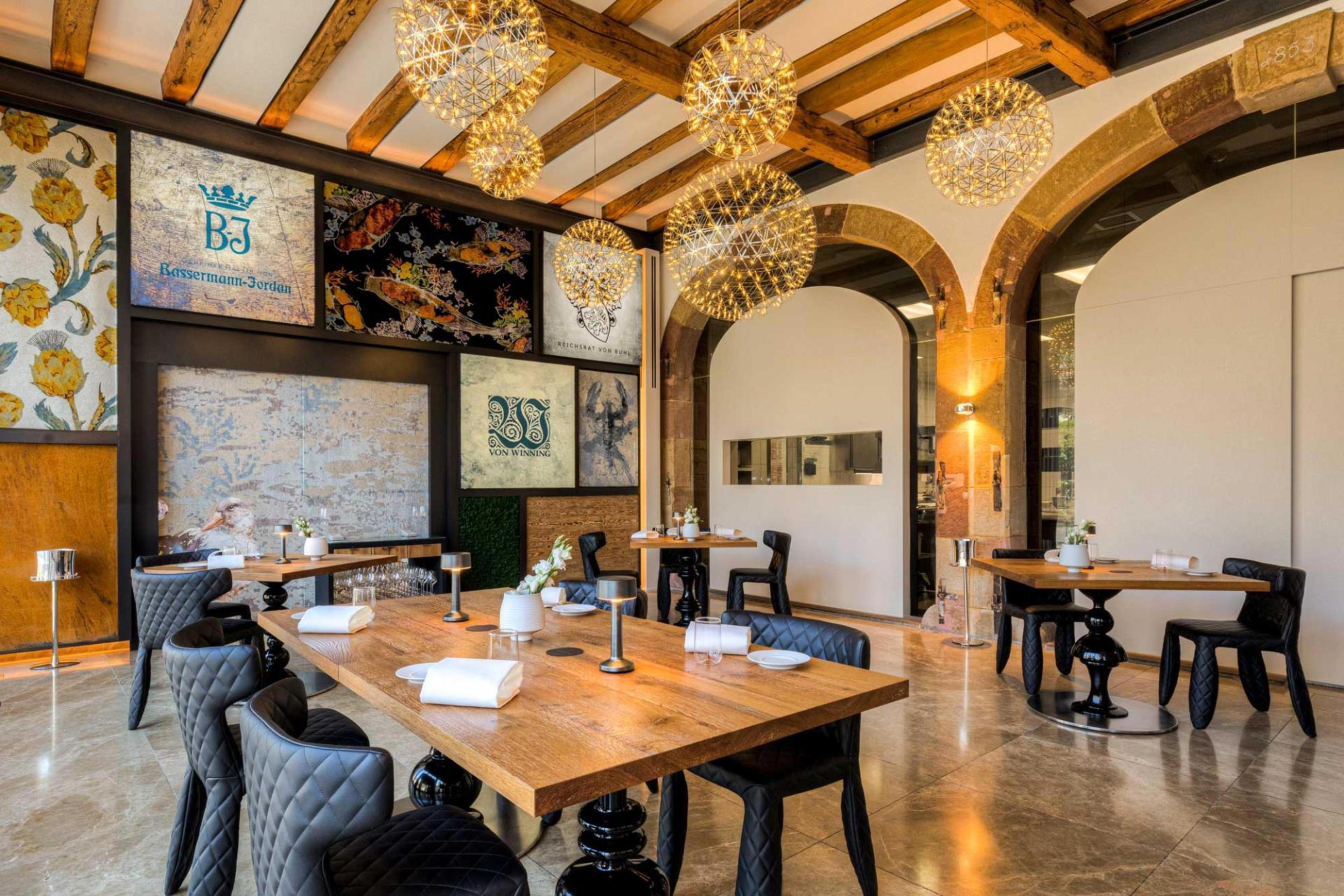
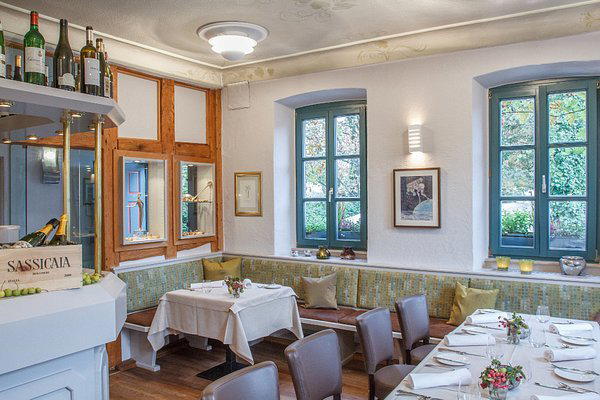
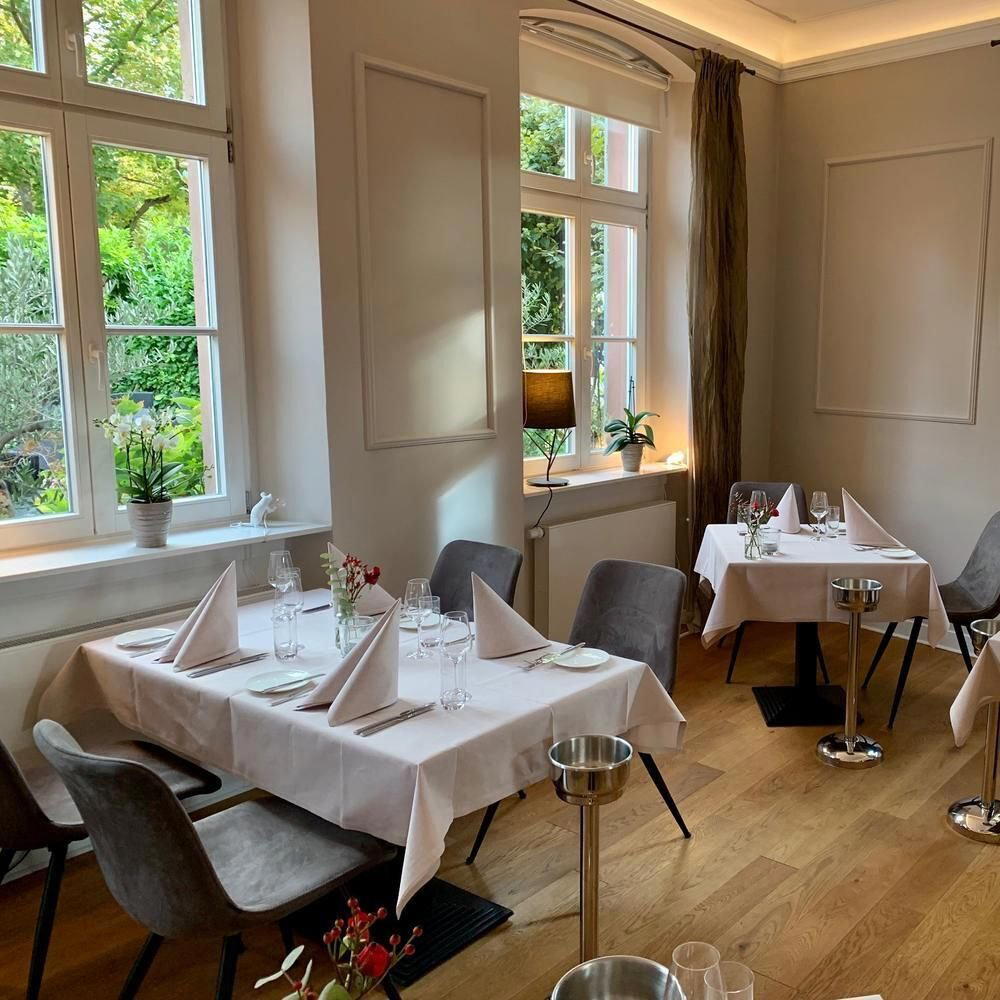
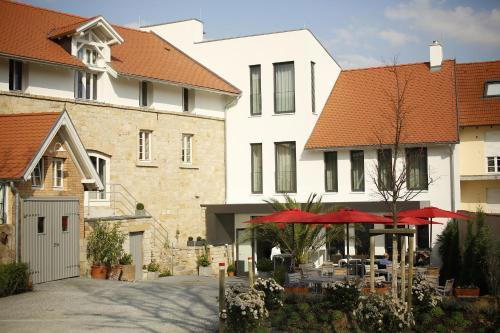
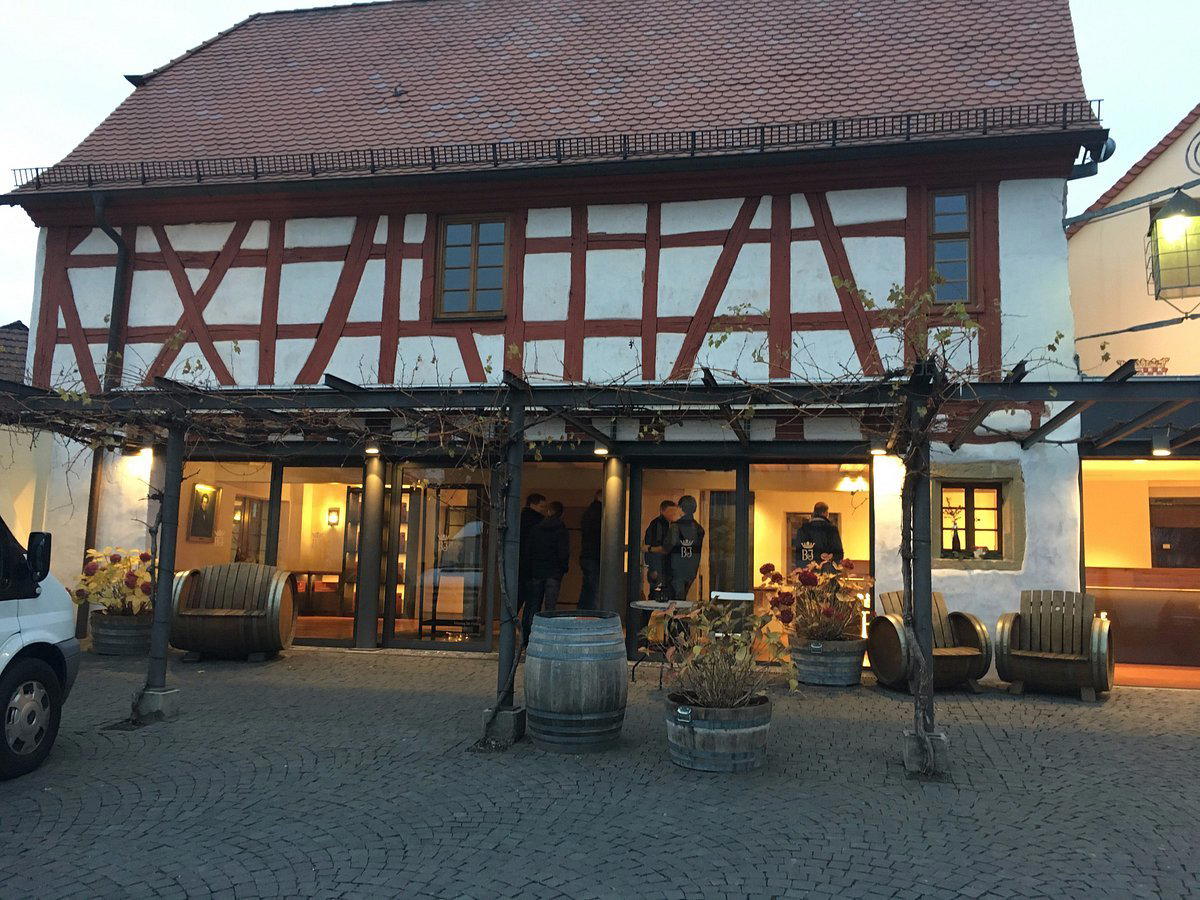
Beautiful historical building with old cross vaults contrasted by modern table settings and colorful decor, described as stylish, elegant, and sometimes formal.