Leopold


Michelin Plate · Falstaff Restaurant - 87 Falstaff Points
Our verdict
The kitchen moves between international cooking and regional Palatinate dishes at a mid-range price point, with a terrace that draws crowds through the warmer months. Advance booking is advisable given the restaurant's sustained popularity in Deidesheim.

Pearl is the En Primeur Club membership app, where members save venues, book tables and use the concierge.
The menu
What to order
- Palatinate trilogy
- Saumagen
- Homemade bratwurst
- Leberknödel
A Winery Courtyard, a Converted Stable, and the Pace of the Palatinate
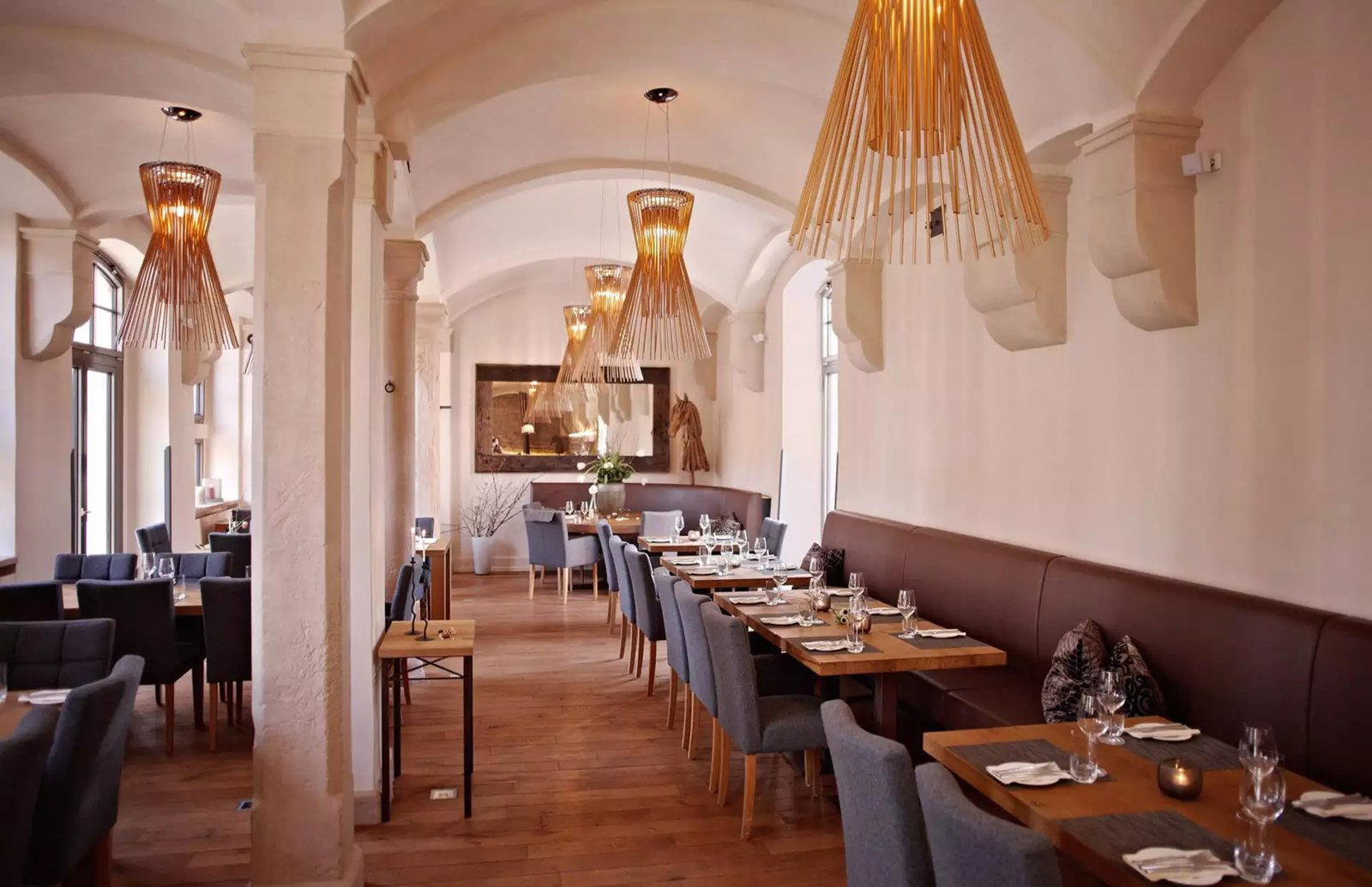
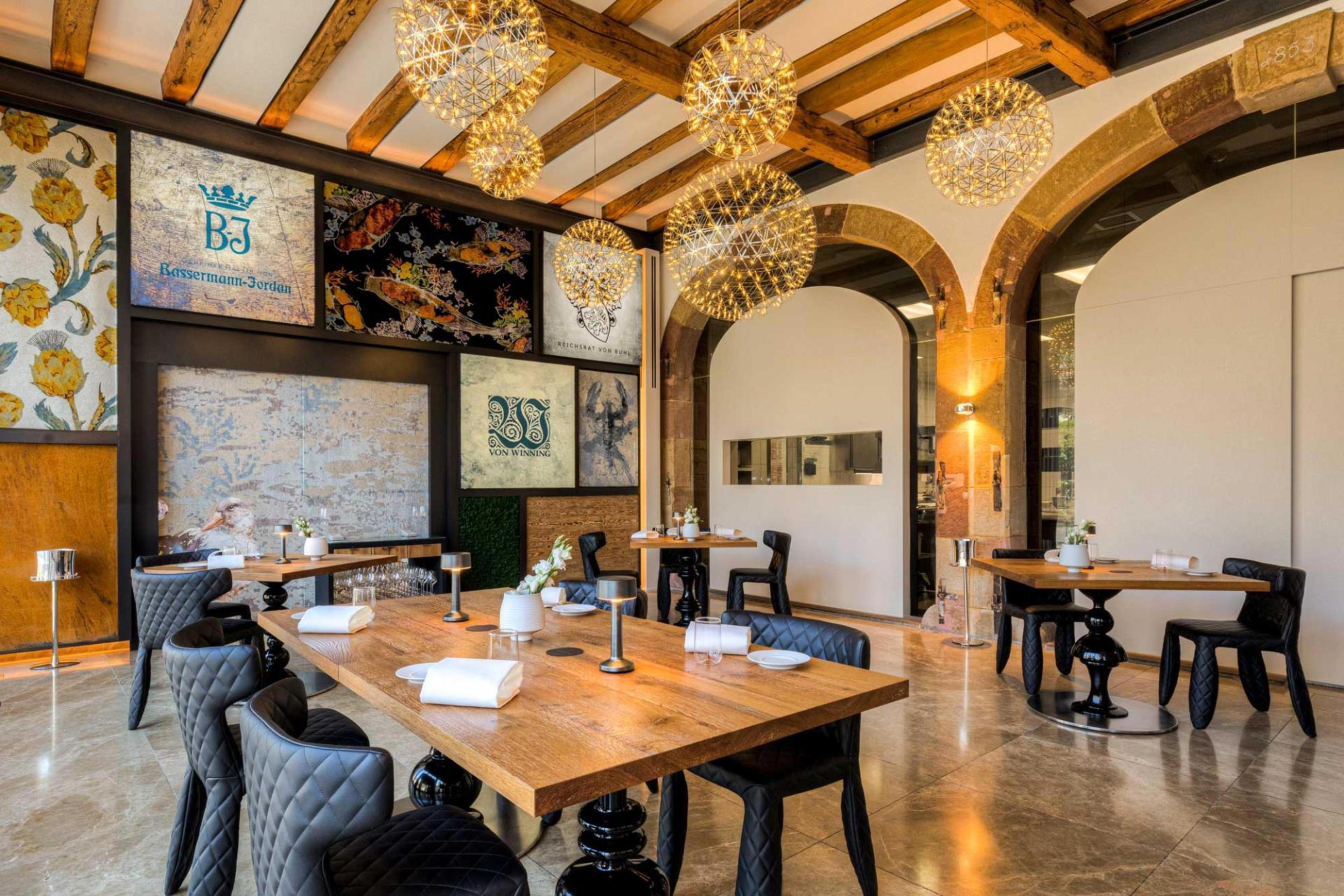
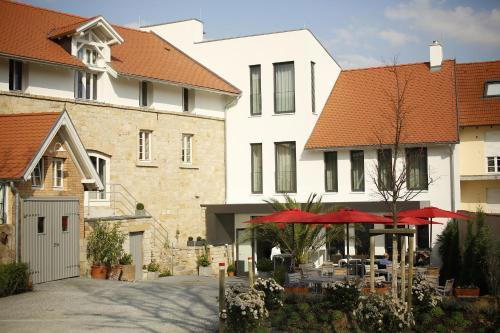
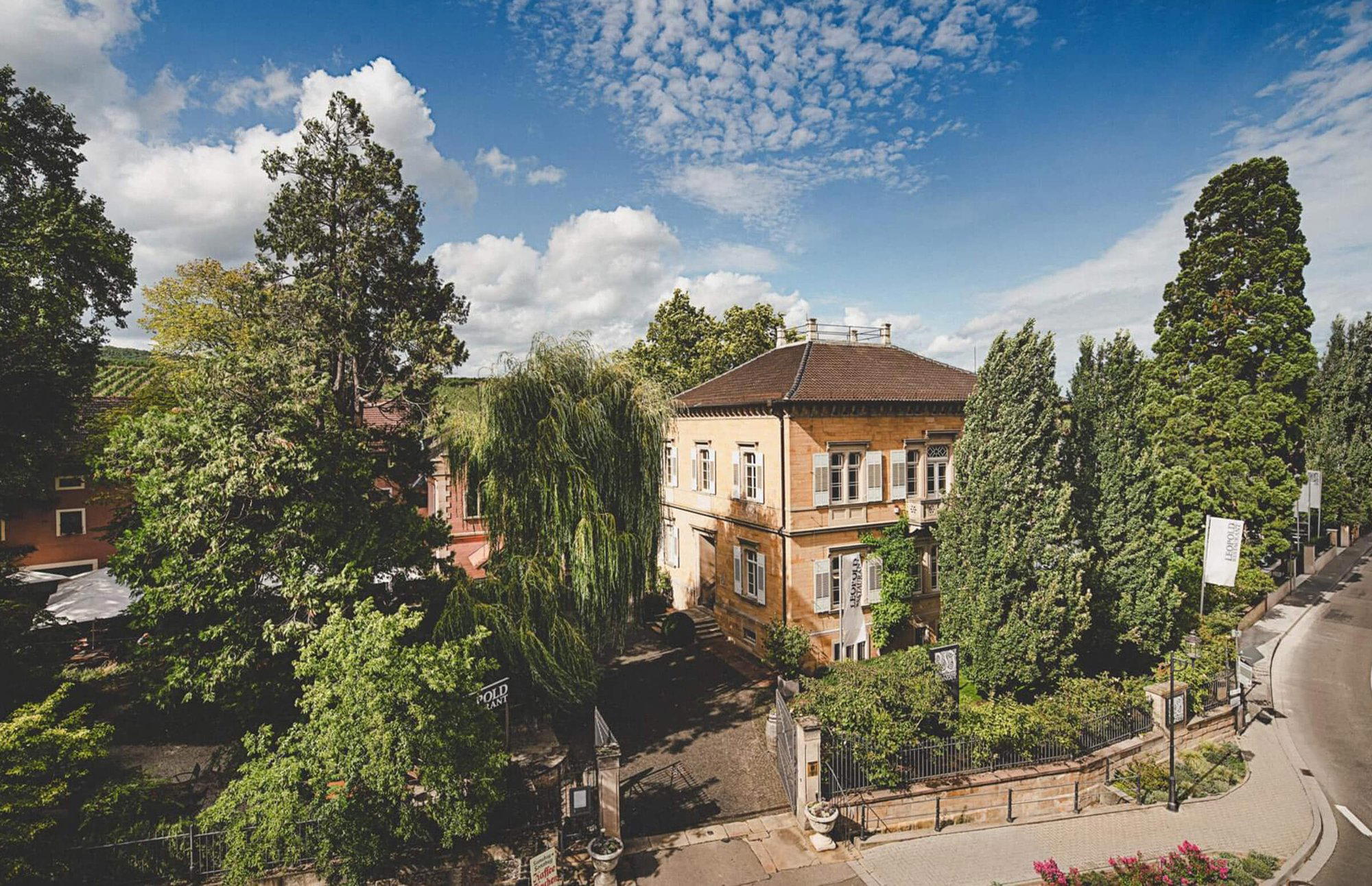
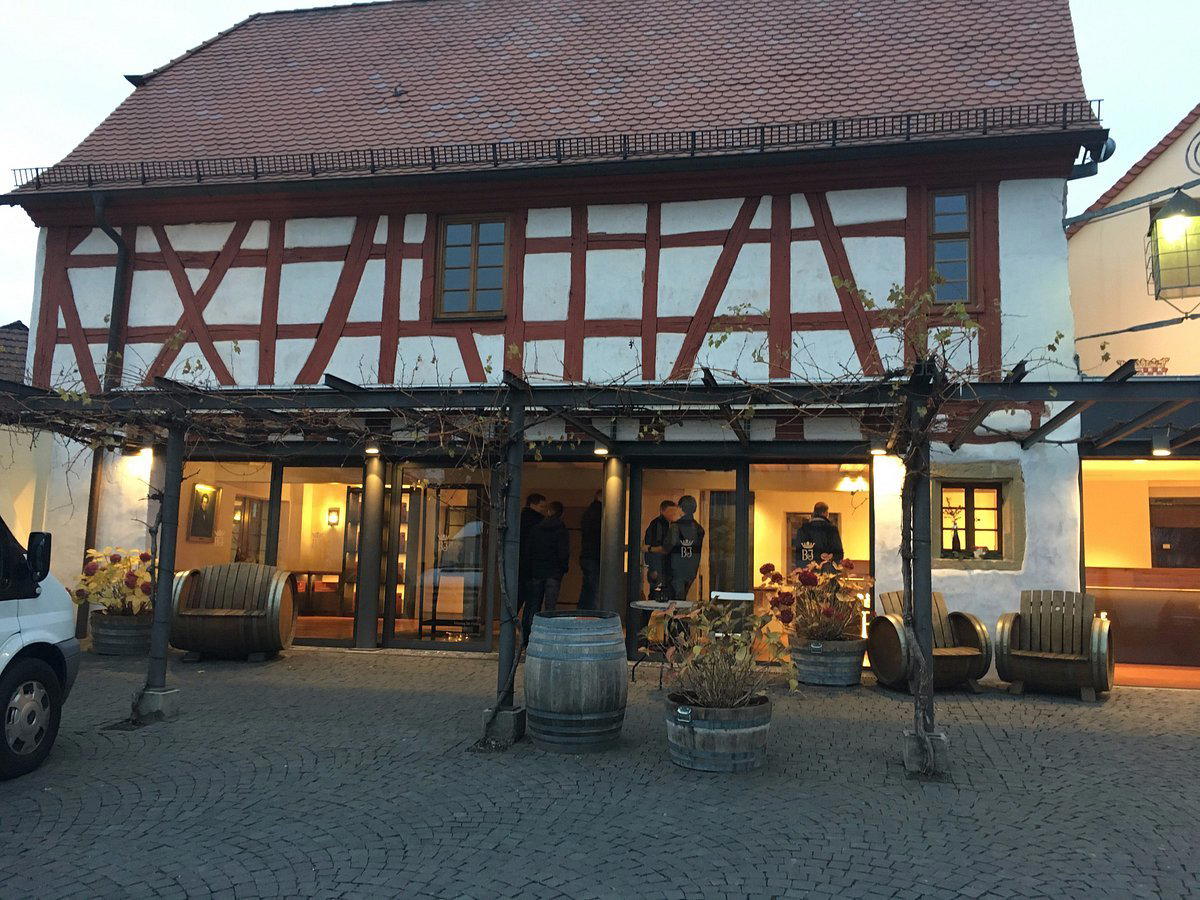
The Palatinate wine route has always shaped how its towns eat. In Deidesheim, where wine cellars underpin the local economy and vine-covered slopes frame the skyline, dining tends to unfold at a measured pace, with bottles opened early and tables held long. Leopold occupies a space that makes that rhythm tangible: a lavishly converted stable within the Von Winning winery complex, part of the broader Bassermann-Jordan estate, one of the Pfalz's most historically significant wine dynasties. The stone walls and high ceilings do what repurposed agricultural architecture does well, holding onto the character of the original structure while framing something decidedly contemporary inside.
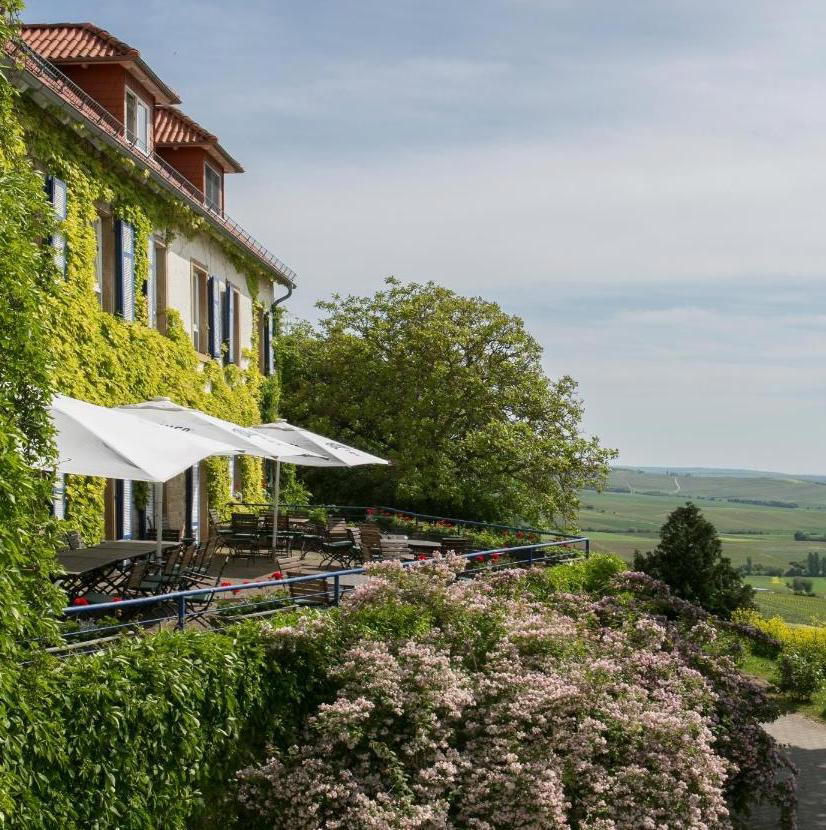
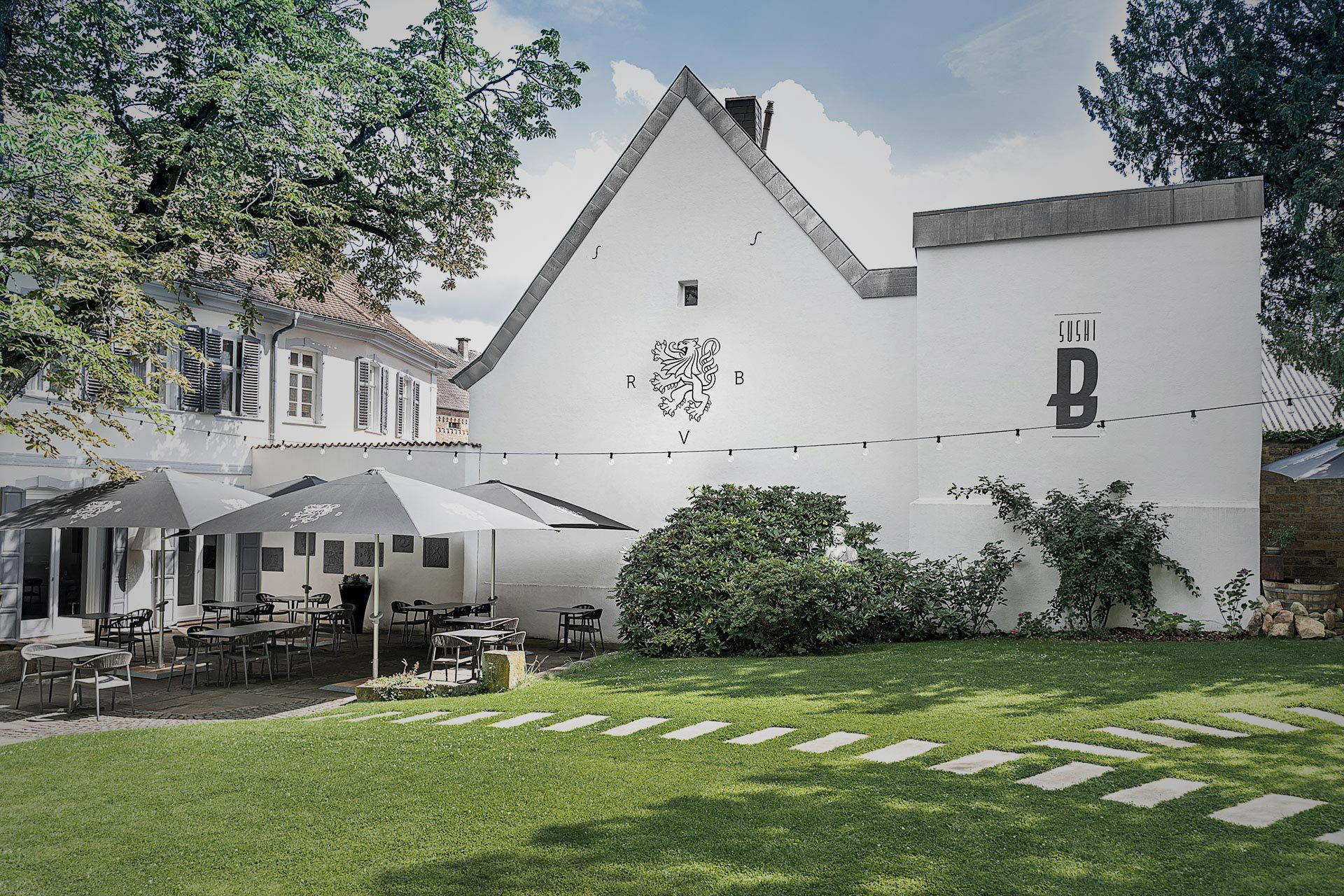
Arriving at Weinstraße 10, the transition from wine village street to winery courtyard is part of what sets the meal's tone. The terrace, which draws particular attention through spring and summer, places diners within the estate itself, with the sights and atmosphere of a working winery providing context that a standalone restaurant could not replicate. That physical setting is not incidental; it is the first signal that a meal here is meant to be taken slowly, over good wine, in the company of the landscape that produced it.
What the Michelin Plate Signals at This Price Point
Germany's Michelin coverage has expanded its Plate recognition in recent years to capture restaurants that deliver consistent, well-executed cooking without reaching for the complexity demanded of starred houses. Leopold's 2025 Michelin Plate places it in that category: kitchens where the sourcing is taken seriously, the execution is reliable, and the overall experience holds up to scrutiny. At the €€ price point, that recognition carries particular weight. It positions Leopold in a tier where value relative to quality is part of the editorial argument, not just the price tag.
Within Deidesheim itself, the restaurant sits below the €€€€ brackets occupied by L.A. Jordan (Modern German, Creative) and Schwarzer Hahn (Modern French), both of which operate as destination kitchens with tasting-menu formats and starred ambitions. riva, also international in orientation but priced a tier above at €€€, rounds out the local comparison set.
The Menu's Double Register: International Reach, Regional Grounding
The kitchen at Leopold operates in a mode that has become increasingly common in German wine-region towns: a menu that acknowledges both the local produce tradition and the appetite of an international visitor base. Palatinate dishes, which draw on the region's reputation for hearty, produce-forward cooking shaped by French influence from across a historically permeable border, sit alongside more broadly international preparations. This double register is not a compromise; it reflects the actual demographic reality of a wine village that attracts visitors from across Germany and beyond, while serving a local clientele with its own expectations.
The approach places Leopold in a wider pattern visible across Germany's wine routes, where the most sustainably popular mid-range restaurants tend to avoid the rigidity of either pure regionalism or untethered internationalism. Comparable international-focused kitchens operating at different price points elsewhere in Germany include JAN in Munich and Loumi in Berlin, though both operate in larger urban contexts where the competitive pressure is considerably higher. For those curious about where German kitchens push harder against convention, CODA Dessert Dining in Berlin, Aqua in Wolfsburg, and Schwarzwaldstube in Baiersbronn represent the country's more technically demanding end, while Vendôme in Bergisch Gladbach, ES:SENZ in Grassau, and Haubentaucher in Rottach-Egern offer further points of reference across different registers.
The Ritual of Eating Here: Pacing, Setting, and the Event Dimension
Dining ritual at Leopold is shaped by its setting in ways that go beyond aesthetics. A converted stable within a winery estate invites a different relationship with time than a city restaurant does. The expectation, reinforced by the terrace and the courtyard surroundings, is that a meal is an occasion rather than a transaction. That pacing suits the Palatinate's wine culture, where a table ordered with a regional Riesling or Spätburgunder from the surrounding appellation becomes its own argument for staying through a second or third glass.
Restaurant's additional function as an event venue is worth noting as context rather than qualification. Spaces that carry serious dining credentials while also operating as event locations often do so because the physical setting is compelling enough to serve both purposes. At Leopold, the converted stable format and winery estate grounds make that dual role legible rather than contradictory. It is the kind of room that earns its reputation for atmosphere through architecture rather than décor.
Planning a Visit
Leopold is on Weinstraße 10, within the Von Winning winery complex in central Deidesheim, a small town on the German Wine Route (Deutsche Weinstraße) in Rhineland-Palatinate, roughly an hour's drive south of Mainz and 20 minutes west of Mannheim. The restaurant operates at a mid-range price point (€€), making it accessible for an extended lunch or a relaxed dinner without the commitment of a tasting-menu evening. The terrace is most productive from late spring through early autumn, when the winery courtyard setting delivers its full effect. For those building a broader Deidesheim visit, the town's dining, accommodation, and wine options are mapped in our full Deidesheim restaurants guide, our full Deidesheim hotels guide, our full Deidesheim bars guide, our full Deidesheim wineries guide, and our full Deidesheim experiences guide.
Frequently asked questions
What awards or recognition does Leopold have?
Leopold has received recognition including: Michelin Plate (2025); This lavishly converted stable of the Von Winning winery (part of the Bassermann-Jordan empire) is an impressively modern and extremely popular restaurant that serves excellent food. The menu includes a selection of i….
What's the signature dish at Leopold?
The kitchen does not operate around a single signature dish. The menu spans both international preparations and Palatinate regional cooking, which means the offer shifts across the two registers rather than anchoring on one defining plate. At the €€ price range, the balance of local and international dishes is the kitchen's consistent identity.
What's the pricing like at Leopold?
Pricing at Leopold is listed as €€.
Where is Leopold located?
Leopold is located at Weinstraße 10, 67146 Deidesheim, Germany, Deidesheim.
Can I walk in to Leopold?
Leopold holds a Michelin Plate (2025) and is described by Michelin as extremely popular, which points toward advance booking being the safer approach. The restaurant is located at Weinstraße 10 within the Von Winning winery complex in Deidesheim, and it also operates as an event venue, meaning capacity on any given day can vary. Checking ahead before turning up is advisable.
What is Leopold known for?
Leopold is recognised for its setting inside a converted stable on the Von Winning winery estate in central Deidesheim, a property tied to the Bassermann-Jordan wine empire. The kitchen runs a double-register menu that combines international dishes with Palatinate regional cooking, earning a Michelin Plate in 2025. The terrace and event-bookable space make it one of the most-visited restaurants on the German Wine Route at the €€ price point.
Cuisine Lens
A quick peer reference to anchor this venue in its category.
| Venue | Cuisine | Price | Awards | Notes |
|---|---|---|---|---|
| LeopoldThis venue (the venue you are viewing) | Modern Palatinate Country Cooking | $50–100 | Michelin Plate · Falstaff Restaurant - 87 Falstaff Points | Not listed |
| L.A. Jordan | Modern French-Japanese Fusion | $300–500 | 3 Michelin Stars · La Liste Top Restaurants | Modern German, Creative |
| Schwarzer Hahn | Modern German/Palatine Fine Dining | Not listed | 1 Michelin Star | Modern French |
| Gasthaus zur Kanne | Modern Palatinate German | Not listed | Michelin Bib Gourmand | Country cooking |
| Restaurant 1718 | French-inspired Bistro | Not listed | Michelin Plate | International |
| riva | Modern Mediterranean with Italian influences | $50–100 | Michelin Plate | International |
Recognition history
Dated appearances from independent guides and award organizations, with the underlying list record or original source where available.
Michelin Plate
Michelin · 2026 Michelin Plate
Falstaff Restaurant - 87 Falstaff Points
Falstaff
Full recognition history (4 entries)
Michelin Plate
Michelin
Michelin Plate
Michelin
Continue exploring
More in Deidesheim
Restaurants in Deidesheim
All restaurants in Deidesheim →
Bars in Deidesheim
Browse all →
Hotels in Deidesheim
All hotels in Deidesheim →
Details
- Modern
- Cozy
- Elegant
- Date Night
- Group Dining
- Celebration
- Family
- Terrace
- Open Kitchen
- Wine Cellar
- Extensive Wine List
- Local Sourcing
- A La Carte
- Wine
- Vegetarian Friendly
- Vegan Options
- Gluten Free Options
Current opening hours
- Monday
- 12 PM–12 AM
- Tuesday
- 12 PM–12 AM
- Wednesday
- 12 PM–12 AM
- Thursday
- 12 PM–12 AM
- Friday
- 12 PM–12 AM
- Saturday
- 12 PM–12 AM
- Sunday
- 12–4 PM
Hours can change for holidays and private events. Hours as of .
Impressively modern wine bar flair in a converted stable with pleasant feel-good atmosphere, spacious terrace offering relaxed Mediterranean vibes in summer, and lively yet comfortable indoor setting.