Our verdict
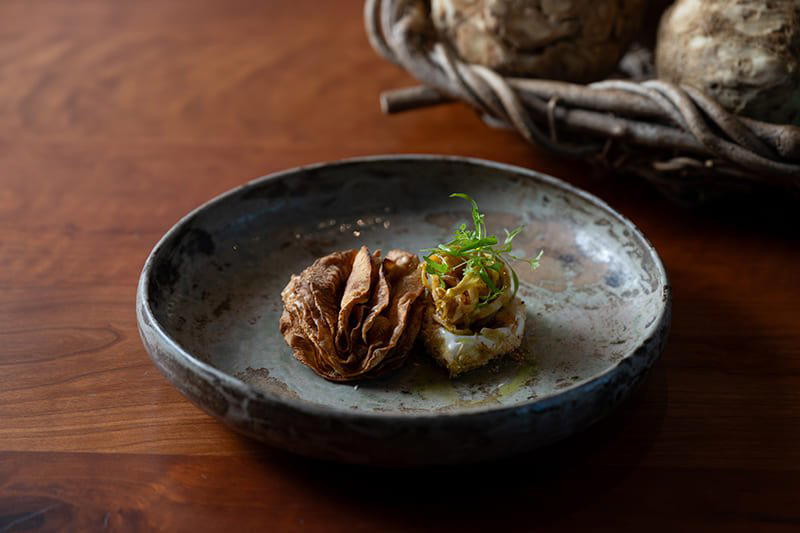
In Nagano's quietly ambitious dining scene, La Rencontre makes a case for French technique applied to one of Japan's most productive agricultural regions. The restaurant operates in Higashinomoncho, a part of the city where European formats sit alongside long-established Japanese traditions. For a region this well-stocked with quality produce, the French kitchen is a logical — if still surprising — choice.

Pearl is the En Primeur Club membership app — saves, bookings, and concierge access live there. Same editors, same standards.
- Address
- Higashinomoncho-328 Nagano, 381-0852, Japan
- Phone
- +815036234105
- Hours
- Mon ClosedTue–Sat 12–3 PM, 6:30–11 PMSun Closed
- Website
- larencontre-nagano.com
- Directions
- Get directions
- Booking
- Book on TableCheck
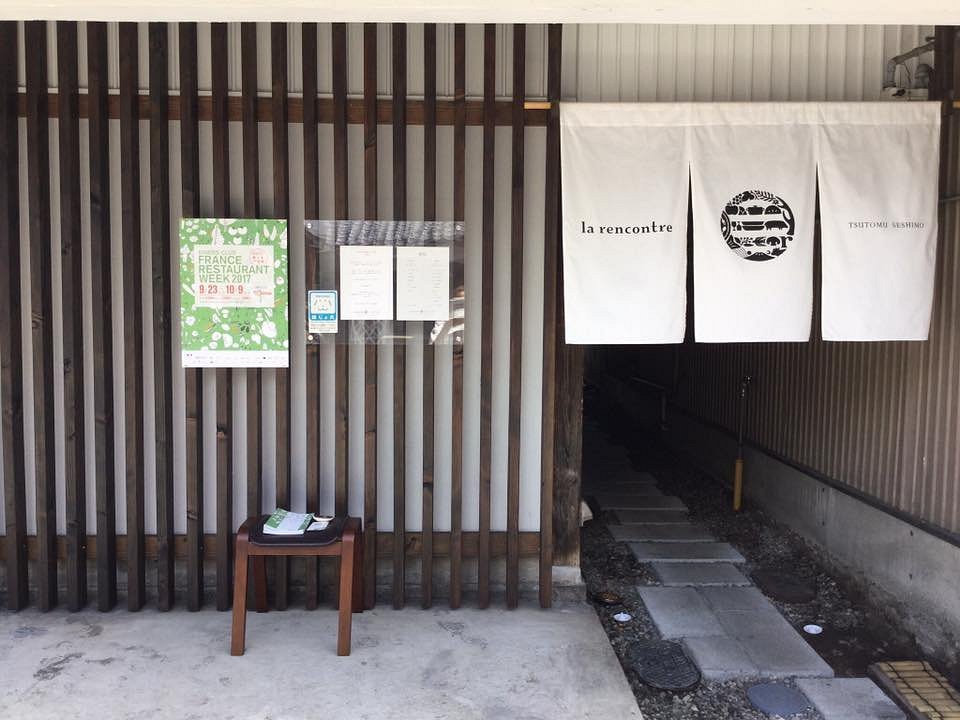
French Cooking in Alpine Country
Nagano Prefecture sits at elevations that most Japanese agricultural regions never reach. The mountain air, the cold winters, and the distinct seasonal rhythms produce vegetables, dairy, mushrooms, and game that read quite differently from the coastal abundance underpinning Tokyo or Osaka's restaurant economies. It is this environment — rather than urban density or international tourism — that gives a French restaurant operating here its most compelling reason to exist. La Rencontre, located on Higashinomoncho in the 381-0852 postal district, sits within reach of some of Japan's most interesting cold-climate produce, and that geography shapes what French cooking means in this context.
The broader French restaurant tradition in provincial Japan has followed a consistent arc. Classically trained cooks who might once have returned only to Tokyo or Osaka have increasingly opened in their home regions, applying technique to local supply chains rather than importing ingredients to match a metropolitan standard. What results is a category of French cooking that is neither purely regional Japanese nor derivative of Paris, it occupies a middle register where the sourcing is local and the grammar is French. La Rencontre belongs to this tradition, and Nagano is a particularly logical setting for it.
What the Region Puts on the Table
Nagano's agricultural credentials are not incidental to a restaurant like this, they are structural. The prefecture ranks among Japan's leading producers of several key categories: leafy vegetables, root vegetables, apples, and a range of mushrooms that benefit from the cool highland climate. Shinshu beef, raised at altitude, has developed a distinct profile among Japan's regional wagyu designations. Shinshu salmon, farmed in the prefecture's cold mountain waters, offers a fatty, clean alternative to the oceanic fish that dominates coastal menus. Wild game, including venison and boar, enters the supply chain seasonally in ways that align more naturally with a French kitchen's traditions than with washoku's seafood-centred architecture.
French technique handles this material well. Reduction sauces built from local bones, preparations that use dairy from Shinshu's highland farms, vegetable cookery that draws on the region's deep seasonal variation, these approaches make sense here in a way they might not in a coastal city where the obvious answer is always the sea. For comparison, restaurants like HAJIME in Osaka or Gion Sasaki in Kyoto operate where the local supply chain is principally maritime. Nagano's landlocked position, far from that reflex, creates different editorial possibilities for a kitchen.
Nagano's Dining Scene in Context
Nagano city is not a primary destination on Japan's fine dining circuit. The international visitor tends to pass through for Zenkoji Temple or use the city as a staging point for the ski resorts around Hakuba and Nozawa Onsen. Domestic visitors, particularly from Tokyo (roughly 90 minutes by Hokuriku Shinkansen), bring different expectations, they know the region's produce reputation and arrive with that as a reference point. This shapes what the ambitious restaurant here is actually doing: it is speaking primarily to a domestic audience that understands Shinshu ingredients as a quality signal.
The comparison set within Nagano itself is varied. Bleston Court Yukawatan represents the resort-adjacent fine dining tier operating out of Karuizawa, while Fogliolina della Porta Fortuna shows that European formats other than French have found productive homes in the region. ca'enne and Aoitou fill out a scene where the appetite for considered, non-washoku cooking has grown steadily. Chinese Sai Muen, operating in the JPY 3,000–4,999 range, anchors the more accessible end of the international dining tier. La Rencontre operates within this ecosystem, where European cuisine is no longer a novelty but is still far from saturated.
Further afield, the precedent for French cooking applied seriously to Japanese regional produce appears in venues like akordu in Nara, which applies European technique to the Yamato region's agricultural output, and Goh in Fukuoka, where the French-Japanese synthesis sits within a city with considerably more international dining traffic than Nagano. The challenge for a restaurant in Nagano is operating without that traffic density while making the sourcing argument compelling enough to pull visitors from outside the region. Globally, the French fine dining format applied to hyper-local supply chains finds parallels in venues like Lazy Bear in San Francisco and, at the seafood end, Le Bernardin in New York City, both of which anchor their identity in sourcing specificity.
The Atmosphere: What to Expect
Higashinomoncho is a quieter district of Nagano city, removed from the immediate bustle of the station area. Approaching a French restaurant in this context carries a particular quality: the contrast between the alpine city's architectural modesty and the precision implied by a European kitchen format creates a specific register. French restaurants in provincial Japanese settings tend toward intimacy, smaller rooms, fewer covers, a pace that differs from the energy of Tokyo's competitive dining corridors. La Rencontre fits this pattern, where the dining experience is shaped as much by the surrounding calm as by what arrives at the table.
Restaurants in this tier in regional Japan typically operate as set-menu formats, where the evening's progression is determined by what the kitchen sourced that week. This is not a format designed for spontaneous visits. It rewards guests who have done the planning work in advance and who arrive with some understanding of what the region's season currently offers.
Planning a Visit
Nagano is accessible from Tokyo via the Hokuriku Shinkansen, with journey times around 80 to 90 minutes, making it a viable day-trip or short-break destination for travellers based in the capital. The address at Higashinomoncho-328 places La Rencontre within the city's older residential fabric, some distance from the main commercial streets near Nagano Station. Timing a visit around Nagano's seasonal calendar, late spring for mountain vegetables, autumn for mushrooms and game, winter for dairy-heavy preparations, is likely to produce the most instructive result. For a broader picture of where La Rencontre sits within the city's wider offer, the full Nagano restaurants guide covers the range from approachable to premium across multiple cuisine categories.
Other venues worth considering in the region include affetto akita in Akita and Abon in Ashiya, both of which illustrate how European fine dining formats have taken root in non-metropolitan Japan with distinct local identities. For those building a broader Japan itinerary around regional fine dining, venues like Harutaka in Tokyo, Aji Arai in Oita, Ajidocoro in Yubari District, and Akakichi in Imabari each represent the kind of committed, place-specific cooking that makes travelling beyond Japan's major cities worthwhile.
Frequently asked questions
Is French restaurant la rencontre suitable for children?
La rencontre is a French restaurant in Higashinomoncho, a quieter residential district of Nagano city, which suggests a setting oriented toward unhurried dining rather than casual family meals. Whether children are formally accommodated is not confirmed by the venue, so contacting them directly before booking with young guests is advisable. The French format and calm neighbourhood context tend to suit older children or adults.
What's French restaurant "la rencontre"'s location?
French restaurant "la rencontre" is located at Higashinomoncho-328 Nagano, 381-0852, Japan, Nagano.
Can I walk in to French restaurant "la rencontre"?
Reservations are recommended for French restaurant "la rencontre" in Nagano. Confirm current policy via the venue's official channels.
What should I expect atmosphere-wise at French restaurant la rencontre?
The restaurant is located at Higashinomoncho-328, a district away from Nagano station's commercial centre, which sets a quieter, more deliberate tone before you arrive. A French restaurant in this kind of residential pocket of a Japanese city typically runs on the smaller side, with a pace shaped by the kitchen rather than turnover. Expect considered service and a room that doesn't compete with the food for attention.
Side-by-Side Snapshot
| Venue | Cuisine | Price | Awards | Notes |
|---|---|---|---|---|
| French restaurant "la rencontre"This venue — the venue you are viewing | Modern French | $150–200 | Not listed | Not listed |
| Kikuzushi | Edomae Sushi | $50–100 | Tabelog Silver #54 | Sushi |
| Fogliolina della Porta Fortuna | Award-Winning Italian Fine Dining | $100–150 | Tabelog Silver #21 | Italian |
| Bleston Court Yukawatan | Nippon French | $300–500 | Tabelog Bronze #37 | Not listed |
| ca’enne | Wood-Fired Italian | $150–200 | Tabelog Bronze #43 | Not listed |
| Chinese Sai Muen | Sichuan Chinese Dim Sum | $30–50 | Tabelog Bronze #292 | Chinese, Sichuan, Dim sum & Yum cha, JPY 4,000 - JPY 4,999 JPY 3,000 - JPY 3,999 |
Continue exploring
More in Nagano
Restaurants in Nagano
Browse all →
Hotels in Nagano
Browse all →
Wineries in Nagano
Browse all →
Details
- Cozy
- Elegant
- Intimate
- Classic
- Date Night
- Special Occasion
- Open Kitchen
- Extensive Wine List
- Local Sourcing
- Garden
- Prix Fixe
- Vegetarian Friendly
Current opening hours
- Monday
- Closed
- Tuesday
- 12–3 PM, 6:30–11 PM
- Wednesday
- 12–3 PM, 6:30–11 PM
- Thursday
- 12–3 PM, 6:30–11 PM
- Friday
- 12–3 PM, 6:30–11 PM
- Saturday
- 12–3 PM, 6:30–11 PM
- Sunday
- Closed
Hours can change for holidays and private events. Last verified .
Relaxing atmosphere in a historic renovated house with table and counter seats overlooking herb and flower fields.