Franziskanerstuben occupies a historic address in the old Franciscan quarter of Bolzano, where South Tyrolean cooking traditions meet the city's distinctly Alpine-Italian character. The address places it within walking distance of the cathedral and the old town's medieval lanes, situating it firmly in the part of Bolzano that feels closest to its Austro-Hungarian past. For visitors reading Bolzano's dining scene, this is a reference point for understanding the region's table traditions.
Pearl is the En Primeur Club membership app — saves, bookings, and concierge access live there. Same editors, same standards.
- Address
- Via dei Francescani, 7, 39100 Bolzano BZ, Italy
- Phone
- +39471976183
- Website
- franziskanerstuben.com
- Directions
- Get directions
 Saves & bookings on Pearl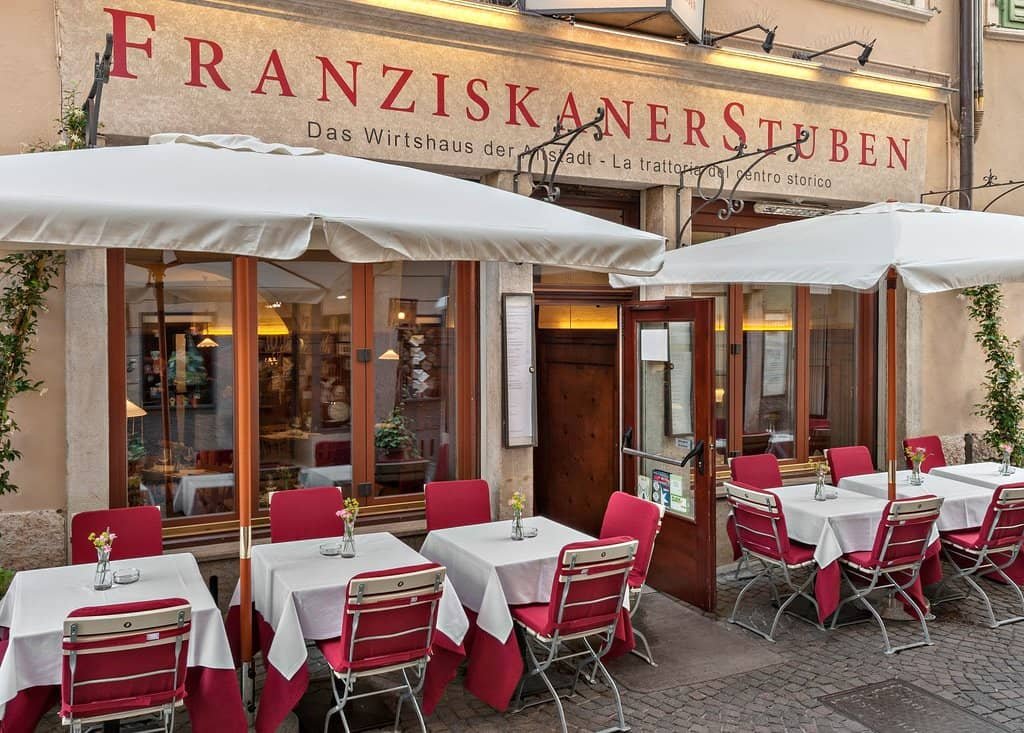
Where Bolzano's Two Kitchens Meet
Bolzano sits at a linguistic and culinary border that most Italian cities don't have to negotiate. To the south, the cooking is recognisably Italian: risotto, cured meats with a Venetian lean, wine poured from Pinot Grigio and Lagrein grapes grown on the valley floor. To the north, the same table carries Speck, Knödel, Schlutzkrapfen, and Graukäse, dishes whose grammar belongs to Tyrol rather than Tuscany. Franziskanerstuben is a restaurant serving traditional South Tyrolean and Tyrolean cooking at Via dei Francescani 7 in Bolzano. The Franciscan quarter is one of the older residential and ecclesiastical precincts in Bolzano, and restaurants here tend to carry that weight in their format, unhurried, rooted in the neighbourhood rather than positioned for tourist throughput.
For anyone mapping Bolzano's dining options, this address places Franziskanerstuben in a distinct category. The city has a tier of more contemporary rooms, aLMa9 works at a modern creative register, and Bogen brings a sharper, more urban sensibility, but the older stuben tradition represents something different: a format that predates the current wave of fine-dining ambition and persists not because of trend but because of function. These rooms were built to serve the people who lived nearby, and many still do.
Reading the Menu as Architecture
The structure of a traditional South Tyrolean menu communicates a great deal about regional priorities before a single dish arrives. Unlike the tasting-menu format that has become standard at places like Atelier Moessmer Norbert Niederkofler in Brunico, where the chef's narrative controls the sequence, the stuben format gives the diner a broader field of choice. Antipasti and Vorspeisen tend to feature cured and smoked products: Speck sliced to order, alongside pickled vegetables and rye breads. The grain-forward first courses, particularly variations on Knödel and pasta stuffed with spinach or beets, carry the real regional identity. These form the structural centre of the meal.
What this architecture reveals is a kitchen philosophy built around preserved, seasonal, and altitude-appropriate ingredients rather than imported luxury goods. The comparison with Italy's southern dining rooms is instructive: a meal at Quattro Passi in Marina del Cantone or Uliassi in Senigallia is built around maritime abundance. The Alpine kitchen works from scarcity and preservation, and the menu at a place like Franziskanerstuben encodes that logic at every course. Secondary cuts braised over long periods, dairy-heavy sauces, and the recurring presence of dark bread mark a kitchen tradition shaped by mountain winters rather than coastal harvests.
That contrast is also visible when you position Bolzano's traditional rooms against Italian fine dining more broadly. The structural ambition of Osteria Francescana in Modena or Piazza Duomo in Alba operates on entirely different terms. Those kitchens are in dialogue with international fine-dining norms. The stuben tradition in Bolzano is in dialogue with the valley and its seasonal calendar, which makes it a different kind of authority, not lesser, just differently oriented.
The Room and the Quarter
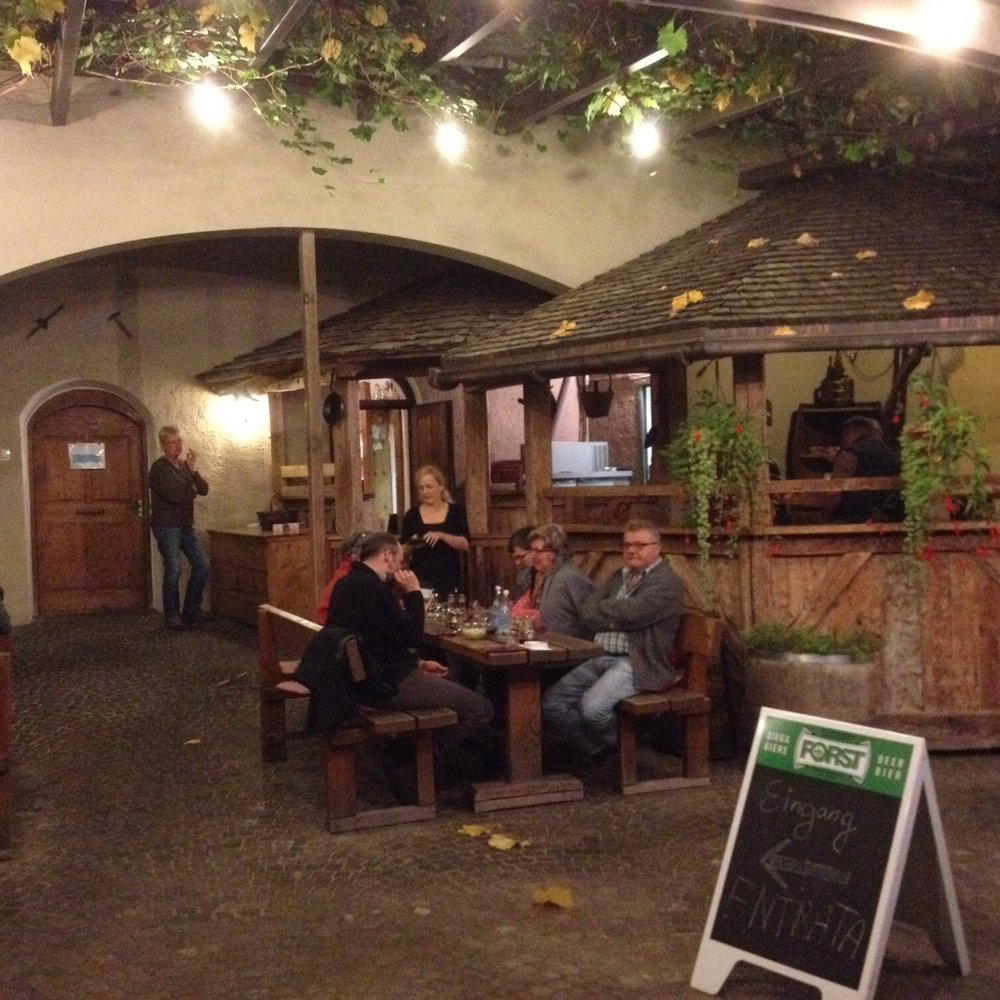
The physical character of a traditional stuben, low ceilings, panelled walls, tiled or stone floors, tables set close together, is not decorative nostalgia. It evolved as a practical response to Alpine winters and the need to retain heat in buildings that lacked modern insulation. The atmosphere this creates, dim, warm, slightly compressed, is inseparable from the food: the two formed together over centuries, and the dishes read differently in this setting than they would on a white-tablecloth terrace. Visiting Franziskanerstuben means entering that pairing on its own terms.
Via dei Francescani runs close to the Franciscan church and monastery complex, one of the older religious foundations in the city. The street connects to Bolzano's pedestrianised centre without sitting directly on the main tourist axis, which means it draws a mix of locals using the neighbourhood and visitors who have moved beyond the immediate cathedral square. For context on the broader old town dining scene, Batzen Häusl occupies a similar register nearby, while Castel Flavon - Haselburg offers a more panoramic setting above the city. Bamboo and Zur Kaiserkron demonstrate the range of the city's mid-to-upper dining tier, from international cuisine to Mediterranean-leaning rooms.
Bolzano in the Wider Italian Dining Conversation
South Tyrol has attracted serious culinary attention over the past decade, partly through the rise of destination restaurants like Atelier Moessmer and partly through a broader reassessment of regional Italian cooking that has moved beyond Emilia-Romagna and Piedmont as the default reference points. That reassessment benefits both the ambitious rooms and the traditional ones: when critics begin paying attention to a region, the full spectrum of its table culture becomes more legible to visiting diners.
The contrast between Bolzano's stuben tradition and the more technically ambitious rooms of northern Italy, Le Calandre in Rubano, Enrico Bartolini in Milan, or Enoteca Pinchiorri in Florence, is not a hierarchy. It is a map of different intentions. The stuben format at its leading is not trying to earn stars in the same way that Reale in Castel di Sangro or Dal Pescatore in Runate are; it is trying to remain legible to the community that built it. For diners coming from farther afield, from the American fine-dining orbit where Le Bernardin in New York City or Lazy Bear in San Francisco set the reference frame, that is a different kind of value proposition, and one worth recognising for what it is.
Planning a Visit
Franziskanerstuben is located at Via dei Francescani 7 in Bolzano's old town, a short walk from the cathedral and the main covered market.
Reputation Context
Comparable venues nearby, for context on price, style, and recognition.
| Venue | Cuisine | Price | Notes |
|---|---|---|---|
| FranziskanerstubenThis venue — the venue you are viewing | Traditional South Tyrolean / Tyrolean | $$ | Not listed |
| Batzen Häusl | South Tyrolean Brewpub & German Gasthaus | $$ | Bolzano |
| Hopfen & Co | Traditional South Tyrolean Brewery Pub | $$ | Piazza Delle Erbe, Old Town |
| Bamboo | Sushi & Fine Dining | $$$ | city center |
| Meta | Modern International Fine Dining | $$$ | Piazza Walther |
| Forsterbräu | Traditional South Tyrolean & Austrian Brewery | $$ | historic center |
Continue exploring
More in Bolzano
Restaurants in Bolzano
Browse all →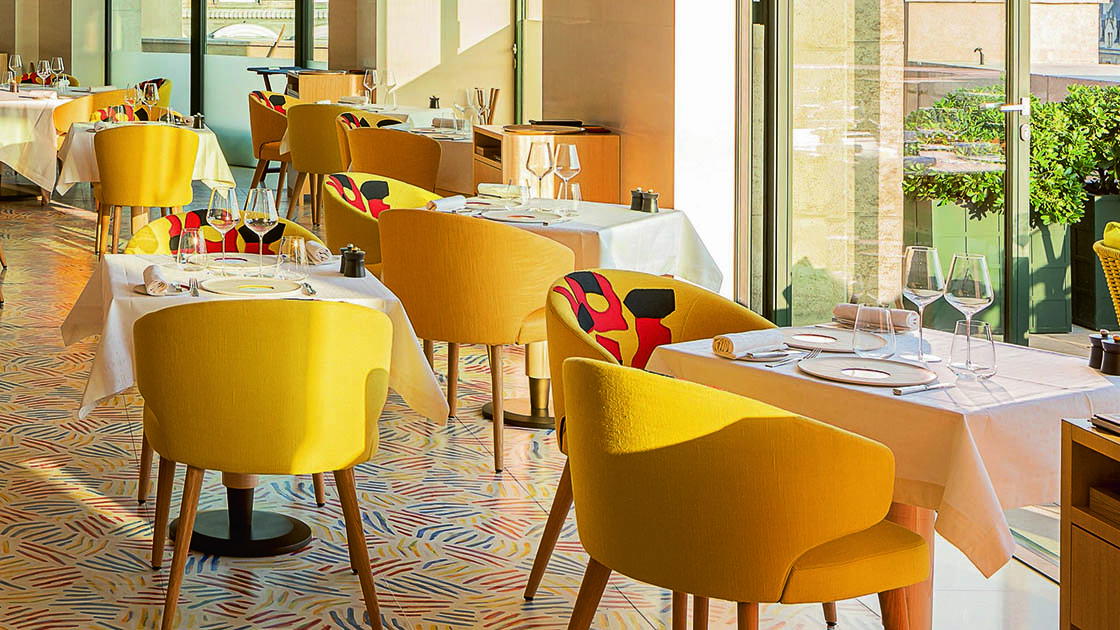
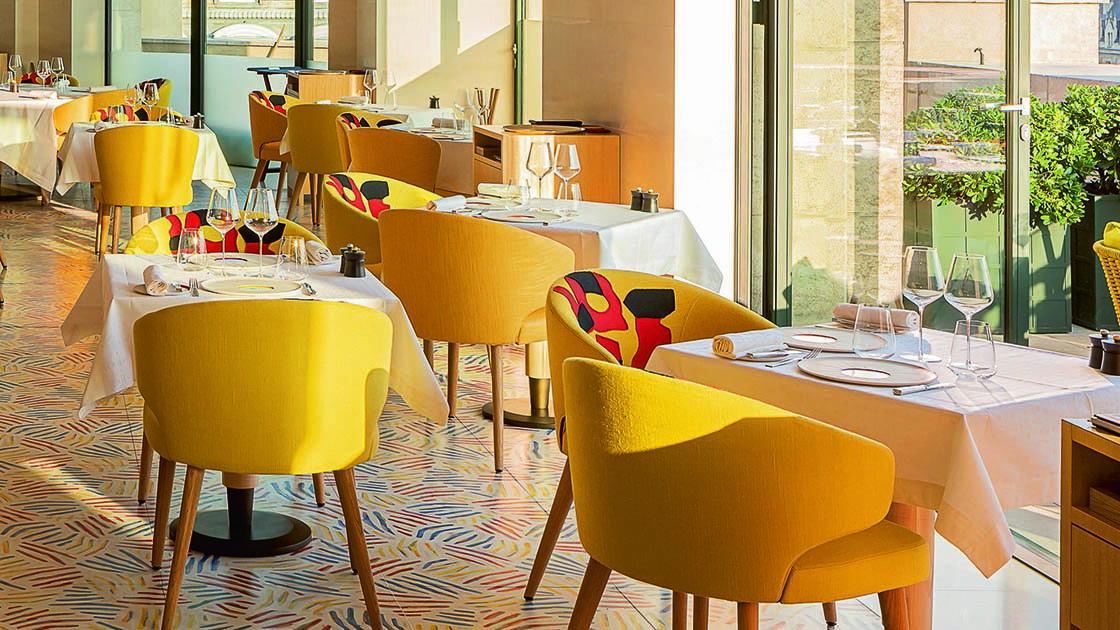
Bars in Bolzano
Browse all →
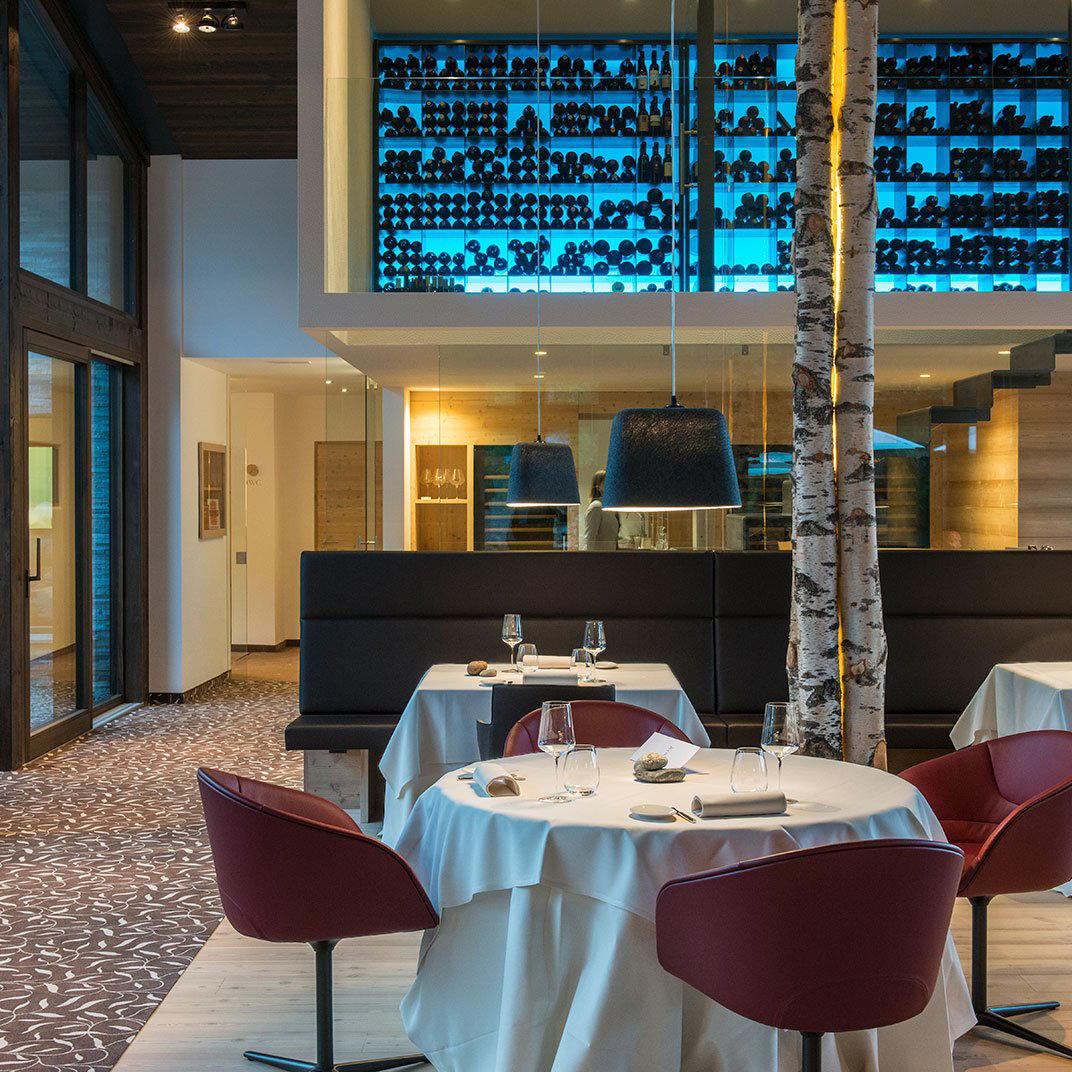
Hotels in Bolzano
Browse all →
At a Glance
- Cozy
- Rustic
- Classic
- Family
- Group Dining
- Casual Hangout
- Historic Building
- Local Sourcing
Current opening hours
- Monday
- 11:45 AM–2:30 PM, 6:30–10 PM
- Tuesday
- Closed
- Wednesday
- 11:45 AM–2:30 PM, 6:30–10 PM
- Thursday
- 11:45 AM–2:30 PM, 6:30–10 PM
- Friday
- 11:45 AM–2:30 PM, 6:30–10 PM
- Saturday
- 11:45 AM–2:30 PM, 6:30–10 PM
- Sunday
- 11:45 AM–2:30 PM, 6:30–10 PM
Hours can change for holidays and private events. Last verified .
Cozy and warm Tyrolean style interior with welcoming atmosphere, no background music for quiet conversations, and old German-style charm.