Our verdict
On a quiet Bolzano side street, Bogen occupies the kind of address that rewards locals who know where to look. The room frames a pace of eating shaped by South Tyrol's dual Alpine and Italian inheritance, where the customs of the table matter as much as what arrives on it. For visitors moving through northern Italy's most culturally layered city, it makes a considered case for attention.

Pearl is the En Primeur Club membership app, where members save venues, book tables and use the concierge.

A Table Set Between Two Traditions
Bolzano sits at a cultural fault line that most Italian cities never have to negotiate. German-speaking South Tyrol meets the Italian peninsula here, and that tension produces something distinct at the table: a dining culture that draws from Alpine hearth cooking and Italian structure simultaneously, without fully resolving into either. The city's better restaurants do not simply blend the two traditions; they hold them in productive tension, letting the diner feel both inheritances in the same meal. Bogen, on Via Dr. Josef Streiter in the city's quieter residential margin, operates within that context.
The address itself signals something. Via Dr. Josef Streiter sits away from the tourist circuit around Piazza Walther and the cathedral quarter, in a part of the city where the architecture is lower, the pace slower, and the clientele more likely to be local. In a city where the leading meals often happen off the main drag, that positioning is not incidental. It reflects a broader pattern in Bolzano's dining scene: the rooms that take the meal most seriously tend not to compete for foot traffic.
The Rhythm of the Meal
South Tyrolean dining rituals carry a particular cadence. The meal is not rushed, and the structure tends to be generous: multiple courses, a wine list weighted toward local Alto Adige producers, and a pace that assumes the table is yours for the evening. That format differs meaningfully from the quick-turn trattoria model common further south in Italy, and it also differs from the more austere Alpine tradition across the border in Austria. What Bolzano's better restaurants have developed is something in between: a deliberate, convivial progression through the meal that treats time at the table as the point, not the vehicle.
At Bogen, that pacing is the frame within which the food makes its argument. Where ConTanima (Creative) operates at the more experimental end of Bolzano's creative dining tier, Bogen reads as a venue grounded in the quieter, more everyday register of how the city actually eats.
What the City's Dining Scene Demands
Bolzano's restaurant culture has matured considerably over the past decade. The city now has a range that stretches from market-priced regional cooking at addresses like aLMa9 to the higher creative register of Castel Flavon - Haselburg and the Mediterranean-inflected cooking at addresses like Batzen Häusl. That range means diners now have genuine choices across price points and styles, and venues compete less on novelty than on precision and authenticity of execution.
In that context, the most durable restaurants in Bolzano tend to succeed not by importing formats from larger Italian cities, but by grounding their menus in what the region actually produces: speck, wild game from the Dolomite valleys, dairy from Alpine pastures, and the Gewürztraminer and Pinot Grigio of Alto Adige's wine corridors. The leading meals in this city feel rooted rather than ambitious in a borrowed way. For comparison, the more destination-driven end of northern Italian dining, represented by venues like Atelier Moessmer Norbert Niederkofler in Brunico or, further afield, Piazza Duomo in Alba and Le Calandre in Rubano, operates at a different scale of ambition and formality. Bogen sits in the register below that tier, closer to how the city feeds itself than to how it performs for visitors.
Italy's broader fine-dining circuit, from Osteria Francescana in Modena and Dal Pescatore in Runate to coastal addresses like Uliassi in Senigallia and Quattro Passi in Marina del Cantone, tends to draw international attention to the country's most technically ambitious kitchens. Bolzano's contribution to that conversation runs through the Alpine particularity of its ingredients and the German-Italian duality of its table customs, not through the modernist technique that drives recognition at places like Reale in Castel di Sangro or Enrico Bartolini in Milan.
Planning a Visit
Via Dr. Josef Streiter 31 is a short walk from central Bolzano, accessible on foot from the main train station district in under fifteen minutes. The city itself is compact, and the surrounding streets mix residential blocks with local commercial life, making the approach feel like a neighbourhood rather than a destination strip. For visitors building a broader Bolzano itinerary, the full Bolzano restaurants guide maps the city's dining range across price tiers and styles. Bolzano's better neighbourhood addresses tend to have limited covers and fill steadily on weekend evenings, so an advance approach is sensible rather than optional.
Frequently asked questions
Where is Bogen in Bolzano?
Bogen is located at Via Dr. Josef Streiter, 31, 39100 Bolzano BZ, Italy, Bolzano.
What makes Bogen a distinctive place to eat in Bolzano compared to a standard Italian trattoria?
Bolzano's geographic position, the capital of German-speaking South Tyrol yet firmly within Italy, means restaurants here draw on a culinary tradition that has no direct equivalent further south or further north. Bogen's address on Via Dr. Josef Streiter puts it in the cultural centre of this dual identity, where Austrian-inflected preparations and Italian structure coexist on the same table. That crossover is the city's defining characteristic and the primary reason Bolzano's restaurant culture sits apart from the mainstream of either country.
What's the best thing to order at Bogen?
Bogen sits in Bolzano, a city where the kitchen draws from both South Tyrolean and Italian traditions, so the most rewarding choices tend to reflect that dual heritage. Dishes rooted in Alpine larder, cured meats, aged cheeses, game, and freshwater fish, are the signature expression of this part of northern Italy. Without a current published menu, the safest approach is to ask staff what reflects the season and the region most directly.
Do I need a reservation for Bogen?
Bolzano's better-regarded addresses fill quickly, particularly on Thursday through Saturday evenings and during the city's busy market seasons in late autumn and December. Booking ahead is the practical choice, especially for groups of more than two. Contact details are not currently listed publicly, so reaching out via the venue directly or through a concierge is the most reliable route.
What do critics highlight about Bogen?
That said, the address on Via Dr. Josef Streiter places it within Bolzano's established dining corridor, a street associated with the city's more considered restaurant culture. Tracking recent coverage in local Alto Adige press or regional food guides will give the most current picture.
Is Bogen good for vegetarians?
South Tyrolean kitchens are historically meat-forward, cured speck, braised game, and dairy-rich preparations are the regional anchors, but Bolzano's dining scene has broadened considerably over the past decade to accommodate plant-based preferences. Without a current menu on record, it is worth contacting Bogen directly before visiting if a fully vegetarian meal is the intention.
Does Bogen justify its prices?
No pricing information is currently documented for Bogen. As a reference point, Bolzano's mid-tier restaurants typically run between €40 and €70 per person for a full multi-course meal with wine, while more ambitious tables push higher. The value question is best assessed once you have a current menu and pricing in hand.
Cuisine Lens
| Venue | Cuisine | Price | Awards | Notes |
|---|---|---|---|---|
| BogenThis venue (the venue you are viewing) | Italian Bistro | Not listed | Not listed | Not listed |
| Vögele | Traditional South Tyrolean | $30–50 | Michelin Bib Gourmand | Regional Cuisine |
| Laurin | Modern Italian Gourmet | $50–100 | Michelin Plate | Modern Cuisine |
| ConTanima | Modern Italian Fine Dining | Not listed | Michelin Plate | Creative |
| Zur Kaiserkron | Modern Italian Mediterranean | $50–100 | Michelin Plate | Mediterranean Cuisine |
| Marechiaro | Italian Seafood & Pizza | $50–100 | Michelin Plate | Seafood |
Continue exploring
More in Bolzano
Restaurants in Bolzano
All restaurants in Bolzano →
Bars in Bolzano
Browse all →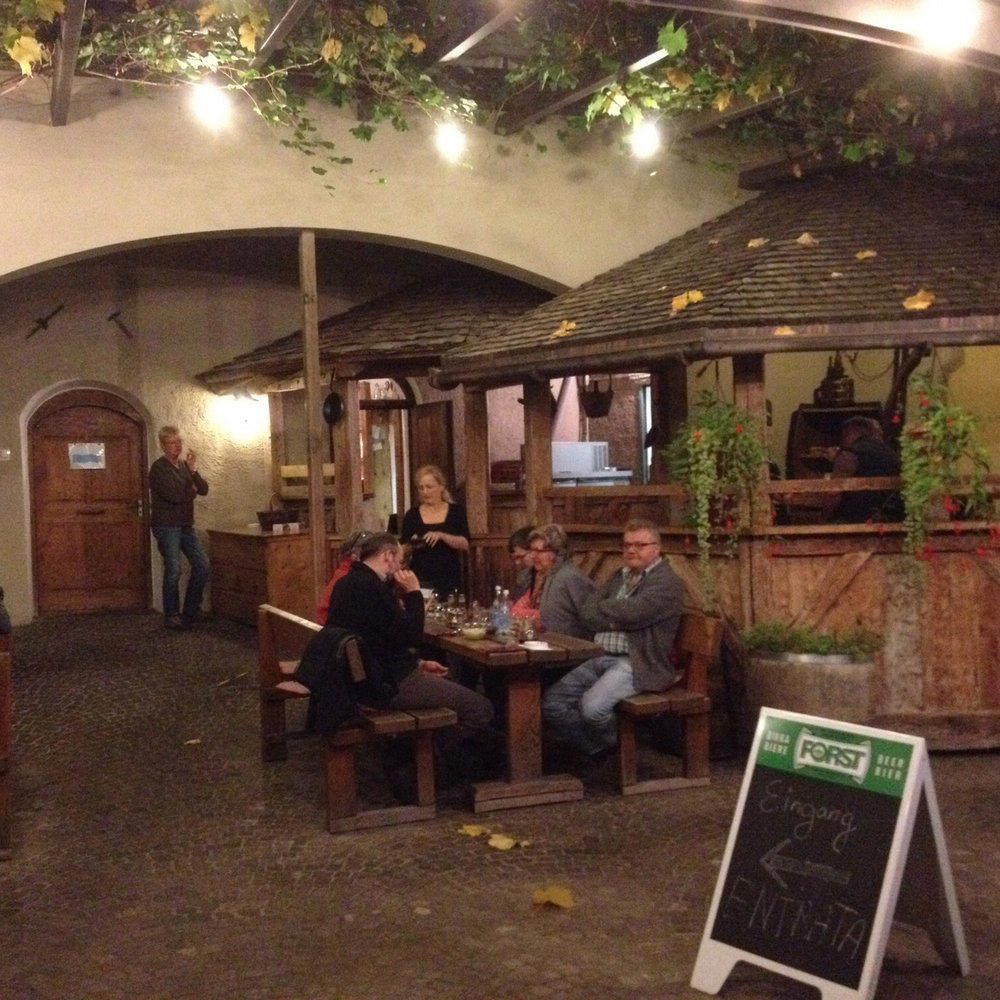
Details
- Cozy
- Bohemian
- Intimate
- Casual Hangout
- Brunch
- Historic Building
- Craft Cocktails
- A La Carte
- Vegetarian Friendly
- Gluten Free Options
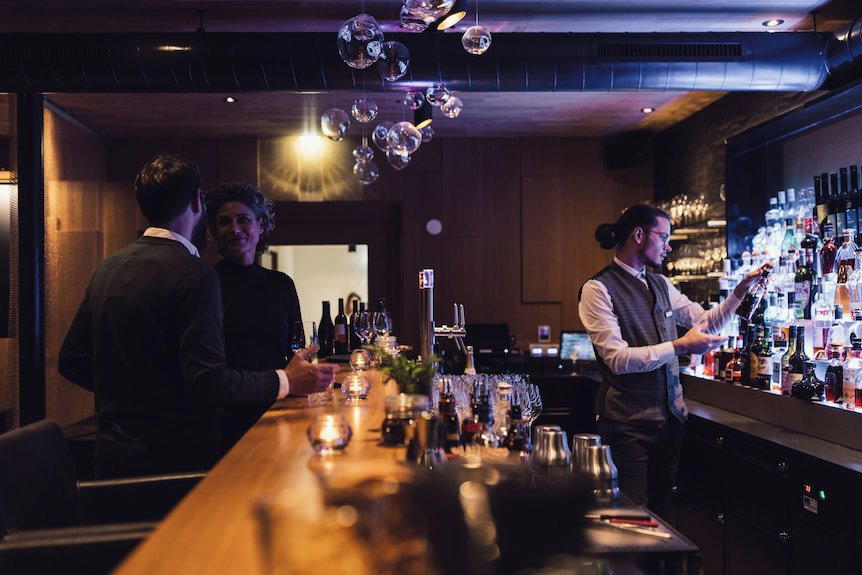
Cozy and welcoming with a long communal counter under flower baskets, offering a bohemian atmosphere in a historic setting with comfortable, informal seating.