Fragole
Fragole occupies a Carroll Gardens address that has quietly accumulated neighborhood loyalty over the years. The Italian-American restaurant on Court Street sits in a Brooklyn dining corridor that now competes seriously with Manhattan counterparts, making it a useful reference point for understanding how the borough's mid-register Italian scene has shifted. Readers building a New York itinerary should cross-reference it against the city's broader dining map.
Pearl is the En Primeur Club membership app — saves, bookings, and concierge access live there. Same editors, same standards.
- Address
- 394 Court St, Brooklyn, NY 11231
- Phone
- +17185227133
- Website
- fragoleny.com
- Directions
- Get directions
 Saves & bookings on Pearl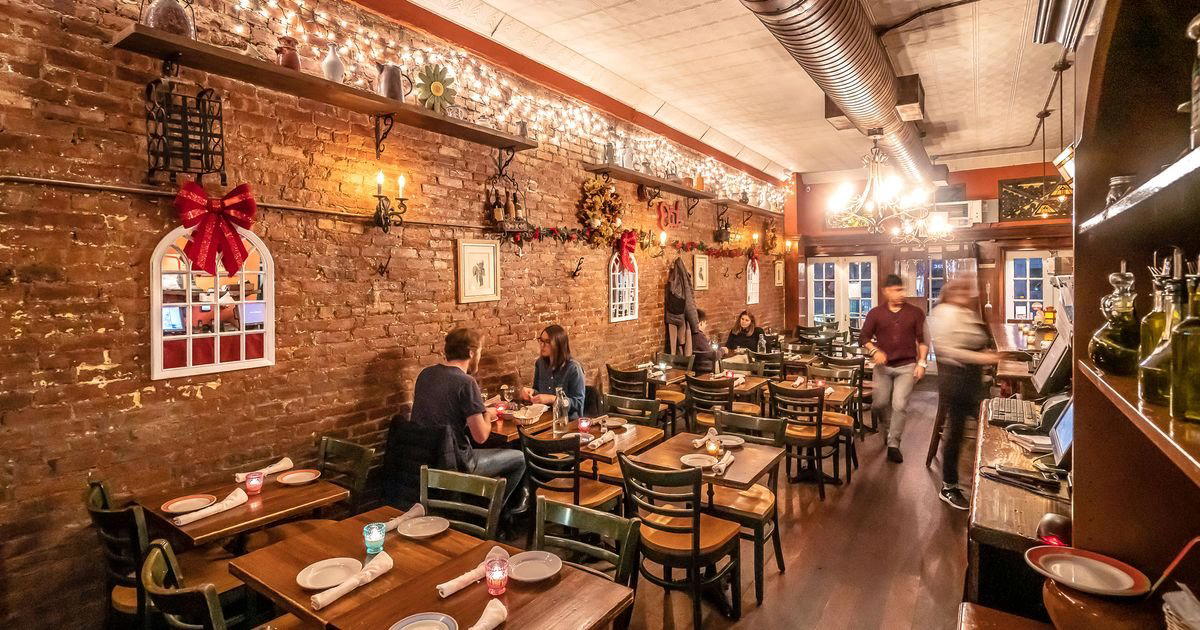
Carroll Gardens and the Shifting Weight of Brooklyn Italian
Court Street in Carroll Gardens has functioned as one of Brooklyn's most stable dining corridors for decades, partly because the neighborhood itself resisted the rapid turnover that reshuffled Williamsburg and Bushwick. Italian-American restaurants along this stretch have historically operated on a different clock than Manhattan counterparts: slower to reinvent, more anchored to a residential audience, and more likely to survive on repeat visits than destination traffic. Understanding where it stands now requires tracing how that broader shift arrived in Carroll Gardens.
The Evolution of the Italian Mid-Register in Brooklyn
The trajectory of Italian dining in neighborhoods like Carroll Gardens follows a pattern visible across American cities: an initial wave of red-sauce institutions serving transplant communities, followed by decades of stability, then a period of reinvention driven by younger kitchens positioning against both the old guard and the fast-casual operators that entered from below. Restaurants that survived this compression did so by finding a lane, either doubling down on heritage execution or pivoting toward a lighter, more regionally specific Italian vernacular. This tension plays out usefully when mapping Carroll Gardens against the broader New York Italian scene.
At the summit of the city's Italian price tier, reference points like Le Bernardin and Eleven Madison Park occupy a different category entirely, where format and ambition push menus well past neighborhood-restaurant territory. The Carroll Gardens cohort operates in a separate competitive set: closer to the domestic dinner occasion, more reliant on wine programs and pasta execution than on tasting-menu architecture. What has changed in the past decade is that the floor of expectation in that mid-register has risen. Guests who might once have forgiven pedestrian pasta now arrive with a sharper frame of reference, partly shaped by the same wave of cooking media and food travel that pushed standards upward across all price tiers.
What Reinvention Looks Like at Street Level
For a restaurant on a corridor like Court Street, reinvention rarely arrives as a dramatic pivot. It tends to accumulate through smaller adjustments: a tightened wine list, a seasonal vegetable added to a menu that previously ran year-round staples, a shift in protein sourcing. These changes are harder to document than a rebrand but more durable in their effect on how a room feels over time. The Italian restaurants that have held neighborhood loyalty in Brooklyn through this period are generally those that made incremental improvements legible to regulars without alienating the base that made them viable in the first place.
This dynamic has parallels elsewhere in American dining. Restaurants like Frasca Food and Wine in Boulder have built multi-decade reputations by deepening a specific regional Italian commitment rather than expanding laterally. Closer to the format Fragole occupies, the principle holds: restaurants that clarify their identity over time tend to earn more durable local recognition than those that drift in response to trend cycles.
Carroll Gardens in the New York Context
Brooklyn's dining reputation has consolidated significantly over the past fifteen years. What was once a secondary consideration for visitors building a New York itinerary now warrants serious attention, particularly for Italian, Middle Eastern, and contemporary American cooking. Carroll Gardens specifically benefits from a demographic that values neighborhood restaurants over destination experiences, which creates a more forgiving commercial environment for mid-register operators than the high-rent Manhattan corridors where failure cycles faster.
At the high end of the city's dining spectrum, Atomix, Per Se, and Masa sit in a different category, where format and ambition define the conversation. Fragole operates in a register where the currency is different: consistency, hospitality warmth, and the kind of food that functions well across multiple occasions rather than a single high-investment dinner.
Blue Hill at Stone Barns in Tarrytown sits in a related conversation around sourcing-led American cooking at the premium tier. Neither competes directly with a Carroll Gardens neighborhood restaurant, but mapping the distance between those poles helps calibrate what the mid-register is actually doing well when it executes correctly.
Smyth in Chicago represents a different response to the same pressure: a kitchen that moved deliberately upmarket while staying committed to a specific ingredient philosophy. Lazy Bear in San Francisco took a different route, formalizing a communal dining format that had started as an underground supper club. Providence in Los Angeles built a seafood-focused identity specific enough to survive multiple cycles of LA dining fashion. Emeril's in New Orleans and The Inn at Little Washington both demonstrate how restaurants with deep local roots move through the long middle of a decades-long run. Addison in San Diego and The French Laundry in Napa occupy the high-investment end of the California fine-dining market. For Italian reference points with European depth, Atelier Moessmer Norbert Niederkofler in Brunico and Dal Pescatore in Runate illustrate what long-run Italian restaurant identity looks like when anchored to region and generation.A Quick Peer Check
Comparable venues nearby, for context on price, style, and recognition.
| Venue | Cuisine | Price | Notes |
|---|---|---|---|
| FragoleThis venue — the venue you are viewing | Classic Italian | $$ | Not listed |
| Barbalu Restaurant | Classic Italian Trattoria | $$ | Financial District-Battery Park City |
| Il Brigante | Southern Italian Trattoria & Pizza | $$ | Financial District-Battery Park City |
| Epistrophy | Sardinian-Inspired Italian | $$ | SoHo-Little Italy-Hudson Square |
| biricchino | Authentic Northern Italian Trattoria | $$ | Chelsea-Hudson Yards |
| Bruno | Authentic Southern Italian | $$ | Howard Beach-Lindenwood |
Continue exploring
More in New York City
Restaurants in New York City
Browse all →
Bars in New York City
Browse all →
Hotels in New York City
Browse all →





At a Glance
- Cozy
- Intimate
- Classic
- Family
- Group Dining
- Casual Hangout
- Date Night
- Standalone
Current opening hours
- Monday
- 2:30–10 PM
- Tuesday
- 2:30–10 PM
- Wednesday
- 2:30–10 PM
- Thursday
- 2:30–10 PM
- Friday
- 11 AM–10 PM
- Saturday
- 11 AM–10 PM
- Sunday
- 11 AM–10 PM
Hours can change for holidays and private events. Last verified .
Warm and welcoming atmosphere with friendly service, described as cozy and authentic by diners.