Our verdict
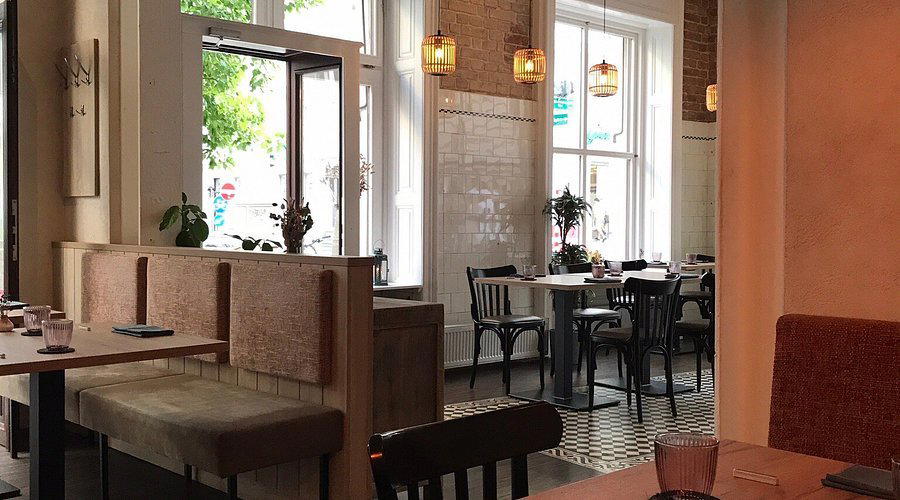
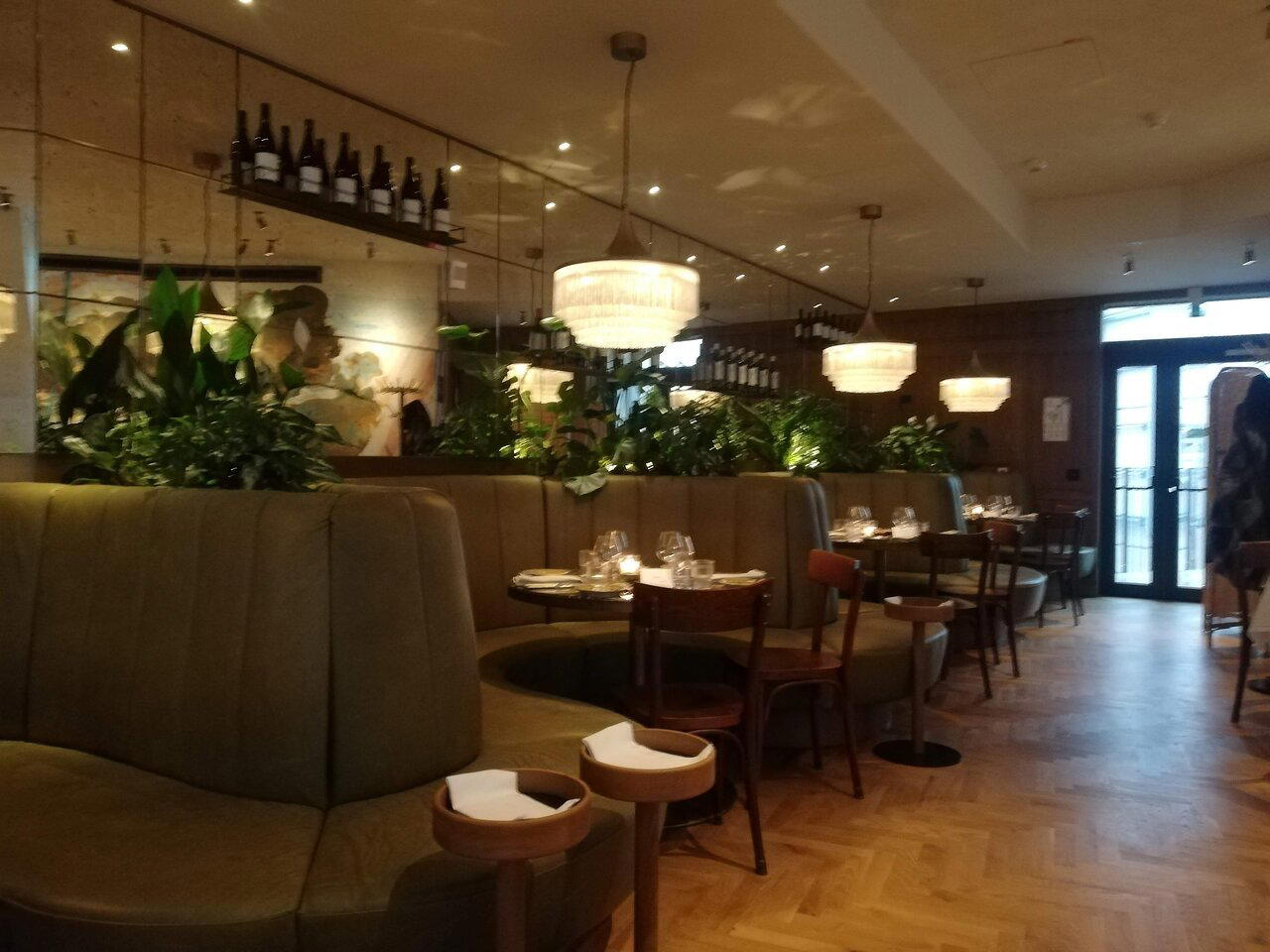
&flora serves Mediterranean-Oriental vegetable-forward cuisine inside Hotel Gilbert on Breite G. 9 in Vienna, with natural wine, craft cocktails, and a conversational pace for breakfast through dinner.

Pearl is the En Primeur Club membership app, where members save venues, book tables and use the concierge.

The menu
What to order
- Sprossenbrokkoli in Miso-Yuzu Butter with Polenta
- Pulled Lamb Tacos
- Beetroot Preparations
Neubau and the Ritual of the Considered Meal
Breite Gasse cuts through the 7th district at a pace that suits it: unhurried, residential, with enough design studios and specialist food shops to signal that the neighbourhood takes quality seriously without performing it. &flora; sits on this street, and the address alone frames expectations before the door opens. Neubau has become the district where Vienna's more deliberate dining expressions tend to land, not the grand Ringstrasse ceremonial dining, and not the casual Beisl, but something in between that prizes intention over spectacle.
That positioning matters for understanding where &flora; fits in Vienna's current dining structure. The city's top-tier creative restaurants Steirereck im Stadtpark, Amador, Konstantin Filippou, and Mraz & Sohn, operate at €€€€ price points with full tasting menu formats and strong awards infrastructure. &flora; occupies a different register: a neighbourhood-anchored address in the 7th that draws from the same appetite for craft and produce-led cooking without the formal ceremonial weight of the Innere Stadt fine dining circuit.
How the Meal Moves
The dining ritual at addresses like &flora; in Neubau follows a cadence that has become more common across European cities where the chef-owner model meets a local residential clientele. The pacing tends to be measured rather than rushed, with courses arriving at intervals that allow conversation rather than demand it. There is no theatre of trolleys or tableside preparations designed to signal occasion, the signal, instead, comes through the produce and the restraint of the cooking itself.
This approach reflects a broader shift in how Vienna's mid-to-upper dining tier has evolved. Where an earlier generation of Austrian fine dining leaned on ceremony and formality as markers of seriousness, the current wave draws seriousness from precision and sourcing. Doubek operates in a similar register in a different part of the city. The comparison is useful: both addresses position produce and technique as the argument, rather than room scale or service choreography.
At &flora;, the name itself points toward the conceptual emphasis. Flora, the plant world, the seasonal growing calendar, suggests a kitchen oriented around vegetables, herbs, and the agricultural rhythm of the Austrian seasons. In practice, this kind of framing in Vienna's contemporary dining scene typically means a menu that shifts with supply rather than fixing permanently, and a service style that explains provenance without over-narrating it.
Seasonal Rhythm and the Austrian Kitchen Context
Austrian cuisine at this level draws from a larder that is more varied than outsiders tend to expect. The alpine producing regions, Styria for pumpkin seed oil and game, the Wachau for apricots and white wine, the broader lowland areas for root vegetables and dairy, feed a cooking tradition that is genuinely seasonal by necessity rather than by marketing. Addresses like Landhaus Bacher in Mautern an der Donau and Obauer in Werfen have built long reputations on this regional specificity. Vienna's city dining, historically more cosmopolitan and international in its reference points, has moved in the last decade toward a similar regional grounding.
The Breite Gasse address in the 7th places &flora; close to the Naschmarkt, Vienna's central produce market, which runs along the Wienzeile a short walk away. For kitchens working with daily supply and seasonal produce, this proximity is logistically meaningful. The Naschmarkt hosts both wholesale and specialist stalls, with a concentration of Eastern European, Middle Eastern, and Central European producers that gives Vienna's chefs a wider ingredient palette than the city's culinary reputation sometimes suggests.
Across Austria, the commitment to seasonal rhythm is visible in restaurants that operate with rotating formats. Kräuterreich by Vitus Winkler in Sankt Veit im Pongau takes this to a botanical extreme, with a kitchen built almost entirely around herb cultivation. Ikarus in Salzburg runs a rotating guest chef model that resets the menu monthly. &flora;'s name implies a related orientation, that the plant world and its seasonal calendar drive the menu logic rather than a fixed signature format.
Where &flora; Sits in the Wider Austrian Dining Picture
Vienna is the obvious anchor, but Austria's serious dining extends well beyond the capital. The alpine dining circuit includes addresses like Griggeler Stuba in Lech, Gourmetrestaurant Tannenhof in Sankt Anton am Arlberg, and Schwarzer Adler in Hall in Tirol, where the alpine setting informs both the produce and the occasion. Döllerer in Golling an der Salzach has built its reputation on a specifically alpine cuisine concept. Ois in Neufelden and Restaurant 141 by Joachim Jaud in Mieming represent the regional spread of serious cooking across Austria's smaller towns.
Within Vienna itself, the segmentation is between the established fine dining tier with multi-star recognition and awards infrastructure, and a younger cohort of addresses in the outer districts that operate with more flexibility and less ceremony. &flora; belongs to the second group by address and by apparent format. That is not a criticism, some of the most interesting cooking in any European city happens outside the awards circuit, where the pressure to perform for inspectors is lower and the latitude to follow seasonal instinct is higher.
Internationally, the move toward flora-forward, produce-led urban dining is well-documented. Addresses like Le Bernardin in New York City have shown that ingredient-led precision can define a dining category at the highest level. Atomix in New York City demonstrates how a considered tasting format can carry deep cultural meaning through its ritual structure. &flora; operates in a different scale and context, but the underlying logic, that the ritual of eating well is inseparable from the sourcing and pacing that frame it, connects to the same dining philosophy.
Planning a Visit
Breite Gasse 9 in the 7th district is accessible by U-Bahn (the Neubaugasse stop on the U3 line is within walking distance) and sits in a part of Neubau that rewards arriving early to walk the neighbourhood before the meal. The surrounding streets have an independent retail character, bookshops, coffee roasters, small wine bars, that suits the pre-dinner hour. For visitors building a broader Vienna itinerary around serious eating, our full Vienna restaurants guide maps the city's dining tiers from the established creative addresses to the neighbourhood-level operators.
Walk-in policy, pricing, and hours should be confirmed directly at the address before building a fixed itinerary around the visit.
Quick Reference: &flora;, Breite Gasse 9, 1070 Wien (7th district, Neubau). Nearest U-Bahn: Neubaugasse (U3). Booking and hours: confirm directly on arrival or via current reservation platforms.
Frequently asked questions
What part of town is &flora in?
&flora; is located at Breite G. 9, 1070 Wien, Austria, Vienna.
Is &flora suitable for a solo diner visiting Vienna's 7th district?
The chef-owner model common to addresses like &flora; on Breite Gasse 9 often includes counter or small-table formats that accommodate solo diners without the awkwardness of larger rooms. Vienna's Neubau district has become a draw for exactly this kind of focused, single-sitting meal. Solo visitors arriving via the U3 Neubaugasse stop are well placed to make an evening of the neighbourhood before or after the meal.
What should I eat at &flora?
The kitchen at &flora; works within the Austrian seasonal framework, meaning the menu shifts with the producing regions, Styrian pumpkin and game in autumn, alpine dairy and foraged greens in spring. No fixed dishes are documented, so ordering preferences are best discussed at the time of booking. The 7th district address on Breite Gasse 9 positions it within a neighbourhood that has developed a reliable appetite for considered, produce-led cooking.
Can I walk in to &flora?
Chef-owner restaurants in Vienna's Neubau district at this level of intention typically operate on reservations, and &flora; fits that pattern. Walking in without a booking is a reasonable gamble on quieter weeknights, but the format and scale of venues on Breite Gasse generally favour advance planning. Contacting the restaurant directly before arriving is the practical approach.
Cost and Credentials
Comparable venues nearby, for context on price, style, and recognition.
| Venue | Cuisine | Price | Notes |
|---|---|---|---|
| &floraThis venue (the venue you are viewing) | Mediterranean-Oriental Vegetable-Forward Cuisine | $50–100 | Not listed |
| Restaurant Béla Béla | Modern Mediterranean & Austrian | $30–50 | Stephansdom, Modern Mediterranean & Austrian |
| Vasco | Mediterranean Fine Dining | Not listed | Staatsoper, Mediterranean Fine Dining |
| Konoba | Croatian Seafood | $30–50 | Josefstadt, Croatian Seafood |
| Ablaufdatum | Mediterranean & Austrian Regional | $20–30 | Obersievering, Mediterranean & Austrian Regional |
| Otto Will Meer | Mediterranean Seafood with Paella & Tapas | $30–50 | Praterstern Wien Nord, Mediterranean Seafood with Paella & Tapas |