
1 Michelin Star
Our verdict
Addiert pairs Korean Contemporary Fine Dining with a formal, quiet dinner setup, a chefs counter, and street scene views on Franz-Josefs-Kai 43. Michelin awarded one star in 2026.

Pearl is the En Primeur Club membership app, where members save venues, book tables and use the concierge.
A Counter at the Canal
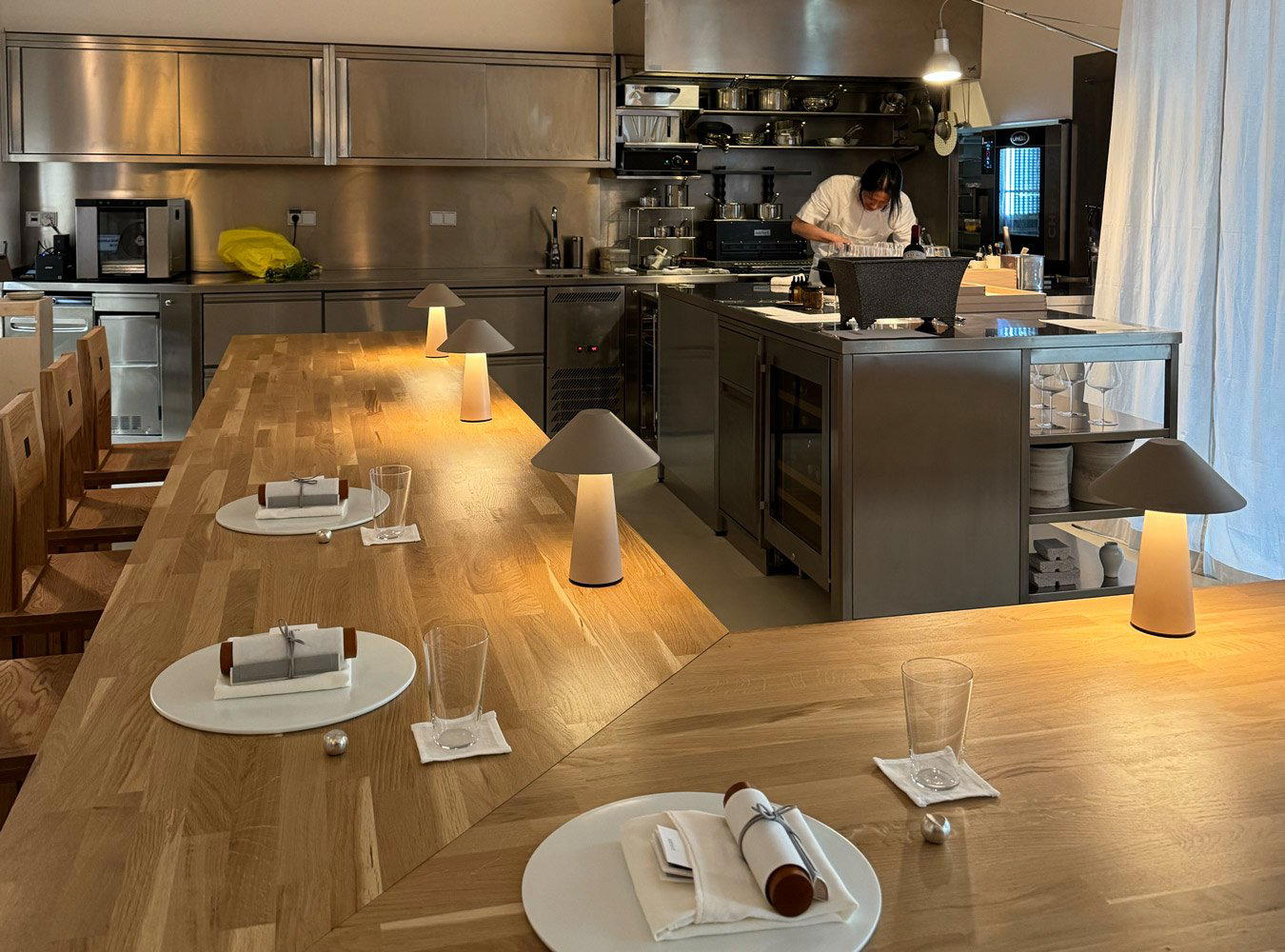
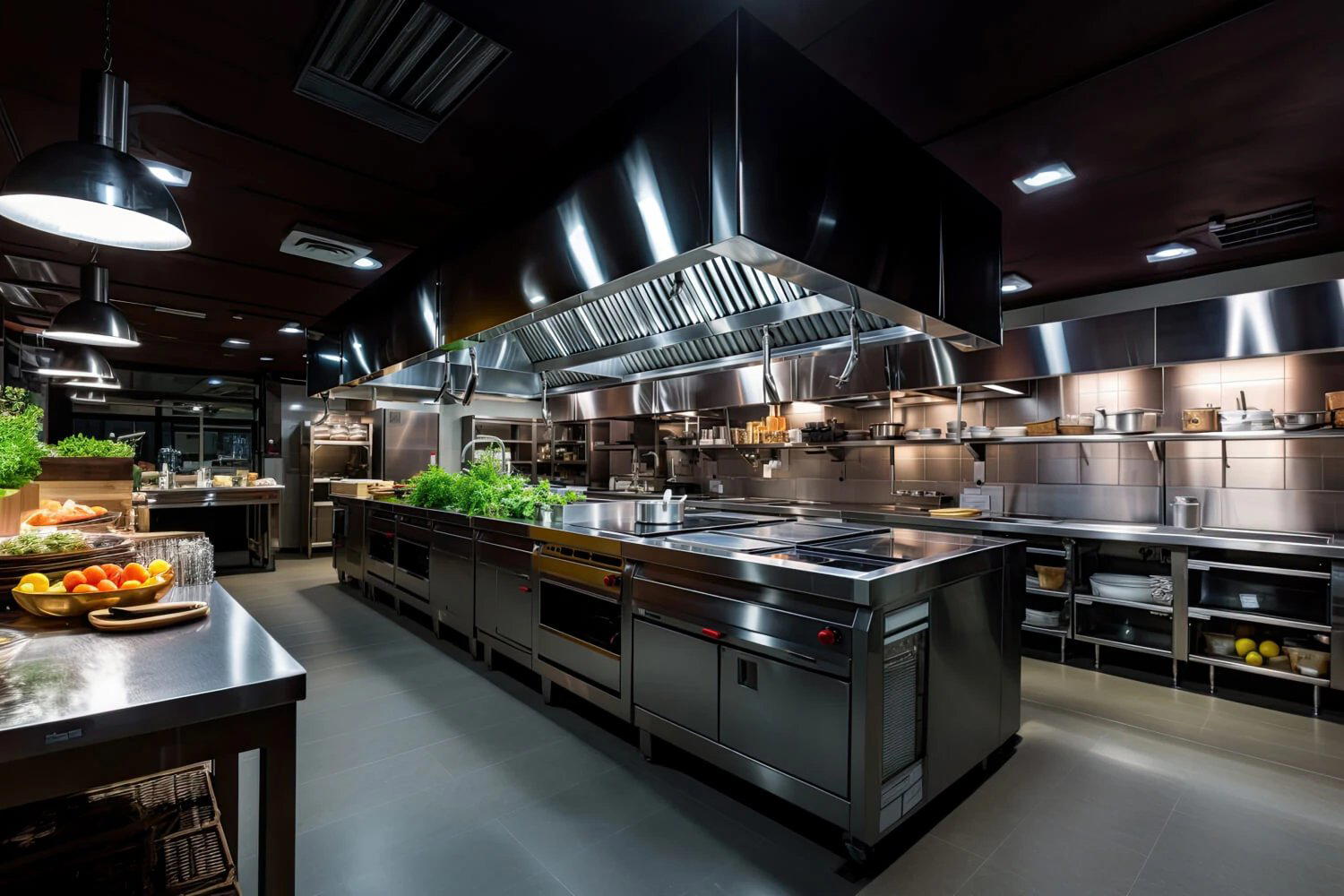
Franz-Josefs-Kai runs along the Danube Canal, a stretch of Vienna more associated with office blocks and riverside bars than serious cooking. Addiert occupies this address without apology, and the contrast between the canal-front exterior and the interior is immediate. The dining room is minimalist to the point of austerity: stainless steel surfaces, clean lines, and a compact L-shaped chef's table that leaves no distance between the kitchen and the people eating at it. There is no performance barrier here. Whatever is being cooked, you watch it happen.
Capacity is deliberately limited to a handful of diners per service. In a city where Vienna's most-discussed creative restaurants, including Steirereck im Stadtpark and Amador, operate at a scale that allows for architectural dining rooms and large brigade kitchens, Addiert sits at the opposite end of the spectrum. The format is closer to a private kitchen than a conventional restaurant, and that compression shapes everything: the pacing, the dialogue between kitchen and guest, the granularity of the service.
Where the Food Comes From, and Why It Matters
The nine-course set menu takes roughly three hours to complete, which is the appropriate pace for what it attempts. The framework is Korean, but the sourcing is local, and that tension is the central editorial fact about this kitchen. Korean cuisine at its most traditional draws on ingredients that have little to no equivalent in Central Europe: specific fermented pastes, regional fish varieties, cultivated vegetables that simply do not grow in Austrian soil. The kitchen at Addiert does not pretend otherwise. Instead, it treats Austrian produce as the primary material and Korean technique and flavour architecture as the method of transformation.
This is not fusion in the diluted sense. Fermented chilli paste, doenjang, and the structural logic of Korean seasoning are applied to ingredients sourced from the region around Vienna, and the results operate on their own terms. A dish described as gochujang ceviche places slices of Austrian trout, a fish with real regional credibility given Austria's alpine river systems and trout-farming tradition, in a marinade of fermented chilli paste, then finishes it with a tangy grapefruit sabayon and basil oil. The European technique is visible in the sabayon; the Korean identity is unmistakable in the heat and fermented depth of the paste. Neither element defers to the other.
The decision to anchor the menu in local ingredients is more consequential than it might initially appear. Vienna's position in the creative restaurant tier, represented by kitchens like Mraz & Sohn and Konstantin Filippou, involves a sustained engagement with Austrian and Central European produce. Addiert participates in that same sourcing culture while redirecting it through a completely different flavour tradition. Austrian trout that might appear in a classic Viennese preparation, or in a modern Austrian tasting menu, arrives here reconfigured by fermentation logic drawn from a cuisine twelve time zones away. The ingredient carries its local credibility; the treatment is entirely foreign to it. That combination produces dishes with a specific kind of tension that neither a straightforwardly Korean kitchen nor a conventional creative Austrian one would generate.
The Format and What It Asks of You
A three-hour nine-course menu at a chef's table with limited covers is a particular kind of commitment. It is not the right format for every occasion, and Addiert does not attempt to be. The open kitchen means the meal is also a conversation, and the service is described as attentive and forthcoming about the details of Korean cuisine, its techniques, its ingredient logic, its regional variations. For a diner with limited familiarity with Korean food, this is useful rather than didactic: the explanations arrive alongside the dishes rather than in advance of them, which keeps the pacing natural.
Vienna's creative dining scene has several reference points for the chef's table format. Doubek operates in a similarly intimate register. What distinguishes Addiert within that cohort is the specificity of its culinary reference point. Most small-format creative kitchens in the city draw on European traditions, however reinterpreted.
The comparison that comes to mind is not another Vienna restaurant but a category of cooking that has emerged in several European cities over the past decade: highly trained kitchens applying a single non-European culinary tradition to local produce, with enough technical fluency to make the argument coherent. At its most compelling, that approach produces menus that are genuinely instructive about both the source cuisine and the local ingredient base. The gochujang ceviche example suggests Addiert is operating at that level.
Planning Your Visit
The address is Franz-Josefs-Kai 43, along Vienna's Danube Canal, accessible from the city centre on foot or by public transport. Given the limited capacity and the specificity of the format, reservations are essential and likely require meaningful advance planning. The three-hour duration of the nine-course menu should be factored into any evening schedule. This is not a venue suited to a pre-theatre dinner or a casual drop-in. It rewards an unscheduled evening.
For broader orientation around Vienna's restaurant scene, the full Vienna restaurants guide maps the city's current creative tier in detail. Visitors spending time across Austria will find comparable ambition in different registers at Ikarus in Salzburg, Obauer in Werfen, Landhaus Bacher in Mautern an der Donau, and Kräuterreich by Vitus Winkler in Sankt Veit im Pongau. Alpine restaurant contexts, where local ingredient sourcing is similarly foregrounded, are well represented by Gourmetrestaurant Tannenhof in Sankt Anton am Arlberg and Griggeler Stuba in Lech. Vienna's hotel, bar, and experience options are covered in the Vienna hotels guide, Vienna bars guide, Vienna wineries guide, and Vienna experiences guide.
For points of international comparison in the category of technically serious, cuisine-specific tasting menus, Le Bernardin in New York City and Emeril's in New Orleans represent different versions of the argument that a defined culinary identity, applied with discipline, produces more coherent results than eclecticism.
Frequently asked questions
Is Addiert good for families?
Addiert's format, a three-hour, nine-course set menu at a chef's table with very limited covers, is oriented toward adults with a specific interest in Korean cuisine and counter dining. It is not suited to young children or casual drop-in visits, and the pace and format require sustained attention from all guests.
What kind of setting is Addiert?
Addiert occupies a minimalist dining room on Franz-Josefs-Kai 43 along Vienna's Danube Canal. Seating is limited to a handful of guests at an L-shaped chef's table, arranged around a fully open stainless steel kitchen. The format is closer to an intimate counter experience than a conventional restaurant.
What distinctions does Addiert have?
Addiert has received recognition including: There is only space for a handful of diners at the L-shaped chef's table in this restaurant's minimalist dining space. A nine-course set menu is prepared in the fully open stainless steel kitchen – this culinary journey through Korea lasts ….
What should I order at Addiert?
There is no à la carte option. The kitchen runs a single nine-course set menu lasting approximately three hours, built around Korean technique applied to local Austrian ingredients. A documented example is the gochujang ceviche: Austrian trout marinated in chilli paste, finished with grapefruit sabayon and basil oil.
Where do I go for Addiert?
Addiert is located at Franz-Josefs-Kai 43, Vienna.
A Quick Peer Check
Comparable venues nearby, for context on price, style, and recognition.
| Venue | Cuisine | Price | Awards | Notes |
|---|---|---|---|---|
| AddiertThis venue (the venue you are viewing) | Korean Contemporary Fine Dining | Not listed | 1 Michelin Star | Not listed |
| ONYX | Modern Asian Fusion with Sushi & Robata Grill | $30–50 | Michelin Plate | Innere Stadt |
| Duchardt | Modern French with Austrian Influences | $150–200 | Michelin Plate | Innere Stadt |
| Cantinetta Antinori | Classic Florentine Tuscan | $50–100 | Not listed | Innere Stadt |
| HAN am Stadtpark | Korean Soul Food | $20–30 | Not listed | Staatsoper |
| Das Kimchi | Korean | $20–30 | Not listed | Wien-Mitte |
Recognition history
Dated appearances from independent guides and award organizations, with the underlying list record or original source where available.
Michelin 1 Star
Michelin
Continue exploring
More in Vienna
Restaurants in Vienna
All restaurants in Vienna →
Bars in Vienna
All bars in Vienna →
Hotels in Vienna
All hotels in Vienna →
Details
- Intimate
- Modern
- Sophisticated
- Minimalist
- Date Night
- Special Occasion
- Chefs Counter
- Street Scene
- Tasting Menu
Current opening hours
- Monday
- Closed
- Tuesday
- Closed
- Wednesday
- 7–11 PM
- Thursday
- 7–11 PM
- Friday
- 7–11 PM
- Saturday
- 6–11 PM
- Sunday
- Closed
Hours can change for holidays and private events. Hours as of .
Pared-back and minimalist atmosphere with charming, attentive service focused on culinary depth and clarity.