Our verdict
ふらっと - Flatt's by the sea serves Noto Italian with Fermentation in a waterfront setting with mountain views, a sake program, and a leisurely, quiet dinner pace.

Pearl is the En Primeur Club membership app, where members save venues, book tables and use the concierge.
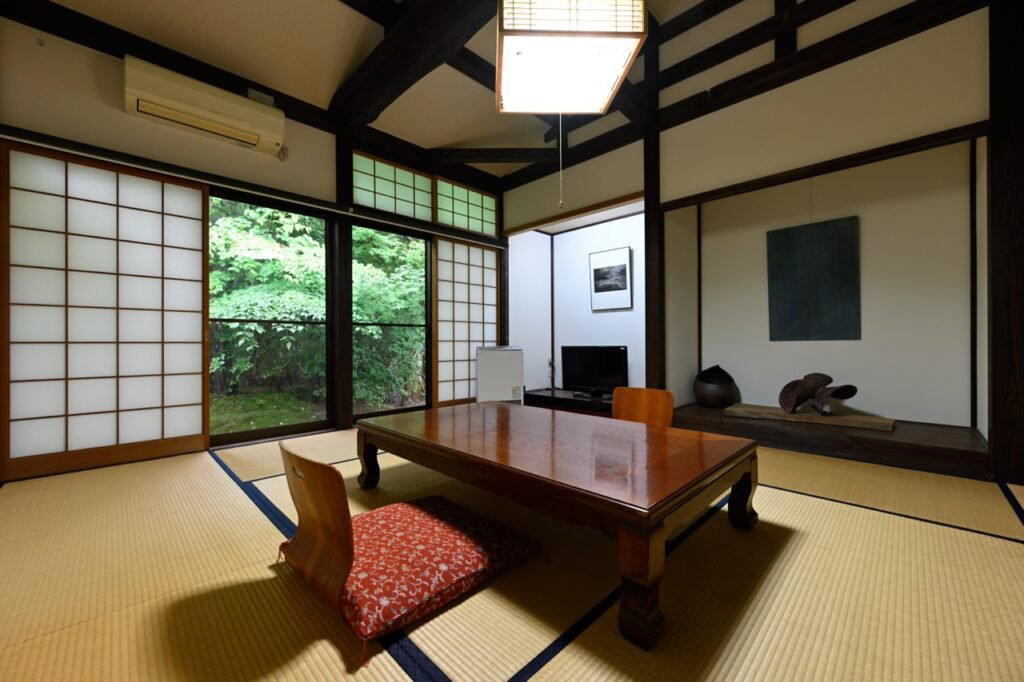
Where the Sea Sets the Terms
The Noto Peninsula occupies a peculiar position in Japan's culinary geography. Remote enough to have preserved its own food logic, salt-fermented squid, aged fish paste, winter yellowtail pulled from the Sea of Japan just offshore, it sits far outside the Michelin circuit that concentrates attention on Tokyo, Kyoto, and Osaka. Restaurants here do not generally trade on awards or chef pedigree. They trade on access to ingredients that chefs in major cities pay premiums to import. Flatt's by the Sea (ふらっと), located in the coastal hamlet of Yanamicho within Noto-cho, operates squarely within that tradition.
The address alone narrows the audience. Noto-cho is not a destination most international visitors reach accidentally. Getting here involves a train to Kanazawa, a further connection to the Noto region, and then road travel along a coastline where the infrastructure thins as the scenery sharpens. That friction is, in many ways, the point. Restaurants in this part of Ishikawa Prefecture serve a version of Japanese coastal cooking that remains largely uncurated for outside consumption, shaped first by what the sea and mountains produce and second by the preferences of locals who eat here year-round.
Coastal Ishikawa's Kitchen Logic
To understand what a restaurant like Flatt's by the Sea is doing, it helps to understand what Noto's food culture actually is. The peninsula has its own classification of preserved and fermented foods, collectively grouped under the concept of hanto no sachi, or peninsula bounty, that includes konka-iwashi (rice-fermented sardines), narezushi (aged persimmon-leaf sushi predating vinegared rice versions), and the briny, complex ishiru fish sauce produced locally in small batches. These are not novelties introduced for tourists. They are working pantry ingredients that have been embedded in Noto households for generations.
The region's fish calendar also sets it apart. Winter buri (yellowtail) migrating south through the Japan Sea toward the Noto coast is one of Japan's most closely watched seasonal fish events, with specimens from this stretch commanding leading prices at Kanazawa's Omicho Market. Spring brings hotaruika (firefly squid) in quantities that make the coastline glow at night during peak spawning. These are the rhythms that structure eating along this shore, and any serious kitchen in the area responds to them. For context, the kind of hyper-seasonal, ingredient-led discipline evident in Noto's leading kitchens shares lineage with what restaurants like Gion Sasaki in Kyoto and Harutaka in Tokyo practice at the formal end of the market, though here it operates without the ceremony of a counter course or a chef's tasting narrative.
The Setting as Signal
Flatt's by the Sea takes its name and orientation from the water visible at its doorstep. In the coastal villages of Noto-cho, the boundary between fishing community and dining room has historically been short: catch comes off boats and into kitchens within a radius that a city restaurant could not replicate with any amount of purchasing budget. The physical setting here is not decorative, it is operational. Proximity to the sea directly determines what is on the table and when.
This model of deeply localized coastal dining has parallels elsewhere in Japan. Restaurants in Hokkaido's fishing towns, the Sanriku coast in Tohoku, and along the Kyushu shoreline similarly build menus around what landed that morning rather than what a supplier catalogue offers. In Japan's domestic dining culture, such places occupy a specific and respected tier: not kaiseki, not fine dining in the metropolitan sense, but a form of precision eating grounded in geography. Venues like a counterpart in nearby Nanao and a lakeside property in Takashima operate within the same regional-produce logic, each shaped by the specific water and terrain it sits beside.
The Noto Context After 2024
The January 2024 Noto earthquake reshaped the peninsula's infrastructure significantly, with damage to roads and coastal communities affecting both residents and the flow of visitors into the area. Recovery has been uneven, and the practical reality for travelers is that access conditions, venue operating status, and local services in Noto-cho should be verified before travel. This is not a region where assumptions about normal operating conditions apply in the way they would in an urban setting. Checking directly with any venue before making the journey is not optional caution but necessary planning.
The disruption has also focused attention on what Noto's food culture actually means to Japan beyond its borders. The peninsula was already designated a Globally Important Agricultural Heritage System (GIAHS) site by the FAO, recognizing the satoyama and satoumi (land-sea integrated farming and fishing) systems that have sustained communities here for centuries. That recognition places Noto in a small global cohort of food-producing landscapes whose methods carry heritage status. A restaurant embedded in this environment is, whether explicitly or not, participating in a food tradition with documented international significance.
Placing Flatt's in the Wider Japan Picture
Japan's restaurant culture tends to be discussed through its Michelin-starred anchors: the kaiseki houses of Kyoto, the omakase counters of Tokyo's Ginza, the creative tasting menus at places like HAJIME in Osaka or Goh in Fukuoka. But a parallel dining culture runs through Japan's regions that operates entirely outside this recognition system and is, in many respects, more directly connected to what Japan's food geography actually produces. Akordu in Nara works with local producers in a different register; regional restaurants in Sapporo like one notable Hokkaido address do the same for northern Japan's ingredients.
Flatt's by the Sea sits within this regional-produce tier, in one of Japan's most materially distinct food geographies. For travelers who have already worked through the formalities of Birdland in Sakai or a specialist address in Nishikawa Machi, a place like this represents a different kind of eating: quieter, more contingent on season and location, and less mediated by the formal dining apparatus.
Planning a Visit
Noto-cho is approximately 90 minutes by road from Kanazawa, which is itself accessible by Shinkansen from Tokyo in roughly two and a half hours. There is no direct rail line into Noto-cho, so car hire or local bus services are the practical options from Kanazawa or the Noto Airport (which serves limited routes). Given the post-earthquake situation as of the most recent publicly available information, travelers should confirm current road access conditions and venue operating hours before departure.
For broader context on dining in this part of Japan's Chubu and Hokuriku regions, the restaurant's Noto location places it within a different reference set than mainland Italy's Noto (Sicily), where venues like Crocifisso, Caffè Sicilia, Il San Corrado di Noto, Orti di Villadorata, and Principe di Belludia define a distinct Mediterranean dining tradition. Readers researching Japanese coastal dining more broadly will find the EP Club Noto restaurants guide a useful reference point, with context covering the region's ingredient culture, seasonal calendar, and the practical logistics of eating well along this stretch of the Japan Sea coast.
Frequently asked questions
Is ふらっと - Flatt's by the sea a family-friendly restaurant?
Coastal Noto-cho restaurants typically operate as relaxed, community-rooted spaces rather than formal dining rooms, which makes them accessible for families. Flatt's sits in the fishing village of Noto-cho (矢波 address), where the general atmosphere runs informal and sea-facing. No specific age restrictions or formal dress codes are documented.
What should I expect atmosphere-wise at ふらっと - Flatt's by the sea?
The name references the sea directly, and the address in the coastal hamlet of Noto-cho places the restaurant within a working fishing-village context. Expect proximity to the water and the pared-back aesthetic that defines most of this peninsula's dining rooms: functional, quiet, oriented around what came off the boats that day. Noto-cho is remote by Japanese standards, which means the crowd is local or intentionally travelling.
How far is Flatt's by the Sea from Kanazawa, and is it worth the journey from the city?
Noto-cho sits approximately 90 minutes by road from Kanazawa, which is itself connected to Tokyo by Shinkansen in roughly two and a half hours. The January 2024 Noto earthquake caused significant road and infrastructure damage across the peninsula, so checking current road conditions before travelling from Kanazawa is advisable. For anyone already visiting Kanazawa's food scene, the Noto Peninsula represents a distinct food logic, sea-fermented, fishery-dependent, FAO-recognised, that no urban Ishikawa restaurant replicates.
What dish is ふらっと - Flatt's by the sea famous for?
Noto's pantry is defined by salt-fermented squid (ika no konowata), dried and preserved seafood, and produce shaped by the peninsula's satoumi fishing systems, which carry FAO recognition as a Globally Important Agricultural Heritage System. What a restaurant in this location sources and how it treats fermentation tends to say more about the kitchen than any fixed menu item.
Price and Recognition
| Venue | Cuisine | Price | Awards | Notes |
|---|---|---|---|---|
| ふらっと - Flatt's by the seaThis venue (the venue you are viewing) | Noto Italian with Fermentation | Not listed | Not listed | Not listed |
| Crocifisso | Modern Sicilian Fine Dining | $150–200 | 1 Michelin Star | Contemporary |
| Principe di Belludia | Creative Sicilian Fine Dining | $150–200 | Michelin Plate · Wine Spectator Best of Award of Excellence | Creative |
| Orti di Villadorata | Modern Sicilian Fine Dining | $100–150 | Michelin Plate | Country cooking |
| Il San Corrado di Noto | Creative Sicilian Fine Dining | $150–200 | World's Best Wine Lists Awards WBWL 2-Star | Not listed |
Continue exploring
More in Noto
Restaurants in Noto
All restaurants in Noto →

Hotels in Noto
Browse all →
Wineries in Noto
Browse all →
Details
- Intimate
- Cozy
- Scenic
- Rustic
- Special Occasion
- Waterfront
- Sake Program
- Local Sourcing
- Waterfront
- Mountain
Intimate dining room with jazz music and panoramic views of the Japan Sea and Tateyama Mountains.