Our verdict
Ferreiro La Florida occupies a storied address on Paseo de la Florida in Madrid's Moncloa-Aravaca district, where the Casa de Campo greenery meets the western edge of the city's serious dining circuit. The setting positions it within a quieter, less tourist-trafficked tier of Madrid restaurants, a counterpoint to the Michelin-dense centre. Details on cuisine format and booking remain sparse, making direct contact advisable before visiting.

Pearl is the En Primeur Club membership app — saves, bookings, and concierge access live there. Same editors, same standards.
- Address
- P.º de la Florida, 15, Moncloa - Aravaca, 28008 Madrid, Spain
- Phone
- +34915598435
- Hours
- Daily 7 AM–1 AM
- Website
- ferreirorestaurante.com
- Directions
- Get directions
- Booking
- Book on CoverManager
The menu
What to order
- Fabada
- Pescados de pincho
- Carnes rojas
- Verduras naturales
- Raciones
A Western Address in a City That Rewards the Off-Centre
Madrid's dining reputation is built largely on a dense cluster of addresses in Salamanca, Justicia, and the historic centre. But the city's western fringe, where Moncloa-Aravaca meets the edge of the Casa de Campo and the Manzanares river curves south, operates differently. Paseo de la Florida is a boulevard with a different cadence: quieter car traffic, the occasional Sunday walker, and the unmistakable backdrop of the ermita where Goya is buried. It is the kind of street that rewards restaurants willing to forgo foot traffic in favour of destination dining, where guests arrive because they have already decided, not because they happened to pass the window.
Ferreiro La Florida sits at number 15 on that paseo, and its address alone signals something about its positioning. In a city where the loudest restaurants compete for visibility on every aggregator and booking platform, a venue on this stretch operates closer to the Madrid that locals know: deliberate, unhurried, and rooted in neighbourhood character rather than tourist-facing accessibility.
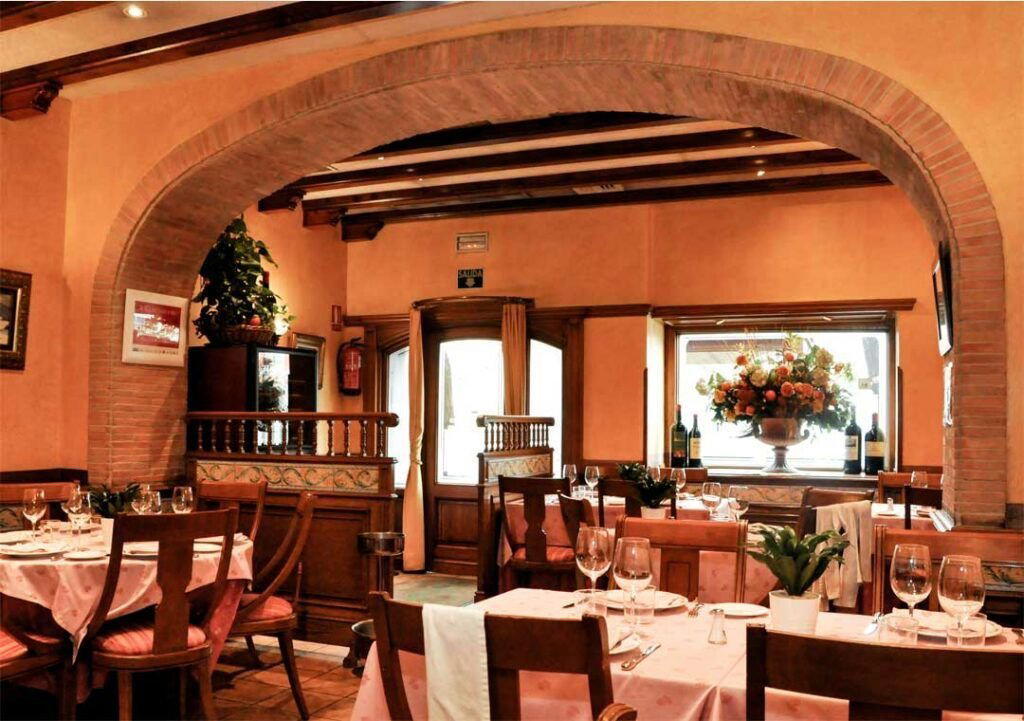
The Physical Container: What the Space Says
The architecture and immediate surroundings of Paseo de la Florida carry a particular weight. The boulevard has a low-density, semi-residential quality that most central Madrid dining rooms cannot replicate regardless of how much they spend on interiors. The physical container of any restaurant here benefits from that context by default: natural light from a less-congested streetscape, proximity to green space, and a sense of remove from the compressed energy of Gran Vía or Chueca.
What this means in practical terms is that the dining room at Ferreiro La Florida, whatever its specific design vocabulary, functions within an environmental frame that larger, more central venues pay architects considerable sums to approximate. The spatial intelligence of the location is baked into the address. In European cities, this kind of positioning, where a restaurant absorbs the character of its immediate geography rather than fighting against it, is often a more reliable predictor of a coherent guest experience than any interior specification.
Comparable dynamics play out across Spain's dining circuit. At Atrio in Cáceres, the medieval streetscape provides a container that the interiors amplify rather than create from scratch. At Azurmendi in Larrabetzu, the rural Basque setting does similar structural work. Location as design is a well-established approach in high-end Spanish hospitality, and Ferreiro La Florida operates within that tradition by virtue of its address, if nothing else.
Madrid's Competitive Dining Field: Where Ferreiro La Florida Sits
The city's top-tier restaurants cluster at the heavier end of the creative Spanish canon. DiverXO and Coque both hold three Michelin stars and price accordingly, setting the ceiling of the market. Deessa and DSTAgE operate in the two-star bracket with strong critical momentum, while Paco Roncero anchors the creative-technique tier with a long track record. These addresses compete for the same high-spend, advance-booking visitor who researches extensively and expects a choreographed experience from arrival to departure.
Ferreiro La Florida, located outside that central cluster on a quieter western boulevard, occupies a different position. What the address does suggest is that the venue self-selects for guests who know the city well enough to travel across it for a specific table, rather than those working through a short list of central institutions.
That positioning has parallels across Spain's broader dining geography. Restaurants in less-trafficked locations, from Mugaritz in Errenteria to Ricard Camarena in València, have demonstrated that distance from a city's most visible dining corridor does not limit ambition or recognition. The model requires guests to commit, and that commitment itself shapes the experience.
The Broader Spanish Table: Context for First-Time Visitors
Spain's dining culture has produced some of the most-discussed restaurants in the world over the past two decades. El Celler de Can Roca in Girona, Quique Dacosta in Dénia, Arzak in San Sebastián, and Aponiente in El Puerto de Santa María all sit within a tradition that values technique, product sourcing, and cultural rootedness equally. Madrid contributes to that conversation through its own axis of creative kitchens, while also hosting a deeply embedded tradition of direct, product-driven cooking that predates the modernist wave. Cocina Hermanos Torres in Barcelona and Martin Berasategui in Lasarte-Oria represent the broader Spanish creative canon that Madrid's leading tables engage with directly.
Internationally, the comparison set for destination dining in lower-visibility locations includes Lazy Bear in San Francisco and Le Bernardin in New York City, both of which demonstrate that location away from the most obvious tourist circuits does not constrain a restaurant's ability to attract a committed audience.
Planning Your Visit
Ferreiro La Florida's address at Paseo de la Florida, 15 in Moncloa-Aravaca places it within the western reaches of Madrid, accessible by metro (Príncipe Pío station is the closest major interchange) or taxi from the centre in under fifteen minutes depending on traffic. The surrounding neighbourhood is low-key and largely residential, with the parkland of the Casa de Campo extending further west. Visitors planning a Madrid trip around multiple restaurants should consult our full Madrid restaurants guide to map the city's dining geography before committing to itinerary logistics. Getting there: Príncipe Pío metro or taxi from central Madrid. Dress: Not confirmed; neighbourhood character suggests smart-casual as a baseline. Budget: Not published; verify with venue before booking.
Frequently asked questions
Where exactly is Ferreiro La Florida?
Ferreiro La Florida is located at P.º de la Florida, 15, Moncloa - Aravaca, 28008 Madrid, Spain, Madrid.
Is Ferreiro La Florida a good option for dining away from Madrid's main tourist corridors?
The restaurant's position on Paseo de la Florida places it in Moncloa-Aravaca, well west of the Salamanca and Justicia districts where most of Madrid's headline addresses are concentrated. For visitors who want to eat where the city's residential fabric asserts itself rather than its restaurant clusters, this address delivers a different register. It sits near the Príncipe Pío metro interchange, making it accessible without a long journey from the centre.
What's the signature dish at Ferreiro La Florida?
The restaurant is located at Paseo de la Florida, 15 in Madrid's Moncloa-Aravaca district, and the kitchen's focus is best confirmed directly with the venue before visiting.
Can I walk in to Ferreiro La Florida?
Walk-in availability at Paseo de la Florida, 15 will depend on the day and time. Given its address in the lower-density Moncloa-Aravaca district rather than Madrid's more heavily trafficked dining corridors, spontaneous seating may be more viable than at central city addresses, but contacting the restaurant ahead of arrival is advisable.
Comparable Spots, Quickly
Comparable venues nearby, for context on price, style, and recognition.
| Venue | Cuisine | Price | Awards | Notes |
|---|---|---|---|---|
| Ferreiro La FloridaThis venue — the venue you are viewing | Traditional Asturian Spanish | $30–50 | Not listed | Not listed |
| Ramón Freixa Tradición | Traditional Spanish Cuisine | $100–150 | Guía Repsol 1 Sol · Macarfi 7.9 Food Rating | Salamanca |
| El Landó | Traditional Spanish Castilian | $30–50 | Macarfi 7 Food Rating | Palacio |
| La Muñoza | Modern Spanish with Ibérico Pork Focus | Not listed | Not listed | Barrio de las Letras |
| Haramboure | Modern Basque-French Bistro | $50–100 | Michelin Plate · Guía Repsol 1 Sol | Madrid |
| El Fogón de Trifón | Traditional Spanish Madrid Classics | $50–100 | Macarfi 8 Food Rating | Goya |
Continue exploring
More in Madrid
Restaurants in Madrid
Browse all →
Bars in Madrid
Browse all →
Hotels in Madrid
Browse all →


Details
- Classic
- Quiet
- Sophisticated
- Business Dinner
- Group Dining
- Celebration
- Family
- Special Occasion
- Standalone
- Private Dining
- Terrace
- Extensive Wine List
- Local Sourcing
- A La Carte
- Set Menu
- Small Plates
- Tasting Menu
- Wine
- Vegetarian Friendly
- Gluten Free Options
Current opening hours
- Monday
- 7 AM–1 AM
- Tuesday
- 7 AM–1 AM
- Wednesday
- 7 AM–1 AM
- Thursday
- 7 AM–1 AM
- Friday
- 7 AM–1 AM
- Saturday
- 7 AM–1 AM
- Sunday
- 7 AM–1 AM
Hours can change for holidays and private events. Last verified .
Traditional and polished, with a quieter, less tourist-heavy setting near Casa de Campo and a classic dining-room feel supported by a large bar and private salons.