
A nine-seat Italian counter in Akita City holding consecutive Tabelog Bronze Awards from 2022 through 2026 and two selections for the Tabelog Italian EAST Top 100. Dinner runs from JPY 15,000 to JPY 19,999, service begins at 18:00, and the room is counter-only. Reservations are accepted online or by phone before 16:00.
Pearl is the En Primeur Club membership app — saves, bookings, and concierge access live there. Same editors, same standards.
- Address
- Japan, 〒010-0001 Akita, Nakadori, 1 Chome−4−3 1F エリアなかいち商業施設内
- Phone
- +81 18-825-1180
- Website
- tabelog.com
- Directions
- Get directions
 Saves & bookings on Pearl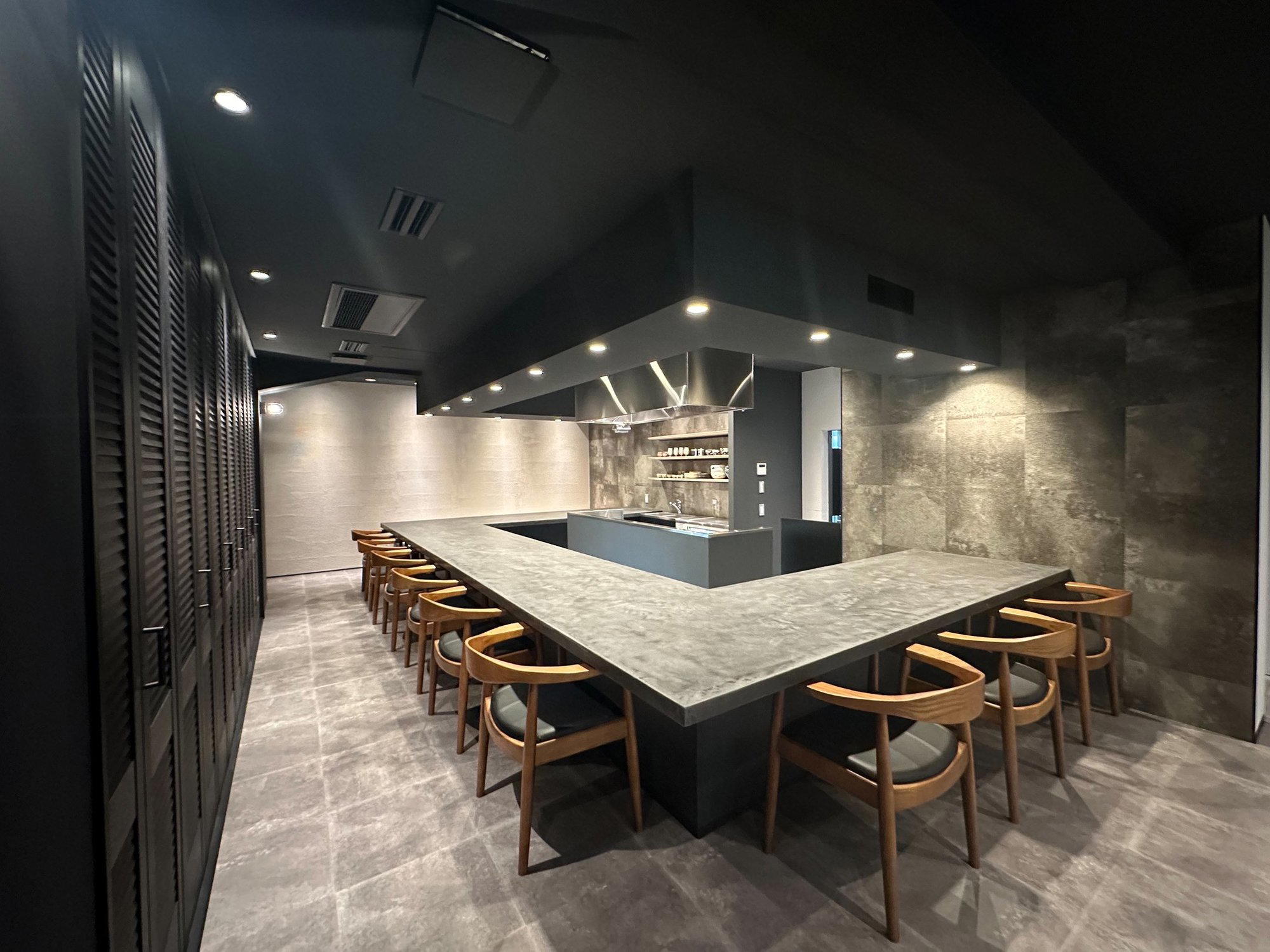
Italian Cooking in Japan's Regional Cities: What the Counter Format Signals
When Italian restaurants earn sustained national recognition outside Tokyo, Osaka, or Kyoto, the achievement carries a different weight. Japan's major cities concentrate culinary competition, talent pipelines, and the food-press attention that drives awareness. Regional cities operate with thinner supply chains, smaller dining populations, and less critical infrastructure.
That maturation has been slow and uneven. The Italian restaurants that built reputations in regional Japan during the 1990s and 2000s leaned heavily on imported ingredients and textbook technique. The generation that followed began integrating local produce while maintaining Italian structural logic: the rhythm of a meal, the wine program's primacy, the counter as a stage for communication between cook and guest. The counter format itself signals something specific: a chef working without a large brigade, a menu shaped by what is available and what can be executed precisely at small scale, and a dining experience in which the table-to-kitchen distance collapses entirely. f occupies that position in Akita.
The Counter as Format and Commitment
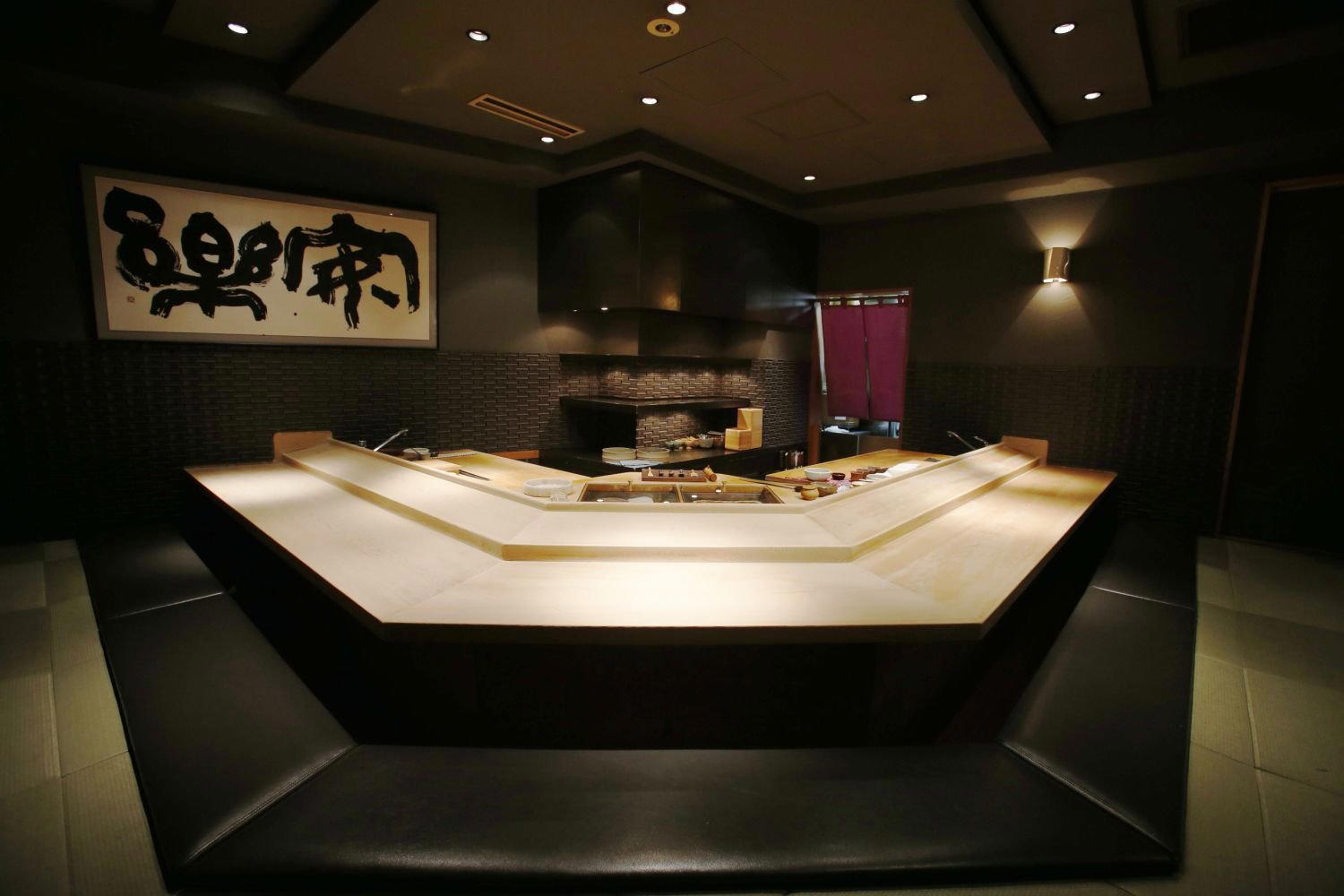
The dining room at f holds nine seats, with six to seven available at the counter on any given evening. That capacity is not incidental. Small-counter Italian in Japan operates in a competitive tier defined less by geography than by format discipline: the chef controls every plate, the sequence is fixed or near-fixed, and the wine program carries genuine editorial intent. The wine list is a central part of the experience.
Reservations are essential, and timing is set around the first seating. For the guest, this means arriving at the stated time matters more than it would at a larger, more flexible room.
Comparable counter-Italian formats at the summit of Japan's national rankings, HAJIME in Osaka, or smaller-capacity operations like akordu in Nara, operate with similar format logic but in cities that generate more inbound dining tourism. f's recognition at the Tabelog level while sitting in Akita, a city most international visitors bypass entirely, places it in a niche within a niche.
Akita's Dining Scene and Where f Sits Within It
Akita City's high-end dining is anchored by kaiseki. Nihon Ryori Takamura represents the kaiseki strand of Akita's formal dining, drawing on the prefecture's agricultural and seafood resources within a Japanese framework. Italian cooking occupies a different register entirely, but both formats share an assumption: the guest is there for a complete meal, not a single dish.
Other Italian addresses in the city, including affetto akita and giueme, complete the local Italian picture. f's Tabelog score of 4.32 (with review-based averages suggesting per-head spend reaching JPY 20,000 to JPY 29,999 in practice) positions it above the mid-tier Italian category and into territory where it competes on terms closer to Tokyo's serious Italian counters than to casual Italian dining anywhere in the Tohoku region.
Japan's national Italian scene has produced a handful of reference points that help calibrate where a regional counter with this awards profile sits. Goh in Fukuoka and 1000 in Yokohama show how Italian cooking adapts to different Japanese regional contexts. The format discipline at f, no lunch, counter-only, reservation-mandatory, wine-forward, mirrors the commitments that distinguish serious Italian from casual trattoria anywhere in the country.
Italian Cooking in Japan: The Cultural Translation Question
Italian cuisine has traveled differently in Japan than French cooking did. French technique arrived through formal culinary training pipelines and the brigade system; Italian arrived more informally, and its adoption in Japan produced a distinct local idiom. Japanese Italian tends to be cleaner and more restrained than its Italian counterpart, with pasta textures adjusted for Japanese palates, sauces tightened, and the overall progression of a meal made more precise. At the counter level, this restraint becomes a design principle rather than a compromise.
The Tohoku region brings its own ingredient vocabulary. Akita's cold-climate agriculture produces distinct rice, vegetables, and mountain produce, and its coastal access means fish availability differs materially from Italian coastal or inland precedents. How a Japanese Italian counter in Akita works with or around those local materials, whether it imports Italian produce, integrates Akita ingredients into Italian structure, or holds to a purist approach, is exactly the question that a restaurant at this recognition level tends to answer in its menu. The menu format is not specified here.
For international reference points on how Italian cooking operates at the highest level in non-Italian contexts, Le Bernardin in New York City and Atomix in New York City offer adjacent comparisons, not Italian, but serious tasting-menu formats in cities where the dining competition is intense and recognition carries specific weight. Harutaka in Tokyo and Gion Sasaki in Kyoto illustrate how Japanese fine dining operates in its home cities, providing a baseline for understanding what regional recognition means against that capital-city backdrop.
Planning a Visit
f operates from 18:00 onward, reservation-only, with no lunch service. The address is Japan, 〒010-0001 Akita, Nakadori, 1 Chome−4−3 1F エリアなかいち商業施設内. Reservations are essential.
For context on the wider city, our full Akita hotels guide, bars guide, wineries guide, and experiences guide cover the broader trip planning picture.
A Pricing-First Comparison
Comparable venues nearby, for context on price, style, and recognition.
| Venue | Cuisine | Price | Notes |
|---|---|---|---|
| fThis venue — the venue you are viewing | Akita, Modern Italian Counter Dining | $$$$ | Not listed |
| すし匠 | Akita, Edomae-Style Sushi Omakase | $$$$ | Not listed |
| Nihon Ryori Takamura | Not listed | $$$$ | Akita, Edo Ryori (Traditional Tokyo-Style Japanese Cuisine) |
| affetto akita | Not listed | $$$ | Honjo-Yuri, Akita Italian with Local Seasonal Ingredients |
| Sushikoma | Yurihonjo, Traditional Omakase Sushi | $$$ | Not listed |
| Tempura Shoshin An | Inaniwa Town, Tempura and Inaniwa Udon | $$$ | Not listed |
Recognition history
Dated appearances from independent guides and award organizations, with the underlying list record or original source where available.
Tabelog Bronze #68
Tabelog
Tabelog Bronze
Tabelog
Tabelog 100 #33 · No. 33
Tabelog · Tabelog 100 - Italian - EAST - 2025
At a Glance
- Intimate
- Elegant
- Modern
- Date Night
- Special Occasion
- Chefs Counter
- Standalone
- Sake Program
- Extensive Wine List
Current opening hours
- Monday
- 11 AM–3 PM, 5–11 PM
- Tuesday
- 11 AM–3 PM, 5–11 PM
- Wednesday
- 11 AM–3 PM, 5–11 PM
- Thursday
- 11 AM–3 PM, 5–11 PM
- Friday
- 11 AM–3 PM, 5–11 PM
- Saturday
- 11 AM–3 PM, 5–11 PM
- Sunday
- 11 AM–3 PM, 5–11 PM
Hours can change for holidays and private events. Last verified .
Intimate hideout with counter-only seating for 9, creating a cozy and sophisticated atmosphere.