Our verdict
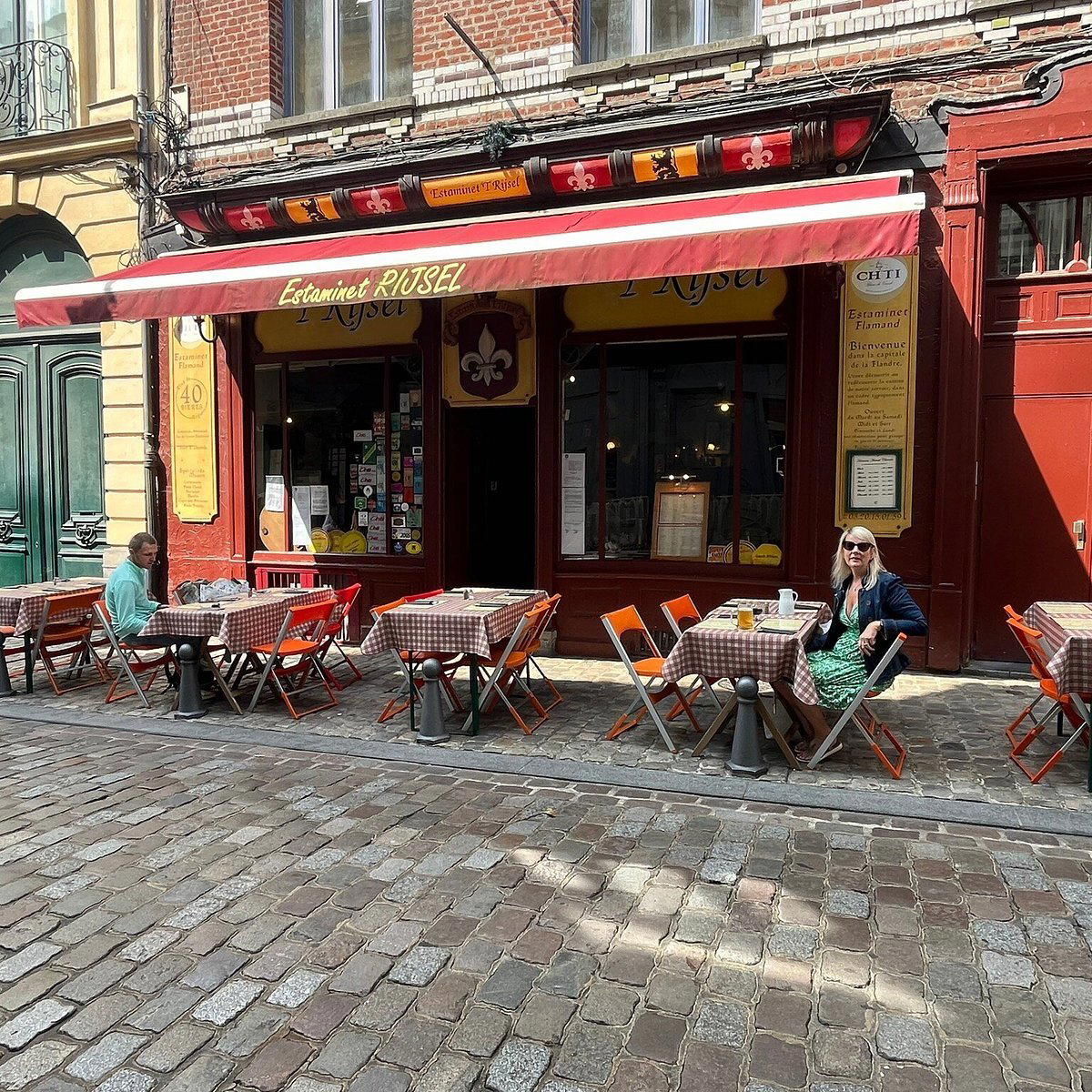
On Rue de Gand, one of Lille's most atmospheric streets, Estaminet 'T Rijsel anchors the city's estaminet tradition with the kind of unhurried, convivial dining that defines northern French bistro culture. The cooking draws from Flemish roots while reflecting the cross-border culinary exchange that has shaped the Nord region for centuries. A reference point for anyone mapping Lille's traditional dining scene.

Pearl is the En Primeur Club membership app — saves, bookings, and concierge access live there. Same editors, same standards.
- Address
- 25 Rue de Gand, 59800 Lille, France
- Phone
- +33359614202
- Hours
- Mon–Fri 12–2 PM, 7–10 PMSat 12–2:30 PM, 7–10:30 PMSun 12–2:30 PM, 7–9:30 PM
- Website
- estaminet-rijsel.fr
- Directions
- Get directions
- Booking
- Book on the venue's website
The menu
What to order
- Carbonnade flamande
- Poulet au maroilles
Where Flemish Tradition Meets the Rue de Gand
Lille's estaminet culture occupies a specific and increasingly rare niche in French dining. These old Flemish taverns, which once served as gathering places for textile workers and market traders across the Nord and Belgian border regions, have largely been absorbed into generic brasserie formats or converted into bars serving industrial lager. The ones that survive with integrity tend to do so on a particular street, in a particular arrondissement, where neighbourhood memory is long and tourist pressure hasn't yet homogenised the offer. Rue de Gand, running through the Vieux-Lille quarter, is one of those streets. Estaminet 'T Rijsel sits along it, its name itself a signal: 'T Rijsel is the Dutch-Flemish word for Lille, a reminder that this city spent centuries as part of the Habsburg Netherlands before becoming French in 1667.
The estaminet as a format resists the logic of contemporary dining trends. There is no tasting menu, no chef's counter theatre, no curated wine list with a somm-driven narrative. What the format offers instead is a fixed cultural grammar: wooden interiors, regional dishes cooked to a known standard, portions calibrated for appetite rather than aesthetics, and a room that functions as much as a social institution as a restaurant. In that sense, Estaminet 'T Rijsel competes less with Lille's modern cuisine addresses, like Ginko or Pureté, and more with the handful of surviving estaminets across the region that still take the format seriously. Its closest peer in spirit, if not in exact format, is Au Vieux de la Vieille, also in the old quarter.
The Flemish Kitchen and Its Cross-Border Logic
Understanding what ends up on the table at an estaminet like 'T Rijsel requires understanding the culinary geography of the Nord. The cooking here is not simply French regional food in the Lyonnais or Périgordine sense, where a single nation's rural larder defines the repertoire. It is a borderlands cuisine, shaped by centuries of Flemish, Dutch, Spanish, and French influence layering over one another. Carbonnade flamande, waterzooi, potjevleesch, ficelle picarde, welsh (the Nord's particular reinvention of a Welsh rarebit): these are dishes that carry their own etymological contradictions, arriving at the table as evidence of how permeable the cultural and culinary border between northern France and Belgium has always been.
That cross-border logic extends to ingredients. The Nord's agricultural identity, built on chicory, endive, maroilles cheese, genièvre gin, and the region's distinctive dark beers, shares more with Belgian Wallonia than with the wine-driven kitchens of Burgundy or Alsace. Where a house like Auberge de l'Ill anchors its regional cooking to Alsatian wine country, or Bras in Laguiole draws from the Aubrac plateau's pastoral specificity, the estaminet kitchen works with a larder that has always moved freely across a border that only became fixed in the modern era. The result is a cuisine that is genuinely Flemish in sensibility even when it operates entirely within France.
Reading the Room: What Estaminet Dining Actually Feels Like
Visually, the estaminet format is consistent across its surviving practitioners: exposed beams, tiled floors, dark wood furniture, and walls dense with objects that register as either authentic accumulation or deliberate curation depending on the age of the establishment. The distinction matters less than whether the room feels inhabited. Estaminets that work do so because locals return to them regularly, not because tourists seek them out once. The midday service at a functioning estaminet in Vieux-Lille draws office workers from the legal and financial district along with neighbourhood regulars; weekend evenings run longer and louder, with tables of four and six rather than the couples and solo diners who populate the city's more considered modern addresses.
For travellers approaching from Paris, Lille is 60 minutes by TGV from Gare du Nord, which makes it viable as a day trip but more rewarding over a weekend. The Vieux-Lille quarter, where Rue de Gand runs, is walkable from the Gare Lille-Flandres in under fifteen minutes. Booking ahead for dinner at the popular estaminets is advisable, particularly on Friday and Saturday evenings when competition for tables across the quarter tightens.
Where 'T Rijsel Sits in Lille's Dining Spectrum
Lille's restaurant scene has broadened considerably over the past decade. La Table at Hôtel Clarance occupies the high-end modern French tier, while Au Soyeux addresses a different register of the market. The estaminet format sits deliberately outside that modernising current. What it offers is the opposite of destination dining: a meal anchored entirely in place, season, and custom rather than in individual culinary ambition.
That positioning is not a limitation. The estaminet's resistance to contemporary restaurant logic is precisely what makes it useful to a traveller who wants to read a city rather than simply eat in it. In a dining culture increasingly shaped by the same international influences visible at Le Bernardin in New York or Lazy Bear in San Francisco, the estaminet operates as a local counterweight. For French regional cooking with comparable institutional weight but different geography, the reference points shift toward Georges Blanc in Vonnas or Paul Bocuse's Auberge du Pont de Collonges, though the estaminet operates at a fraction of the formality and price of either.
For a complete picture of Lille's dining options across formats and price tiers, the EP Club Lille restaurants guide maps the full spectrum. Those interested in the higher end of the modern French canon across the country can also cross-reference against Alléno Paris au Pavillon Ledoyen, Troisgros, or Les Prés d'Eugénie to understand how differently the French regional kitchen can express itself across geography and ambition. And for another angle on how Southern French technique and terroir interact, La Table du Castellet provides a useful Mediterranean contrast to the Nord's Flemish orientation.
Planning Your Visit
Estaminet 'T Rijsel is located at 25 Rue de Gand in the Vieux-Lille quarter. As with most established estaminets in the area, dinner reservations are advisable rather than optional on weekends. Arriving by train from Paris takes approximately one hour on the TGV from Gare du Nord to Gare Lille-Flandres, placing the restaurant within easy reach for a long weekend. The autumn and winter months suit the estaminet format particularly well: the cooking is built around warming, slow-cooked dishes, and the rooms, designed before the era of air conditioning and open kitchens, read better when the weather outside justifies closing the door.
Frequently asked questions
Does Estaminet 'T Rijsel work for a family meal?
The estaminet format, which 'T Rijsel represents on Rue de Gand in Vieux-Lille, is among the more family-accommodating structures in northern French dining. Portions follow the generous Flemish tavern tradition, and the cooking centres on unfussy regional classics rather than tasting-menu formality. The communal, room-filling atmosphere typical of the format means children fit naturally into the setting.
How would you describe the vibe at Estaminet 'T Rijsel?
At 25 Rue de Gand, 'T Rijsel operates as a neighbourhood institution rather than a destination restaurant in the contemporary sense. The estaminet register means exposed beams, tiled floors, dark wood, and a room that fills with locals and visitors alike in roughly equal measure. It reads as a working tavern with history, not a staged version of one.
Is Estaminet 'T Rijsel a good option for eating regional Nord cuisine specifically, rather than standard French bistro food?
Yes, and the distinction matters in Lille. The estaminet tradition on Rue de Gand draws directly from the Flemish culinary geography of the Nord, producing dishes — beer-braised meats, cold terrines, grain-thickened stews — that differ markedly from Parisian bistro cooking. For a visitor whose priority is understanding what separates Lille's food culture from the broader French canon, 'T Rijsel in Vieux-Lille represents the most direct route to that answer.
What do people recommend at Estaminet 'T Rijsel?
The dishes most associated with Lille's estaminet tradition are the Flemish staples: carbonnade flamande braised in northern beer, potjevleesch (the cold mixed-meat terrine served with fries), and waterzooi. At an address like 'T Rijsel in Vieux-Lille, these are the orders that define the experience rather than the periphery of the menu.
Where is Estaminet 'T Rijsel located?
Estaminet 'T Rijsel is located at 25 Rue de Gand, 59800 Lille, France, Lille.
Peers Worth Knowing
Comparable venues nearby, for context on price, style, and recognition.
| Venue | Cuisine | Price | Notes |
|---|---|---|---|
| Estaminet 'T RijselThis venue — the venue you are viewing | Traditional Flemish Bistro | $30–50 | Not listed |
| L'Annexe | Modern French Bistronomique | $30–50 | Buisson |
| Le Barbier qui Fume | French Smoked Meats Bistro | $30–50 | Vieux Lille 3 |
| Le Passe Porc | Traditional French Brasserie | $30–50 | Lille Centre 19 |
| Le Lion Bossu | Traditional French Gastronomic | $50–100 | Vieux Lille 3 |
| La Bottega | Italian Pizza | $20–30 | Vieux Lille 3 |
Continue exploring
More in Lille
Restaurants in Lille
Browse all →
Hotels in Lille
Browse all →

Wineries in Lille
Browse all →
Details
- Rustic
- Cozy
- Classic
- Casual Hangout
- Family
- Historic Building
- Beer Program
- A La Carte
- Beer Program
Current opening hours
- Monday
- 12–2 PM, 7–10 PM
- Tuesday
- 12–2 PM, 7–10 PM
- Wednesday
- 12–2 PM, 7–10 PM
- Thursday
- 12–2 PM, 7–10 PM
- Friday
- 12–2 PM, 7–10 PM
- Saturday
- 12–2:30 PM, 7–10:30 PM
- Sunday
- 12–2:30 PM, 7–9:30 PM
Hours can change for holidays and private events. Last verified .
Dark, cozy interior with brick walls, old picture frames, wooden tables, and a raucous, lively atmosphere during peak hours.