
Tabelog 100 #58
Our verdict
An 11-seat Kitashinchi tonkatsu counter and table room, epais sits in Osaka’s higher-attention fried-pork tier, with Tabelog 100 Tonkatsu selections across 2017, 2018, 2019, 2021, 2022, 2024, and 2026. Lunch runs at a gentler price point than dinner, making the daytime service the sharper value play for travelers tracking Osaka’s specialist food culture.

Pearl is the En Primeur Club membership app, where members save venues, book tables and use the concierge.
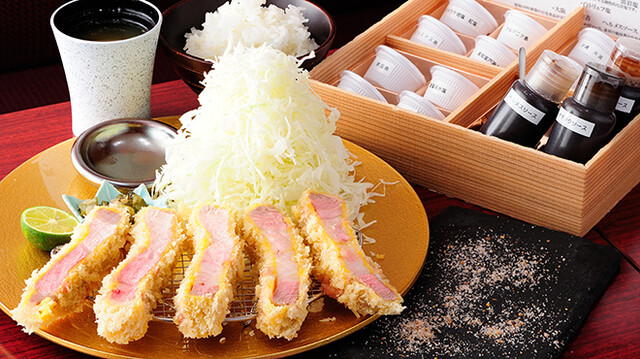
The menu
What to order
- Brand pork tonkatsu (loin cutlet)
- Brand pork tonkatsu (fillet cutlet)
- Chamiton pork tonkatsu
- Sangenton pork tonkatsu
- TOKYO X pork tonkatsu
- Shinshu Taro pork tonkatsu
Osaka changes by the hour. By day, its restaurants run with speed and discipline; by night, the city turns to longer meals, specialist counters, and more deliberate pacing. Tonkatsu fits that split: at lunch, a crisp, focused set meal; at dinner, a slower study in pork, frying technique, and the rhythm of service. epais belongs to that more deliberate Osaka category, though its lunch pricing explains why the restaurant draws attention beyond the usual fried-cutlet audience.
Osaka’s reputation leans toward takoyaki, okonomiyaki, and counter snacks, but its specialist restaurants are just as revealing. Tonkatsu is a useful test because it looks simple until details matter: cut, batter thickness, oil management, resting time, cabbage, rice, sauce, salt, and service rhythm. A restaurant listed in Tabelog 100 Tonkatsu for 2026 is not being rewarded for novelty. It is measured against a national field where consistency matters more than spectacle.
Osaka tonkatsu, split between lunch value and dinner pacing
The daytime appeal is clear: lunch sits in the JPY 2,000 to JPY 2,999 band, keeping the meal within reach for a serious Osaka food day rather than making it the main event. Dinner moves to JPY 5,000 to JPY 5,999, changing the comparison. Tonkatsu is no longer competing only with casual cutlet shops; it sits nearer the city’s compact specialist restaurants, where format, sourcing, and service must justify the climb.
That divide matters for travelers. Lunch suits a tightly planned Osaka day, especially with other food stops before or after the meal. Dinner works when the point is not speed but a narrower read of Osaka’s premium casual dining: focused Japanese formats without the ceremony of kaiseki, tempura, or sushi, yet requiring similar kitchen attention. In the same city, KAHALA and Iwaki occupy different high-spend Japanese lanes, while Hiraishi shows how one technique can sustain a meal. Tonkatsu at this level belongs in that conversation, but with a more democratic grammar.
The format reinforces the distinction without needing spectacle. The experience reads closer to a focused specialist restaurant than a high-throughput lunch shop. When fried food is served with care, sequence, pauses, and heat management become part of the meal rather than background labor. That flexibility helps explain why the restaurant can fit both a quick Osaka food day and a more deliberate evening built around one category.
Why a cutlet specialist belongs in an Osaka fine-dining itinerary
For visitors mapping Osaka dining, tonkatsu is a useful break from louder categories. It is less performative than yakitori, less formal than tempura, and less dependent on seasonal narrative than many tasting-menu restaurants. The discipline is physical and repetitive: frying without greasiness, protecting juiciness, cutting cleanly, and serving before the crust loses its point. Recognition in a tonkatsu-specific list therefore means more than a general popularity signal.
epais is listed in the 2026 Tabelog 100 Tonkatsu selection. In Japan’s restaurant culture, where genre lists can be fiercely competitive, that kind of category recognition is more useful than a vague popularity signal. The listed score of 3.73 also places it where Japanese diners tend to read an address as a specialist rather than a neighborhood fallback.
The curry listing is worth noting without overreading it. Tonkatsu and curry share a long casual-dining overlap in Japan, but a restaurant recognized in the tonkatsu category is judged on the cutlet first. Dinner’s higher price band pushes the meal toward texture, fat, pacing, and focus rather than quick satisfaction alone. That is where epais starts to make sense as more than a simple lunch stop.
Within Osaka, the choice is not simply “tonkatsu or something else.” It is which version of the city the meal should reveal. Shokudo Akari and Kitashinchi Shien point toward other Japanese dining cultures, while unnamed bakeries, coffee rooms, and casual counters fill the daytime grid. For broader planning, Our full Osaka restaurants guide gives the better citywide frame, while Our full Osaka hotels guide, Our full Osaka bars guide, Our full Osaka wineries guide, and Our full Osaka experiences guide place the meal inside a full itinerary rather than treating dinner as an isolated booking.
How to fold it into a food-led day
The sharper strategy is to decide first whether lunch or dinner should carry the day. Lunch keeps cost controlled and leaves room for Osaka’s casual classics later, from snack counters to coffee or bakeries. Dinner fits when the evening should stay in Osaka’s specialist-restaurant register, before or after another focused stop rather than a crawl.
Travelers comparing Japanese specialist formats beyond Osaka can think about epais alongside other compact dining rooms in Japan without forcing a direct cuisine comparison. The point is not similarity of dishes; it is how Japan’s focused restaurants often turn a narrow category into a serious meal. In that context, tonkatsu becomes less a comfort-food detour and more a precise way to read craft.
For a more Osaka-specific contrast, unnamed international rooms, casual counters, and Japanese specialists show how varied formats sit beside local specialist cooking in the same dining ecosystem. Outside Japan, Japanese comfort forms may travel well, but in Osaka the pleasure is seeing how tightly a familiar dish can be edited at the source.
Frequently asked questions
What's the address for epais?
Osaka.
Is epais more mid-range or high-end?
Pricing at epais is listed as Dinner: JPY 5,000 - JPY 5,999; Lunch: JPY 2,000 - JPY 2,999.
Is epais reservation-only?
Reservation requirements are not specified in the provided details. Contact the restaurant directly at +81-6-6347-6599 for the current booking policy.
What's the signature at epais?
The clearest draw is tonkatsu, supported by epais’s 2026 Tabelog Tonkatsu "Tabelog 100" selection in Osaka. Curry is also listed in the restaurant’s categories.
Do they accommodate allergies at epais?
For allergy requests, contacting the restaurant in advance at +81-6-6347-6599 is the sensible approach.
Reputation First
Comparable venues by cuisine and category.
| Venue | Cuisine | Price | Awards | Notes |
|---|---|---|---|---|
| epaisThis venue (the venue you are viewing) | Premium Tonkatsu & Curry | $30–50 | Tabelog 100 #58 | Not listed |
| Binbiya | Michelin-starred seafood izakaya | $50–100 | Tabelog 100 #51 | Kita |
| Sumibi Yakitori Torimasa | Modern Yakitori Omakase | $50–100 | Tabelog 100 #87 | Chūō |
| Kyosho ran Minamimori chou | Japanese Yakiniku | $50–100 | Tabelog 100 #1 | Kita |
| Wagyu no Kiraku | Traditional Wagyu Yakiniku & Yaki-shabu | $50–100 | Tabelog 100 #15 | Kita |
| Higyu | Japanese Yakiniku | Not listed | Tabelog 100 #79 | Kita |
Recognition history
Dated appearances from independent guides and award organizations, with the underlying list record or original source where available.
Tabelog 100 #58 · No. 58
Tabelog · Tabelog 100 - Tonkatsu - 2026
Continue exploring
More in Osaka
Restaurants in Osaka
All restaurants in Osaka →



Bars in Osaka
All bars in Osaka →




Hotels in Osaka
All hotels in Osaka →



Wineries in Osaka
Browse all →
Details
- Elegant
- Cozy
- Intimate
- Sophisticated
- Solo
- After Work
- Date Night
- Business Dinner
- Casual Hangout
- Special Occasion
- Chefs Counter
- Standalone
- Design Destination
- Local Sourcing
- A La Carte
- Set Menu
- Counter Dining
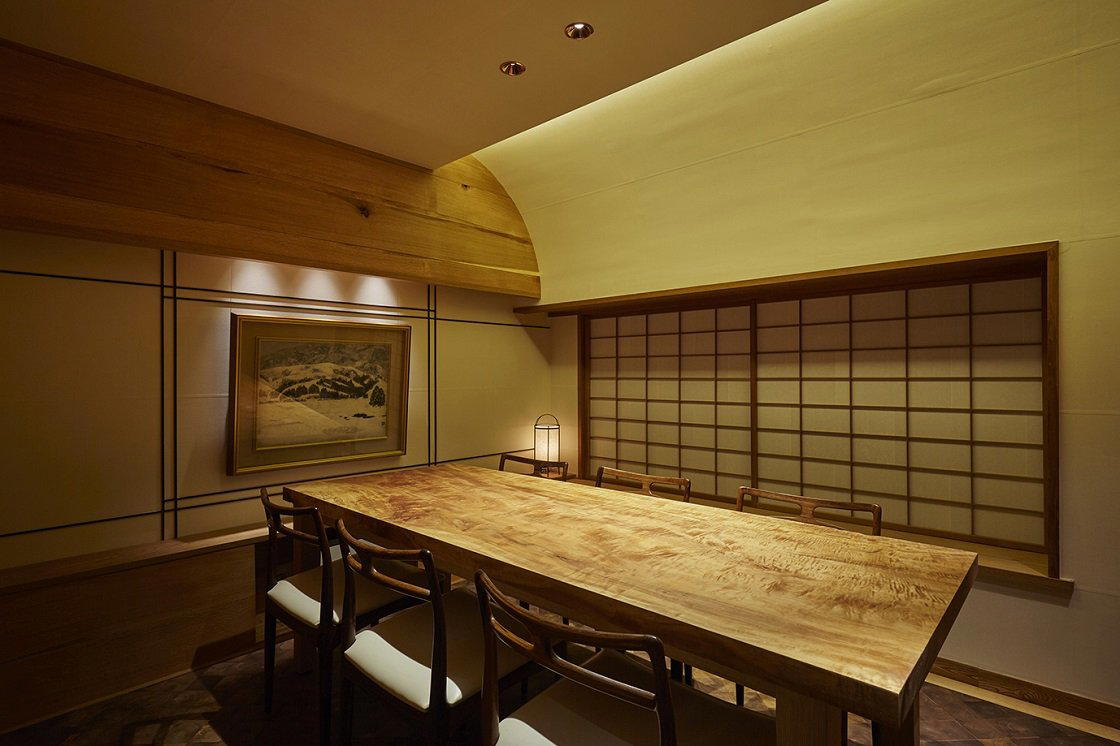
Small, elegant and adult-oriented space with just 11 seats, non-smoking and quietly relaxed, designed for leisurely enjoyment of high-end tonkatsu rather than a bustling casual diner atmosphere.