El Nacional occupies a restored 1889 coach house on Passeig de Gràcia, operating as one of Barcelona's most architecturally ambitious food halls. Where comparable all-day venues in European capitals tend toward a single kitchen concept, El Nacional runs four distinct food stations and four bars under one vaulted roof, making it a reference point for the grand-format dining hall in Spain.
 Discover on Pearl
Pearl is the En Primeur Club membership app — saves, bookings, and concierge access live there. Same editors, same standards.
- Address
- Pg. de Gràcia, 24 Bis, Eixample, 08007 Barcelona, Spain
- Phone
- +34 935 18 50 53
- Website
- elnacionalbcn.com
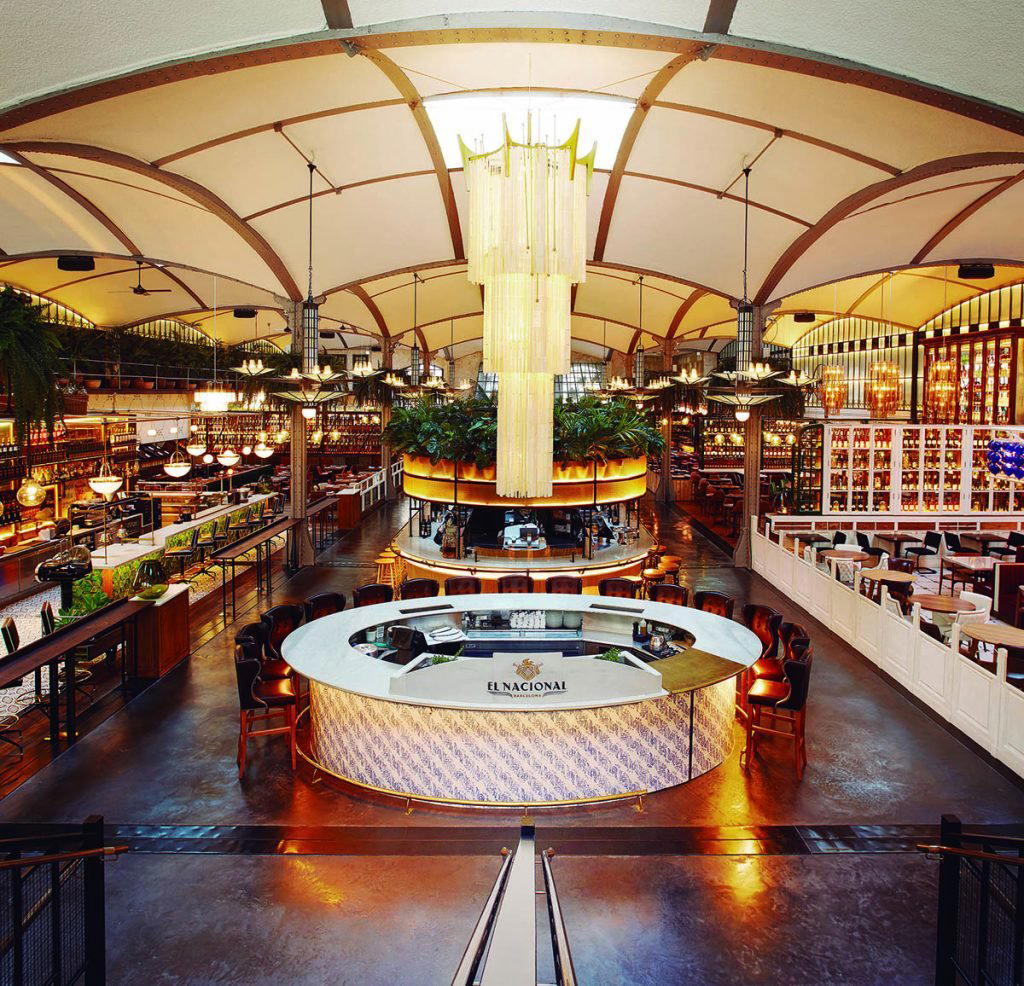
A Coach House on Passeig de Gràcia
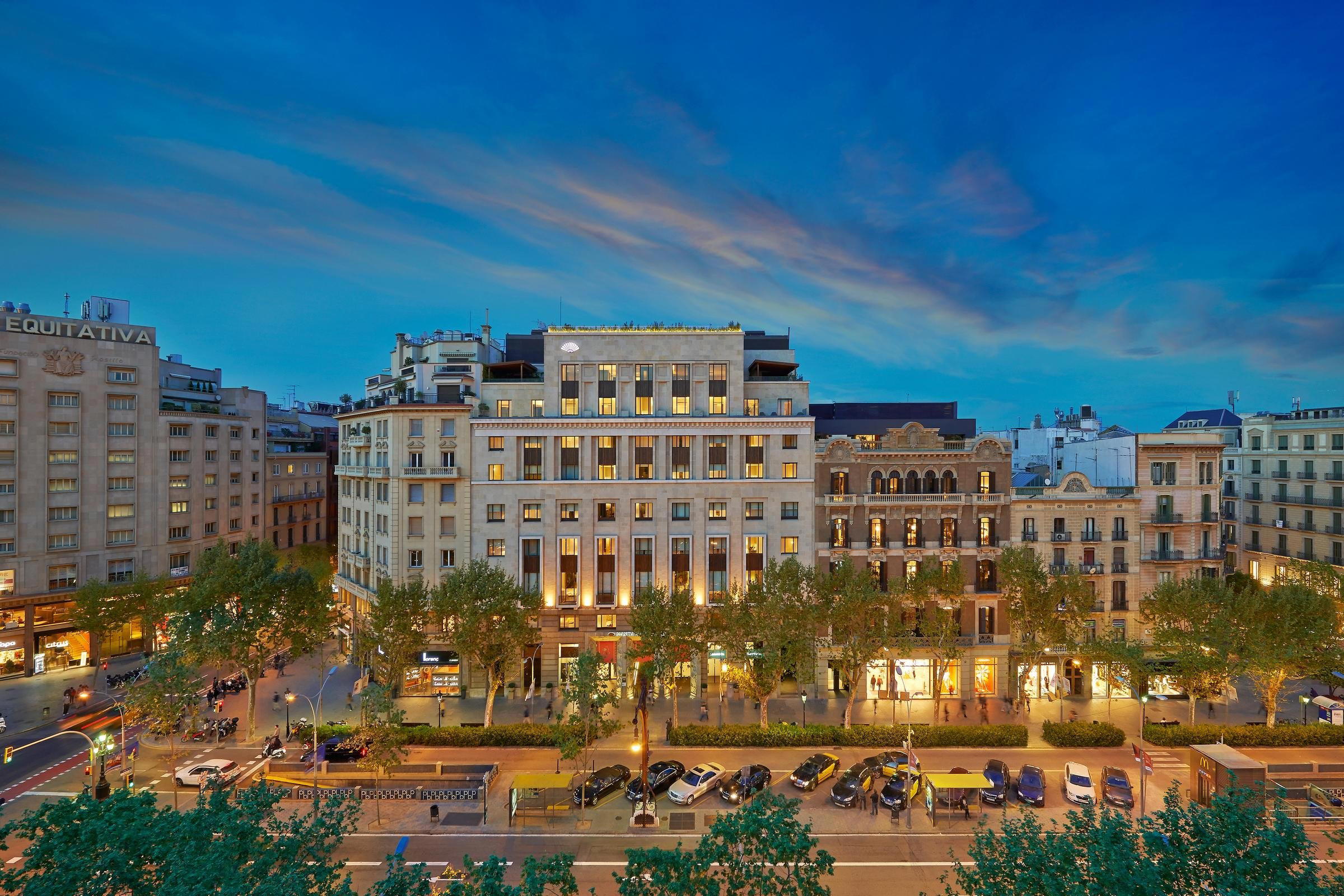
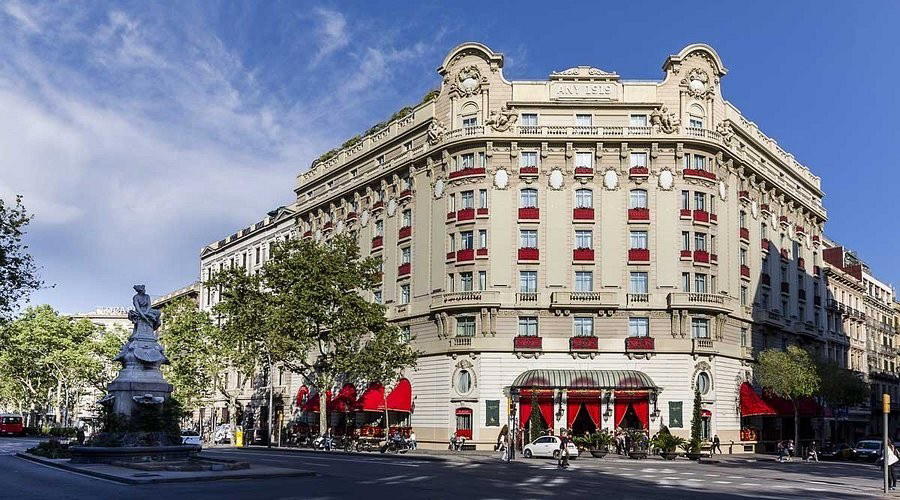
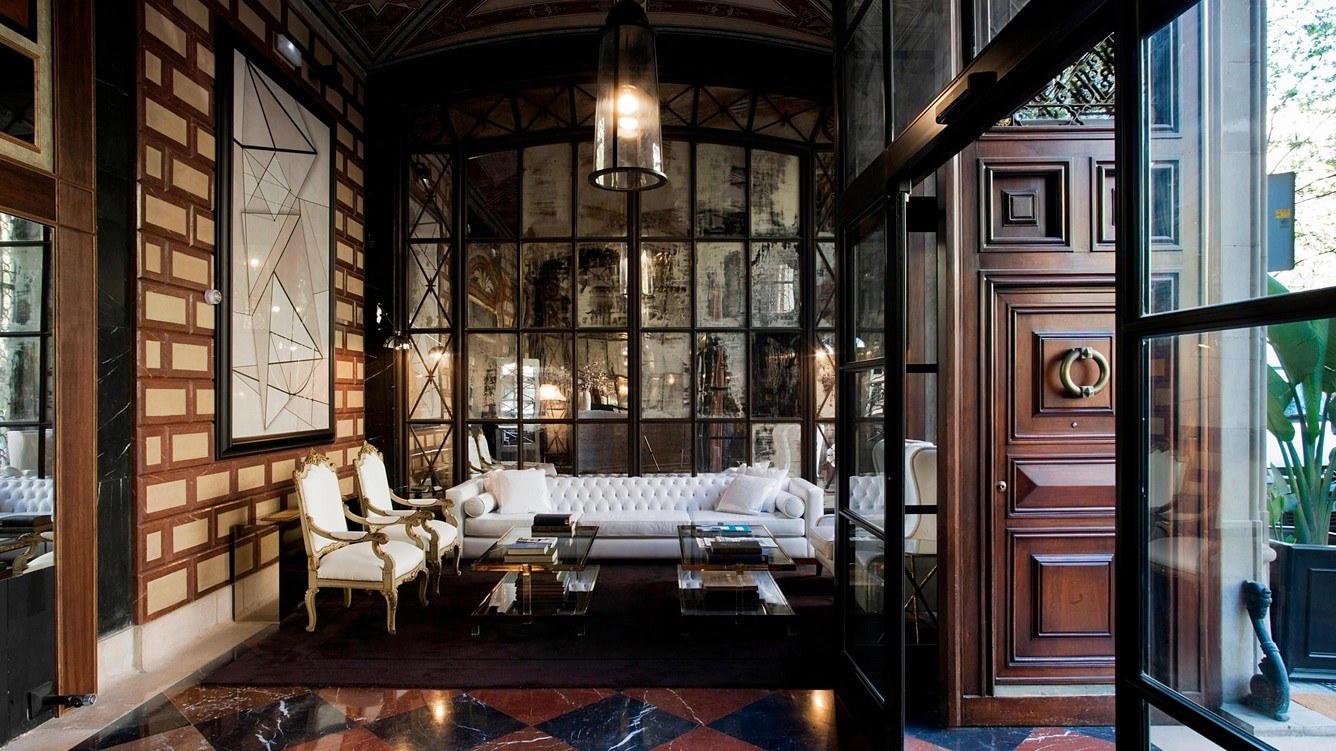
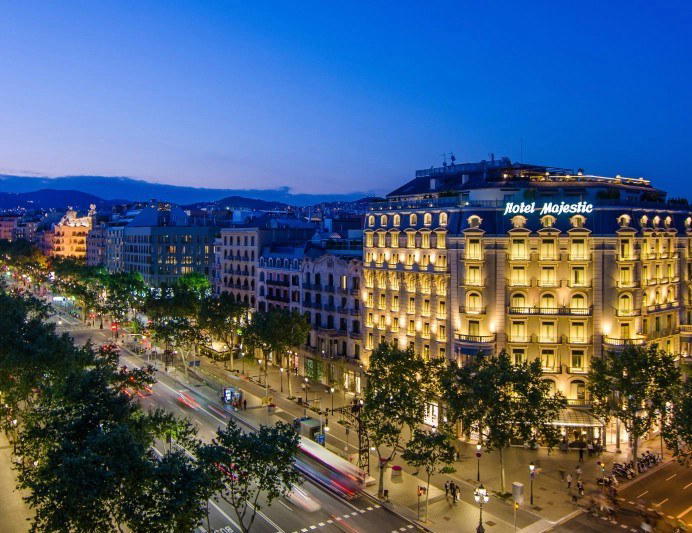
The building announces itself before any food arrives. The address — Passeig de Gràcia 24 Bis, a few steps from the Manzana de la Discordia — places El Nacional at the geographical and symbolic centre of Eixample's 19th-century grid. The original 1889 coach house frame, with its vaulted ceilings and iron columns, has been restored to carry a contemporary food hall format that runs across more than 4,000 square metres of interior. The scale is unusual for Barcelona's dining scene, where the prevailing format runs to intimate neighbourhood rooms or tightly choreographed tasting counter. El Nacional goes the other direction: multiple kitchens, multiple bars, a crowd that shifts from mid-morning coffee to late-night cocktails without the room ever feeling abandoned.
Barcelona's all-day dining category has developed a distinct identity over the past decade. The city's proximity to the Mediterranean, the Catalan tradition of the mercat and the long afternoon lunch culture have made multi-station eating a natural fit, but the execution at the grand format level remains rare. For context on how Barcelona's serious tasting-menu restaurants operate at the other end of the spectrum, venues like Disfrutar (Progressive, Creative), ABaC (Creative), and Lasarte (Progressive Spanish, Creative) represent Barcelona's counter-argument: concentrated, singular, and authored. El Nacional sits in a different competitive tier, less about signature technique and more about the logistics and experience of feeding a large, mixed crowd with genuine product quality across several disciplines simultaneously.
Sourcing and the Question of Scale
Large-format venues carry an inherent challenge around supply chain integrity. When a single site operates four kitchens and serves hundreds of covers across a full day, the gap between stated sourcing values and operational reality can widen quickly. The broader shift in Spanish hospitality toward transparency in ingredient provenance, visible in Michelin-level houses like Azurmendi in Larrabetzu, where environmental certification is part of the restaurant's identity, or Aponiente in El Puerto de Santa María, where the kitchen's relationship to marine ecosystems is structurally embedded in the menu, has raised the threshold of expectation even for large casual venues.
El Nacional positions itself as a showcase for Catalan and Spanish product: seafood from the Catalan coast, cuts from Iberian producers, regional cheeses and wines. That framing aligns with a broader movement in Barcelona's mid-to-upper casual segment, where provenance language has become part of the hospitality offer rather than a purely fine-dining concern. The practical test of those claims lies in the kitchen's day-to-day operation across its multiple stations, something that varies by service and season in ways that a single visit cannot fully measure. What can be said is that the format requires a supply discipline rarely demanded of single-kitchen operations, and the public-facing emphasis on Spanish product identity is consistent with the positioning of the space.
The Grand Hall Format in European Context
Barcelona is not the only European city to have revived the 19th-century market-hall concept as a premium dining destination. London's Harrods dining halls, Madrid's Mercado de San Miguel, and Lisbon's Time Out Market all attempt variants of the same idea: architectural heritage plus curated food offer plus extended hours. The distinction between those formats and what El Nacional attempts lies in the level of kitchen ambition at each station. Food hall models that prioritise throughput tend to compress quality toward a reliable middle. The more interesting question, in El Nacional's case, is whether the four-kitchen model allows any station to operate with the focus of a standalone restaurant, and by most accounts, the seafood and Catalan meat stations attract the strongest repeat interest from Barcelona regulars who treat the venue as a destination for specific dishes rather than as a general food court.
That selective-use behaviour is worth noting. It mirrors how serious diners use multi-concept venues in other cities: not as an undifferentiated all-in-one experience, but as a venue where one or two stations have earned independent credibility. In the broader map of Spanish dining, the contrast with single-authored restaurants is sharp. Cocina Hermanos Torres (Creative) and Enigma (Creative) represent Barcelona's authored end of the spectrum; El Nacional sits at the social and architectural end, where the building and the breadth of offer do the editorial work.
What the Room Offers by Time of Day
The operational model across a full day gives El Nacional a flexibility that suits its format. The morning bar draws office workers and tourists from the Passeig de Gràcia hotels; the lunch service peaks with a mix of business tables and visitors who have worked out that the kitchen quality is a step above the tourist-adjacent traps that line the boulevard further south. By early evening, the cocktail bars begin to lead, and the room takes on a different register, louder, younger on average, more interested in the drinks program than the kitchens. Visiting with a specific station in mind, and timing that visit to avoid the peak tourist window between 7pm and 9pm on summer weekends, is the approach that yields the most consistent experience.
Reservations are recommended, particularly during high season (June through September) and at weekend lunches. The Passeig de Gràcia address makes logistics simple.
Placing El Nacional in Barcelona's Dining Map
El Nacional belongs in the category of spaces that explain how Barcelona eats socially rather than how its chefs think technically. The architectural ambition of the restored building, combined with a deliberate emphasis on Spanish product identity, gives the venue a legitimate place in the city's self-image as a food capital, distinct from, but not competing directly with, the tasting-menu tier represented by Disfrutar or the progressive Spanish cooking at Lasarte.
The broader Spanish context matters too. Across the country, restaurants have pushed sourcing and environmental thinking further. El Celler de Can Roca in Girona, Mugaritz in Errenteria, and Quique Dacosta in Dénia have each made ingredient ethics part of their public identity. El Nacional's task is different in scale and register, but the expectation of product transparency that those restaurants have helped establish now applies, at least implicitly, to ambitious venues across the category spectrum.
Compact Comparison
Comparable venues nearby, for context on price, style, and recognition.
| Venue | Cuisine | Price | Notes |
|---|---|---|---|
| El Nacional BarcelonaThis venue — the venue you are viewing | $$$ | ||
| Asador de Aranda | $$$ | la Dreta de l'Eixample, Traditional Castilian Grill | |
| Bodega Sepúlveda | Sant Antoni, Traditional Catalan Tapas | $$$ | |
| Manairo | $$$ | el Fort Pienc, Modern Catalan Tasting Menu | |
| Can Solé | $$$ | la Barceloneta, Classic Catalan Seafood Paella | |
| Asador d'Aranda | $$$ | Sant Gervasi - Galvany, Traditional Castilian Roast Meats |
Continue exploring
More in Barcelona
Restaurants in Barcelona
Browse all →
Bars in Barcelona
Browse all →
Hotels in Barcelona
Browse all →
At a Glance
- Elegant
- Sophisticated
- Iconic
- Lively
- Group Dining
- Special Occasion
- Late Night
- Open Kitchen
- Design Destination
- Extensive Wine List
- Craft Cocktails
- Local Sourcing
Classy and beautiful food hall atmosphere with elegant surroundings, open kitchens, and a vibrant social vibe reflecting Barcelona's cultural life.