El Laurel occupies a corner of Eixample's quieter western edge, on Carrer de Floridablanca where the neighbourhood's dining energy runs at a lower register than the Passeig de Gràcia circuit. The address places it inside Barcelona's mid-tier creative scene, where the city's appetite for reinvention shows up in smaller rooms rather than flagship kitchens. It is the kind of address that rewards those already familiar with the broader Spanish dining conversation.
Pearl is the En Primeur Club membership app — saves, bookings, and concierge access live there. Same editors, same standards.
- Address
- Carrer de Floridablanca, 140, Eixample, 08011 Barcelona, Spain
- Phone
- +34 933 25 62 92
- Website
- laurelbcn.wixsite.com
- Directions
- Get directions
 Saves & bookings on Pearl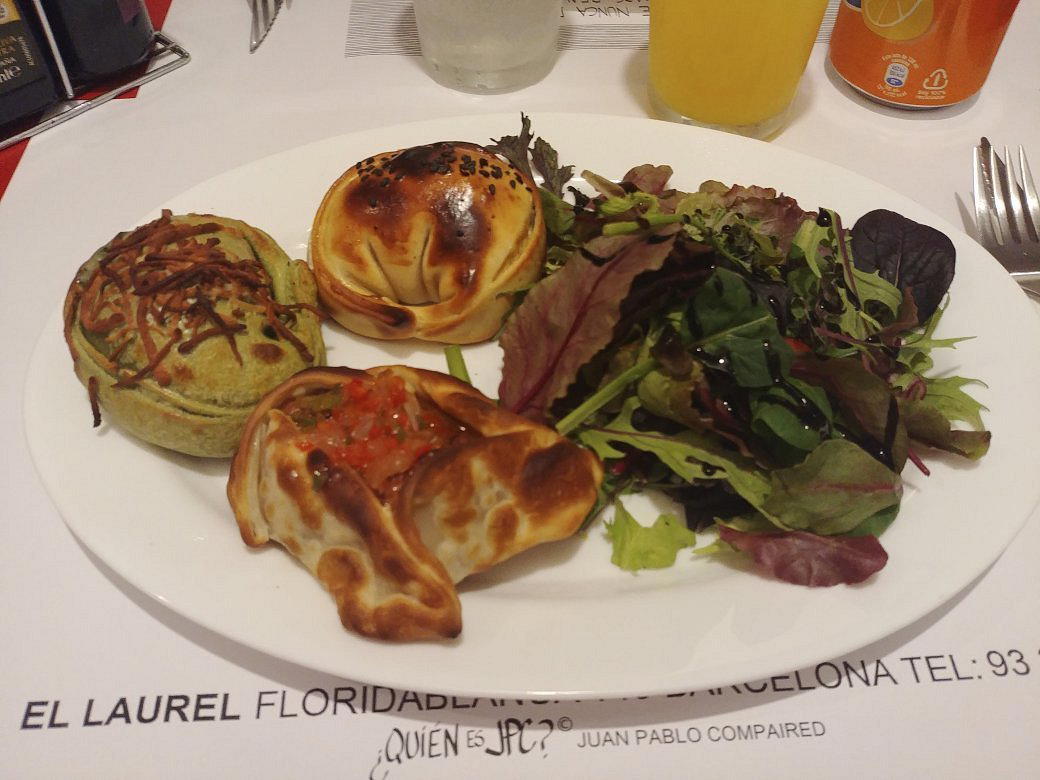
A Street-Level View of Eixample's Evolving Table
Barcelona's Eixample district has never been a single dining story. The grid that Cerdà laid out in the nineteenth century carved the city into blocks of roughly equal dimension, but the restaurants that filled those blocks have never sorted themselves by any equivalent logic. The stretch around Carrer de Floridablanca, in the district's southwestern quadrant, sits at some remove from the density of decorated kitchens clustered near Passeig de Gràcia and Diagonal. That distance is not a disadvantage. It is, in a city that has spent two decades producing particularly discussed cooking in Europe, a particular kind of address: quieter, less trafficked by international itineraries, and correspondingly more anchored to the rhythms of the neighbourhood itself.
El Laurel is on Floridablanca 140, which places it within walking distance of the Sant Antoni market and the bars and casual restaurants that have gathered around it. That market's renovation, completed in 2009 and followed by a second wave of hospitality interest in the early 2010s, shifted the gravitational pull of Eixample dining westward. The area around Sant Antoni became one of the first parts of the neighbourhood where a younger, less formal dining energy established itself alongside older, more fixed institutions. El Laurel operates inside that broader shift.
How the Neighbourhood Conversation Has Changed
The editorial angle that makes sense for El Laurel is not arrival but evolution. Barcelona's restaurant scene has gone through at least three distinct phases since the early 2000s. The first was the global attention brought by the avant-garde movement centred on El Bulli and its satellites. The second was the post-crisis recalibration of the mid-2010s, when elaborate tasting menus contracted in number and mid-market kitchens with serious technical ambitions expanded. The third, still ongoing, is the redistribution of serious cooking across the city's neighbourhoods, away from the prestige corridors and into addresses like Floridablanca.
That redistribution is visible across the city. Cocina Hermanos Torres operates in a converted greenhouse space in Les Corts, well outside the traditional fine-dining corridor. Enigma occupies a Sant Antoni address that would have read as peripheral a decade ago. The movement of serious kitchens into non-obvious postcode, a pattern visible in cities from London to Tokyo, has played out clearly in Barcelona over the past ten years. The restaurant's Floridablanca address fits that trajectory.
Barcelona Inside the Spanish Context
To read the restaurant accurately, it helps to understand where Barcelona sits in the wider Spanish dining hierarchy. The country's most decorated restaurants are spread across the north and east: El Celler de Can Roca in Girona, Mugaritz in Errenteria, Arzak in San Sebastián, and Martin Berasategui in Lasarte-Oria. Within Barcelona, the restaurants that draw sustained international attention include Disfrutar, Lasarte, and ABaC, all of which operate at the upper tier of price and formality. Below that tier, but above the city's general restaurant population, sits a range of kitchens where the cooking is technically serious without the ceremony or the invoice that accompanies a tasting-menu institution.
That middle band is where most of Barcelona's dining evolution is currently happening. It is also where an address like El Laurel on Floridablanca reads most clearly. The Spanish creative tradition spans from Quique Dacosta in Dénia to Aponiente in El Puerto de Santa María and DiverXO in Madrid, with each of those kitchens representing a specific regional and conceptual position. Barcelona's contribution to that tradition has always been plural, spread across more addresses and more formats than a single flagship story can contain.
The Eixample Grid as Dining Terrain
The Eixample's chamfered corners, the octagonal intersections that define Cerdà's plan, create a particular pedestrian experience: long sightlines, wide pavements, and a sense of the city as rational and navigable. That physical character has shaped the kind of restaurant that works in the neighbourhood. This is not a place for hidden staircases or unmarked doors. The dining rooms that work here tend toward street-level legibility, with windows that connect the interior to the pavement. The neighbourhood's pace, unhurried by the tourist compression of the Gòtic or the competitive density of the Eixample's own prestige blocks, allows for a different relationship between a restaurant and its surrounding streets.
The Sant Antoni axis, which runs through the blocks immediately east of the restaurant's address, has become one of the more instructive places to observe how Barcelona residents actually eat when they are not performing for visitors. The market anchor draws a mixed population: older Eixample residents who have been shopping there for decades, younger professionals who moved into the neighbourhood when rents shifted in the mid-2010s, and a bar and restaurant cohort that reads the area's customer base accurately and programs accordingly. For comparison, Ricard Camarena in València operates on a similar logic of neighbourhood anchoring, with serious cooking directed primarily at a local audience rather than an international one. Atrio in Cáceres represents the opposite model, a destination address that draws visitors from outside its city. The restaurant's Floridablanca positioning reads closer to the former.
Planning a Visit
Carrer de Floridablanca 140 is in the Eixample Esquerra, the left side of the Eixample when oriented toward the sea, and is reachable by metro via the Rocafort or Poble Sec stations on Line 3, or Urgell on Line 1. The Sant Antoni area around this address is busiest on weekend mornings, and the surrounding streets are quieter at midweek lunch. For those building a broader Barcelona itinerary, International comparisons for this style of neighbourhood-anchored mid-market creative cooking include Lazy Bear in San Francisco and Le Bernardin in New York City, though each of those operates at a different formality register. Visit directly or check current availability before planning around it.
Credentials Lens
Comparable venues nearby, for context on price, style, and recognition.
| Venue | Cuisine | Price | Notes |
|---|---|---|---|
| El LaurelThis venue — the venue you are viewing | Authentic Argentine Empanadas | $$ | Not listed |
| El Ñaño | Authentic Ecuadorian | $$ | la Sagrada Familia |
| Loren Restobar | Paraguayan & Latin American | $$ | el Camp de l'Arpa del Clot |
| Lasun restaurant | Authentic Nepalese | $$ | la Sagrada Familia |
| El Boliche del Gordo Cabrera | Uruguayan/Argentinean Steakhouse | $$ | la Dreta de l'Eixample |
| Dr Stravinsky | Experimental Cocktail Bar | $$ | Sant Pere, Santa Caterina i la Ribera |
Continue exploring
More in Barcelona
Restaurants in Barcelona
Browse all →
Bars in Barcelona
Browse all →
Hotels in Barcelona
Browse all →
At a Glance
- Cozy
- Lively
- Casual Hangout
- Late Night
- Standalone
Current opening hours
- Monday
- Closed
- Tuesday
- 5 PM–12 AM
- Wednesday
- 5 PM–12 AM
- Thursday
- 5 PM–12 AM
- Friday
- 5 PM–12 AM
- Saturday
- 5 PM–12 AM
- Sunday
- 5 PM–12 AM
Hours can change for holidays and private events. Last verified .
Inviting and warm atmosphere with a small front bar and larger dining room, well-suited for casual pre- or post-movie bites.