Our verdict
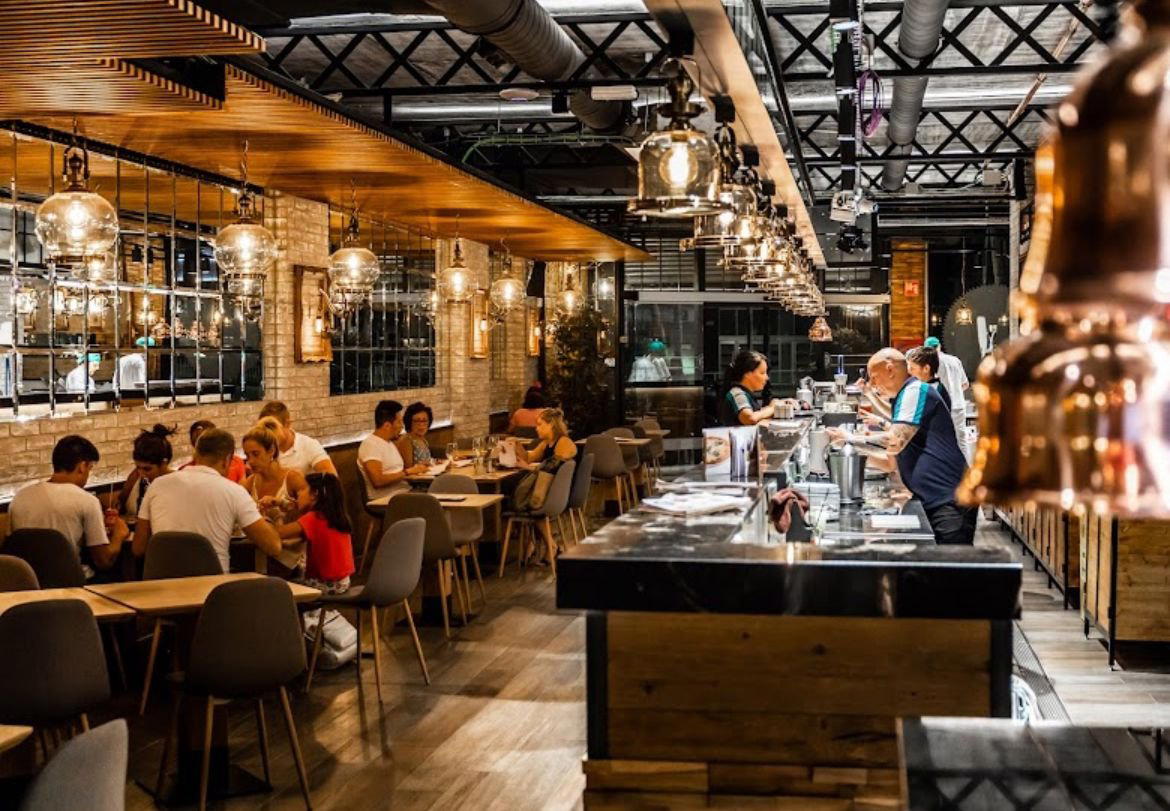
El Ñaño occupies a quietly considered address on Carrer de Lepant in the Eixample, a neighbourhood where the density of serious dining has been rising steadily for a decade. The restaurant operates within a Barcelona scene that has shifted from spectacle-driven tasting menus toward more grounded, collaborative service models. For visitors tracking that shift, it is a useful reference point on the city's mid-to-upper dining tier.

Pearl is the En Primeur Club membership app, where members save venues, book tables and use the concierge.
Carrer de Lepant and the Eixample's Changing Dining Register
Carrer de Lepant sits in the right-hand quadrant of the Eixample's grid, east of Passeig de Gràcia and a measured distance from the neighbourhood's most trafficked dining corridors. The street-level approach here is quieter than the main avenues, the building stock is standard Eixample residential, and the restaurants that have taken root along this stretch tend to operate without the institutional weight of the city's most decorated addresses. That relative quiet is precisely what makes the area worth attention: it is where Barcelona's dining scene deposits the restaurants that rely on food and service rather than location premium to build a following.
El Ñaño sits within that context at number 203. That is a different competitive environment from the one facing Disfrutar, ABaC, or Lasarte, whose reputations are inseparable from their award tallies and whose pricing reflects it. El Ñaño is operating in a register where the dining proposition has to be self-evident at the table.
The Service Architecture: When Team Coherence Defines the Experience
In Barcelona's upper-middle dining tier, the gap between a memorable meal and a merely competent one is almost always a service question rather than a cooking question. The city has enough skilled kitchens at this level that technical execution is a baseline expectation. What differentiates a room is whether the front-of-house and kitchen operate as an integrated unit, reading the table and adjusting rather than running a scripted sequence.
The editorial angle worth applying to El Ñaño, and to restaurants like it across the Eixample, is the team dynamic model: the degree to which the sommelier, floor staff, and kitchen communicate in a way the guest can actually feel. Barcelona has seen this approach refined most visibly at the leading end, where venues like Cocina Hermanos Torres and Enigma have made service choreography as deliberate as the cooking. The question for a restaurant at El Ñaño's address level is whether that same coherence carries through at a less theatrical scale, where the resources are smaller and the margin for inconsistency is narrower.
That kind of collaboration, when it works in a mid-tier room, tends to produce a specific atmosphere: unhurried without being inattentive, knowledgeable without performance. It is the dining register that Spain's broader restaurant culture has historically handled well, and that Barcelona has been working to preserve as the city's profile has attracted more internationally formatted concepts that prioritise spectacle over conversation.
Barcelona's Broader Scene: Where El Ñaño Sits in the Hierarchy
Barcelona's restaurant hierarchy is now several tiers deep. At the apex, venues like Disfrutar compete for placement on global lists alongside Spain's most discussed addresses elsewhere, including El Celler de Can Roca in Girona, Mugaritz in Errenteria, and Quique Dacosta in Dénia. Below that, a second tier of creative tasting-menu restaurants occupies the €€€€ bracket and draws destination diners. Then comes a third tier, larger and more variable, where neighbourhood restaurants serve a primarily local clientele with cooking that may be technically serious but does not carry international recognition.
El Ñaño's position in that structure, on the evidence of its Eixample address and the absence of major award listings, places it in the third tier by institutional measure. That is not a diminishment: Spain's third tier is where some of the country's most consistent everyday cooking happens, insulated from the pressures that come with critical exposure and high-volume tourism. Comparable dynamics play out across the country, from neighbourhood rooms near Arzak in San Sebastián to the undecorated addresses surrounding Martin Berasategui in Lasarte-Oria.
For the visiting diner, the practical implication is direct: El Ñaño is a Eixample local rather than a destination restaurant, which changes how you should approach the booking, the expectation, and the experience.
The Eixample as a Dining District
The Eixample's grid structure means that most of its restaurants are within a ten-minute walk of each other, which makes the district useful for multi-venue evenings and easier to assess as a dining ecosystem than a neighbourhood like Gràcia or Poblenou, where venues are more dispersed. The right-hand Eixample, where Carrer de Lepant runs, has historically been overshadowed by the prestige corridor around Passeig de Gràcia and the concentration of Michelin-starred addresses further west. That relative lower profile has kept rents more manageable, which in turn has allowed smaller, owner-operated restaurants to persist in a city where rising costs have thinned out that category elsewhere.
El Ñaño on Lepant is a product of that environment. Understanding the street and the district is as useful as understanding the restaurant itself, because the context determines the dining mode: this is a neighbourhood room, not a booking you plan a trip around, and that framing is not a criticism but a precise description of what makes it worth visiting on the right night.
Planning Your Visit
The information currently available for El Ñaño does not include confirmed hours, booking method, or pricing, so the practical guidance below is drawn from the Eixample neighbourhood context and peer-set norms rather than venue-specific data. Verify directly before visiting.
| Factor | El Ñaño (Eixample, Lepant) | Cocina Hermanos Torres | Disfrutar | Lasarte |
|---|---|---|---|---|
| Price tier | Not confirmed | €€€€ | €€€€ | €€€€ |
| Format | Not confirmed | Creative tasting menu | Progressive tasting menu | Progressive Spanish tasting menu |
| Award status | Not confirmed | 2 Michelin stars | 3 Michelin stars | 3 Michelin stars |
| Booking lead time | Not confirmed | Several weeks | Months in advance | Several weeks |
| Primary audience | Neighbourhood and local | Destination diners | Destination diners | Destination diners |
For broader Barcelona dining context, including the city's full range from neighbourhood rooms to destination tasting menus, see our full Barcelona restaurants guide. For reference points outside the city, the Spanish dining conversation also runs through Aponiente in El Puerto de Santa María, DiverXO in Madrid, Ricard Camarena in València, and Atrio in Cáceres. For international comparators in the neighbourhood-serious-dining category, Lazy Bear in San Francisco and Le Bernardin in New York City represent different ends of what committed, team-driven dining can look like outside Europe.
Frequently asked questions
What part of town is El Ñaño in?
El Ñaño is located at Carrer de Lepant, 203, Eixample, 08013 Barcelona, Spain, Barcelona.
What kind of dining experience does El Ñaño offer compared to other Eixample restaurants on Carrer de Lepant?
El Ñaño is positioned in the Eixample's eastern grid on Carrer de Lepant, 203, a street that sits outside the more heavily trafficked tourist corridor around Passeig de Gràcia. That address points toward a neighbourhood-oriented format rather than a destination-dining proposition. Barcelona's Eixample contains several dozen independent restaurants within a ten-minute walk of this location, so the competitive set is specific and worth researching before booking.
What dish is El Ñaño famous for?
The restaurant sits on Carrer de Lepant in the Eixample, a district where kitchens range from market-driven Catalan to broader Mediterranean formats. check the venue's official channels for current menu detail.
Can I walk in to El Ñaño?
Walk-in availability at El Ñaño has not been confirmed publicly. The restaurant is located at Carrer de Lepant, 203 in the Eixample, a dense dining corridor where covers fill quickly on weekday evenings and weekends. Booking ahead is the standard practice across this part of Barcelona.
What has El Ñaño built its reputation on?
El Ñaño operates in the Eixample's right-hand quadrant, east of Passeig de Gràcia, a stretch that has developed a steady neighbourhood dining identity distinct from the more tourist-facing blocks closer to the city's central axes. Its position on Carrer de Lepant places it among a cluster of restaurants that draw a largely local clientele.
Can El Ñaño adjust for dietary needs?
For guests with specific requirements, contacting the restaurant at Carrer de Lepant, 203 in Barcelona's Eixample before visiting is the reliable approach, as this is standard practice across the neighbourhood's mid-tier dining tier.
Is a meal at El Ñaño worth the investment?
Pricing for El Ñaño has not been publicly confirmed, so a direct cost-value assessment isn't possible here. What is established is its location on Carrer de Lepant in the Eixample, a district where the mid-range covers sit roughly between €25 and €55 per person across comparable neighbourhood restaurants.
Comparable Venues
Comparable venues nearby, for context on price, style, and recognition.
| Venue | Cuisine | Price | Notes |
|---|---|---|---|
| El ÑañoThis venue (the venue you are viewing) | Authentic Ecuadorian | $20–30 | Not listed |
| Gallo Santo | Vegan Mexican | $20–30 | la Sagrada Familia |
| Tapes La Bona Sort | Modern Catalan Tapas | $20–30 | Sant Pere, Santa Caterina i la Ribera |
| Mazah Restaurant | Authentic Lebanese | $30–50 | la Dreta de l'Eixample |