
Eiraku puts Tokyo’s gyoza culture in a small Kitakoiwa setting rather than a central-city dining room. Its Tabelog 100 Dumplings 2024 selection, 12-seat scale, sauce-less gyoza identity, ramen and Chinese categories, and modest JPY 1,000–1,999 budget place it in the everyday-specialist tier: low ceremony, high specificity, and little room for hesitation at busy times.
Pearl is the En Primeur Club membership app — saves, bookings, and concierge access live there. Same editors, same standards.
- Address
- 東京都江戸川区北小岩5-16-2
- Phone
- +81336577527
- Website
- tabelog.com
 Saves & bookings on Pearl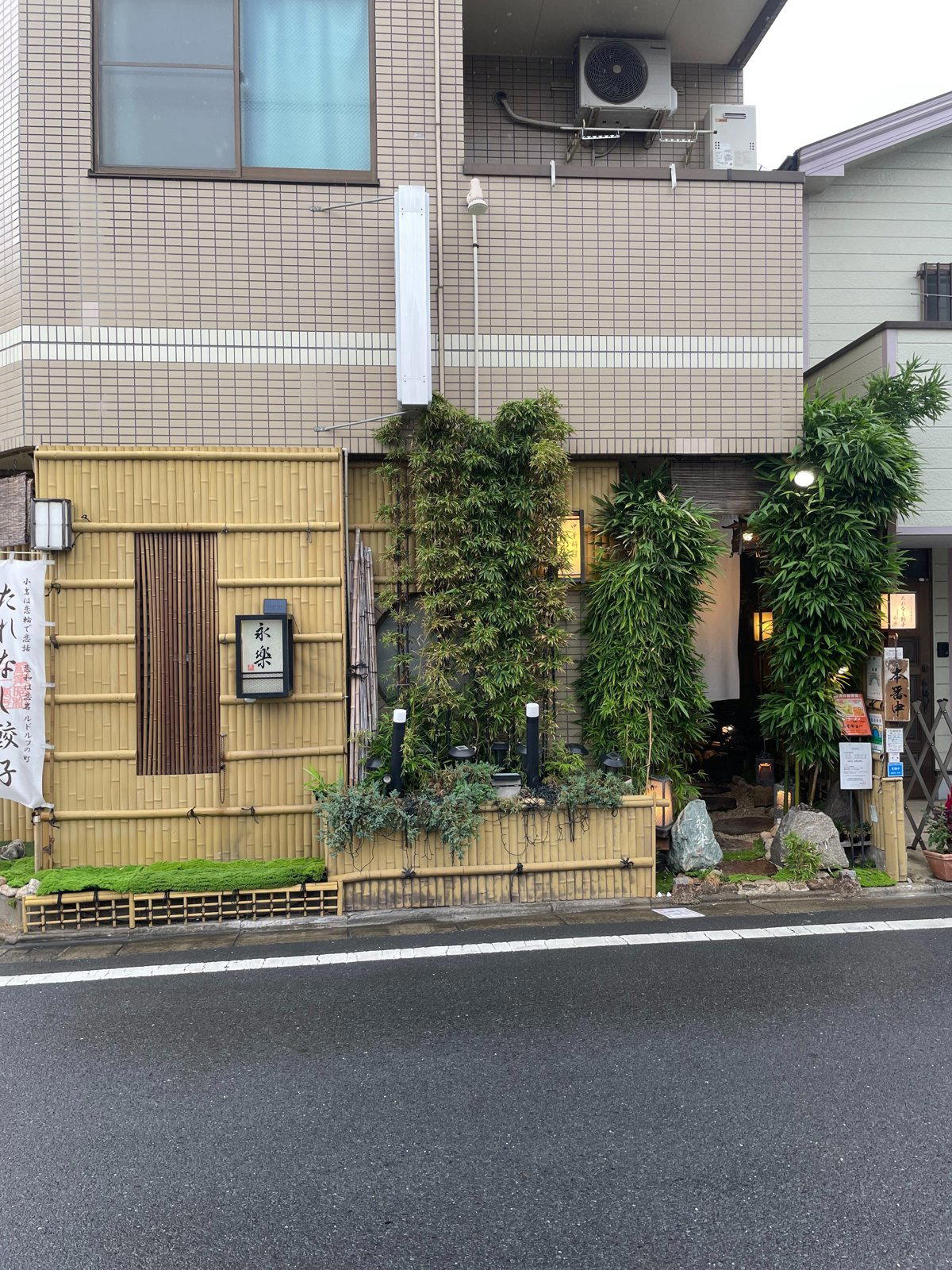
Kitakoiwa does not perform Tokyo dining in glossy, central-city style. It is residential, close-grained and practical: narrow streets, local stations, small rooms, and restaurants that earn repeat custom through habit rather than theatre. Here, Eiraku fits a Tokyo tradition serious diners know: the specialist neighborhood shop built around one clear anchor, then widened by ramen and Chinese-style staples.
Tokyo gyoza culture sits between snack, side dish and full meal. At one end are quick counters attached to ramen shops; at another, old-school Chinese-Japanese kitchens where dumplings share the table with noodles, rice and drinks. The appeal is sequencing, not spectacle: a good gyoza meal moves from the first hot plate to soup, noodles or rice, then back to another bite if the table orders with intent. Eiraku’s public identity around “tare-nashi gyoza,” or sauce-less gyoza, sharpens that sequence: the dumpling is not a blank vehicle for vinegar, soy and chili oil, but the central proposition.
Sauce-less gyoza and the Tokyo neighborhood meal arc
The sauce-less format changes how the table reads the first course. In a city where gyoza often arrives with a small dish of tare assembled by the diner, removing that ritual returns attention to filling, wrapper and seasoning. The claim is control, not luxury. That puts Eiraku closer to Tokyo’s compact specialist dining culture than to its premium tasting-menu economy, even though the meal has its own progression.
The arc is simple without being careless. Dumplings set the rhythm, ramen gives the meal weight, and Chinese-restaurant staples let the table stretch beyond one plate. It is a different tasting progression from omakase or kaiseki, but still ordered: start with the house focus, decide whether noodles or rice should carry the middle, and use drinks such as sake or shochu as support rather than ceremony. The dumpling, ramen and Chinese category listing signals a hybrid form familiar across Tokyo’s eastern wards, where everyday meals and specialist reputations overlap.
Tabelog’s Dumplings “Tabelog 100” 2024 selection gives the room a public credential in a crowded genre. That matters because gyoza is not scarce in Tokyo; countless places sell it cheaply. A dumpling-specific selection separates Eiraku from general-purpose neighborhood restaurants, while its price band keeps it in Tokyo’s low-cost, high-turnover dining rather than the destination-counter economy. The value is focus, not grand service language.
Why Kitakoiwa changes the decision
Location shapes expectation. Kitakoiwa, in Edogawa, asks for a different mindset from Ginza, Ebisu or Aoyama. The reward is not a polished dining district but a local circuit where small restaurants keep narrow specialties alive. For travelers who only eat near hotels, this side of Tokyo can feel inefficient; for diners who read the city by rail lines and residential neighborhoods, that is the point. The meal becomes less about checking off a famous room and more about seeing how one dish category works outside the international restaurant corridor.
The comparison set reinforces that reading. Sansar Koiwa ten sits in Tokyo in a similar JPY 1,000–1,999 band, while Takagiya Roho is cheaper. Tsuke Soba Ishii and Enak Enak show how affordable specialist cooking outside the metro can run on comparable budgets, and Open Oven sits below that range. Against those peers, Eiraku’s distinction is not price escalation, but recognition within a named dumpling category and a defined house style. That makes the detour rational for diners already interested in Tokyo’s casual specialist rooms.
Scale also affects the experience. A 12-seat restaurant leaves little margin for lingering or indecision, and small Tokyo rooms often impose tempo even without formal tasting-menu rules. Arrive ready to order, assume the signature category leads, and treat the rest as support. This is not for a long, wandering dinner built around indecision. It is for understanding how a focused dumpling shop can carry a meal at everyday prices.
How to place it in a Tokyo eating itinerary
Eiraku works as a counterpoint to central Tokyo’s polished restaurant itineraries. A day of shopping or museums in the core can end here if the diner is comfortable leaving the usual orbit; a more natural fit is an east-side eating day, where rail travel and neighborhood pacing are part of the plan. The nearest station is Keisei Koiwa, and the restaurant sits about 535 meters from it, so the commitment is manageable but intentional.
For broader planning, use Our full Tokyo restaurants guide to balance neighborhood specialists with central dining rooms. Tokyo itineraries work better when grouped by geography rather than hype: Akihabara choices such as . 鮪と炭火焼き うお炭 秋葉原店, Shinjuku stops like 12/10 Shinjuku ten, Kagurazaka skewers at 124. KAGURAZAKA (Yakitori), graphic café culture at 2D Cafe, and curry-focused dining at 3 Chome no Curry Ya San all belong to different versions of the city. A Kitakoiwa gyoza stop refuses to collapse Tokyo dining into a single luxury narrative.
Travelers building a wider Japan route can compare how modest specialist formats shift by city: -Grilled beef Sukiyaki- KAMAKURA TANUKIAN 鎌倉 たぬき庵 in Kamakura.cafe in Osaka.know in Kumamoto, (Shoku) Vietnam in Kawasaki, [Curry Senmon Ten] Maruyama Kyoju. in Sapporo, and [ki:] in Kyoto each frame everyday dining through a different local lens. For Tokyo beyond restaurants, the companion guides to Tokyo hotels, Tokyo bars, Tokyo wineries, and Tokyo experiences keep the city from becoming disconnected meals.
The editorial call is clear: Eiraku is for diners who care about gyoza as a category, not travelers seeking a grand night out. Its case rests on a narrow format, a small room, a recognized dumpling-list credential, and a low-stakes price point. Read it as a short, focused Tokyo meal with a defined opening act, not an all-evening production. For a broader international comparison in casual Japanese formats, Jōdo Saké Bar in Los Angeles and Onigiri Time in Pasadena show how Japanese drinking and snack traditions translate abroad; Kitakoiwa shows the local version with fewer layers of explanation.
Price and Positioning
Nearby venues at a similar price tier for orientation.
| Venue | Cuisine | Price | Notes |
|---|---|---|---|
| EirakuThis venue — the venue you are viewing | Edogawa, Chinese Dumplings | $$ | Not listed |
| Kameido Gyoza Honten | Not listed | $ | Kōtō, Old-school fried gyoza specialty shop |
| Chinese Sai ARATA | Not listed | $$$ | Chūō, Modern Sichuan Chinese with Japanese wine pairings |
| Tokyo Doujiang Seikatsu | Not listed | $ | Shinagawa, Traditional Taiwanese Breakfast & Fresh Soy Milk |
| Ryumon | Ōta, Gyoza-focused Chinese dumpling shop | $ | Not listed |
| Nanxiang Steamed Bun Restaurant (南翔饅頭店) | Roppongi, Shanghai Xiaolongbao | $$ | Not listed |
Recognition history
Dated appearances from independent guides and award organizations, with the underlying list record or original source where available.
Tabelog 100 #87 · No. 87
Tabelog · Tabelog 100 - Dumplings - 2024








At a Glance
- Classic
- Cozy
- Quiet
- Family
- Casual Hangout
- Solo
- Group Dining
- Standalone
- Garden
- Sake Program
- Beer Program
- Garden
- Street Scene
A small, residential neighborhood restaurant with a relaxed, traditional feel; guest descriptions emphasize a nostalgic, classic Chinese-diner atmosphere and a hidden-gem quality.