Qazvin's Street-Level Dining and What It Tells You About the City Ayatollah Taleghani Street runs through a Qazvin that most international visitors overlook entirely. The city sits roughly 150 kilometres northwest of Tehran on the old Silk Road...
 Discover on Pearl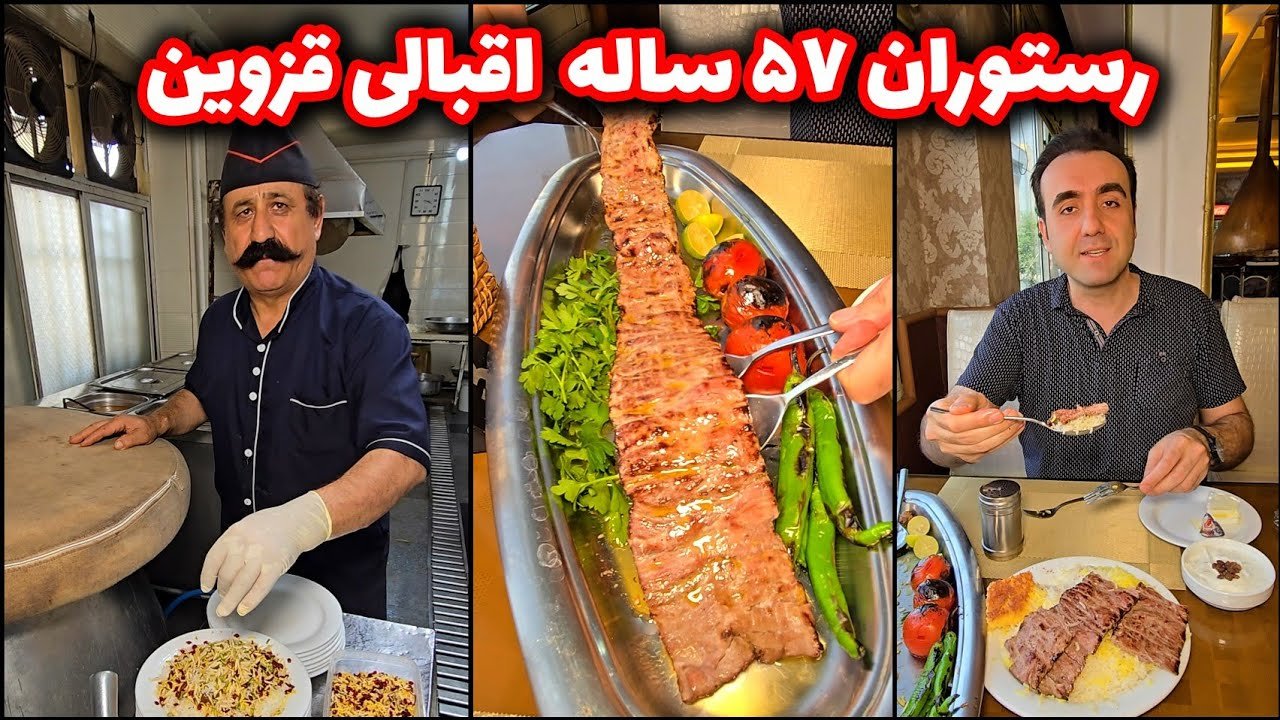
Qazvin's Street-Level Dining and What It Tells You About the City
Ayatollah Taleghani Street runs through a Qazvin that most international visitors overlook entirely. The city sits roughly 150 kilometres northwest of Tehran on the old Silk Road corridor, and its food culture reflects that position: a junction of northwestern Iranian ingredients, Central Plateau cooking techniques, and the kind of long-standing neighbourhood restaurant that earns its reputation over years rather than press cycles. Eghbali Restaurant (رستوران اقبالی) occupies a spot on this street that places it squarely within the fabric of everyday Qazvini dining rather than the tourist circuit.
Qazvin has historically been one of Iran's more underappreciated food cities. While Isfahan and Shiraz draw visitors toward their heritage restaurant complexes, and Tehran dominates conversation about contemporary Iranian dining, Qazvin operates on a different register: deeply local, ingredient-driven in the sense that what arrives on the table reflects what the province actually produces rather than what a menu designer has curated for effect. The agricultural land around Qazvin Province supplies the Tehran metropolitan region with a significant share of its walnuts, grapes, and seasonal vegetables, which means local tables here tend to see produce at a closer remove from the source than restaurants in the capital.
The shortlist, unlocked.
Hard-to-book tables, cellar releases, and concierge-planned trips.
Get Exclusive Access →The Ingredient Geography Behind Qazvini Tables
Understanding what makes the Qazvin Province significant in Iranian food terms requires looking at its geography before its kitchens. The Alborz foothills to the north of the city yield herbs, wild greens, and game that move into local cooking in ways that are less formalised than in the heavily tourism-influenced restaurant scenes of cities like Shiraz or Isfahan. Saffron, the defining spice of Iranian cuisine at a national level, is less central here than the walnut, dried fruits, and the tangy-sour combinations that define northwestern Iranian palates.
Neighbourhood restaurants along Taleghani Street occupy an important tier in the local food system: not the formal sit-down establishments oriented toward ceremonial occasions, and not the fast-casual kebab-and-bread counters that line every Iranian high street, but the middle ground where rice dishes, stews, and grilled meats appear in formats built for regular local custom rather than first-time visitors. This is the category in which Eghbali Restaurant operates. That positioning matters because it shapes ingredient decisions: sourcing tends to be local and seasonal by default rather than by philosophy, and the menu reflects what is available from nearby suppliers rather than what signals sophistication to an outside audience.
Comparing the Qazvin Restaurant Scene to Peer Cities
Iran's mid-sized historic cities each have a distinct restaurant character. In Isfahan, places like Shahrzad Restaurant (رستوران شهرزاد) have built reputations serving the city's classical Persian dishes to a mixed local and heritage-tourism audience. In Shiraz, complexes such as Soofi Restaurant Complex (مجموعه رستوران های صوفی) operate at a larger, more formally staged scale. In Yazd, the approach at places like Caesar Italian Restaurant (رستوران ایتالیایی سزار) reflects that city's particular tourist-destination status. Qazvin's dining scene is less formatted for visitors, which means neighbourhood restaurants here serve a primarily local constituency and calibrate accordingly: portion sizes, pricing, and ingredient choices reflect what a returning Qazvini customer expects, not what an itinerant traveller finds reassuring.
Farther afield in Iran's food geography, coastal restaurants like Khorsand Seafood in Bandar Abbas and island-based spots such as Jijian Classic Kabab in Qeshm are shaped almost entirely by maritime proximity. The contrast with landlocked Qazvin Province is a useful one: where coastal dining turns on the day's catch and Persian Gulf spice influence, interior Iranian cooking like what Qazvin produces leans on preserved and dried elements, slow-cooked proteins, and a souring palette built from pomegranate molasses, dried limes, and verjuice. For more context on how these regional registers compare across Iran, the full قزوین restaurants guide maps the scene in more detail.
What to Expect on Taleghani Street
Arriving on Ayatollah Taleghani Street in Qazvin, the physical cues are familiar to anyone who has spent time in Iranian provincial cities: street-level shopfronts, a mix of commercial and residential, and restaurants that signal their presence through handwritten menus in Persian rather than bilingual signage. Eghbali's address within this corridor places it in the kind of setting where the lunch service is shaped by the neighbourhood's working rhythm and the evening trade follows local family patterns rather than tourist timelines.
The lack of a formal English-language web presence or published booking system is, again, characteristic of this tier of Iranian provincial dining rather than a specific limitation. Reservations at this level typically happen by phone or in person, and capacity is generally sized for neighbourhood scale. Visitors arriving without a Persian-speaking companion should factor that into logistics: ordering, understanding availability, and confirming opening hours all work more smoothly with some language coverage. For the independently minded traveller, this is a practical consideration rather than a deterrent, and it is part of what keeps this kind of restaurant operating primarily for its local constituency.
Comparisons with other well-documented Iranian provincial restaurants are useful anchors. Polo Restaurant (رستوران پلو) in زنجان and Bozorgi Restaurant in قم both operate in a similar register: mid-sized cities with strong local food identities and restaurants oriented toward repeat local custom. Shahabbasi Restaurant in ميبد and Laneh Tavoos Restaurant (رستوران لانه طاووس) in Marv Dasht extend that pattern into smaller towns. The through-line is a kind of provincial Iranian restaurant that international food media rarely covers in depth but that represents the actual daily dining infrastructure of a country whose culinary heritage extends well beyond its headline dishes.
For comparison with Iranian restaurants operating at a more formal or heritage-inflected scale, Pasargad Restaurant (رستوران پاسارگاد) in مرو دشت and رستوران خان سالار Khan Salar Restourant in Rain provide useful reference points from within the same regional zone of western-central Iran.
Planning a Visit
Qazvin is approximately two hours from Tehran by road or intercity bus, making it viable as a day trip from the capital or as an overnight stop on a route toward Zanjan or Tabriz. The city's compact historic core means that Taleghani Street is accessible from the main visitor areas on foot or by short taxi. As with most neighbourhood restaurants in Iranian provincial cities, arriving at conventional meal times (lunch from around noon, dinner from early evening) is the practical approach given the absence of published booking infrastructure. A Persian-speaking contact or a local guide significantly improves the logistics for non-Persian speakers. For context on the broader dining scene in the city, the قزوین restaurants guide covers the range from street-level options to more formal settings.
Frequently Asked Questions
- Is Eghbali Restaurant (رستوران اقبالی) suitable for children?
- Neighbourhood restaurants of this type in Qazvin typically serve Iranian family groups as a core audience, so children are generally part of the expected clientele rather than an exception.
- What is the atmosphere like at Eghbali Restaurant (رستوران اقبالی)?
- Qazvin's neighbourhood restaurant scene runs on local custom rather than tourism, and Eghbali's setting on Taleghani Street reflects that: the atmosphere is functional and familiar for regulars, without the staged heritage decor that some Iranian cities deploy for visitor audiences. No formal awards or published ratings are on record for this venue.
- What dish is Eghbali Restaurant (رستوران اقبالی) famous for?
- No specific signature dish is documented in the public record for this venue. Given Qazvin Province's ingredient profile, rice dishes, slow-cooked stews (khoresh), and grilled kebab formats are the structural pillars of provincial Iranian restaurant menus in this tier. Order from what the kitchen confirms is available on the day.
- Do they take walk-ins at Eghbali Restaurant (رستوران اقبالی)?
- Walk-in is the standard operating model for neighbourhood restaurants of this type in Qazvin. There is no published online reservation system on record, which is consistent with how this tier of Iranian provincial dining works across cities like Qazvin, Zanjan, and Qom.
- How does Eghbali Restaurant fit into Qazvin's broader food geography as a travel destination?
- Qazvin sits at the edge of a historically productive agricultural zone that supplies much of Tehran's fresh produce, and its restaurants reflect that proximity to the source. Eghbali Restaurant on Taleghani Street operates within the city's everyday dining infrastructure rather than its heritage-tourism layer, which positions it alongside similar neighbourhood establishments covered in resources like Polo Restaurant in Zanjan and the broader provincial Iranian dining scene. For travellers moving through northwest Iran, Qazvin's neighbourhood restaurants represent a less mediated encounter with the region's food culture than the more visitor-oriented venues in Isfahan or Shiraz. The قزوین restaurants guide provides additional context for planning.
How It Stacks Up
These are the closest comparables we have in our database for quick context.
Need a table?
Our members enjoy priority alerts and concierge-led booking support for the world's most difficult tables.
Get Exclusive AccessThe shortlist, unlocked.
Hard-to-book tables, cellar releases, and concierge-planned trips.
Get Exclusive Access →