Khorsand Seafood
On the Khwaجه Ata Boulevard in Bandar Abbas, Khorsand Seafood draws from one of the Persian Gulf's most productive coastlines, placing it inside a city whose relationship with fish and shellfish runs deeper than any menu can summarize. For visitors approaching southern Iran's seafood tradition seriously, this address on the Hormozgan waterfront circuit represents a practical first reference point alongside peers like Mr Fish in the same city.
 Discover on Pearl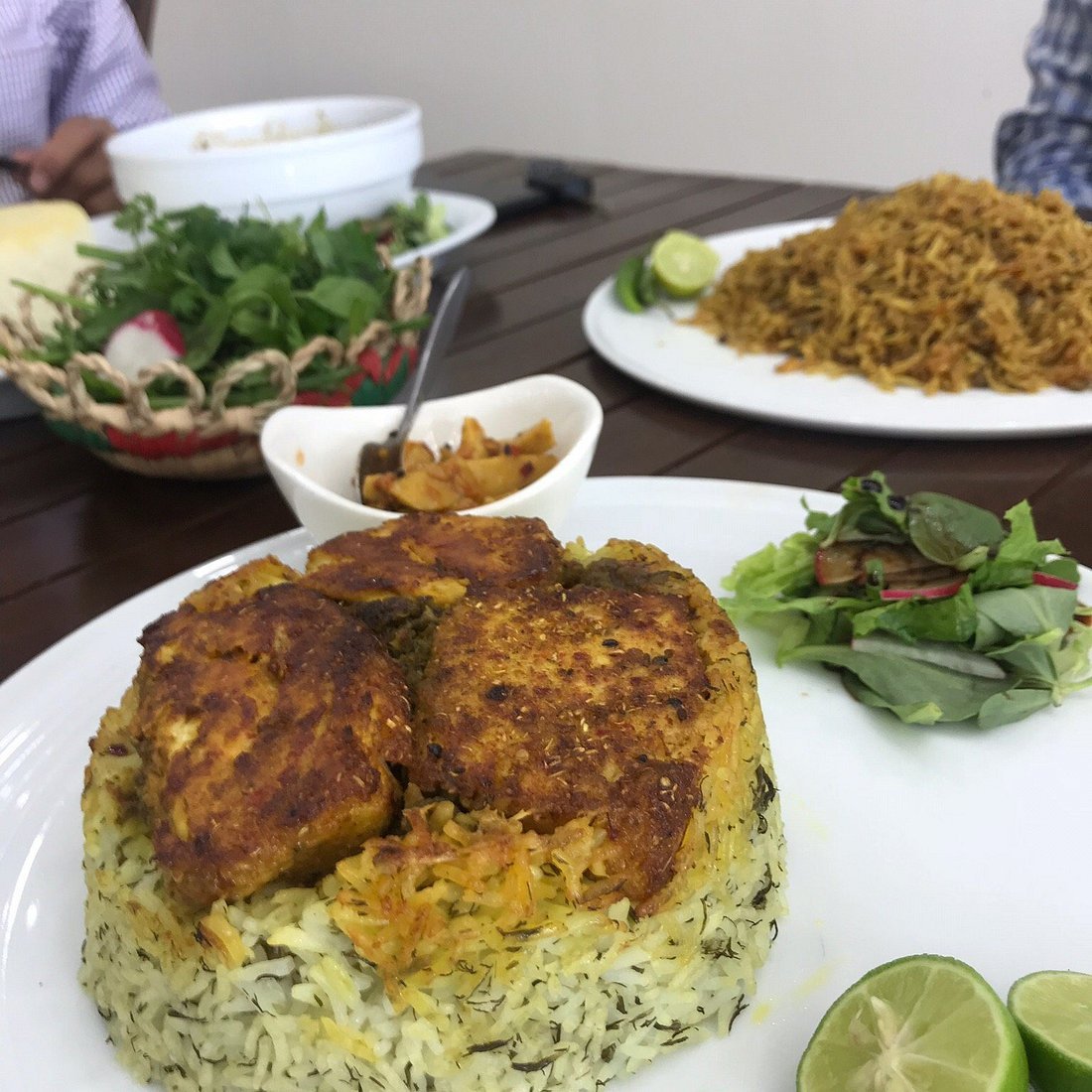
Where the Persian Gulf Arrives on the Plate
Bandar Abbas sits at the narrowest point of the Strait of Hormuz, the channel through which roughly a fifth of the world's traded oil passes and, less documented but no less significant, a corridor for some of the most varied marine life in the northern Indian Ocean system. The city's restaurant scene is shaped less by culinary fashion and more by proximity: fishing boats unload on the same waterfront that feeds the kitchens, and the distance between catch and counter is measured in hours rather than days. Khorsand Seafood, addressed on Khwaجه Ata Boulevard in the Hormozgan provincial capital, operates within that supply geography. The source is the story here, as it is across the better seafood addresses in the city.
This matters because Persian Gulf seafood carries a distinct profile from the Atlantic or Mediterranean catches that dominate Western culinary writing. Hammour (grouper), shrimp from the shallow coastal flats, kingfish, and snapper varieties specific to warm, high-salinity Gulf waters define the local repertoire. Preparations in the Bandar Abbas tradition tend toward spicing that reflects the city's position as a historic trading port: turmeric, dried limes, fenugreek, and tamarind appear alongside fish in ways that connect this cooking to both Iranian highland cuisine and the broader Gulf-Indian Ocean culinary corridor that centuries of trade built. A restaurant on this boulevard is not operating in isolation; it is part of a port city's long argument about what to do with the sea.
The shortlist, unlocked.
Hard-to-book tables, cellar releases, and concierge-planned trips.
Get Exclusive Access →Approaching Khorsand: The Boulevard and Its Context
Khwaجه Ata Boulevard runs through a district that feels, in the way of many Iranian port cities, simultaneously workaday and atmospheric. The air carries salt and diesel in roughly equal measure. Fishing operations, wholesale fish markets, and restaurants share the same urban fabric, which means arriving at a seafood address here is less a destination event and more a continuation of the waterfront's general activity. That lack of theatrical separation between supply chain and dining room is, in fact, part of what makes the southern Iranian seafood experience different from resort-coast seafood restaurants that perform proximity to the sea without actually having it.
For travelers coming from Tehran or Isfahan, where the seafood offer is necessarily import-dependent, the contrast on arrival in Bandar Abbas is immediate. Restaurants in this city work with a freshness baseline that inland venues cannot match regardless of logistics. Mr Fish (آقای ماهی) in بندرعباس operates in the same city and the same supply environment, giving visitors a useful peer comparison when mapping the local offer. The two addresses together sketch the range available on this waterfront.
The Ingredient Case: Why Hormozgan Province Changes the Equation
Hormozgan Province's coastline extends for more than 1,500 kilometers, encompassing islands, estuaries, and open-water zones that support a diversity of species uncommon in more heavily fished seas. The shallow Gulf shelf warms to temperatures that accelerate the growth of crustaceans; the shrimp fishery here has historically been one of the most productive in the region. For a restaurant operating on this supply, the ingredient advantage is structural rather than aspirational. It does not require a premium procurement budget or a relationship with an artisan supplier; the geography does the work.
This is the frame through which Khorsand Seafood, like its peers on the Bandar Abbas waterfront, should be read. The editorial question for any serious seafood address in this city is not whether the sourcing is good but how the kitchen responds to what the boats bring in. Southern Iranian cooking has its own answer to that question, one that involves more aggressive spicing than the minimalist preparations that define high-end Japanese or Scandinavian seafood traditions. The result is not a lesser version of those approaches; it is a different argument entirely about what fish is for. Compared with, say, the restrained technique orientation of Le Bernardin in New York City, the Bandar Abbas kitchen tradition treats the catch as a vehicle for a broader flavor architecture rather than an end in itself. Neither position is wrong; they reflect different culinary inheritances.
For context on how Iranian restaurants across the country handle regional ingredients and traditional cooking frameworks, Baastan Restaurant | رستوران سنتی باستان in Isfahan and Koohpayeh Restaurant (رستوران کوهپایه) in تهران represent the inland traditional register, where the absence of Gulf fish makes the Bandar Abbas offer feel even more specific by contrast.
The Bandar Abbas Seafood Scene: Peer Set and Positioning
Iran's seafood restaurant culture concentrates most visibly in the port cities of the south and along the Caspian coast in the north, with Bandar Abbas holding the southern anchor position. The city does not have the tourist infrastructure of Qeshm Island — where Croll (سی رول) in قشم and Jijian Classic Kabab in Qeshm serve a more visitor-oriented market — but it has something those island addresses lack: a functioning commercial port whose daily catch feeds a local population with high standards for what fish should taste like. Locals are the primary audience, and local expectations are exacting.
Within that frame, Khorsand Seafood occupies the kind of position that neighborhood-specific seafood houses hold in port cities worldwide: known to residents, less visible to passing travelers, and reliant on repeat custom from people who would immediately notice a drop in quality. This is a different competitive context from the more visible addresses that court the tourist trade. It is also, in most port cities, where the more reliable cooking tends to sit.
Travelers exploring wider Iranian dining, from the kebab traditions of Jijian Classic Kabab in Qeshm to the northern Iranian and Persian classics at addresses like Laneh Tavoos Restaurant (رستوران لانه طاووس) in Marv Dasht or Anar Caravanserai | کاروانسرای انار in Anar, will find Khorsand Seafood a useful geographic and culinary counterpoint: this is where the Iranian table meets the sea most directly.
Planning Your Visit
Bandar Abbas is served by Bandar Abbas International Airport, with connections to Tehran and other major Iranian cities. The city functions on a schedule shaped by the heat; midday temperatures in summer months frequently exceed 40°C, and the local rhythm of eating shifts accordingly toward later evenings. The address on Khwaجه Ata Boulevard is accessible by taxi from the city center. No booking contact details are currently available in public records for Khorsand Seafood, and visitors should plan for walk-in arrangements, which are standard practice across most mid-range seafood addresses in the city. For a broader orientation to eating in Bandar Abbas, our full Bandar Abbas restaurants guide maps the full offer across price points and cuisine types.
Frequently Asked Questions
- Does Khorsand Seafood work for a family meal?
- Bandar Abbas seafood restaurants at this address level are generally family-oriented by default; the city's dining culture runs multigenerational, and a mid-range waterfront seafood house is a standard format for family gatherings in southern Iran.
- What should I expect atmosphere-wise at Khorsand Seafood?
- If you are arriving from a larger Iranian city or from a context where seafood restaurants operate as destination venues, expect something more functional and port-adjacent. Bandar Abbas restaurants in this category tend toward direct room formats where the priority is the catch rather than the setting; the atmosphere is generated by the activity of a working port city rather than by designed hospitality cues. No awards data exists to suggest a premium service tier.
- What should I eat at Khorsand Seafood?
- Order from whatever is being positioned as the day's fish. In a port city with direct access to the Gulf, the daily catch principle applies more literally here than in most restaurant contexts. The Gulf hammour (grouper), local shrimp, and kingfish preparations that define southern Iranian coastal cooking are the reference points for this cuisine; ask what came in that morning and build from there.
- How hard is it to get a table at Khorsand Seafood?
- No booking infrastructure or awards profile currently signals a reservation bottleneck. If the city's general dining pattern applies, walk-in access at most hours is likely, with the possible exception of Friday lunchtimes, when family dining peaks across Iranian restaurants at every price point.
- What is the defining dish or idea at Khorsand Seafood?
- The defining idea across Bandar Abbas seafood cooking, and the frame within which any address here should be read, is the spiced Gulf fish preparation: fresh catch from the Strait of Hormuz treated with turmeric, tamarind, and dried lime in a way that reflects the city's centuries-long position as a trading port connecting Persian, Arab, and South Asian culinary traditions. No specific signature dish data is available for this venue, but that broader tradition is the reference point.
- Is Khorsand Seafood a good option for travelers who want to understand southern Iranian coastal cooking specifically?
- For anyone mapping the regional cooking of Hormozgan Province rather than simply eating a meal, a waterfront address like this one in Bandar Abbas provides more direct access to the Gulf seafood tradition than restaurants in Tehran or Isfahan can offer regardless of their quality. The city's supply chain, the spice vocabulary of the local kitchen, and the port-city eating culture are all present here in a way that more prominent or internationally recognized Iranian restaurants simply cannot replicate from an inland position.
For other points of reference across Iran's diverse regional dining scene, see Hot stone fish at Good fish restaurant in تبریز for the northern fish tradition, Eghbali Restaurant (رستوران اقبالی) in قزوین and Bozorgi Restaurant in قم for central Iranian cooking, and Viunj Restaurant in اصفهان for the Isfahan register. Further afield, Atomix in New York City illustrates how a different port-adjacent culinary tradition, Korean, handles the question of ingredient sourcing and precision at the opposite end of the formality spectrum.
How It Stacks Up
These are the closest comparables we have in our database for quick context.
Need a table?
Our members enjoy priority alerts and concierge-led booking support for the world's most difficult tables.
Get Exclusive AccessThe shortlist, unlocked.
Hard-to-book tables, cellar releases, and concierge-planned trips.
Get Exclusive Access →