Laneh Tavoos Restaurant (رستوران لانه طاووس)
Laneh Tavoos sits in Marv Dasht, the Fārs Province town whose agricultural plains have supplied Persian kitchens for centuries. The name translates loosely as 'Peacock's Nest,' signalling the decorative ambition that defines many traditional Fars dining rooms. For visitors arriving from Persepolis, it represents the most immediate option for a meal rooted in the region's own produce.
 Discover on Pearl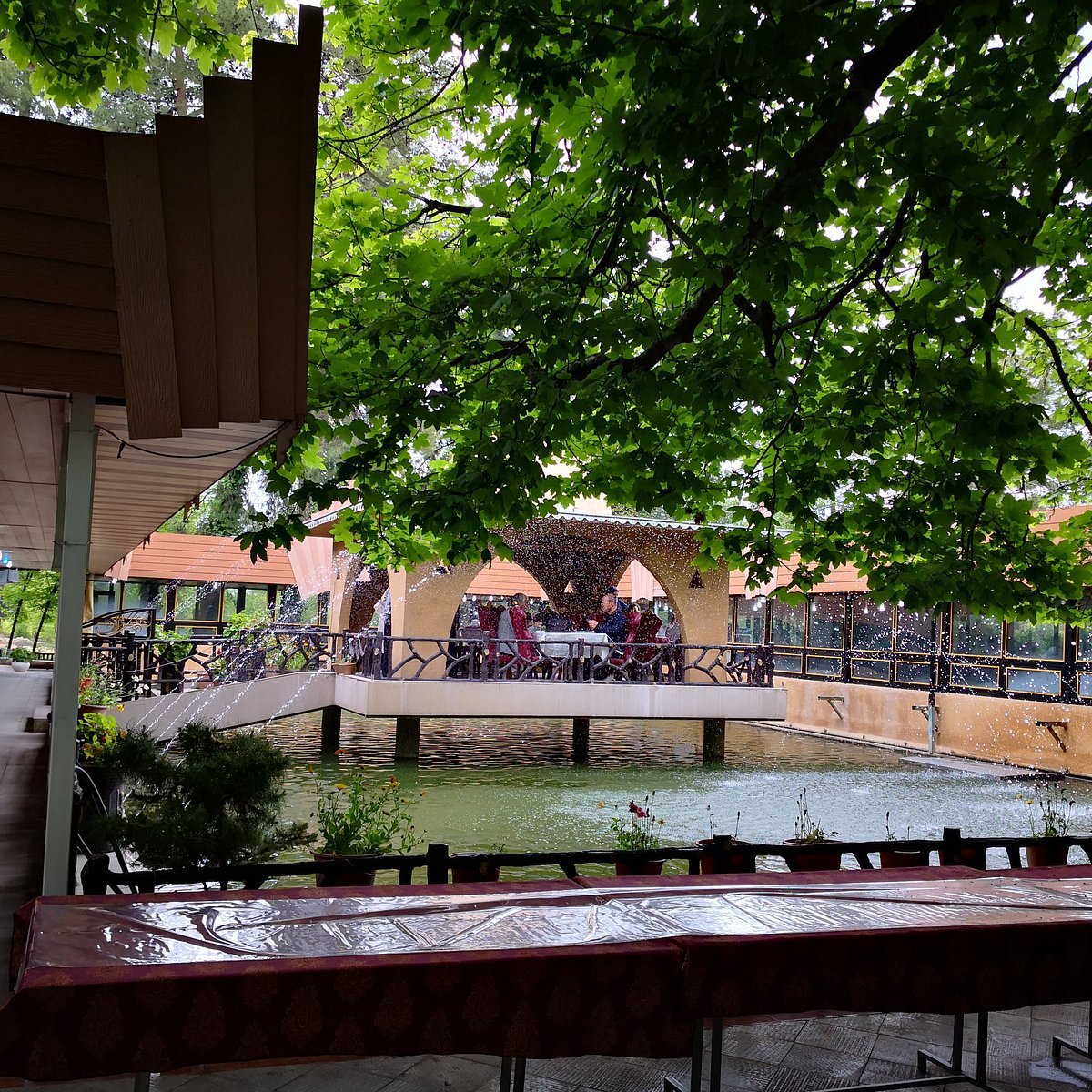
Where the Plains of Fārs Meet the Table
Marv Dasht occupies a stretch of flatland in Fārs Province that has been under cultivation since the Achaemenid period. The Kor River runs through this basin, feeding fields of wheat, herbs, and legumes that have supplied southern Persian cooking for millennia. Restaurants in this part of Iran don't need to import their identity from Tehran or Shiraz — the sourcing story is already embedded in the soil. Laneh Tavoos Restaurant (رستوران لانه طاووس) sits within that supply chain, drawing on a regional larder that most visitors to Persepolis pass through without registering.
The name itself frames expectations. 'Laneh Tavoos' — Peacock's Nest , signals a certain decorative register that recurs across traditional Persian dining rooms in Fārs: tiled surfaces, high ceilings, and the kind of visual density that turns a meal into an occasion. This is the aesthetic tradition of caravanserai hospitality adapted for a modern town, and it places the restaurant in the same broad category as the Anar Caravanserai | کاروانسرای انار in Anar, where historical setting does meaningful work in shaping the dining atmosphere.
The shortlist, unlocked.
Hard-to-book tables, cellar releases, and concierge-planned trips.
Get Exclusive Access →The Ingredient Logic of Southern Fārs
Persian cuisine in Fārs Province operates on a different seasonal rhythm than the capital. Herb-forward stews here , ghormeh sabzi, khoresh-e-fesenjān, and their regional variants , draw on produce that in many cases travels no more than an hour from field to kitchen. Dried limes (limoo omani), saffron from nearby Khorasan trade routes, and lamb raised on the province's scrubland pastures represent the core sourcing triangle for any serious kitchen in this corridor. That sourcing geography shapes flavour in ways that are measurable: the saffron-to-rice ratio in a properly made khoresh in Fārs tends to be higher than in northern Iranian interpretations, and the lamb carries less fat than breeds common to the Caspian shore.
For a town of Marv Dasht's size, the presence of a named restaurant with clear decorative ambition suggests an operation that serves both locals and the steady stream of visitors heading to Persepolis , one of Iran's most-visited archaeological sites, located just a few kilometres away. That dual audience shapes what a kitchen in this position needs to offer: dishes recognisable to domestic travellers from Shiraz and Tehran, prepared with enough local specificity to justify the detour. Compare that positioning to Koohpayeh Restaurant (رستوران کوهپایه) in Tehran, which operates in a metropolitan context where the regional sourcing story must be more deliberately constructed rather than assumed from geography.
Reading the Menu Through a Regional Lens
Without confirmed menu data, the safest analytical frame is the regional one. Fārs Province kitchens at this price tier , mid-range traditional restaurants in smaller Iranian cities , typically anchor their offering in kabab variations, rice dishes (polo and chelo with regional herb combinations), and one or two slower-cooked stews that represent the kitchen's depth. Ash-e-reshteh, the thick herb and noodle soup, appears frequently in this corridor as both a starter and a standalone lunch dish. Bread, almost always fresh-baked flatbread rather than packaged industrial alternatives, functions as an indicator of kitchen seriousness.
The ingredient sourcing angle matters here precisely because Marv Dasht's agricultural identity is not incidental. This is not a city that imports its culinary character from elsewhere. The question for any visitor is how completely the kitchen makes use of what the surrounding plains provide. For comparison, consider how Baastan Restaurant | رستوران سنتی باستان in Isfahan situates itself within that city's established culinary tradition , the sourcing and stylistic logic are different by province, and that difference is the substance of the experience.
Marv Dasht in the Context of Fārs Dining
Shiraz, the provincial capital roughly 50 kilometres to the south, carries the majority of Fārs Province's restaurant reputation. The city has a developed dining scene, a tourist infrastructure built around its gardens and poets, and a range of price tiers from street-level to formal. Marv Dasht operates in a quieter register, serving as a functional stop rather than a destination in its own right , which means its restaurants are weighted toward reliability and local character rather than showmanship. That is not a criticism; it describes a category of Iranian dining that is genuinely underrepresented in international travel coverage.
Visitors to the region who engage seriously with what Fārs produces , its saffron, its lamb, its herb combinations , will find that smaller-city restaurants like this one often preserve older preparation methods that larger urban kitchens have modified for speed or cost efficiency. The Pasargad Restaurant | رستوران پاسارگاد in Marv Dasht offers a direct local comparison, sitting in the same city and likely drawing from the same regional supply base. Travellers with time could reasonably compare both to understand the range that Marv Dasht's dining actually covers. For a wider view across Iran's restaurant categories, our full Marv Dasht restaurants guide maps the options by area and format.
Planning a Visit: What to Know Before You Go
Marv Dasht is accessible from Shiraz by road in under an hour, and the route toward Persepolis passes through the town itself, making a meal here a natural break in either direction. For visitors coming from Tehran, the domestic flight to Shiraz followed by a road transfer remains the standard approach. Restaurant hours in Iranian provincial towns typically follow a split service pattern , a midday meal period running roughly from noon into the early afternoon, and an evening service from around 7pm , though confirmation directly with the venue is advisable given the absence of published hours in available records. Booking by phone is the norm in this category of traditional Iranian restaurant, though walk-in remains common for lunch. Payment in Iran operates outside international card networks, so cash in rials or the local equivalent remains the practical requirement across the country.
Those building a wider itinerary through Iran's traditional dining scene might cross-reference with Eghbali Restaurant (رستوران اقبالی) in Qazvin for a northern provincial comparison, or Bozorgi Restaurant in Qom for a central-plateau counterpoint. The regional variation in Persian cooking across these corridors is more pronounced than most international coverage suggests. At the further end of the culinary spectrum, the precision-driven tasting formats at restaurants like Atomix in New York City or Le Bernardin in New York City represent what happens when ingredient sourcing becomes the explicit subject of a kitchen's public identity , a contrast that clarifies, by difference, what makes Fārs Province cooking's relationship with its own land so structurally distinct.
Frequently Asked Questions
- Is Laneh Tavoos Restaurant child-friendly?
- Traditional Iranian restaurants at Marv Dasht's price tier are generally family-oriented by default. Persian dining culture places no structural barrier to children, and the shared-dish format common across this category suits mixed-age groups. Without confirmed details on seating configuration or specific facilities, the practical assumption based on regional norms is that families are welcome, though it is worth confirming directly before a visit with young children.
- How would you describe the vibe at Laneh Tavoos Restaurant?
- The name signals decorative intention, and traditional Fārs Province dining rooms in this register tend toward warm interiors with tiled or patterned surfaces, communal-length tables, and an ambient noise level that reflects a local rather than tourist-calibrated clientele. Marv Dasht is not a city with an international dining scene, which means the atmosphere is shaped by the town's own rhythms rather than by outside expectation. Think of it as the functional opposite of a curated concept restaurant: the purpose is a substantial meal in recognisable surroundings, not an engineered experience.
- What should I order at Laneh Tavoos Restaurant?
- No confirmed menu data is available for this venue, so any order recommendation would be speculative. The strongest approach for any traditional Fārs Province kitchen is to start with what the region actually produces: lamb-based dishes, saffron rice preparations, and herb-driven stews. Ask the server what has come in fresh that day , in smaller Iranian restaurants, the most reliable guide to kitchen quality is always the question about what is cooking right now rather than what is printed.
- How hard is it to get a table at Laneh Tavoos Restaurant?
- Marv Dasht is not a high-density dining city, and restaurants in this category are not operating at the kind of occupancy pressure seen in Shiraz or Tehran. The practical constraint is not availability but access to booking channels , phone is the standard method, and without published contact details in available records, a hotel concierge in Shiraz or a local guide familiar with the town is a reasonable intermediary. Lunch during the Persepolis visitor season (spring and autumn) represents the highest-traffic window.
- Why does a restaurant in Marv Dasht specifically matter for understanding Fārs Province cooking?
- Marv Dasht sits at the geographic centre of a farming basin that has supplied Persian kitchens since antiquity, which means restaurants here have proximity to ingredients that urban operations in Shiraz or Tehran must source at one remove. The province's saffron trade routes, its lamb pastures, and its herb cultivation all converge in this corridor. A meal in Marv Dasht, at a traditional restaurant drawing on that supply base, is an encounter with Fārs cooking at its most geographically grounded , which is a different proposition from eating the same cuisine in a city where the sourcing chain has been intermediated by wholesale markets and transport logistics.
Quick Comparison
These are the closest comparables we have in our database for quick context.
Need a table?
Our members enjoy priority alerts and concierge-led booking support for the world's most difficult tables.
Get Exclusive AccessThe shortlist, unlocked.
Hard-to-book tables, cellar releases, and concierge-planned trips.
Get Exclusive Access →