Qom's Dining Scene and Where Bozorgi Fits Qom operates under a different set of social and culinary rules than Tehran or Isfahan. As Iran's primary centre of Shia Islamic scholarship, the city draws pilgrims, clerics, and families rather than...
 Discover on Pearl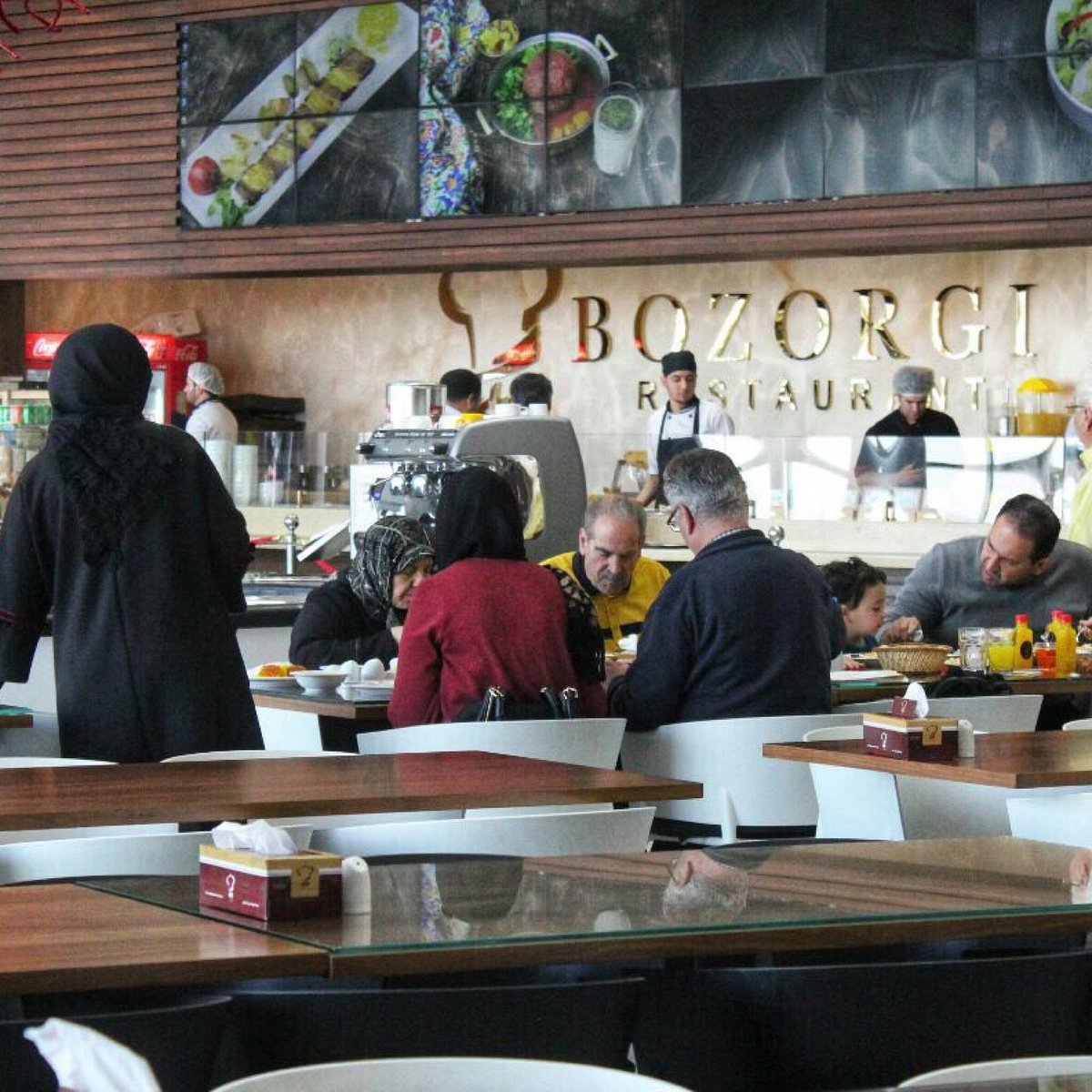
Qom's Dining Scene and Where Bozorgi Fits
Qom operates under a different set of social and culinary rules than Tehran or Isfahan. As Iran's primary centre of Shia Islamic scholarship, the city draws pilgrims, clerics, and families rather than the kind of cosmopolitan dining crowd that has pushed restaurant formats in the capital toward more experimental territory. The result is a food scene built around hospitality in the traditional sense: generous portions, shared tables, and cooking that references the larder of central Iran rather than international influence. Bozorgi Restaurant, located within the Mehr-o Mah Complex, occupies that register. It is a venue shaped by its city's specific appetite, not one working against it.
For a broader map of where Bozorgi sits among Qom's options, the Our full قم restaurants guide covers the city's dining tiers in more detail.
The shortlist, unlocked.
Hard-to-book tables, cellar releases, and concierge-planned trips.
Get Exclusive Access →The Mehr-o Mah Complex: What the Address Signals
In Iranian cities, the commercial complex format carries real meaning. A restaurant embedded in a complex like Mehr-o Mah is typically pitching at a mid-to-upper-middle bracket of local diner: families marking occasions, groups of visitors to the shrine, business contacts sharing a meal. The physical environment in these settings tends toward the formal side of casual — clean lines, sufficient space between tables, and a level of service that registers as considered without crossing into the theatrical. That context matters when reading Bozorgi's positioning. It is not a street-level kabab joint, nor is it attempting the kind of tasting-format ambition that venues like Lazy Bear in San Francisco or Le Bernardin in New York City occupy at the opposite end of the global spectrum. It is a serious local restaurant serving a serious local purpose.
Ingredient Sourcing and the Central Iranian Larder
Central Iran's culinary identity is built on a shorter, more austere ingredient list than the herb-heavy cooking of the north or the tamarind-inflected dishes of the south. Lamb from the plateau, saffron from Khorasan and South Khorasan provinces, dried limes (limu omani), kashk (fermented whey), and split peas form the backbone of the region's kitchen. Rice from the Caspian basin arrives as the prestige grain, cooked with a precision — the tahdig crust, the separate steaming , that tells you more about a restaurant's technical competence than almost any other single dish.
Where ingredients come from shapes not just flavour but the cultural logic of a meal. In Qom, a city where the population skews toward those who have travelled here for religious or scholarly reasons rather than leisure tourism, the expectation is that a restaurant like Bozorgi sources within familiar regional parameters. That means the slow-cooked stews (khoresh) and grilled meats (kabab) that define the canon, rather than imported proteins or produce that would feel incongruous in this context. The sourcing choices in traditional Iranian restaurants of this type are rarely about novelty; they are about reliability and regional correctness, which carries its own discipline.
This is a useful contrast with how sourcing-led restaurants operate in other parts of Iran. Venues like Shahrzad Restaurant in Isfahan have built identities around the particular traditions of their own cities, while places such as Soofi Restaurant Complex in Shiraz work within the Fars province's distinctive flavour palette. Qom's version of that regional specificity is quieter but no less real.
How Qom Compares to Iran's Broader Restaurant Scene
Across Iran, the mid-range restaurant tier has been quietly diversifying. In Tehran, you find formats that would not have existed a decade ago , Japanese-influenced plating, fusion kabab, and European-style bistros sitting alongside traditional chelo kabab houses. The same pressure is visible in port cities: Khorsand Seafood in Bandar Abbas and Mr Fish in Bandar Abbas represent a southern coastal identity built on Gulf catches that has little overlap with what Qom puts on its tables. Even within Fars province, Laneh Tavoos Restaurant in Marv Dasht and Pasargad Restaurant in Marv Dasht operate in the shadow of Persepolis, with a tourist-adjacent clientele that shifts expectations slightly.
Qom has not followed that diversification path at the same speed. The city's conservative social culture means that the hospitality sector remains oriented toward what the local and pilgrim population actually wants rather than what out-of-town food writers might find photogenic. That is not a criticism; it is a structural fact that shapes every restaurant decision, from ingredient sourcing to décor to portion size.
For comparison across formats and cities, it is worth looking at how other regional Iranian restaurants handle their specific contexts: Eghbali Restaurant in Qazvin, Polo Restaurant in Zanjan, and Shahabbasi Restaurant in Meybod each show how a mid-range Iranian restaurant anchors itself to its particular city rather than chasing a national or international format.
Planning a Visit: What to Know Before You Go
Bozorgi Restaurant's address within the Mehr-o Mah Complex in Qom is the primary navigation reference, since no website or phone number is currently listed in public records. For visitors arriving from Tehran, Qom is roughly 150 kilometres south via the Tehran-Qom expressway, making it accessible as a day trip or an overnight stop en route to Isfahan. The complex format suggests the restaurant operates during standard Iranian meal service hours , a long midday window and an evening service , though confirming current hours directly on arrival or through local enquiry is advisable given the absence of an online booking channel.
No dress code data is available, but Qom's conservative character means modest dress is both expected and appropriate city-wide, not just within any particular establishment. Families travelling with children will find the complex setting accommodating in terms of physical space and noise tolerance, which is a practical consideration in a city where multi-generational meals are the norm rather than the exception.
For those building a wider itinerary across Iran's restaurant scene, connections to places like Caesar Italian Restaurant in Yazd, Croll in Qeshm, Jijian Classic Kabab in Qeshm, Döner Garden in Tehran, Good Fish Restaurant in Tabriz, and Khan Salar Restaurant in Rain help map the range of dining formats available across the country.
Frequently Asked Questions
- Does Bozorgi Restaurant work for a family meal?
- Given Qom's character as a family-oriented pilgrimage city and the Mehr-o Mah Complex setting, the format is suited to group and family dining without qualification.
- What is the atmosphere like at Bozorgi Restaurant?
- Qom's dining culture leans toward the functional and hospitable rather than the theatrical. Restaurants in commercial complexes in the city typically offer a clean, orderly environment with table service oriented toward shared dishes and generous portions , a register consistent with the pilgrim and family traffic the city attracts, rather than the bar-adjacent energy of Tehran's dining scene.
- What is the signature dish at Bozorgi Restaurant?
- No specific dish data is available in verified records. Central Iranian restaurants of this type generally anchor their menus around slow-cooked khoresh, grilled lamb kabab, and rice preparations with tahdig , the regional canon rather than a single signature. For verified dish-level detail, enquiring directly on arrival is the reliable approach.
- Do I need a reservation for Bozorgi Restaurant?
- With no online booking channel currently listed, walk-in is the practical approach. In a city like Qom, where restaurant traffic peaks around pilgrimage periods and religious holidays, arriving outside the core midday rush reduces wait time at busier venues in the complex-restaurant category.
- How does Bozorgi Restaurant fit into Qom's pilgrim dining circuit?
- Qom receives millions of pilgrims annually visiting the Fatima Masumeh Shrine, and restaurants near major complexes in the city are calibrated to serve that traffic efficiently. Bozorgi's location within the Mehr-o Mah Complex places it within accessible range of the city's religious and commercial centre, making it a practical option for visitors observing the shrine circuit who want a seated meal rather than street-level fast food. The regional Iranian menu format aligns with what that demographic expects, and the complex setting provides a degree of comfort and organisation that street dining does not.
Comparison Snapshot
These are the closest comparables we have in our database for quick context.
Need a table?
Our members enjoy priority alerts and concierge-led booking support for the world's most difficult tables.
Get Exclusive AccessThe shortlist, unlocked.
Hard-to-book tables, cellar releases, and concierge-planned trips.
Get Exclusive Access →